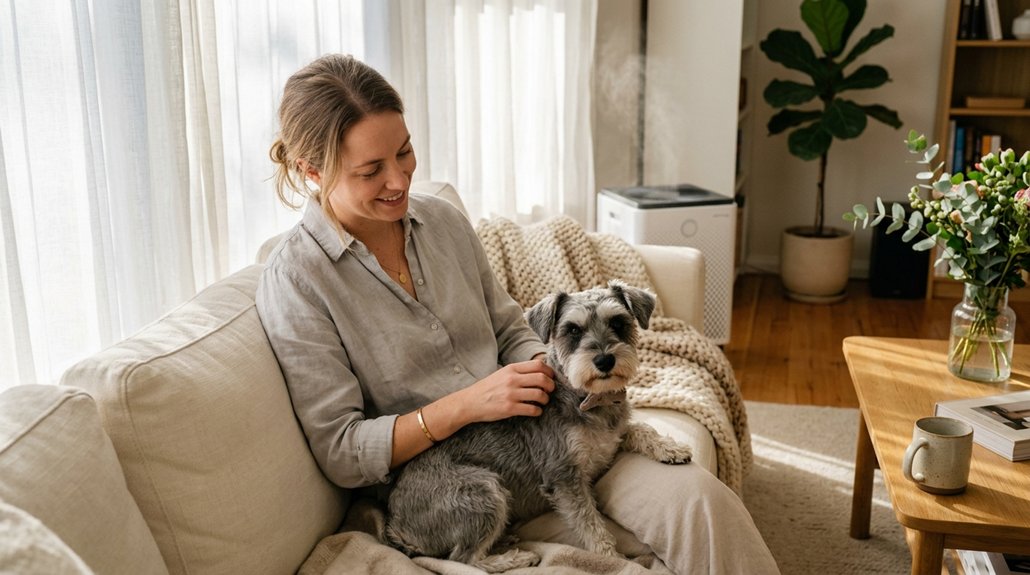
You can own a dog with allergies by carefully selecting breeds like Poodles or Schnauzers, known for lower allergen levels. Implement strategies such as allergy testing, establishing pet-free zones, and using HEPA filters to reduce exposure. Frequent grooming and maintaining cleanliness help manage allergens effectively. Consulting an allergist can provide personalized tips, including potential immunotherapy for long-term relief. Learn how to optimize your living environment for a more comfortable experience with your furry friend.
Key Takeaways
- Hypoallergenic breeds like Poodles and Schnauzers can minimize allergy symptoms for sensitive individuals.
- Allergy testing pinpoints specific triggers, assisting in selecting a suitable dog breed.
- Implementing pet-free zones and using HEPA filters reduce indoor allergen exposure.
- Regular grooming and frequent baths for your dog decrease loose fur and dander.
- Consulting an allergist is essential for personalized allergy management and treatment options.
Understanding Dog Allergies and Their Causes

When it comes to understanding dog allergies and their causes, it’s crucial to recognize that no dog is genuinely hypoallergenic. All dogs naturally produce allergens, with dander being the primary source. These tiny skin flakes, along with proteins in saliva, urine, and feces, are potent allergen sources that often trigger allergies. Notably, limited exposure to these allergens can offer benefits; children raised with dogs may have a lower risk of developing allergy-related conditions like asthma later in life due to modified immune responses to protein allergies. Genetic factors also play a significant role in how environmental triggers affect individuals, highlighting the importance of thorough allergy testing to identify specific allergens beyond just dander effects or assumed hypoallergenic breeds.
Evaluating Allergy-Friendly Dog Ownership
To effectively manage allergies while owning a dog, it’s essential to identify hypoallergenic breeds like Poodles, Bichon Frises, and Schnauzers, which produce less dander. Allergy testing plays an important role in pinpointing specific triggers, allowing you to tailor breed selection and management strategies accordingly. Creating an allergy-friendly environment involves establishing pet-free zones, employing HEPA air filters, and adhering to a consistent cleaning routine, ensuring a more comfortable coexistence with your furry companion.
Identifying Hypoallergenic Dog Breeds
Choosing a hypoallergenic dog breed, while not entirely eliminating allergens, can be an effective strategy for minimizing allergic reactions. Start with thorough criteria selection and breed research. Some breeds, like Poodles, Bichon Frises, and Schnauzers, are recognized for their low-shedding coats, which generate fewer allergens. Smaller breeds might also be preferable, as they usually produce less dander compared to larger dogs. Consideration of the dog’s gender can be essential; male dogs might create protein Can f 5, potentially escalating allergies. Consult the American Kennel Club’s list of hypoallergenic breeds to align breed characteristics with your specific sensitivities. Even with a hypoallergenic dog, individual responses differ, so understanding and researching is important in finding the most suitable match.
Allergy Testing and Management
While selecting a hypoallergenic breed is a thoughtful approach, managing allergies involves an extensive strategy. Allergy triggers like proteins in pet dander, saliva, and urine require precise identification, making allergist consultations essential. Accurate testing methods ascertain the specific allergens affecting you, as over 80% of sufferers react to multiple irritants.
Consider these steps for effective management:
- Consult an allergist for targeted testing methods to pinpoint allergy triggers.
- Adopt regular grooming routines like bathing and brushing to reduce pet dander.
- Evaluate medication options such as antihistamines or immunotherapy for all-encompassing treatment.
- Select breeds like Poodles or Bichon Frises which may emit fewer allergens, but remember, no breed is entirely allergen-free.
Implementing personalized strategies guarantees a more allergy-friendly dog ownership.
Creating an Allergy-Free Home
Although dog ownership can be challenging for individuals with allergies, creating an allergy-free home environment is achievable with strategic planning. Start by designating pet-free zones, particularly in bedrooms, to reduce allergen exposure. Implement a rigorous cleaning routine—use vacuums and air purifiers with HEPA filters to capture pet dander and other allergens efficiently. Regular grooming and bathing of your dog are essential, as these actions considerably lower the amount of dander in your home. Opt for hard flooring like hardwood or linoleum, which trap fewer allergens compared to carpets, making them easier to clean. Consult with an allergist to develop tailored strategies, including testing for specific allergens related to dog ownership. These steps can make living with a dog more comfortable and manageable.
Choosing Hypoallergenic Dog Breeds
When choosing a dog breed that suits your allergies, it’s important to contemplate breeds like Poodles, Bichon Frises, and Schnauzers, known for their minimal shedding and lower allergen production. Understanding the role of the Can f 5 protein, which is prominent in male dogs, helps you make informed decisions about potentially favoring female dogs or certain breeds. Remember, smaller breeds may release less dander, and regular grooming can considerably reduce allergens in your home.
Minimal Shedding Characteristics
In the domain of hypoallergenic dog breeds, selecting one with minimal shedding characteristics can substantially ease life for allergy sufferers. Breeds like Poodles, Bichon Frises, and Schnauzers are engineered by nature to help you combat allergens. Their hair, instead of fur, effectively traps dander and prevents it from becoming airborne. Consistent dog grooming and routine bathing are essential in dander control, promoting a healthier household. Significantly, smaller breeds often emit less dander than their larger counterparts.
- Poodles: Elegant and intelligent, their curls efficiently keep dander at bay.
- Bichon Frises: Their soft, fluffy coats are more than just adorable; they confine allergens.
- Schnauzers: Known for their wiry coats, they’re experts in minimizing shedding.
- Regular grooming: Essential for lowering allergen presence in your home.
Allergy-Friendly Dog Options
For individuals managing pet allergies, selecting a dog breed with hypoallergenic characteristics isn’t about finding a pet that produces no allergens, but about minimizing them as much as possible. Certain breeds like Poodles, Bichon Frises, and Schnauzers are known for their reduced dander production, a key factor in dog breed characteristics beneficial for allergy sufferers. Smaller breeds typically generate less dander, enhancing allergy symptom management. Allergy testing can help pinpoint specific allergens such as Can f 5 proteins, steering you towards less reactive breeds. Regular grooming and bathing additionally help in minimizing allergen exposure. Consulting with a veterinarian or allergist is vital for exploring suitable breed options that complement both your lifestyle and allergy management needs, ensuring a harmonious coexistence with your furry companion.
Allergy-Proofing Your Home
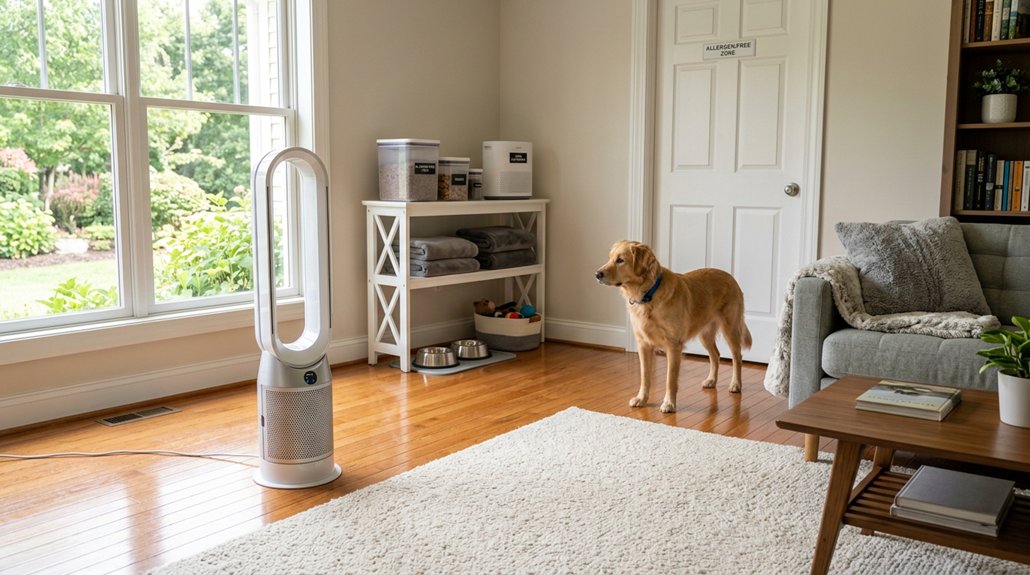
Although owning a dog can bring immense joy, it can pose a challenge if someone in your household has allergies. To manage this, focus on allergy-proofing your home, especially creating pet-free zones and enhancing indoor air quality. Employ these strategies:
- Designate pet-free zones like the bedroom to guarantee a safe, allergen-free space for restful sleep.
- Install HEPA air filters and use vacuum cleaners equipped with HEPA technology to effectively capture dust and pet dander.
- Regular grooming and bathing of your dog can reduce shedding and dander, while frequent washing of their bedding and toys limits allergen buildup.
- Choose hard flooring such as hardwood over carpet, which traps fewer allergens and simplifies cleaning.
These steps create a more harmonious home environment for allergy sufferers.
Effective Strategies for Managing Pet Allergies
Managing pet allergies effectively requires a multifaceted approach to guarantee the wellbeing of those affected. Proper grooming techniques, like regular bathing, play a pivotal role in reducing dander and allergens produced by pets. Establishing cleaning schedules, including daily vacuuming with HEPA filters and washing pet beds, helps minimize allergen buildup and maintain a healthier environment. Designating pet-free zones, particularly in bedrooms, further aids in symptom control by limiting direct allergen exposure. Additionally, using HEPA air filters in both vacuums and air purifiers efficiently captures airborne allergens, enhancing overall air quality. Consulting an allergist provides tailored treatment plans that might include antihistamines or immunotherapy. Each strategy works synergistically to reduce exposure and manage allergy symptoms effectively.
Why Regular Grooming and Personal Hygiene Matter
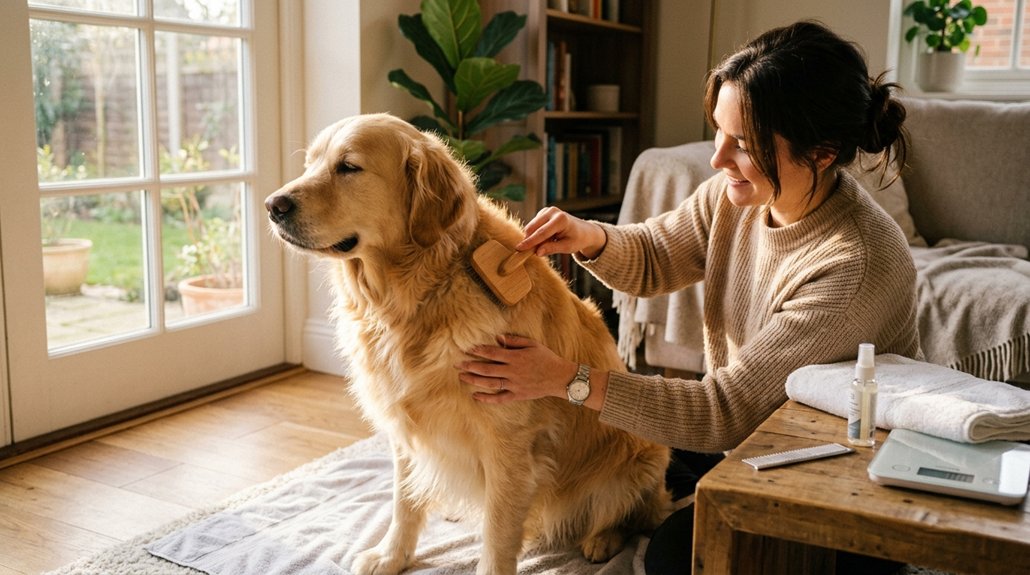
Despite the seemingly endless task of managing pet allergies, establishing a routine for regular grooming and maintaining personal hygiene proves essential in greatly reducing allergens in your home. By incorporating effective grooming techniques and personal hygiene practices, you can notably lower allergen levels.
- Brush pets regularly: It reduces loose fur and dander in your environment.
- Frequent baths: Baths help decrease dander and saliva proteins on fur, potent allergens for many.
- Wash your hands: After pet interaction, this prevents allergen transfer to other surfaces.
- Change clothes: Post-pet contact, this practice reduces inhalation of allergens indoors.
Creating a consistent grooming routine can profoundly improve air quality, providing relief for allergy sufferers. Combined with regular cleaning, these efforts are pivotal in managing allergens.
Thinking About Immunotherapy for Your Allergies?
When you’re struggling with allergies triggered by your dog, considering immunotherapy could be a game-changer in your management strategy. Immunotherapy benefits include building a long-term tolerance to specific allergens over a period of 3 to 5 years. This involves regular injections where allergen doses gradually increase, aiming to desensitize your immune system. Studies show that up to 85% of allergic rhinitis patients experience significant symptom improvement after treatment. However, immunotherapy isn’t for everyone. Important treatment considerations include your allergy severity, age, and any existing health conditions. Consulting an allergist is crucial to determine if this option suits your needs. While immunotherapy offers promising relief, careful evaluation guarantees it aligns with your health profile and lifestyle.
When to Consult Professionals for Allergy Management
Considering immunotherapy is just one aspect of handling dog-related allergies, yet there are times when turning to professionals is necessary for a thorough management approach. Consulting an allergist becomes essential for accurate allergy testing. With up to 80% of sufferers allergic to multiple allergens, identifying specific dog-related culprits is key. If symptoms persist even with pet ownership, consider professional consultations for personalized treatment plans. Keep track of symptom monitoring and collaborate with healthcare professionals for tailored solutions.
Professional insights might include:
- Identifying sensitivities to dog saliva, urine, and dander
- Exploring antihistamines or immunotherapy options
- Establishing pet-free zones in your home
- Developing effective cleaning strategies
Regular check-ins guarantee that strategies evolve with your needs, optimizing your living environment.
Preparing for a Hypoallergenic Dog
Selecting the right dog breed can greatly impact managing allergies for sensitive individuals. Although hypoallergenic myths suggest some breeds completely avoid triggering allergy symptoms, no dog is truly allergen-free. However, breeds like Poodles, Bichon Frises, and Schnauzers are known for producing fewer pet allergens, making them suitable for dog ownership. Understanding breed characteristics and undergoing allergy testing can guide your dog selection to match your allergy profile, particularly against specific proteins like Can f 5. Smaller breeds generally offer better dander control. Implement regular grooming routines and maintain pet hygiene with frequent baths to further reduce allergens. Finally, create an allergy-friendly home by using HEPA filters and designating pet-free zones to minimize exposure to allergy triggers.
Frequently Asked Questions
Can I Live With a Dog if I Have Allergies?
You can live with a dog if you’ve allergies, by focusing on allergy management. Opt for hypoallergenic breeds and maintain a rigorous cleaning routine, including using HEPA filters, grooming the dog, and establishing pet-free zones to minimize allergens.
Can You Get a Service Dog for Allergies?
Yes, you can get a service dog for allergies. These dogs provide significant service dog benefits by assisting with allergy management, like detecting allergens and retrieving medications, although proper breed selection is essential to minimize allergy risks.
What Dog Breed Is Worst for Allergies?
Oh, you love sneezing competitions, huh? Well, steer clear of breeds like Golden Retrievers and Siberian Huskies for peak performances. Their double coats and allergens are Olympic-level allergy-inducers. Opt for hypoallergenic breeds to reduce those thrilling allergy symptoms.
Can You Develop Dog Allergies Later in Life?
Yes, you can develop dog allergies later in life. Your immune system might change, leading to late-onset allergy symptoms. Recognizing these symptoms early is essential for effective management, even if you’ve never experienced them before.
Conclusion
Owning a dog with allergies might seem like tackling a mountain of sneezes, but it’s achievable with the right approach. Choosing hypoallergenic breeds and transforming your home into a fortress against allergens can make a world of difference. Regular grooming and personal hygiene become your superhero capes, combating allergens one bath at a time. When all else fails, immunotherapy can be your secret weapon, while consulting professionals guarantees you’re set on the path to harmonious, sneeze-free pet ownership.