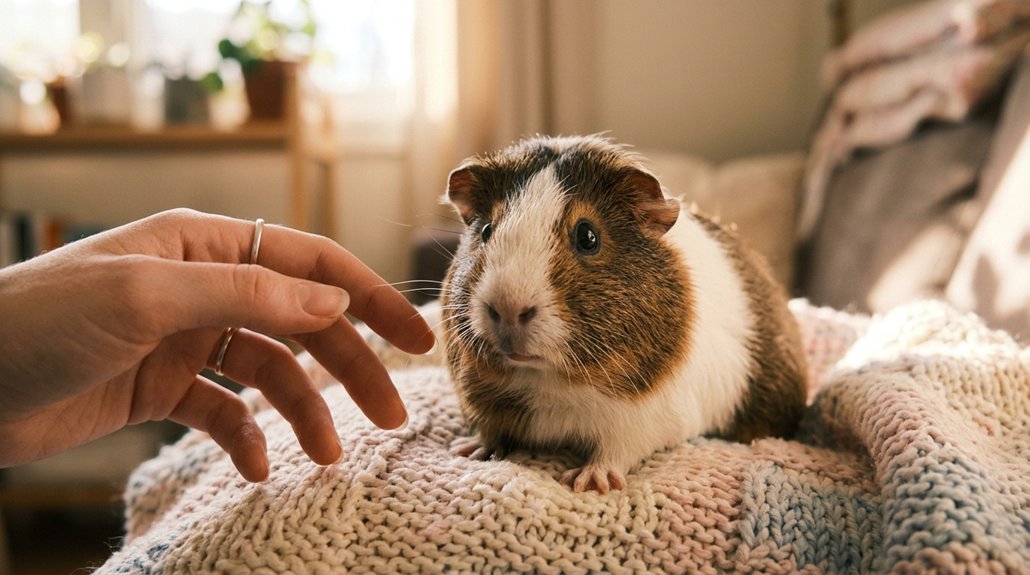
To build trust with a new guinea pig, create a secure environment: provide ample space, use cozy bedding, and place the enclosure in a quiet area. Patience is essential; consistent routines like regular feeding and gentle handling foster comfort. Understand your guinea pig’s behavior by observing social signals and eating patterns. Introduce treats and toys gradually to reinforce positive interactions. Calm handling builds confidence, while watching for signs of trust, like taking treats from your hand, will guide you further.
Key Takeaways
- Position the enclosure in a quiet area with hidey houses to minimize stress.
- Maintain consistent feeding and handling routines to enhance predictability and safety.
- Approach slowly, offering your hand for sniffing to build familiarity with your scent.
- Use gentle handling, supporting the body securely to promote comfort.
- Reward with treats and positive reinforcement to encourage trust and bond creation.
Setting Up a Trust-Building Space for Your New Guinea Pig
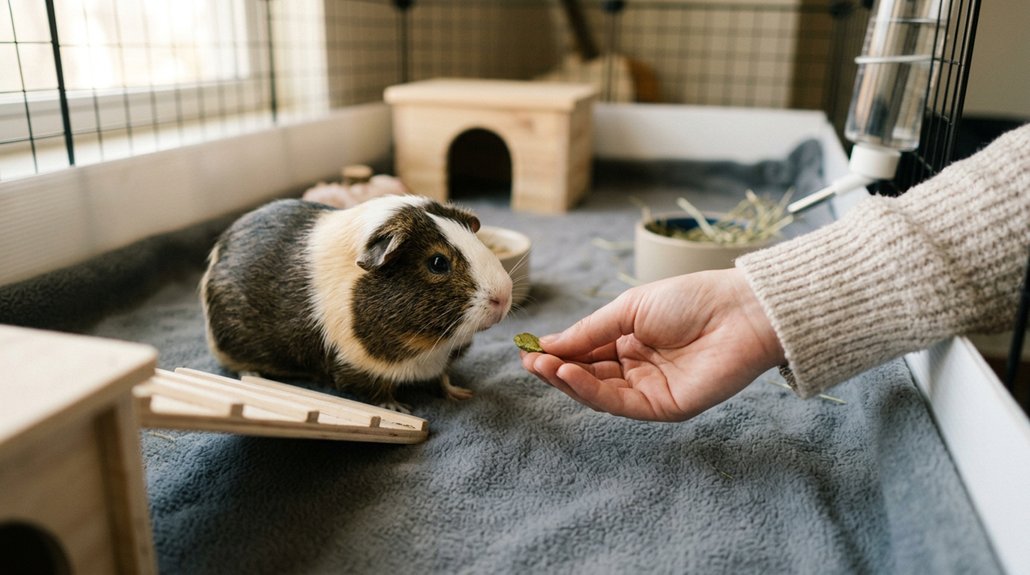
When creating a trust-building space for your new guinea pig, it’s important to establish a calm and secure environment that caters to their sensitive nature. Start with an enclosure design that meets space requirements of at least 2ft x 4ft for one guinea pig or 2ft x 5ft for pairs, ensuring ample room for exploration. Include hidey houses to offer private retreats, mitigating territorial stress and fostering security. Select bedding materials such as soft fabrics or waterproof fleece liners to enhance comfort and well-being. Position the enclosure in a quiet location, shielded from loud noises and high traffic, facilitating a peaceful adaptation process. Additionally, covering the habitat with a light cloth can simulate a natural refuge, promoting trust and relaxation.
Why Patience and Consistent Routines Matter
When you’re building trust with a new guinea pig, patience and consistency are key components of success. Patience allows these sensitive creatures to adapt to human interactions at their own pace, while consistent routines in feeding and handling foster a secure environment. By maintaining predictable patterns and calm interactions, you’ll facilitate positive associations and ultimately encourage a stronger, trusting bond.
Patience Helps Build Trust
Although establishing trust with a new guinea pig can be challenging, it’s essential to understand that patience is key in overcoming their natural skittishness. Implementing trust exercises, like gradual interaction, encourages your guinea pig to acclimate to human presence without feeling threatened. Spend time near them without direct handling, allowing them to associate your presence with safety. As you proceed, offer treats as positive reinforcement, encouraging voluntary interaction. Remember, patience involves accepting that trust-building is a slow process, potentially spanning weeks to months. During this time, focus on gentle and deliberate actions. By calmly adhering to these methods, you’re laying a foundation for mutual trust, enabling your guinea pig to feel secure and gradually more comfortable in your companionship.
Consistency Reinforces Positive Behavior
Establishing a consistent routine is pivotal in fostering trust and reinforcing positive behavior in guinea pigs. Engaging in behavior reinforcement requires you to feed and handle your guinea pig at the same times each day. These routines help the guinea pig anticipate interactions, reduce anxiety, and encourage trust development. Regularly offering treats and gentle handling are instrumental techniques that strengthen the bond. Documenting observed behaviors and energy levels in a journal provides valuable insights, allowing you to adjust routines to optimize comfort and trust-building needs. Patience is essential, as the establishment of trust demands time and perseverance. By consistently applying positive reinforcement strategies, you can create a solid foundation for a lasting connection with your guinea pig.
Routines Create Safe Environment
Consistent routines do more than reinforce behavior; they create a secure environment for your guinea pig by reducing unpredictability. Incorporating daily rituals, such as scheduled feeding and cleaning times, helps your pet anticipate activities and feel at ease. Regular interaction at designated times fosters familiarity, utilizing positive reinforcement to gradually accustom your guinea pig to your presence. Calm voices and gentle actions during these routines promote positive associations, enhancing trust.
Documenting your guinea pig’s reactions and energy levels during routines allows for monitoring stress indicators and comfort signals. Introduce regular handling and light grooming as part of your routine, ensuring these interactions respect your pet’s comfort zone. This patient, consistent approach will fortify your bond, creating a reliably secure environment.
Getting to Know Your Guinea Pig’s Behavior
To effectively build trust with your guinea pig, observe their daily habits closely, as this can provide valuable insights into their natural rhythms and preferences. Recognizing vocal cues such as purring or squeaking will help you understand their emotional state, while identifying social signals like relaxed body postures enhances your interpretation of their comfort levels. By studying these behaviors, you can tailor your interactions to meet their needs and support the development of a trusting relationship.
Observing Daily Habits
Since understanding your guinea pig’s daily habits is essential for building trust, paying attention to their behaviors will give you valuable insight into their needs and preferences. Carefully monitor their eating patterns as a gauge of comfort levels; any deviations might indicate stress or discomfort. Observe how they interact with their environment—whether they’re hiding or showing curiosity. Recognize that changes in behavior, such as eating less or more, could signal distress or acclimation challenges. Documenting these patterns can aid in identifying subtle shifts that may require further attention. Additionally, tracking their response to handling and activity levels, such as popcorning or remaining still, provides information on their sense of security. This vigilance guarantees a positive and nurturing environment for your pet.
Recognizing Vocal Cues
Building trust with your guinea pig requires attentiveness not only to their daily habits but also to their vocal cues. Vocal communication in guinea pigs is essential for interpreting their emotional expression, providing insights into their needs and mood. For instance, a contented guinea pig often purrs, while chirping indicates excitement. Recognizing a startled or attention-seeking squeak helps you appropriately respond to their emotional state. A “wheeking” sound at feeding time displays enthusiasm and reflects a positive bond based on shared experiences. Quiet, gentle noises often mean your guinea pig is relaxed and secure, signifying a growing comfort level. By consistently observing and interpreting these vocalizations, you can enhance your relationship, gaining a deeper understanding of your guinea pig’s unique personality.
Identifying Social Signals
When getting to know your guinea pig’s behavior, it’s important to pay keen attention to both their vocal cues and social signals. Vocal communication such as purring or squeaking conveys their emotional state, indicating contentment or fear. Observing body language is vital; a relaxed posture suggests comfort, while a tense body or flattened ears signal stress. Scent marking, performed by rubbing their chins on objects, reflects species-specific behavior to establish territory boundaries. A guinea pig’s approach to sniff your hand is a positive curiosity signal, encouraging interaction and bonding. Noticing natural behaviors like “pop corning” — jumping with joy — aids in understanding their moods, fostering a trusting environment by meeting their emotional and interaction needs.
Steps for Gentle Handling and Interaction
Gently coaxing trust from a new guinea pig involves understanding their natural instincts and creating a controlled, calm environment to encourage interaction. Begin by approaching your guinea pig with gentle handling in mind—crouch down and speak softly to set a serene atmosphere conducive to initial interactions. Offer your hand for sniffing to acclimate them to your scent and presence before attempting to lift them. When lifting, support their body carefully by placing one hand across the shoulders and the other under the bottom, lifting smoothly and gently. Establish routines such as consistent feeding and quiet cuddle sessions to build a sense of security over time. Patience is essential; allow your guinea pig to adjust at their own pace, and never force interactions.
Using Treats and Toys to Build Trust
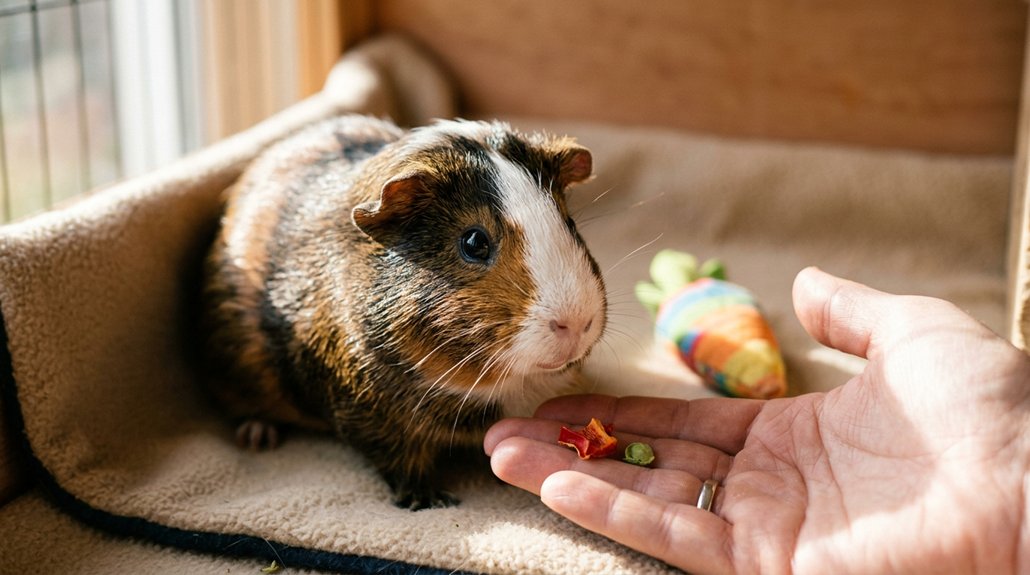
Although gaining your new guinea pig’s trust may initially seem intimidating, integrating treats and toys into your approach can considerably ease this process. Start by using small, nutritious treat types, such as bell peppers or carrots. These not only encourage approachability but create positive associations with your presence. Offering these treats consistently during feeding times establishes a reliable routine, fostering bonding and trust. Carefully consider toy selection; interactive toys like chewable blocks or tunnels stimulate curiosity and promote exploration. Observe your guinea pig’s behavior to guarantee activities don’t cause stress. Regularly rotate toys to keep them engaged and comfortable, maintaining varied experiences that enhance trust. Using these strategies, you’ll lay a strong foundation for a trusting relationship.
Signs Your Guinea Pig Trusts You
As you build trust with your guinea pig, you’ll notice several distinct behaviors indicating their comfort with you. Recognizing trust indicators is essential in evaluating the effectiveness of your bonding techniques. Look for positive signs such as:
- Approaching you freely: Signals that they feel secure in your presence.
- Expressing excitement: Wheeking or chirping upon your arrival shows recognition and a positive association.
- Acceptance of petting: Allowing handling without stress suggests established trust.
- Taking treats from hand: Demonstrates a bond, showing trust in your intentions.
- Calm grooming behavior: Lying down during brushing indicates complete relaxation.
These behavioral cues reflect the trust your guinea pig has developed, enhancing your connection and ensuring their overall well-being. Understanding these signs will guide your ongoing bonding with them.
Overcoming Common Bonding Challenges
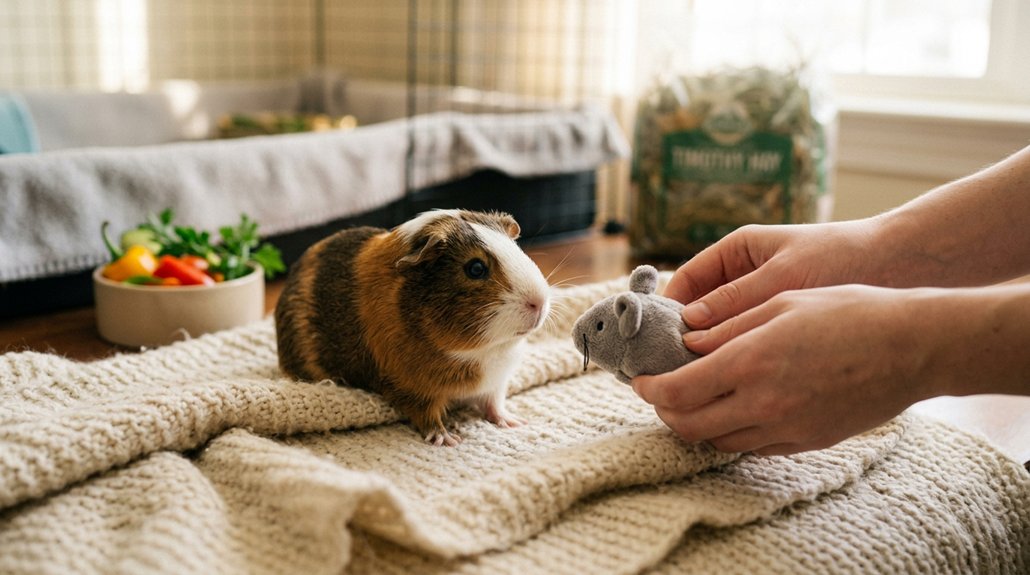
Building trust with your guinea pig can be immensely rewarding, but sometimes obstacles arise in this journey. Overcoming common bonding challenges involves effective bonding strategies and handling techniques. Start by gradually desensitizing your guinea pig to your presence. Spend time near their enclosure, allowing them to observe you and feel secure. Utilize positive reinforcement through treats to create positive associations with your presence.
Maintain a calm demeanor during interactions to avoid inducing stress. Consistency is vital; trust requires time, especially with guinea pigs lacking previous human contact. Support their body fully during handling, avoiding scruffing or tail lifting. This guarantees they feel safe and secure.
| Challenge | Strategy | Outcome |
|---|---|---|
| Initial Fear | Desensitization | Security and Confidence |
| Flight Response | Calm Handling Techniques | Reduced Stress |
| Trust Development | Consistent Interaction | Gradual Bonding |
Frequently Asked Questions
How to Get a New Guinea Pig to Trust You?
Engage your guinea pig by combining grooming techniques with treat rewards. Use a soft brush to groom gently, creating calmness. Offer nutritious treats like bell peppers post-grooming, strengthening trust. Consistent positive interactions will foster deeper bonds.
How Does a Pig Say “I Love You”?
In piggie communication, guinea pigs express “I love you” through vocalizations like purring and chirping. Recognizing these sounds isn’t just listening—it’s understanding their subtle language of affection, much like deciphering Shakespeare’s prose to reveal its hidden beauty.
How Long Does It Take to Get a Guinea Pig to Trust You?
It can take a few days to several weeks or months for a guinea pig to trust you. Trust exercises and your patience levels considerably influence the process, emphasizing gentle handling and consistent interaction for ideal results.
How Do I Bond With My New Guinea Pig?
To bond with your new guinea pig, create a comfortable environment using positive reinforcement techniques, like offering treats. Speak softly, move gently, and respect their pace, gradually increasing interaction, while ensuring trust-building is patient and consistent.
Conclusion
Building trust with your new guinea pig is much like nurturing a delicate blossom in a garden. With patience, consistency, and gentle care, you’ll witness it unfurl its petals, revealing trust and companionship. Just as a gardener understands each plant’s needs, observe your guinea pig’s behavior, using treats and interaction as sunlight and water. Overcoming challenges is akin to weathering storms; perseverance guarantees your bond thrives. Embrace each step, and your furry friend will flourish in your gentle hands.