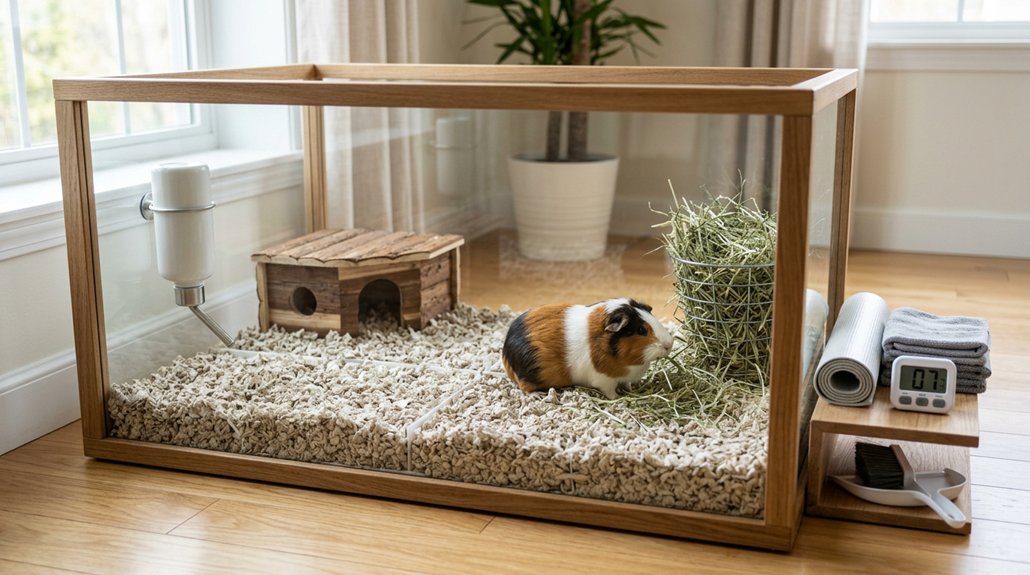
To keep your guinea pig’s habitat clean and healthy, clean the cage twice weekly and perform daily spot cleans. Use a mix of Aspen shavings and CareFresh or opt for fleece bedding with pee pads for best results. Sanitize with a vinegar-water solution and guarantee bedding is swapped regularly. Design your cage for easy access and cleanup. Maintain a routine to control odors and manage moisture effectively. Explore strategies to enhance cleanliness further.
Key Takeaways
- Implement daily spot cleaning and deep clean the cage twice weekly to reduce odors and bacteria.
- Use vinegar-water solutions for sanitizing surfaces and choose bedding that minimizes health risks.
- Opt for a mix of Aspen shavings and CareFresh or paper pellets to absorb moisture and control odors.
- Design the cage for easy cleaning with accessible components and integrated flaps for efficient bedding removal.
- Designate specific feeding areas and employ small pee pads in high-traffic zones to protect the habitat.
Understand the Importance of Regular Cleaning for Guinea Pigs
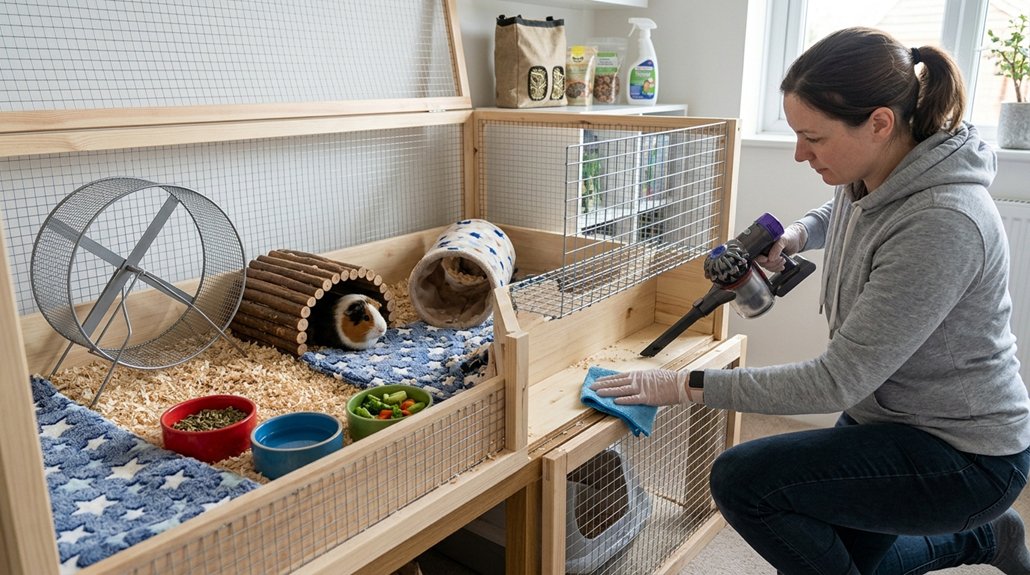
Maintaining a clean guinea pig habitat is crucial for safeguarding their health and well-being. Regular cleaning greatly reduces the risk of respiratory illnesses by eliminating bacteria and allergens in soiled bedding. Deep cleaning the cage at least twice a week, in conjunction with daily spot cleaning, is fundamental for a healthy habitat environment. This routine minimizes bacterial diseases, fostering improved guinea pig health and reducing the need for veterinary visits. Use safe cleaning solutions, like a vinegar and water mix, to avoid exposing them to harmful chemicals. Consistently maintaining cleanliness guarantees a less stressful and pleasant living space, thereby contributing positively to their overall well-being. Prioritizing these practices will lead to happier, healthier guinea pigs and an extended lifespan.
Select the Best Bedding for Cleanliness and Comfort
When selecting bedding for your guinea pig, prioritize options like a 3-to-1 mix of Aspen shavings and CareFresh for ideal absorption and moisture control, while minimizing exposure to harmful wood phenols. Fleece bedding is a cost-effective choice, providing ease of maintenance with weekly washing while keeping unpleasant odors at bay. Additionally, consider safety and health by using paper pellets to maintain a clean habitat that remains gentle on your pet’s feet.
Absorption and Moisture Control
Selecting the right bedding for a guinea pig habitat relies heavily on balancing absorption and moisture control to guarantee cleanliness and comfort. Efficient moisture management begins with a careful bedding comparison. Choose absorbent materials like paper pellets or CareFresh, which effectively manage moisture and control odors. Enhance absorption by lining the cage with newspaper, making cleanup straightforward by rolling it up with soiled bedding. Paper pellets excel in absorption, while CareFresh provides a soft texture. Aspen shavings combined with CareFresh in a 3:1 ratio mitigate health risks linked to wood phenols, yet maintain good absorption. Regular monitoring of moisture levels, paired with frequent bedding changes, is essential for a clean environment and odor prevention.
- Paper Pellets: Superior moisture control
- Aspen + CareFresh: Balances absorption
- Fleece Bedding: High-traffic areas compassion
- Monitor & Change: Prevent odor build-up
Safety and Health Considerations
Ensuring a guinea pig’s habitat is both clean and comfortable involves essential safety and health considerations. Bedding safety is key; choose materials that minimize risk. Aspen shavings or kiln-dried pine reduce phenol-related health risks, especially when combined with materials like CareFresh in a 3 to 1 ratio. Fleece bedding requires weekly maintenance and, by adding small pee pads, you can maintain further cleanliness. For odor control and mess management, consider paper pellets, which are especially effective under hay boxes. Avoid plastic liners as they present a risk to your guinea pig’s well-being. Instead, opt for absorbent and non-toxic options. Regularly monitor moisture levels and change bedding as needed to promote peak health awareness and a comfortable environment.
Maintenance and Cost Efficiency
Maintaining a guinea pig’s habitat goes beyond safety considerations, requiring careful choices in bedding to achieve both cleanliness and cost efficiency. The right bedding materials make a significant difference in odor control and moisture management. Choose paper pellets for optimum absorption and reduced cleaning frequency. A strategic approach uses fleece in main zones, paired with paper bedding in allocated “kitchen” areas for streamlined cleaning. Regularly refreshed bedding, supplemented by pee pads in high-traffic spots, lessens cleanup effort and lowers expenses. Utilizing a 3 to 1 layered bedding ratio of Aspen shavings to CareFresh enhances comfort with efficient absorption.
- Absorbent paper pellets: Control of odors, minimized cleaning.
- Layered bedding: Balance of comfort and cleanliness.
- Bedding customization: Tailoring to guinea pig habits.
- Pee pads in high-use zones: Reduce overall maintenance costs.
Master Deep Cleaning Techniques for Thorough Hygiene
Every dedicated guinea pig owner understands that mastering deep cleaning techniques is essential for ensuring thorough hygiene in your pet’s habitat. Aim for a cleaning frequency of twice a week to prevent bacterial growth. Remove all bedding and sanitize all surfaces using a safe vinegar and water solution. Spray this mixture on the cage surfaces and toys, then wipe them dry to protect your guinea pigs from harmful chemicals. Don’t forget to clean and sanitize food and water containers during your routine. Proper sanitation minimizes health risks. Place absorbent materials beneath bedding to manage moisture and odors effectively. Allocate around 30 minutes to address every corner, ensuring that you reach hard-to-access areas for an uncompromised level of cleanliness.
Daily Spot Cleaning Hacks for Freshness and Ease
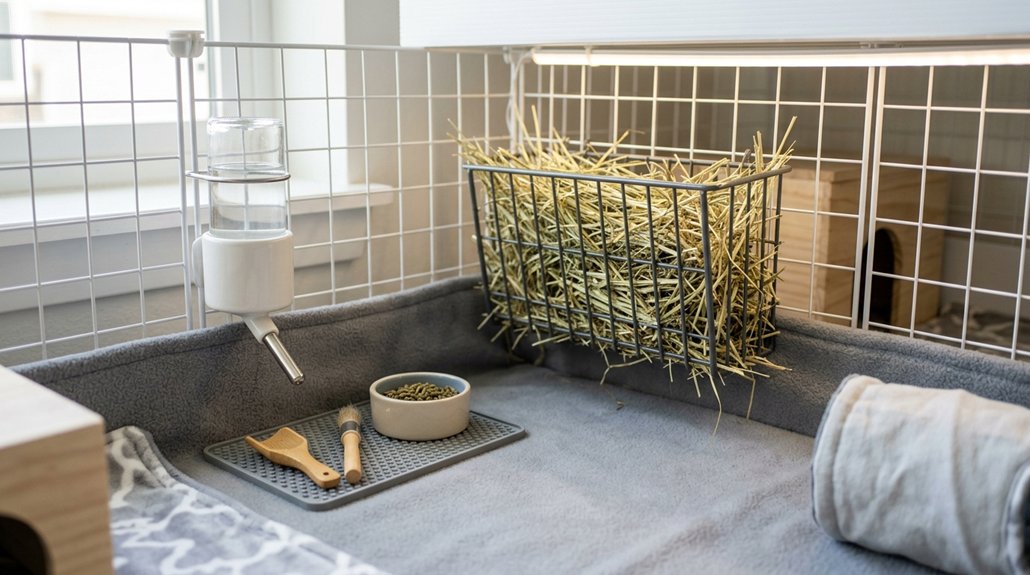
To maintain a clean guinea pig habitat with minimal effort, prioritize quick debris removal, particularly in high-traffic areas like hay boxes. Efficient management of hay using designated keepers or boxes streamlines the process and reduces mess. Always keep essential tools like a dust pan and small shovel within reach to guarantee your daily cleaning routine is both swift and thorough.
Quick Debris Removal
Begin daily spot cleaning by swiftly removing uneaten food, soiled bedding, and droppings from high-traffic areas like hay boxes to preserve a fresh habitat for your guinea pigs. Employ effective debris collection techniques, such as using a mini vacuum or rubber gloves, to minimize disruption to your pets. Quick cleaning tools simplify your routine, ensuring efficiency and cleanliness.
Implement the following strategies for streamlined maintenance:
- Mini Vacuums: Ideal for sucking up loose hay and remnants swiftly.
- Absorbent Materials: Position paper pellets or towels for easier debris removal.
- Rubber Gloves: Excellent for manually picking up small debris with precision.
- Dust Pans: Utilize for the quick gathering of bedding and droppings in less time.
These strategies facilitate a clean, hygienic environment for your guinea pigs.
Efficient Hay Management
While spot cleaning involves swift debris removal, managing hay effectively is equally important to maintain a hygienic habitat for your guinea pigs. By designating a specific hay storage area using hay boxes or keepers, you’ll keep messes contained and simplify cleanup. Guarantee peak hay nutrition by routinely checking and replenishing these areas, providing your guinea pigs with consistent access to fresh hay essential for their diet. Combat moisture and odor by implementing absorbent materials and changing bedding regularly. Leverage small pee pads in busy zones to capture messes efficiently.
| Item | Technique |
|---|---|
| Hay Storage | Hay boxes, designated area |
| Hay Nutrition | Regular refills, freshness |
| Moisture and Odor Control | Absorbent bedding, pee pads |
Spot clean daily, removing uneaten hay and droppings, reducing health risks linked to waste buildup.
Essential Daily Checkpoints
Have you ever considered how essential daily spot cleaning is to maintaining a healthy guinea pig habitat? By integrating a daily routine, you can greatly enhance your guinea pigs’ environment. Utilize efficient cleaning tools for best results. Here’s a concise approach:
- Remove Soiled Bedding and Uneaten Food: Focus on high-traffic areas like hay boxes to guarantee freshness.
- Prompt Dropping Removal: Prevent buildup and odors by swiftly cleaning up droppings.
- Guarantee Fresh Hay and Water: After cleaning, replenish essential items for health and hydration.
- Set a Specific Cleaning Time: Establish a routine that you and your guinea pigs can rely on consistently.
Implementing these checkpoints diligently minimizes mess, controls odor, and promotes a healthier space for your small pets.
Optimize Your Cage Design for Easy Cleaning and Comfort
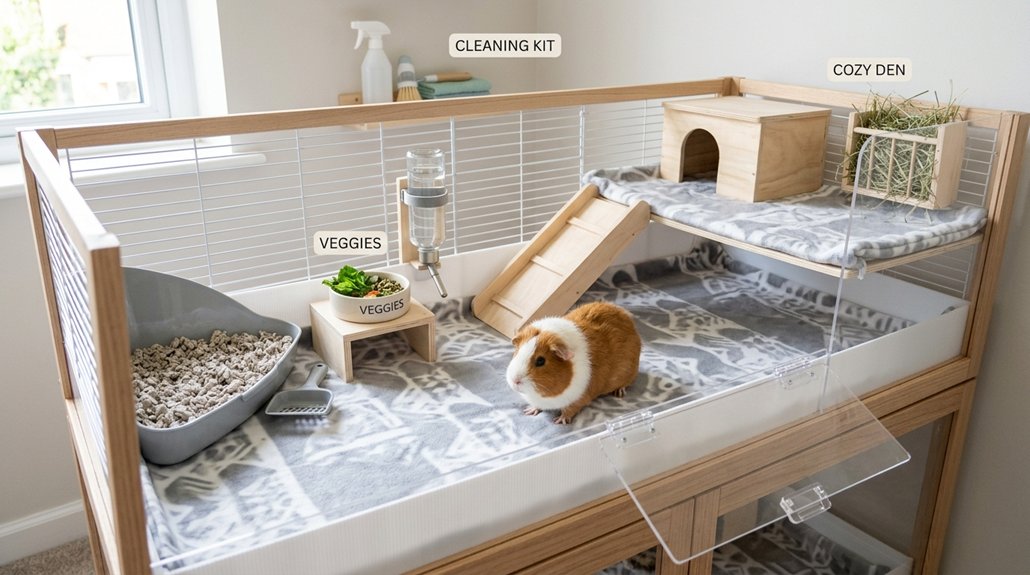
To optimize your guinea pig cage for easy cleaning and comfort, it’s important to evaluate design elements that enhance both accessibility and livability. Begin by selecting a C&C cage with a two-grid depth. This cage layout maximizes accessibility for cleaning while providing your guinea pigs with ample space. Place the cage on a stable table or stand. Such positioning minimizes physical strain during cleaning tasks. Integrate cleaning flaps into the design to facilitate efficient removal of bedding into a garbage can. Utilize removable components in the cage setup to streamline maintenance without needing to relocate the entire structure. Finally, confirm the cage’s location allows access from all sides, enhancing routine cleaning and interaction with your pets.
Efficiently Manage Mess in Hay and Feeding Areas
Managing mess in hay and feeding areas requires strategic organization to maintain a clean guinea pig habitat. To achieve effective mess reduction, designate a specific zone for hay using hay boxes or keepers to control scattering. This feeding organization strategy confines the mess, making cleanup more efficient. Enhance cleanliness by lining feeding zones with absorbent materials like paper pellets, which manage moisture and control odors. Regularly checking for uneaten food prevents spoilage and maintains tidiness. Additionally, use small pee pads in high-traffic zones to protect bedding, allowing you to focus on spot cleaning rather than complete changes. Monitor guinea pig behavior to identify hotspots, ensuring your cleaning efforts are targeted and accurate.
Organize hay areas with designated zones and absorbent materials to maintain a tidy guinea pig habitat effectively.
- Designate a hay area with boxes
- Line zones with absorbents like paper pellets
- Routinely remove uneaten food
- Deploy small pee pads in traffic areas
Find Allergy-Friendly Cleaning Solutions
A number of practical solutions exist for keeping a guinea pig habitat clean while minimizing allergy risks. Start with natural disinfectants like a vinegar and water solution in a 1:1 ratio. This effectively sanitizes surfaces without introducing harsh chemicals and aids in allergen reduction. Subsequently, take the cage outside for cleaning. Doing so greatly minimizes indoor allergens by reducing exposure during the maintenance process. Opt for hypoallergenic bedding materials, such as paper pellets or soft fleece, instead of traditional wood shavings to lessen potential allergic reactions. Utilize allergy-friendly tools, like mini vacuums and rubber gloves, for efficient debris removal without respiratory irritation. Maintain a regular cleaning schedule—daily spot cleanings and twice-weekly deep cleans guarantee an environment conducive to health.
Create Your Guinea Pig Cleaning Support Crew
While allergy-friendly cleaning solutions play an essential role in maintaining a guinea pig habitat, enlisting a cleaning support crew can further enhance efficiency and consistency. Engage family members or partners in the cleaning teamwork, establishing a shared responsibility by assigning specific tasks. Creating shared routines is important; synchronize efforts, crafting a regular cleaning schedule that eases individual workload and upholds habitat cleanliness. Leverage local pet care communities or online forums to acquire insights and enhance the cleaning approach. Occasionally employing a professional cleaning service can relieve pressures, particularly during hectic periods or when allergies arise. A foundation of open communication regarding care responsibilities fortifies teamwork and nurtures a positive atmosphere.
- Assign specific tasks to family members
- Establish a regular cleaning schedule
- Reach out to pet care communities
- Hire professionals for support when needed
Adapt Your Habitat for Seasonal Changes
Adapting a guinea pig’s habitat to seasonal changes is essential for their comfort and health. Effective seasonal adaptations include temperature control to maintain ideal indoor conditions of 17–20°C during colder months. Place habitats in well-ventilated areas, avoiding drafts and direct heat. For outdoor settings, guarantee protection from sun and wind; bring guinea pigs indoors if temperatures drop below 15°C. Utilize absorbent bedding materials to manage moisture during wetter seasons, preventing odors and promoting a clean environment. Regularly adjust bedding layers to accommodate humidity and temperature fluctuations, guaranteeing dryness and comfort. Modify cleaning schedules seasonally, increasing frequency during shedding times to manage fur and debris. Implement these strategies to optimize your guinea pig’s habitat year-round.
Frequently Asked Questions
How to Keep a Guinea Pig Enclosure Clean?
To maintain a clean guinea pig enclosure, replace soiled bedding daily and store uneaten food properly to prevent spoilage. Use paper pellets for bedding. Sanitize surfaces with vinegar solutions regularly to guarantee a hygienic and odor-free environment.
What Is the Number One Cause of Death in Guinea Pigs?
Respiratory disease, primarily prompted by poor guinea pig health from grimy, germ-filled environments, is the number one cause of death. Common illnesses stem from inadequate ventilation, causing harmful bacteria or allergens to invade their vulnerable respiratory systems.
What Does Popcorning Mean in a Guinea Pig?
Popcorning in guinea pigs is an exuberant behavior characterized by spontaneous jumping and twisting. It’s observed during positive social interactions and play, indicating happiness, mental stimulation, and adaptation, showcasing their well-being and maintaining healthy habitat dynamics.
What Are 5 Signs Your Guinea Pig Is Happy?
Your guinea pig’s happiness coincides with behaviors like “popcorning,” curious foraging, relaxed postures, grooming, and seeking interaction. These behaviors confirm they’re content, showcasing instincts and trust, creating a vibrant, joyful atmosphere in their habitat.
Conclusion
Maintaining a clean habitat for your guinea pig isn’t just about aesthetics; it’s vital for their health. Did you know that guinea pigs can produce 100 droppings daily? That’s why regular cleaning is necessary, not just for comfort, but for preventing respiratory issues linked to ammonia buildup. By understanding bedding choices, mastering cleaning techniques, and optimizing cage design, you guarantee a safe environment. Use allergy-friendly solutions and support systems to make cleanliness efficient, safeguarding your pet’s well-being year-round.