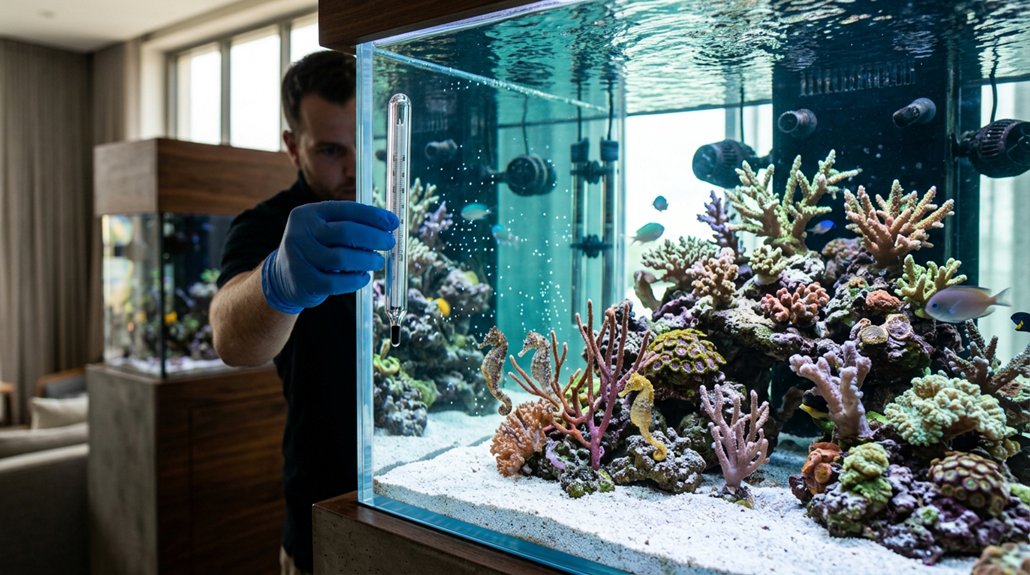
You should clean a saltwater tank a little every day, with more thorough maintenance each week and deeper equipment service every few months. Feed fish and check health daily, top off evaporation, and confirm temperature and salinity. Weekly, test water, clean glass, and rinse filter media. Do a 10% water change every two weeks, or monthly if needed. Clean lights, pumps, and skimmers monthly to quarterly, and act sooner if water quality drops or algae spikes.
Key Takeaways
- Feed and inspect fish daily, while topping off evaporated water and checking temperature, salinity, equipment, and skimmer cup.
- Clean glass, test water chemistry, and rinse mechanical media weekly to control algae, waste, and flow.
- Perform a 10% partial water change every two weeks, or monthly if bioload is light and tests stay stable.
- Deep-clean lights, hoses, and carbon monthly to quarterly, depending on buildup and manufacturer recommendations.
- Service pumps, powerheads, and skimmers every three months, and clean sooner if ammonia, algae, detritus, or stress increases.
Saltwater Tank Cleaning Schedule
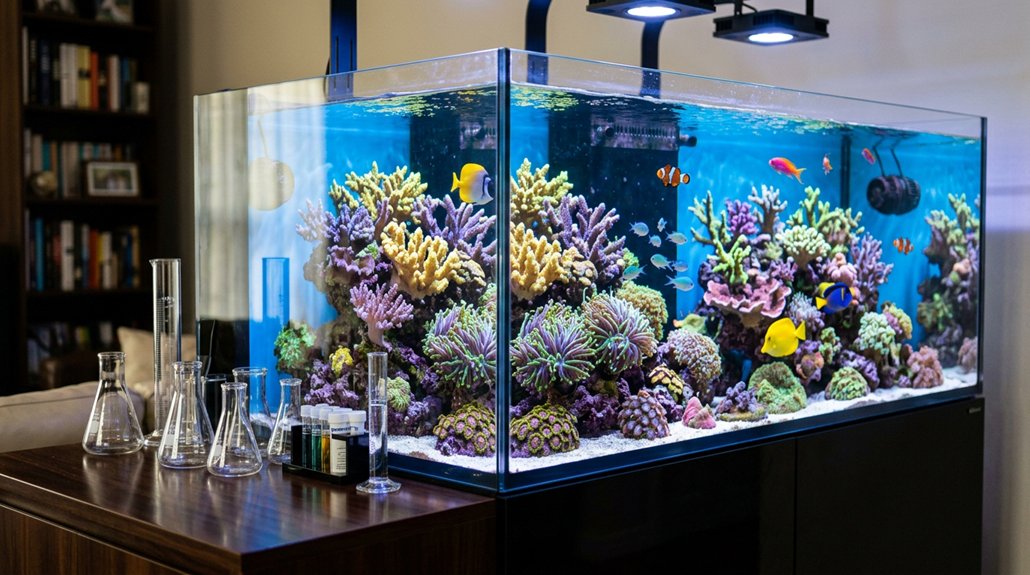
A reliable saltwater tank cleaning schedule starts with weekly water testing for ammonia, nitrite, nitrate, phosphate, and, in reef systems, calcium and alkalinity, since those results should guide how often you clean and change water. You should plan partial water changes every two weeks, or at least monthly, using smaller 10% exchanges when possible to protect beneficial bacteria and maintain stability. In heavily stocked systems, weekly changes may be necessary. Clean the display glass with an algae magnet weekly, or more often if fouling is fast. Replace or rinse mechanical filter media around water-change days, and change activated carbon about every two months. This routine supports algae management, preserves water quality, and lets you adjust maintenance before problems build.
Daily Saltwater Tank Tasks
Each day, feed your fish twice and use those feedings as a quick health check, watching for appetite, coloration, wounds, and unusual behavior. During these feeding checks, top off evaporative loss so salinity and temperature stay stable. Record temperature and specific gravity daily; even small shifts can stress livestock. Inspect heaters, pumps, powerheads, lights, skimmers, and plumbing for leaks, loose fittings, or poor flow.
- Refill freshwater for evaporation.
- Verify 77–82°F and about 1.026 SG.
- Empty the skimmer cup, rinse it, and wipe salt creep from cords and surfaces.
These short tasks take minutes, but they help you catch problems early, protect equipment, and keep your tank operating within target parameters.
Weekly Saltwater Tank Maintenance
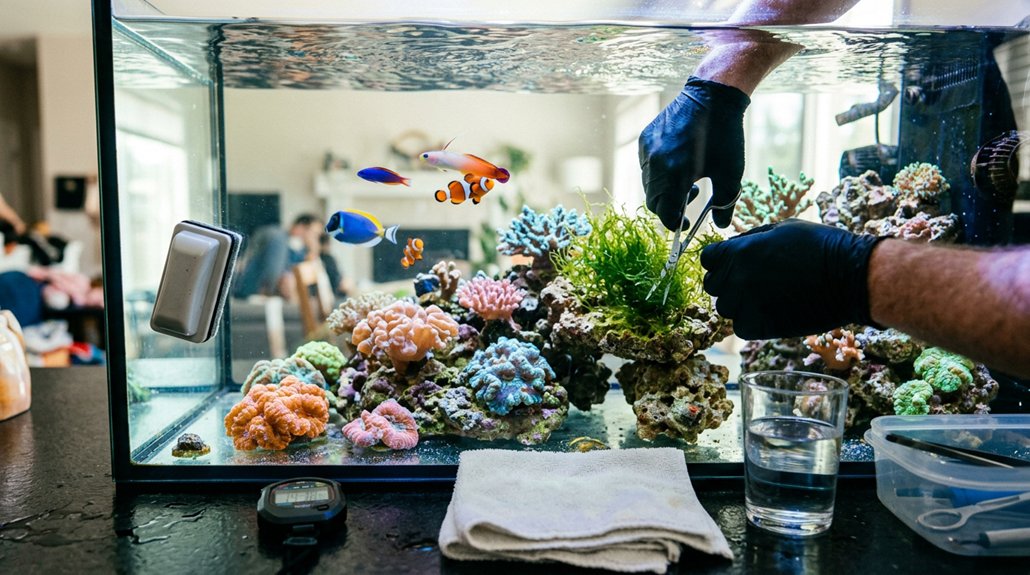
Weekly, you should test ammonia, nitrite, nitrate, and phosphate, and for reefs, calcium and alkalinity, to confirm water chemistry is stable and catch problems early. Then clean the display glass with an algae magnet so algae prevention stays consistent and visibility remains high. Rinse prefilter sponges and swap disposable mechanical media on this weekly cycle to preserve flow and avoid clogging. Wipe the protein skimmer cup and neck to keep foam production efficient and skimmate removal steady. Do spot cleaning on rockwork, siphon trapped detritus, and do light substrate grooming where debris settles, since accumulated waste can spike nutrients and restrict circulation. These tasks don’t replace larger service intervals, but they do keep the tank stable, clean, and easier to manage.
Biweekly Water Changes and Filter Care
Every two weeks, perform a partial water change of about 10% of the tank volume to keep nutrients in check without causing sharp chemistry swings. Match temperature and salinity first, then test source and tank water for ammonia, nitrite, nitrate, phosphate, and, for reefs, calcium and alkalinity. This biweekly logistics routine keeps parameters stable.
- Replace filter socks or floss a few days before or after the change, so you don’t strip nitrifying bacteria.
- Rinse prefilter sponges with tank water, vacuum substrate while siphoning, and inspect skimmer cups and hoses.
- Manage filter rotation separately: swap activated carbon about every two months, not by appearance, to prevent pollutant desorption.
Keep biological media intact and avoid overcleaning.
Monthly Saltwater Tank Cleaning
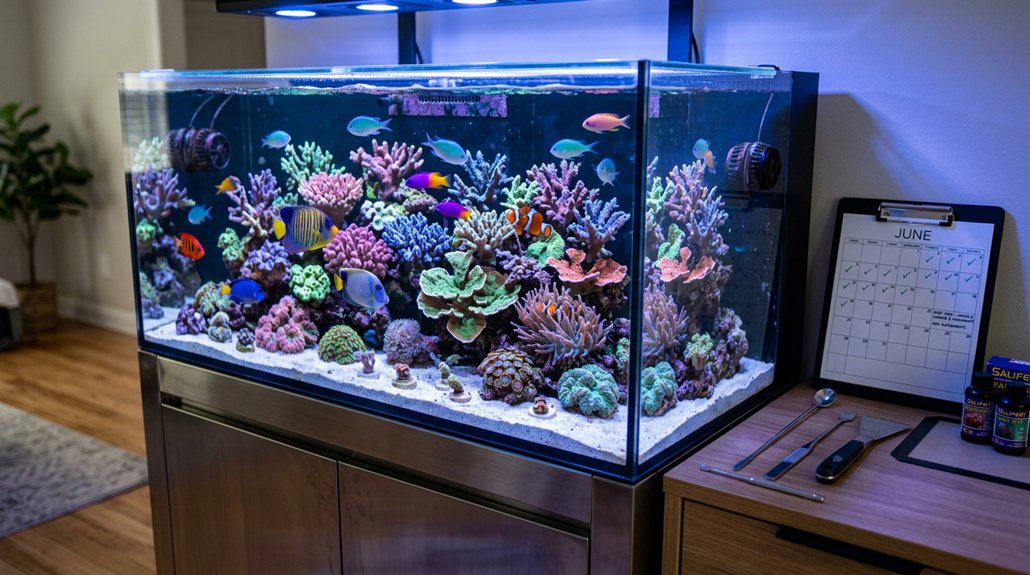
Once a month, give the tank a targeted cleaning to keep light, flow, and filtration performing well: wipe cover glass and acrylic light shields with a damp cloth, and use white vinegar on stubborn calcium deposits to preserve light transmission. Next, soak and brush protein skimmer air intake hoses and valves in vinegar to prevent clogs and maintain consistent foam production. Rinse prefilter sponges, and replace disposable mechanical media if it’s loaded with debris. If you don’t do biweekly water changes, perform a partial monthly exchange, typically 10% to 20% based on bioload and test results. Check pumps and powerheads, remove visible coralline buildup, and spot-clean encrustation. This routine supports algae control, substrate vacuuming, and stable water quality without overworking the system.
Quarterly Deep-Clean Tasks
Every quarter, you should remove and soak pumps, gyres, and other removable equipment in the appropriate cleaning solution, then rinse and reassemble them to restore flow and efficiency. You’ll also want to refresh lighting components and replace or clean carbon on schedule so output and water quality stay consistent. Document the service date, parts changed, and any probe recalibration in your maintenance log so you can track performance over time.
Quarterly Equipment Soak
Quarterly soaking of hard-working equipment keeps flow and gas exchange from sliding as calcium and coralline buildup accumulate. You should schedule this deep maintenance every 3 months for pump preservation and seal longevity, not as part of weekly chores.
- Remove pumps, powerheads, and gyres, then soak them for about 1 hour in double-strength citric acid or white vinegar.
- Fully disassemble, brush, rinse, and briefly run parts in freshwater so bearings and seals shed trapped debris before reinstalling.
- Take skimmers offline for partial dismantling, clean the venturi and body, and let performance stabilize for up to a day.
Also clean return pump housings, overflows, and plumbing with airline-tube-tied brushes. Stagger service dates and document them, so you don’t disrupt biological filtration or tank stability.
Lighting And Carbon Refresh
Monthly lens and cover cleaning keeps light output from dropping as salt spray and calcium build up, so wipe acrylic shields, glass, and reflectors with RODI water or a vinegar solution and dry them fully before reassembly. Each quarter, deep-clean fixtures: remove dust and salt from fans, vents, and heatsinks, and tighten any corroded fittings to protect thermal management and extend LED lifespan. Check bulbs and tubes against the manufacturer schedule, since most need replacement every 6–12 months. At the same time, refresh activated carbon on a roughly two-month schedule when you use it regularly, or at least quarterly, so Carbon capacity doesn’t fall and adsorbed pollutants aren’t released back into the tank. Log every install and replacement date to keep service intervals consistent.
Signs Your Saltwater Tank Needs Cleaning Sooner
If your tests show ammonia or nitrite above 0 ppm, or nitrate climbing past about 20–40 ppm (reef tanks should stay under 10 ppm), you should clean the tank sooner and do a partial water change right away. Watch for algae indicators, cloudy water, excess detritus, and behavioral changes in fish that suggest stress.
If ammonia, nitrite, or nitrate rise, clean sooner and do a partial water change right away.
- Rapid algae on glass, rock, or sand means nutrients are building fast; test phosphate and increase water changes.
- Reduced return flow, overflow noise, or a clogged filter sock means your mechanical media needs cleaning or replacement now.
- Little skimmer foam, noisy powerheads, or hot-cold heater swings point to equipment fouling; inspect impellers, intakes, and skimmer necks promptly.
Frequently Asked Questions
Do Salt Water Tanks Need to Be Cleaned?
Yes, you do need to clean saltwater tanks regularly. You’ll manage algae, maintain your protein skimmer, do water testing, and use a substrate vacuum to remove detritus, keeping chemistry stable and livestock healthy.
How Long Does It Take for a Saltwater Tank to Clear Up?
It’ll usually clear in a few hours to 72 hours, depending on cause. You should watch water clarity and nutrient cycling; minor detritus clears fast, but persistent haze may need testing, filtration, or UV.
Is a Saltwater Tank High Maintenance?
Yes—saltwater tanks can be high maintenance, but you’ll manage it with routine testing, water changes, and equipment cleaning. Biofilter upkeep and livestock compatibility matter most; if you stay consistent, you’ll keep problems small.
How Often Should I Top off a Saltwater Tank?
You should top off daily, or whenever water evaporation lowers the level, to offset evaporative loss and maintain salinity control. If you’ve got an auto top off, check it regularly and refill as needed.
Conclusion
In your saltwater tank, consistency is everything. If you stay on schedule with daily checks, weekly maintenance, biweekly water changes, and monthly deep cleaning, you’ll keep water chemistry stable and livestock healthier. Don’t wait until the tank looks like a disaster zone; a neglected system can spiral fast. Watch for cloudy water, excess algae, or stressed fish, and clean sooner when needed. With disciplined upkeep, you’ll protect your investment and your reef’s long-term stability.