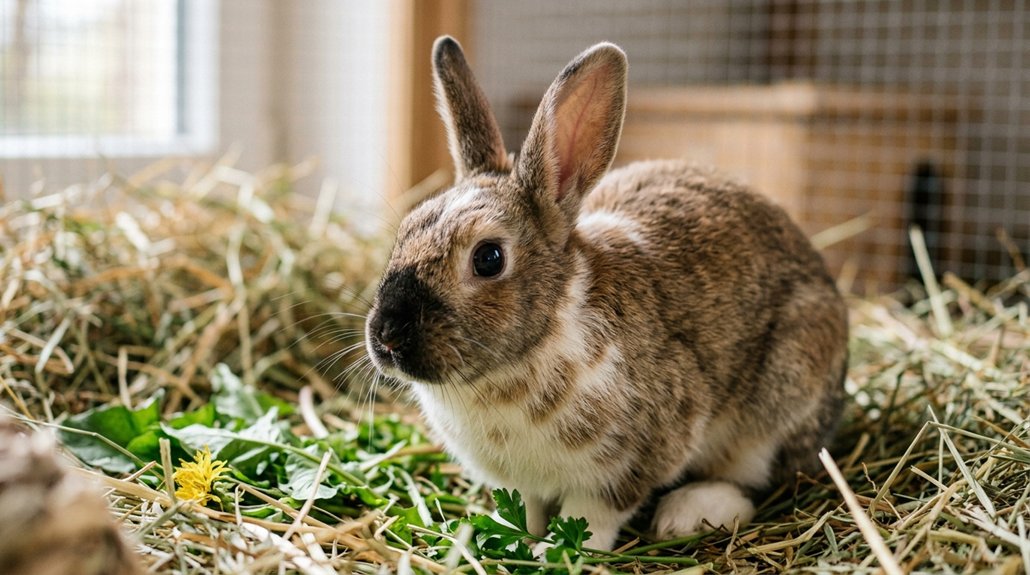
If your rabbit seems stressed or unhappy, monitor for signs like pinned ears, altered social behaviors, or decreased appetite. Mitigate stressors by creating a quiet, well-ventilated habitat with hiding spots and temperature control. Provide consistent routines and enrichment activities, such as interactive toys, to support mental health. Consult a vet if stress indicators persist to address potential health issues. By understanding and addressing these aspects, you’ll guarantee your rabbit’s well-being and discover effective strategies.
Key Takeaways
- Observe signs like pinned ears, altered pooping habits, or withdrawal; consult a vet if symptoms persist for expert assessment.
- Implement noise reduction strategies and provide a spacious, tranquil habitat with hiding spots to mitigate environmental stress.
- Maintain consistent daily routines in feeding and interaction to reduce anxiety linked to sudden changes.
- Engage rabbits in enrichment activities like foraging and interactive toys to support mental stimulation.
- Gradually introduce cage mates to prevent territorial disputes and monitor social interactions to ensure balanced socialization.
Recognizing and Responding to Stress Signs in Rabbits
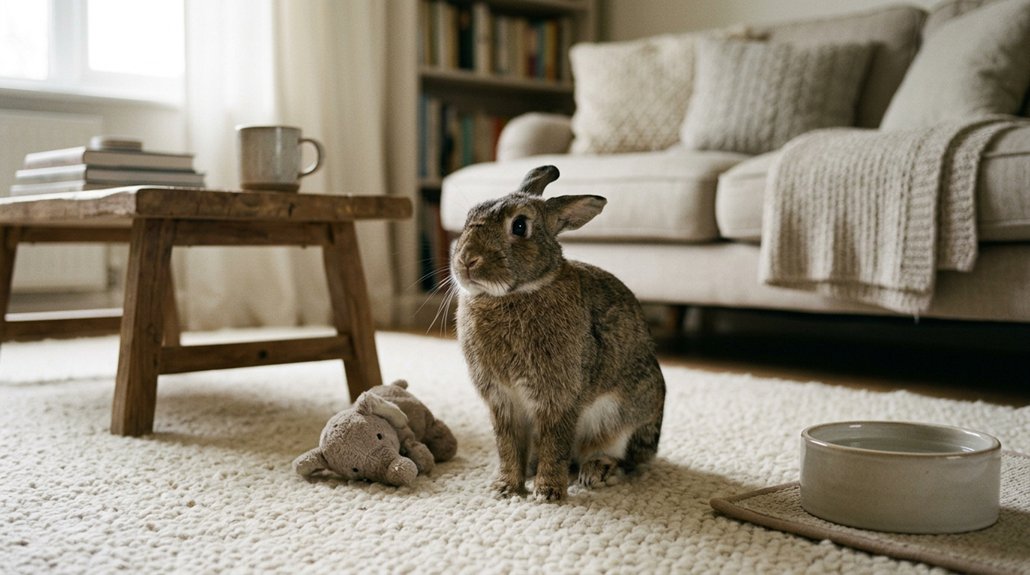
In many cases, recognizing stress in rabbits requires keen observation of detailed behavioral and physical cues. Start by evaluating body language cues: pinned ears and hunched sitting positions can indicate significant stress or discomfort. Behavioral changes, such as excessive hiding during interactions, suggest your rabbit may feel unsafe or anxious. Moreover, monitor alterations in social behavior, like increased aggression or withdrawal; these often reflect emotional distress or responses to social stressors.
Additionally, be vigilant for physical symptoms: small poop size or shaking can denote health issues or pronounced stress, warranting immediate attention. Prioritize your rabbit’s well-being by providing varied enrichment activities and a secure environment to help alleviate stress. Timely recognition and response are essential in maintaining your rabbit’s health and happiness.
Environmental Stressors and How to Mitigate Them
To effectively mitigate environmental stressors for your rabbit, adopt noise reduction strategies such as soundproofing their habitat area and avoiding high-traffic spaces in your home. Habitat optimization is also essential—ensure the enclosure is both spacious and well-ventilated, incorporating elements that cater to natural behaviors, such as hiding spots and varied terrain. By consistently maintaining a stable environment regarding temperature and lighting, and providing a steady supply of fresh hay, food, and clean water, you’ll create a sanctuary that minimizes stress and promotes well-being.
Noise Reduction Strategies
While rabbits are generally resilient creatures, exposure to excessive noise can greatly increase their stress levels, necessitating effective noise reduction strategies. Implement soundproofing techniques by isolating your rabbit from disruptive noises, such as loud music or television. Consider installing soft bedding materials that absorb sound, mitigating sudden disturbances. Designate a quiet retreat where your rabbit can escape overwhelming noise. Use calming products like white noise machines to create a soothing environment and mask startling sounds. Regularly evaluate the habitat for noise sources, such as squeaky toys or loud appliances, and remove them to decrease potential stress triggers. These detailed approaches can greatly enhance the tranquility of your rabbit’s environment, reducing stress and promoting overall well-being.
Habitat Optimization Tips
Ensuring a rabbit’s ideal habitat is an integral aspect of their well-being, just as noise reduction is imperative for maintaining their mental serenity. Begin by designing a spacious habitat that enhances airflow management, vital for minimizing confinement stress and optimizing air quality. Introduce soundproofing or designate quiet zones to safeguard them from disruptive noises. Adequate lighting should incorporate natural light and adjustable artificial sources, simulating their natural environment. Regular cleaning and rearrangement of their living space can introduce stimulating scents and foster exploration. Finally, a temperature-controlled setting is essential to prevent extreme fluctuations, ensuring comfort and safety.
| Aspect | Action |
|---|---|
| Habitat Design | Create spacious and ventilated living conditions. |
| Airflow Management | Enhance with soundproofing and quiet zones. |
| Temperature Control | Maintain consistent comfortable temperatures. |
Addressing Rabbit Social and Mental Stressors
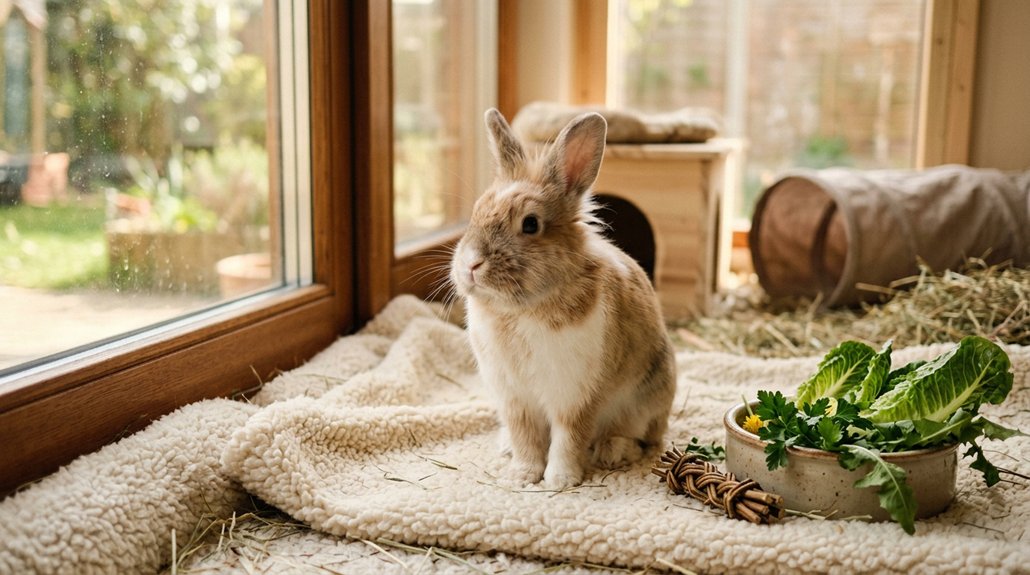
Although rabbits are often seen as low-maintenance pets, their social and mental well-being requires careful attention to prevent stress-related issues. Rabbit companionship plays an essential role in their emotional health. It’s important to monitor social interactions within established social hierarchies, ensuring neither overcrowding nor isolation occurs. Overcrowding may cause aggression, whereas isolation can lead to anxiety.
When introducing new cage mates, proceed gradually to mitigate territorial disputes or aggression. Maintaining a consistent daily routine for feeding and interaction helps avoid stress from sudden changes. Additionally, assess your rabbit’s social preference to balance socialization opportunities. Engage their minds with enrichment activities, including foraging and interactive toys, to alleviate boredom. Adhering to these methods supports a happy and mentally robust rabbit.
Creating a Stimulating and Safe Environment
Creating a stimulating and safe environment for your rabbit is vital to its overall well-being. Habitat size is essential; provide ample space to guarantee your rabbit moves freely. A cramped space may lead to stress and anxiety. Equip the habitat with hiding spots and climbing structures to satisfy natural instincts and enhance physical activity. Mental enrichment is equally important. Introduce activities like puzzle feeders and toys that encourage chewing and foraging, thereby alleviating boredom and promoting mental health. To maintain your rabbit’s curiosity, regularly alter the layout of its living area and rotate toys and enrichment items. This dynamic environment supports mental stimulation, making sure your rabbit remains engaged and stress-free. Prioritize these elements to foster a harmonious habitat.
Enrich Your Rabbit’s Daily Routine
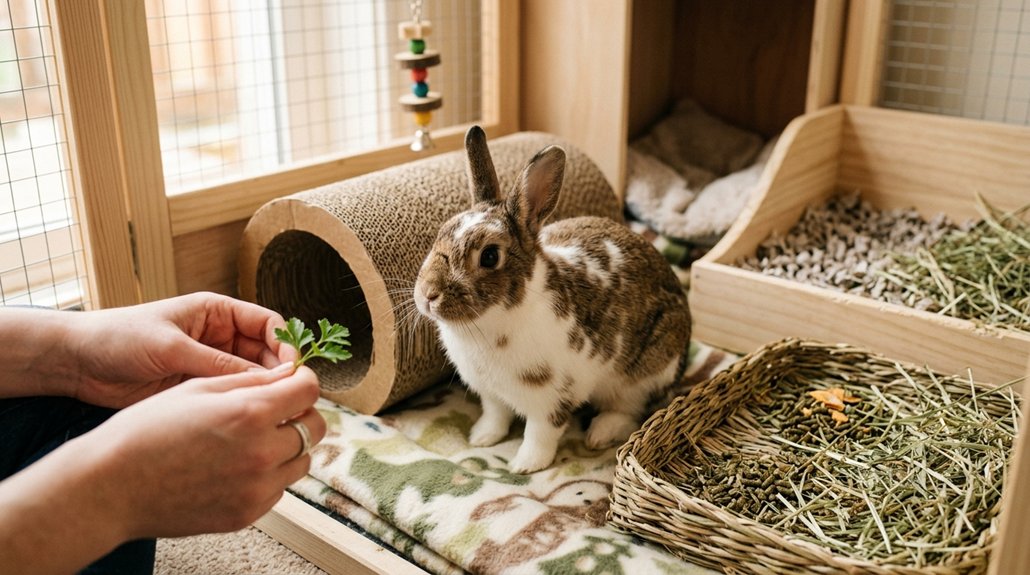
A rabbit’s daily routine can considerably benefit from a variety of enriching activities designed to stimulate both mind and body. To maintain mental stimulation and alleviate stress:
- Toy Rotation: Regularly cycle through different toys and enrichment items to prevent boredom. This encourages exploration, keeping your rabbit mentally engaged.
- Dietary Variety: Incorporate a varied diet, including fresh vegetables and occasional treats, to promote foraging behaviors. Offering diverse nutrition not only encourages natural instinctual behaviors but also provides necessary dietary enrichment.
- Habitat Exploration: Alter your rabbit’s habitat layout during cleanings. This encourages curiosity and can help alleviate feelings of confinement. Additionally, strategically place food and water across different locations to promote exercise, further reducing stress and anxiety.
Implementing these strategies can considerably improve your rabbit’s well-being.
Seeking Vet Help for Rabbit Stress
If your rabbit exhibits stress indicators like excessive hiding or lethargy, consulting a veterinarian is essential to exclude potential health problems. A vet’s expertise not only aids in diagnosing these symptoms but also offers targeted stress reduction strategies specific to your rabbit’s needs. Regular check-ups guarantee both the physical and mental well-being of your rabbit, facilitating prompt interventions for any stress-related concerns.
Identifying Stress Symptoms
Observing your rabbit’s behavior is essential for identifying stress symptoms that necessitate veterinary attention. Behavioral indicators, such as pinned ears, lethargy, or aggressive actions like charging and nipping, can reflect discomfort or fear, with potential health implications if left unchecked.
Consider these signs:
- Social Withdrawal: If your rabbit frequently hides or avoids interaction, it may be experiencing distress or sadness, signaling the need for professional advice.
- Physical Indicators: Reduced poop size, shaking, and lunging can point to underlying health issues or severe stress.
- Environmental Triggers: Sudden loud noises and the presence of predators in your rabbit’s environment can lead to heightened stress levels.
Persistent stress signs require a veterinarian’s assessment to identify health concerns and devise stress-reduction strategies.
Vet Consultation Benefits
Consulting with a veterinarian provides essential insights into managing your rabbit’s stress efficiently. The vet conducts thorough behavioral assessments to pinpoint underlying health issues contributing to stress, ensuring timely intervention. By addressing these factors, your rabbit’s environment becomes more conducive to comfort. Additionally, a vet might suggest dietary recommendations tailored to alleviate specific stress-related symptoms, hence improving overall well-being. Regular check-ups are important, not only for monitoring physical health but also for preventing conditions like dental troubles or obesity that could lead to stress. A detailed care plan, crafted with professional guidance, encompasses both mental and emotional health strategies, supporting your rabbit’s resilience against stressors. Specialist advice can adequately transform your rabbit’s habitat into a sanctuary of tranquility.
Frequently Asked Questions
How Do I Help My Bunny With Stress?
Monitor your bunny’s behavior for stress signs like lethargy or altered eating habits. Create a calm environment, offer enriching activities, guarantee ample space and ventilation, and consult a veterinarian for persistent issues to support their well-being.
What Is the 3-3-3 Rule for Bunnies?
The 3-3-3 rule highlights a bunny’s initial reserved whispers of stress signals, evolving into exploratory comfort and ending with genuine behavior. It helps discern bunny behavior, aiding your insight into their silent journey towards settling in.
How Do Rabbits Say “Sorry”?
Rabbits say “sorry” using apologetic behaviors like submissive rabbit body language. They might lower their bodies, gently binky, or nuzzle, signaling reconciliation. Treats or toys can further express apology, reinforcing trust and social bonds effectively.
What to Do if My Bunny Is Unhappy?
To improve your bunny’s happiness, monitor bunny behavior for stress indicators like aggression or lethargy. Guarantee environmental enrichment and social interactions. If issues persist, consult a veterinarian for tailored advice to address your rabbit’s specific needs.
Conclusion
Coincidentally, when rabbits experience stress, their behavior often mirrors human anxiety signs, serving as a cue for you to intervene. By recognizing these signs and promptly addressing environmental, social, and mental stressors, you can greatly enhance your rabbit’s well-being. Make it a routine to enrich their environment and stimulate their senses while ensuring their safety. If these efforts don’t alleviate stress, consult a veterinarian to identify underlying issues. Remember, proactive care is key to your rabbit’s happiness and health.