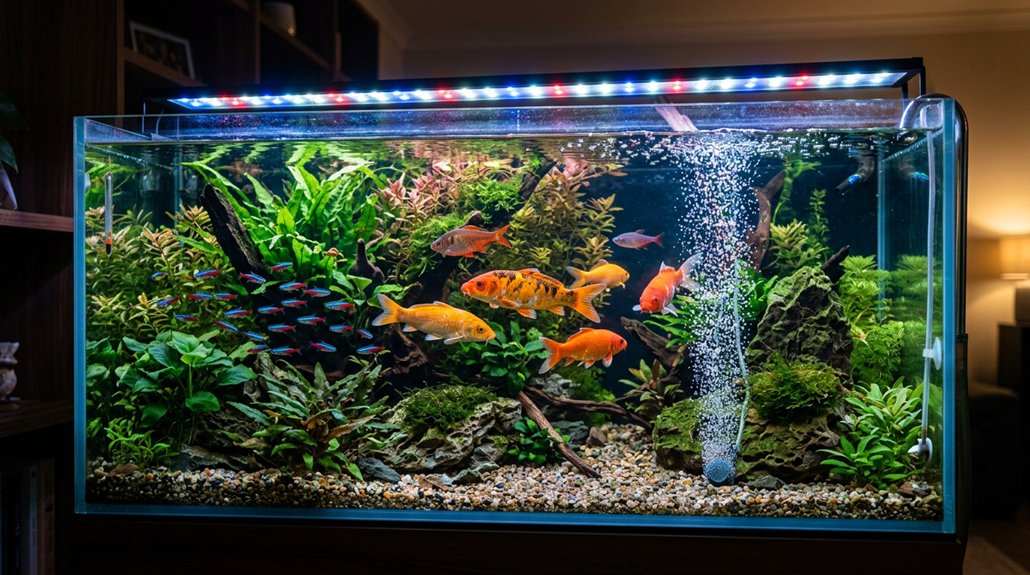
Choose aquarium lighting by matching PAR, spectrum, and coverage to your tank and plants. Low-light species need about 10–20 PAR at the substrate, while demanding stems and carpets need over 30 PAR, especially in deeper tanks. Aim for a neutral 5,500–6,500 K LED with blue and red output, and use dimming or timers for a stable 10–12 hour photoperiod. Pick a fixture that spans your tank well, and you’ll see the setup details that matter most.
Key Takeaways
- Match light intensity to plant needs: low-light plants need 10–20 PAR, medium plants 20–30 PAR, and carpets or stems above 30 PAR.
- Choose a neutral white 5,500–6,500 K spectrum with blue and red PAR bands for strong growth and natural color.
- Select fixtures that fit your tank size and depth; wider or deeper tanks often need multiple LEDs or stronger output.
- Use dimmable, programmable lighting with 10–12 hour photoperiods, dawn/dusk ramping, and gradual acclimation to reduce algae.
- Balance budget and performance: basic clip-ons suit nanos, mid-range LEDs fit most tanks, and high-end units are for demanding planted setups.
Choose Freshwater Aquarium Lighting
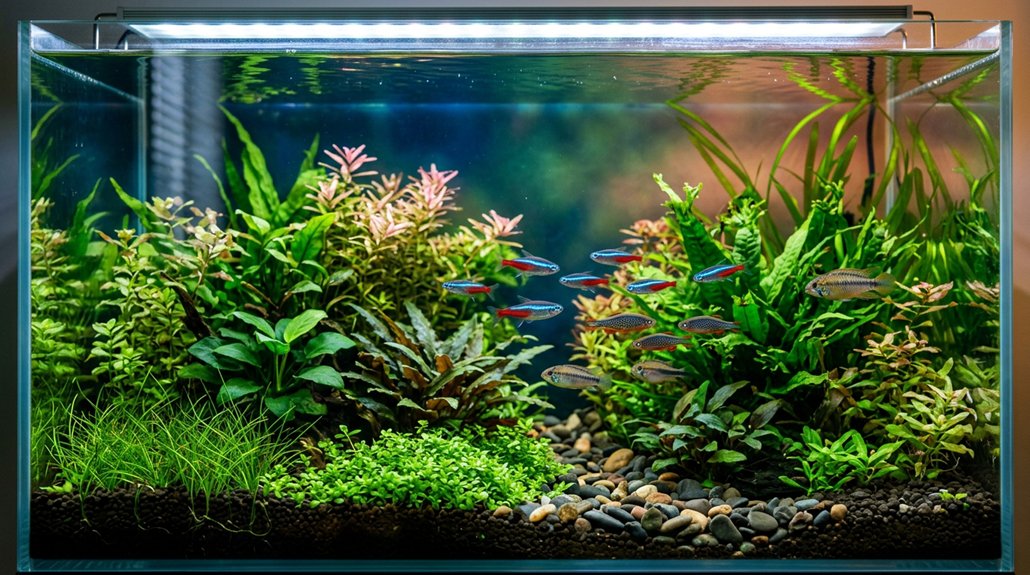
To choose freshwater aquarium lighting, match the fixture to your tank’s plants and dimensions: low-light species like Anubias, Java Fern, and Cryptocoryne usually thrive at about 10–20 PAR, while medium- to high-light plants such as Rotala, Ludwigia, and carpeting species often need more than 20–30 PAR and may require CO2 supplementation. Account for plant placement, because shaded zones need less output than foreground areas, and substrate choice affects how deep light must penetrate. For most freshwater setups, LED fixtures are the best option since they’re efficient, durable, dimmable, and allow tighter control. In wider tanks, use two fixtures or a wide-beam unit to prevent edge dimming. Set output with a timer, then monitor growth and algae; adjust only as needed.
Match Light Spectrum to Your Tank
Once you’ve matched the fixture to your tank’s size and plant demands, the next step is choosing a spectrum that supports growth without distorting color or encouraging algae. For most freshwater aquariums, target a neutral white spectrum around 5,500–6,500 K; it mimics daylight, preserves natural color, and fits many natural habitats. Make sure your light includes both blue and red PAR-active bands: blue penetrates water efficiently, while red supports photosynthesis. Avoid reef-style spectra above 10,000 K or heavy violet/UV emphasis unless you’re keeping corals, because they can wash out freshwater fish and stress some species. If you keep mixed-demand plants, use adjustable-spectrum LEDs to balance red and white output for growth and algae prevention.
Set the Right Light Intensity
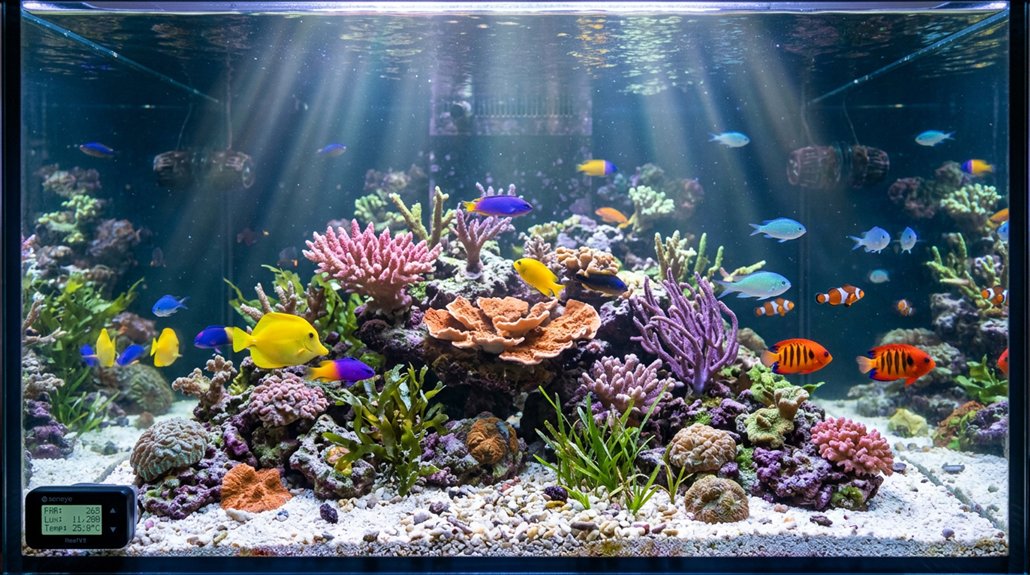
Set light intensity by the needs of the plants you keep: low-light species like Anubias, Java Fern, and Crypts typically do well at about 10–20 PAR, medium-light plants prefer roughly 20–30 PAR, and high-light carpets or stem plants often need more than 30 PAR. You should verify PAR at the substrate, since deeper tanks lose intensity and may need stronger fixtures or closer mounting. Use dimmable LEDs or multi-channel fixtures so you can fine-tune output without swapping bulbs. During plant acclimation, start lower and increase gradually to avoid stress and algae. Run a consistent photoperiod of about 10–12 hours with a timer, and use seasonal dimming if ambient light changes. Watch growth and algae closely; if plants stall or algae rises, reduce intensity or shorten the daily duration first.
Factor in Tank Size and Spread
Tank size and light spread should guide your fixture choice just as much as intensity, because wider tanks—especially those over 18–24 inches across—often need two lights or a fixture with a wide beam of about 120° to cover the full footprint. Measure length and width, then plan beam overlap to avoid dark zones.
| Tank size | Coverage need | Tip |
|---|---|---|
| Narrow | Single strip | Center it |
| Wide | Two fixtures | Overlap beams |
| Deep | Higher PAR | Reduce loss |
Long tanks usually need multiple strip lights spaced evenly. If your tank has lids, hoods, or tall aquascapes, place lights close to the water and add secondary units where shadows form. Deeper tanks demand stronger output so light reaches the substrate evenly and efficiently.
Choose the Right Light Fixture
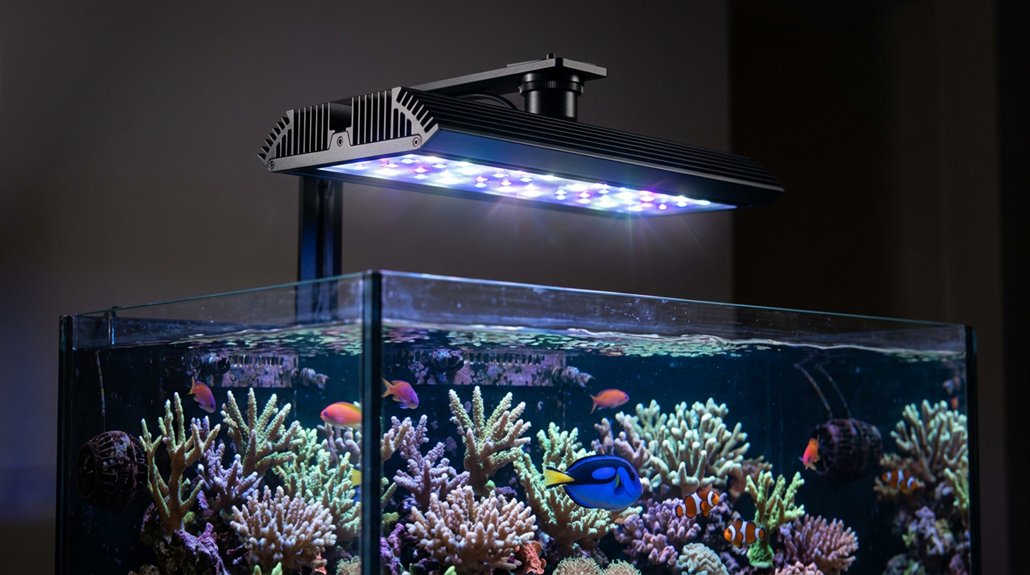
You’ll want to match the fixture type to your tank’s needs: basic full-spectrum LEDs or fluorescents suit low-to-moderate planted setups, tunable LED strips fit intermediate growth, and high-output customizable LEDs are better for high-light, CO2-assisted aquascapes. Choose a fixture with enough spread and intensity for your tank dimensions and depth, since wide or tall tanks often need higher PAR or multiple units to keep light even at the substrate. Add dimming, timing, and app-controlled sunrise/sunset features so you can maintain a consistent photoperiod and reduce stress on plants and algae.
Fixture Types And Fit
Choosing the right fixture starts with matching the light to your tank’s goals: LED fixtures are the best all-around choice for most planted aquariums because they’re energy-efficient, long-lasting, and often dimmable, while fluorescent T5/T8 housings can still be a budget-friendly option for low-to-moderate light setups. Next, check tank width and beam angle; most lights concentrate usable spread into about 1 foot, so tanks wider than 18–24 inches often need two fixtures or a wide-beam model for even coverage. For deeper tanks over 18 inches, you’ll need higher PAR output or multiple closer-mounted LEDs to reach the substrate. Also verify mounting clearance, hood compatibility, and fixture length, using clips, legs, or suspension so the light fits securely without glare or overheating.
Smart Controls And Timers
Reliable aquarium lighting depends as much on control as it does on output, so a fixture with programmable timers should be high on your list. You should set a stable photoperiod: about 12 hours for tropical tanks, or 8–10 hours for non-planted systems to limit algae. Choose LED fixtures with dimmability and spectrum control so you can use automated dimming for sunrise, sunset, and moonlight effects, while tuning Kelvin and blue-red balance. App- or controller-based systems give you remote programming for multi-stage schedules and custom profiles. For long aquariums, sync multiple timers or smart plugs so both fixtures switch together, preventing shadowing and uneven growth. Also program a short feeding or maintenance override, then clear manual overrides quickly so you don’t disrupt the light-dark cycle.
Set a Healthy Light Schedule
Setting a healthy light schedule means giving your aquarium a consistent photoperiod that matches its inhabitants and plant load, typically about 8–12 hours per day. You should run planted tropical tanks closer to 12 hours, while non-planted or low-maintenance tanks often do better at 8–10 hours. Use a timer to automate daily on/off events, and, when possible, enable dawn simulation and dusk ramping to reduce stress and support a stable sleep cycle. If you keep carpeting or other high-light plants, you may need 10–12 hours; low-light plants like Anubias and Java Fern usually need only 6–8. Keep the tank in complete darkness at night. After any change, monitor plant response and algae for 2–4 weeks, then adjust by 15–30 minutes.
Keep Algae Under Control
Keeping algae under control starts with balancing light, plant demand, and nutrients. You should run timers for consistent photoperiods: about 8–10 hours in non-planted tanks and 10–12 hours in planted setups. Match intensity to your species; low-light plants like Anubias, Java Fern, and Crypts need roughly 10–20 PAR, while higher-light plants may need more than 30 PAR plus CO2. If light is too strong for your system, algae can exploit the excess. Use dimmable LEDs or programmable spectrums to limit blue peaks and abrupt shifts. Keep nutrients in check with water changes, restrained feeding, RO/DI or chemical media, and substrate maintenance. Fast growers help outcompete algae, and algae grazers can suppress early growth before it spreads.
Choose Aquarium Lighting by Budget
You should match your aquarium light to both your budget and tank size: under $60, beginner LED fixtures like the AquaZen ZenGlow 7.5W or Lifegard 2.5W clip-on work well for nano tanks and low-light plants. If you’ve got $60–$300, step up to fixtures like Chihiros B-Series or AquaIllumination Blade/Prime for better coverage and control on 20–50 gallon planted tanks; above $300, programmable units such as EcoTech Radion or Kessil Tuna Sun give you higher PAR and spectrum control for large or deep tanks. You’ll also want to factor in lifetime cost, since LEDs use less power and last longer than fluorescents, which need bulb replacement every 10–12 months.
Budget-Friendly Light Types
Budget often determines whether aquarium lighting is simply functional or truly optimized, and the best choice depends on tank size and plant demand. For small setups, LED starters like AquaZen ZenGlow or Clip on fixtures such as Lifegard Full Spectrum deliver full-spectrum output with low wattage and low heat.
- A bright nano tank shimmering over moss
- A compact clip-on glowing above stems
- A slender strip LED washing a mid-size aquascape
- A long shop-light beam spanning an older tank
If you’re upgrading an old fluorescent hood, LED shop-light-style fixtures can save money while improving efficiency and spread. Mid-range tunable strips add spectrum control; advanced units like Kessil or Radion belong only when you need high PAR, CO2-driven growth, or app-based scheduling.
Best Value by Tank Size
Tank size is the quickest way to narrow down lighting value, because the right fixture for a 10-gallon nano isn’t the right buy for a 40-gallon planted tank. For nano compatibility, pick affordable full-spectrum LEDs in the $15–$60 range.
| Tank size | Best-value choice |
|---|---|
| Under 15 gal | AquaZen ZenGlow 7.5W, Lifegard 2.5W clip-on |
| 20–50 gal | Chihiros B-Series, AquaIllumination Blade |
| Large planted | EcoTech Radion, Hydra, Kessil Tuna Sun |
| Tight budget | Shop lights or multiple LEDs |
| Shallow tanks | Reflective hoods, wider spread |
You’ll often need two units on wider tanks to prevent dark zones. Spend more only when you need higher PAR, dimming, or spectrum control. LEDs usually beat fluorescents on lifespan and energy use, while fluorescents add bulb replacement every 10–12 months.
Frequently Asked Questions
How Do I Know if My Fish Prefer Dim Lighting?
You’ll know they prefer dim lighting if they show nocturnal behavior, hide during bright periods, and choose shelter preferences like caves or plants. Watch for stress, faded color, or reduced activity under stronger illumination.
Should I Use Dimmers or Timers With Aquarium Lights?
Yes—use both if your fixture supports dimmer compatibility. You’ll get precise photoperiod control with timers, and a gradual sunrise with dimmers, reducing stress and improving behavioral consistency in your aquarium.
Can Aquarium Lighting Affect Fish Colors and Breeding?
Yes, aquarium lighting can affect your fish’s colors and breeding. Even by candlelight, you’d see color enhancement with proper spectrum, while stable photoperiods provide breeding stimulation, influencing hormones, pigmentation, and reproductive behavior markedly.
Do I Need Different Lighting for Low-Tech and High-Tech Planted Tanks?
Yes—you’ll want different lighting. Low tech, CO2 free tanks usually do best under moderate light, while high light setups are typically fert dependent and need stronger illumination, plus stable CO2, to prevent algae and imbalance.
How Often Should Aquarium Light Bulbs or LEDS Be Replaced?
You should replace aquarium bulbs when output drops, usually yearly for fluorescents; LEDs often last 3–7 years. Watch for bulb lifespan and spectral shift, since changing color output can stress plants and alter algae growth.
Conclusion
Choosing the right aquarium lighting helps you support plant growth, color rendering, and stable fish behavior. If you think any bright fixture will work, imagine a tank lit like a spotlight: plants burn, algae spreads, and fish stay stressed. Instead, match spectrum, intensity, spread, and schedule to your tank size and livestock. Choose a fixture that fits your budget, then adjust it carefully. With the right light, your aquarium’ll stay healthy and balanced.