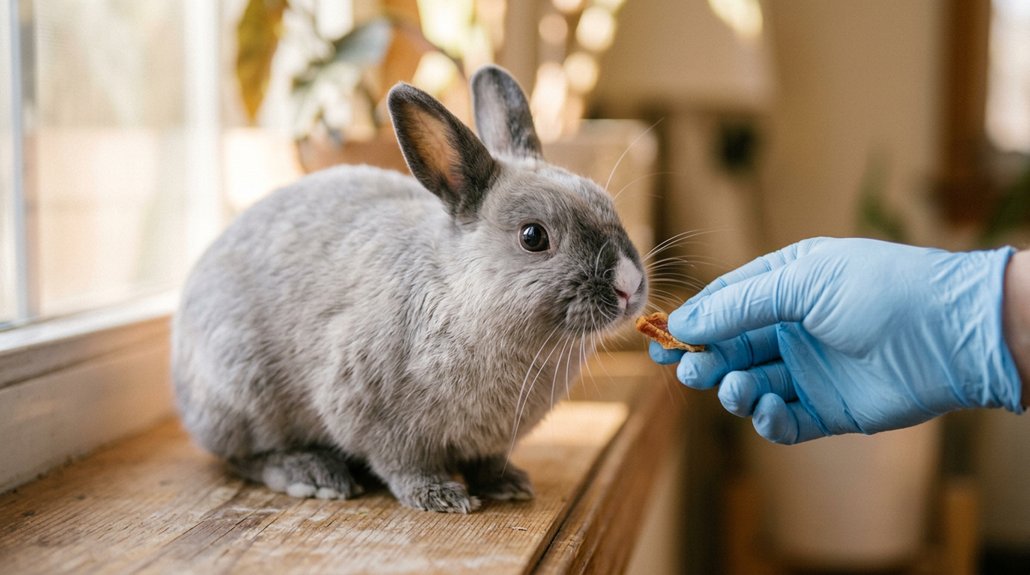
To handle a rabbit that bites or nips, start by understanding its discomfort triggers. Guarantee a spacious, enriched habitat to reduce stress and frustration. Use gentle approaches, allowing interactions on their terms, and employ positive reinforcement with treats to encourage calm behavior. Keep a consistent routine and provide toys to redirect focus from biting. Regular health checks are essential to rule out pain-related aggression. With these methods, you’re on track to fostering a more harmonious bond. More strategies await.
Key Takeaways
- Create a spacious and enriched habitat to reduce frustration and territorial aggression.
- Gradually socialize rabbits to new experiences, preventing stress and overwhelming reactions.
- Use positive reinforcement, like treats, to reward calm behavior and build trust.
- Neuter or spay rabbits to mitigate hormonal aggression and territorial behaviors.
- Monitor health regularly to identify and address underlying issues contributing to aggression.
Why Do Rabbits Bite? Understanding Triggers
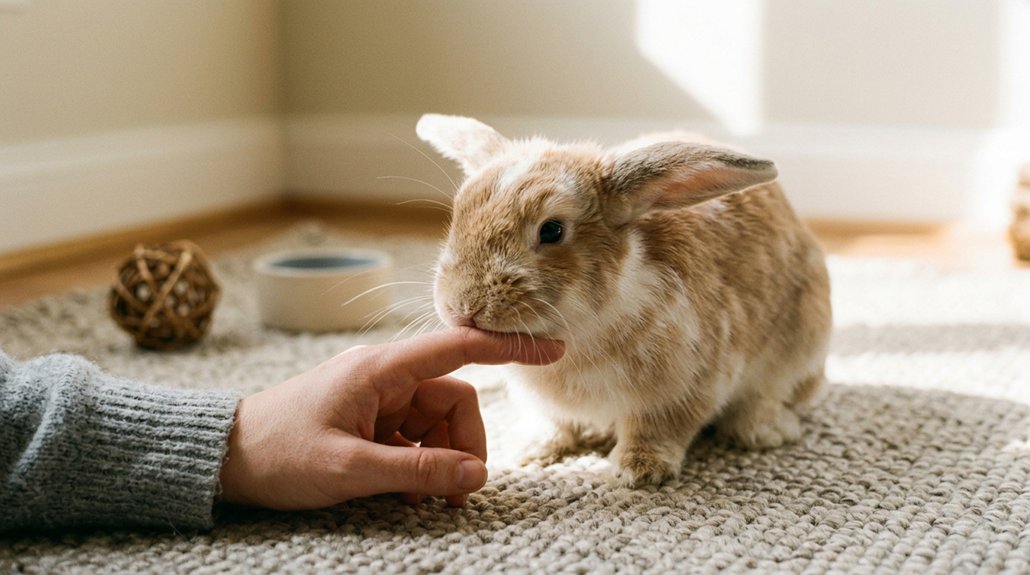
When trying to understand why rabbits bite, it’s important to recognize that these behaviors often serve as a form of communication rather than aggression. Rabbits may use biting as communication signals to express discomfort or a need for attention. Fear responses are another trigger; rabbits might bite when they feel threatened or stressed, reflecting their nesting instincts and territoriality. Unneutered males, influenced by hormonal changes, often exhibit more aggressive behaviors tied to social hierarchy, such as defending their space or resources. Additionally, frustration from inadequate environments can lead to increased biting incidents. To decipher biting behaviors, observe your rabbit’s body language and assess potential triggers like changes in their surroundings or routine, ensuring their emotional and physical needs are compassionately met.
Creating a Biting-Free Environment
To cultivate a biting-free environment for your rabbit, it’s crucial to focus on their habitat and social interactions. Start by creating a spacious and environment-enriched living area. Rabbits need a minimum of 10ft x 6ft x 3ft to express natural behaviors, which reduces frustration and potential biting.
Consider the following strategies:
- Use scatter feeding: This promotes foraging instincts and minimizes territorial aggression over food, which can cause nipping.
- Provide safe spaces: Establish calming areas with hiding spots to reduce anxiety and aggressive biting. A stress-free environment is key.
- Implement gradual socialization: Slowly introduce new experiences and companions to prevent your rabbit from feeling overwhelmed, which helps curb fear-driven biting.
Gradually Building Trust With Your Rabbit
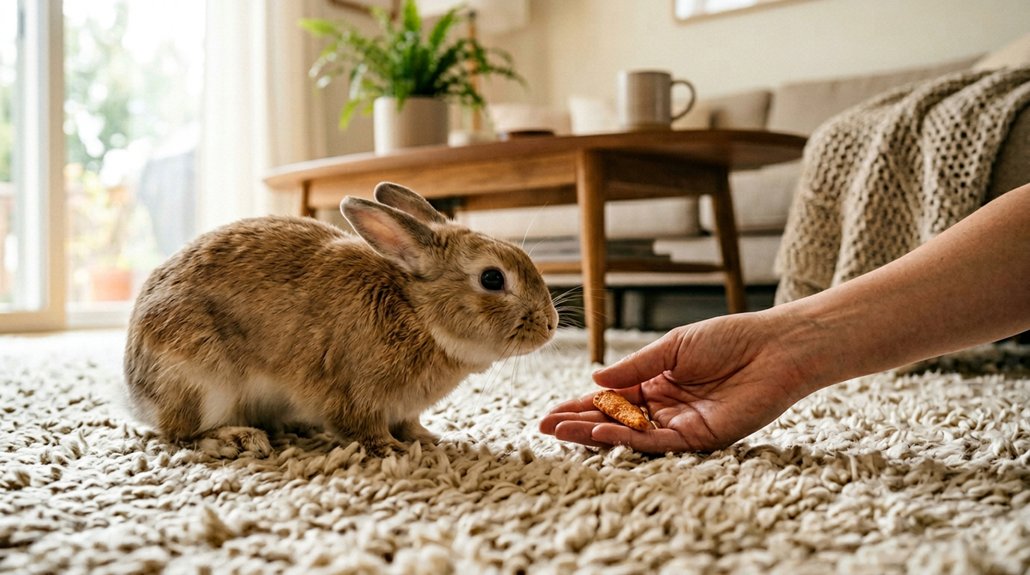
To build trust with your rabbit, start by allowing it to approach you on its terms, which minimizes anxiety and establishes a safe space. Use positive reinforcement by offering treats for calm behavior, making each interaction a positive experience for the rabbit. Incorporate gentle petting and consistent routines in your daily interactions, ensuring the rabbit associates your presence with safety and comfort.
Positive Reinforcement Strategies
Although handling biting behavior in rabbits can be challenging, employing positive reinforcement strategies often leads to rewarding outcomes. Begin by using treat training to encourage calm conduct and redefine interaction tips for building trust. Consistency is key, and creating positive associations with treats helps transform their perception from fear to trust.
- Routine-Based Trust Building: Spend consistent daily time interacting with your rabbit. Establishing predictable interactions enhances familiarity and reinforces trust.
- Calm and Controlled Environment: Maintain a calm demeanor, avoiding abrupt movements and speaking quietly. This creates a secure environment, reducing instances of nipping.
- Redirect Focus: When your rabbit shows signs of nipping, gently redirect their attention to toys or engaging activities, rewarding positive behaviors, and preventing negative patterns.
Gentle Interaction Techniques
Creating a compassionate connection with your rabbit starts with allowing them to approach you on their own terms, fostering an environment of trust and curiosity. Begin by sitting on the floor, displaying patience and inviting them with treats to form positive associations. Use consistent bonding activities, such as gentle daily petting sessions to build trust. Incorporate calming techniques like maintaining a serene environment free from abrupt sounds or movements. When your rabbit remains calm, reward them with treats or praise, strengthening their trust in you.
| Bonding Activities | Calming Techniques | Reinforcement Tips |
|---|---|---|
| Gentle petting | Quiet environment | Offer treats for calm behavior |
| Floor time | Slow movements | Praise to encourage gentleness |
| Treat sharing | Soft speaking | Redirect nipping with toys |
| Routine handling | Dim lighting | Consistent positive interactions |
| Interactive play | Safe, familiar toys | Celebrate small trust milestones |
Effective Reward Strategies for Rabbit Behavior
When you’re attempting to improve a rabbit’s behavior, employing effective reward strategies becomes essential. Begin with thoughtful treat selection. Opt for small, healthy treats that won’t overwhelm your rabbit’s diet but serve as positive reinforcement. By closely engaging in behavior observation, you’ll identify moments worthy of reward, such as calmness during interactions.
Here are three strategies to enhance your rabbit’s behavior effectively:
- Consistent Routine: Establish predictable times when you’ll offer rewards, fostering security.
- Pair Handling with Treats: Gradually combine handling with treats to reinforce positive behavior, like gentleness.
- Vocal Praise: Use nurturing language to supplement treats, fortifying your bond.
Redirect biting with a toy instead of negative reactions, reinforcing that calm behavior results in rewards.
Gently Handling Rabbits to Prevent Nipping
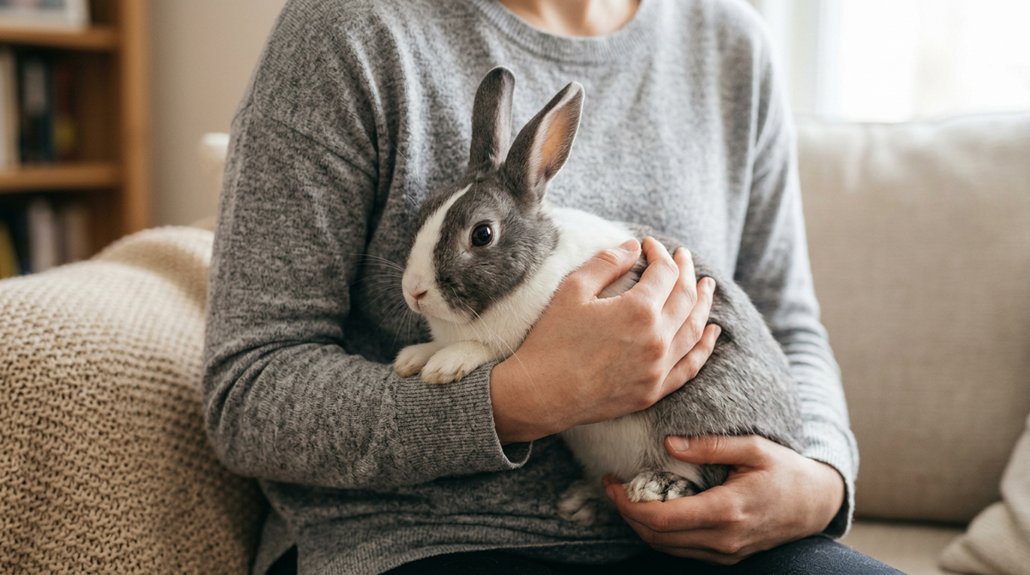
To guarantee your rabbit remains calm and avoids nipping, it is essential to focus on gentle handling techniques that build trust. Spend a few minutes daily engaging in gentle petting; this reinforces trust-building techniques, making your hands symbols of safety and affection. Allow your rabbit to approach you voluntarily, promoting confidence and reducing defensive behaviors. Approach with slow, calm movements to create a serene aura.
| Approach | Action |
|---|---|
| Trust Building | Pet daily, associate hands with treats |
| Gentle Petting | Calm, slow interactions |
| Positive Reinforcement | Reward calm behavior with treats |
Furthermore, utilize positive reinforcement by rewarding calmness. Anticipate and redirect potential nips by offering toys or engaging distractions, reinforcing good behavior without aggression. Combining these methods guarantees your rabbit associates handling with positivity and security.
Managing Territorial and Hormonal Aggression
To effectively manage a rabbit’s biting behavior, it’s essential to understand their territorial nature and how it influences aggression, especially when their space feels threatened. Neutering or spaying your rabbit can be a significant step in reducing hormonal aggression, particularly prevalent in unneutered males during mating season. Providing ample space, environmental enrichment, and gradual introductions to other rabbits can mitigate territorial hostility and promote a harmonious environment.
Understanding Rabbit Territoriality
While establishing a harmonious environment for your rabbit, understanding their territorial behavior is essential for preventing aggression. Rabbits can become defensive during feeding or cleaning, mistaking your actions as invasions of their personal space. To mitigate territorial disputes, consider their need for adequate space and natural behavior patterns.
- Space Requirements: Offering a minimum living area of 10ft x 6ft x 3ft high can help reduce stress and conflicts among rabbits.
- Feeding Strategies: Switching to scatter-feeding simulates natural foraging and reduces territorial aggression over food resources.
- Respecting Boundaries: During nesting or sensitive periods, avoid intrusions into their space, observing from a distance to prevent triggering aggressive responses.
Neutering for Aggression Control
Maneuvering rabbit territoriality often brings us to the subject of neutering as a method to manage aggression, a common concern for many rabbit owners. Neutering benefits extend to reducing hormone-driven aggressive behaviors such as nipping and biting. Unneutered males may showcase aggression, especially during mating seasons. Mitigating these actions through neutering can lead to positive behavioral changes.
| Benefit | Explanation |
|---|---|
| Aggression Reduction | Decreases fighting and territorial aggression |
| Social Improvement | Enhances interactions with humans and pets |
| Better Litter Training | Lessens inappropriate elimination |
| Post-neuter Stability | Changes take about a month to stabilize |
Neutered rabbits demonstrate a reduction in fighting and marking behaviors, fostering improved social interactions. While behavioral changes may take up to a month to stabilize, many owners witness a marked decrease in aggressive tendencies.
Managing Hormonal Behaviors
Although dealing with hormonal aggression in rabbits can be challenging, understanding and addressing the root causes can make a world of difference. Recognizing that hormonal cycles in rabbits often peak during springtime is vital. Here are three strategies to manage territorial and hormonal aggression effectively:
- Neutering or Spaying: Unneutered males might exhibit heightened territorial instincts and mating drives, leading to biting and nipping. Neutering is a solid approach to reducing these behaviors.
- Space Allocation: Make certain your rabbit has a spacious environment (at least 10ft x 6ft x 3ft high) to minimize frustrations from confined spaces.
- Introduce Companion Rabbits: Providing social companionship fulfills natural behaviors and reduces possessiveness over territory, thereby mitigating aggression.
Regular veterinary consultations are essential for monitoring hormonal-related aggression and identifying any underlying health issues.
Checking for Health Issues in Aggressive Rabbits
When dealing with an aggressive rabbit, it’s important to reflect that its behavior may stem from underlying health issues. Routine health checks play a significant role in identifying dental diseases which breed pain and biting tendencies. Behavioral observation is equally important; watch for signs like lethargy or shifts in appetite, hinting at gastrointestinal stasis that might explain sudden aggression. Unneutered or unspayed rabbits often experience hormonal imbalances, causing aggressive nipping, making spaying/neutering worth considering. Also, pay attention to changes in litter habits or signs of distress as they offer crucial clues to unseen health problems. If any of these symptoms arise, consulting a veterinarian is imperative to rule out medical concerns and guarantee your rabbit’s overall well-being and comfort.
Maintaining Positive Rabbit Behavior Long-Term
Consistently fostering positive behavior in your rabbit requires a commitment to understanding and responding to their needs. To maintain gentle behavior, prioritize social bonding and engaging enrichment activities. Here’s how:
- Daily Routine: Establish a consistent routine featuring handling and socializing sessions. This daily rhythm offers security and helps your rabbit comprehend their environment’s expectations.
- Positive Reinforcement: Use treats and affection to reward calm interactions. This builds trust and strengthens your bond over time.
- Environment: Regularly check your rabbit’s habitat to verify it’s spacious, clean, and stimulating. An uninspiring space can lead to frustration and aggression.
Monitor for behavioral changes and consult a vet if aggression persists, as it might signal an underlying health issue that needs addressing.
Frequently Asked Questions
What Is the 3 3 3 Rule for Rabbits?
The “3 3 3 rule” helps you understand rabbit behavior by outlining their adjustment phases: 3 days of stress, 3 weeks adapting and showing personality, and 3 months integrating. Recognizing biting triggers during these stages fosters compassion and patience.
How to Get a Rabbit to Stop Nipping?
To stop your rabbit from nipping, focus on rabbit behavior modification and bite prevention. Offer chew toys, reinforce gentle interactions with treats, and guarantee calm, patient handling. Always consult a vet if biting persists, indicating potential health issues.
How Do You Discipline a Rabbit for Biting?
You don’t discipline a rabbit by punishment; instead, use positive reinforcement to encourage gentler behavior. Recognize behavioral triggers and provide distractions or toys to redirect biting, ensuring consistent, patient responses that foster trust and reduce aggression.
What Does It Mean if Your Rabbit Nips You?
Think of a rabbit’s nip as a gentle whisper of their body language, signaling discomfort or seeking attention. Address biting triggers compassionately, ensuring a safe environment that reduces stress and promotes understanding between you and your rabbit.
Conclusion
Even well-cared-for rabbits can display biting behavior; in fact, about 30% of rabbit owners report experiencing this issue at some point. Understanding why this happens and taking steps to prevent it can foster a trusting relationship with your rabbit. By addressing environmental, behavioral, and health factors, and employing effective reward strategies, you can guide your rabbit towards more positive interactions. Remember, patience and consistency are key in maintaining a harmonious bond with your furry friend.