Owning a rabbit involves initial costs of $120 to $250 for setting up its habitat, and essential items like cages and bedding. Expect monthly expenses between $60 and $100 for diet and litter. Veterinary care, including check-ups and vaccinations, adds to your budget, with routine costs around $100 and potential emergencies ranging from $200 to $1,000. Rabbits live 8 to 12 years, meaning long-term planning is vital. Discover strategies to manage these expenses effectively.
Key Takeaways
- Initial setup costs range from $120 to $250, including indoor cage and essential habitat supplies.
- Monthly expenses for diet and litter are between $60 and $100.
- Routine veterinary care and vaccinations cost approximately $100 every six months.
- Adoption fees range from $85 to $450, often including spaying/neutering and vaccinations.
- Emergency veterinary care costs can range from $200 to over $4,000.
The Real Cost of Owning a Rabbit

Owning a rabbit involves several financial considerations that often surprise first-time owners. Beyond the initial acquisition, understanding rabbit behavior and dietary needs is essential for budgeting. Setting up a suitable habitat ranges from $120 to $250 and includes a cage, bedding, and essentials, ensuring your rabbit’s well-being. Monthly, expect to spend $60 to $100 on diet essentials like hay, fresh vegetables, and litter—key elements supporting their health and natural behavior.
Health maintenance is another vital component. Routine veterinary care costs around $100 every six months, with possible spaying or neutering expenses of $250 to $600. Also, unexpected health issues might require emergency veterinary intervention, averaging $200 to $1,000. Proper financial planning safeguards both your peace of mind and your rabbit’s health.
Adoption vs. Buying a Rabbit: Initial Investment Explained
When considering whether to adopt or purchase a rabbit, it’s crucial to weigh the initial financial investment and associated health benefits. Adoption fees, typically ranging from $85 to $450, often include spaying/neutering and vaccinations, offering important health coverage that can offset future veterinary expenses. On the other hand, purchasing from a breeder may cost between $885 and $1,490 and could entail additional out-of-pocket expenses for necessary medical procedures, impacting your rabbit’s overall healthcare budget.
Understanding Adoption Costs
Adopting a rabbit presents a more affordable initial investment compared to purchasing from a breeder, potentially saving several hundred dollars in upfront costs. Adoption fees typically range from $85 to $450, including valuable services such as spaying or neutering. This contrasts with buying from a breeder, where such procedures could add an additional $250 to $600 to your expenses. Exploring adoption benefits provides you access to shelter resources, including expert advice on rabbit care and ongoing health needs.
Consider the emotional impact of adoption:
- Save a life: Offer a loving home to a rabbit in need.
- Reduce pet overpopulation: Help mitigate the demand on shelters.
- Financial relief: Lower upfront costs mean more budget for quality care.
Adopting is not only cost-effective but also responsible and compassionate.
Breeder Purchase Considerations
For those considering purchasing a rabbit from a breeder, understanding the initial financial commitment is essential. A breeder’s reputation plays a critical role in ensuring your rabbit’s health and temperament. Purchasing from a reputable breeder can cost between $885 and $1,490. This price reflects assurance of rabbit lineage, health records, and temperament insights. However, adopting a rabbit is often more budget-friendly, with fees from $85 to $450. Shelters typically include spaying/neutering and vaccinations at a lower cost. Regardless of choice, remember that initial setup costs, including cages and supplies, range from $120 to $300. The American Rabbit Breeders Association (ARBA) provides resources to find trustworthy breeders, assisting you in making an informed and health-focused decision.
Setting Up Your Rabbit’s Home: Essential Starter Costs
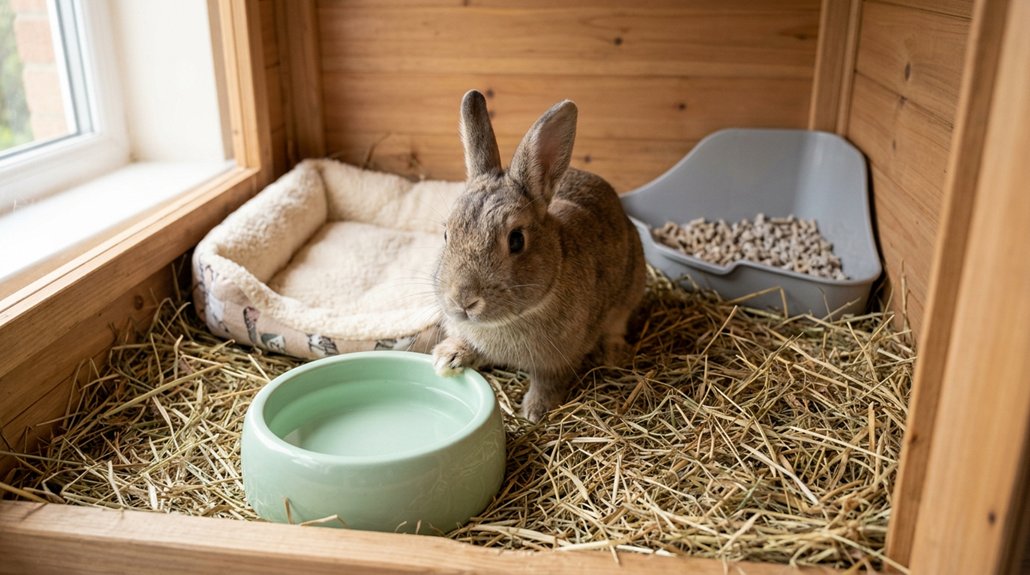
Although adding a rabbit to your family is an exciting decision, setting up their home involves certain fundamental starter costs. A proper indoor cage, ranging from $50 to $300, is crucial to provide your rabbit ample room to stretch and move freely. Carefully choose cage types tailored to your rabbit’s size to guarantee a comfortable environment. Bedding options, necessary for health and comfort, can vary from $10 to $30 and should be chosen to maintain hygiene. The complete setup cost, including a litter box, food and water bowls, and important toys for mental stimulation, may range from $120 to $250.
- Investing in their happiness and well-being.
- Creating a nurturing and loving space.
- Guaranteeing their comfort and health.
Monthly Rabbit Care Expenses: What to Expect
Once your rabbit’s home is properly set up, you’ll need to anticipate ongoing monthly care expenses to secure their well-being. Key components include hay costs, vegetable budgeting, and pellet moderation to maintain a balanced diet. Expect hay expenses of about $20 to $50 monthly for unlimited supply. Fresh veggies range from $20 to $50, depending on variety. Pellets should complement hay and greens, costing between $13 and $26.
Choose bedding options based on comfort and hygiene, varying from $10 to $50 each month. Consumable expenses like litter, toys, and treat selection are also essential, with costs around $18 to $30 monthly. This structured care guarantees a healthy environment for your rabbit.
| Category | Monthly Cost | Range |
|---|---|---|
| Hay | $20 – $50 | Essential |
| Vegetables | $20 – $50 | Nutritious |
| Pellets | $13 – $26 | Moderate |
| Bedding | $10 – $50 | Hygienic |
Routine Veterinary and Health Care Expenses
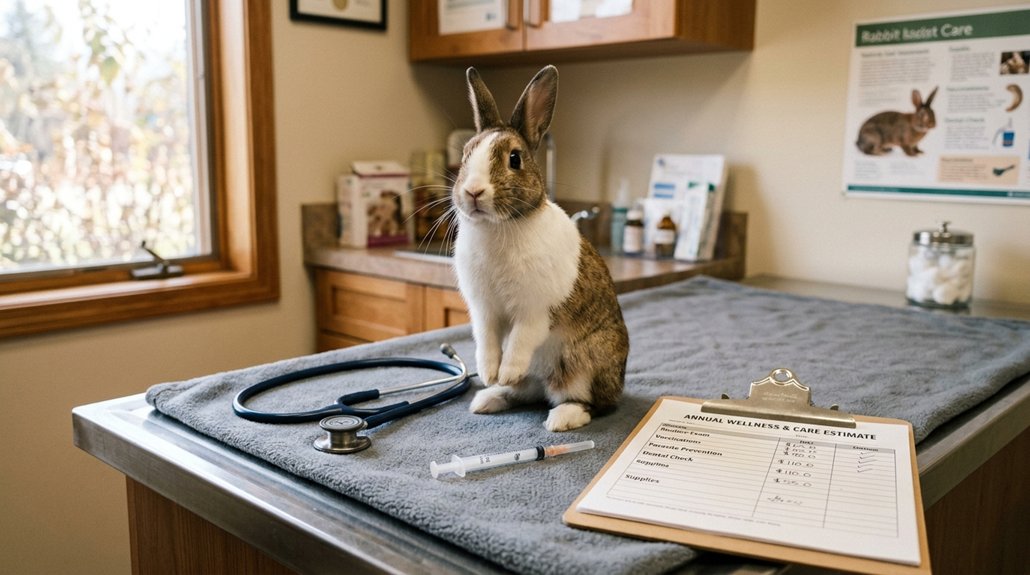
When caring for your rabbit, keeping their health at the forefront is essential, and routine veterinary visits are a vital part of this responsibility. Preventive wellness plays a significant role in maintaining your pet’s health. Typically, routine check-ups cost between $60 and $100 per visit. Scheduling these exams twice yearly enhances early detection of potential issues, potentially averting costly treatments later. Routine vaccinations, such as the RHDV2 vaccine, are critical in safeguarding against life-threatening diseases, costing about $95 per dose.
Routine vet visits and vaccinations are crucial for your rabbit’s health, preventing costly future issues.
Remember, your rabbit relies on you for its health. Consider these expenses:
- Regular exams guarantee a long, vibrant life.
- Timely vaccinations protect against severe illnesses.
- Spaying or neutering ranges from $150 to $600, contributing to a healthier, calmer rabbit.
Handling Unexpected Medical and Emergency Costs
When unexpected medical emergencies arise, veterinary consultations can quickly strain your budget, with costs ranging from $150 to $300 for the visit alone, and additional treatments potentially escalating into the thousands. It’s beneficial to explore pet insurance options, which can greatly alleviate financial burdens by covering a portion of these unforeseen veterinary expenses. Being prepared for emergencies not only guarantees your rabbit receives the necessary care promptly but also prevents a sudden spike in monthly costs, helping you maintain a balanced financial plan.
Emergency Vet Visits
Although owning a rabbit as a pet can bring joy and companionship, it’s important to anticipate potential medical emergencies that could arise. Recognizing early emergency symptoms, such as lethargy or rapid breathing, can make a significant difference. It’s imperative to seek urgent care from professionals; consultation fees can range from $150 to $300. Without timely intervention, costs may escalate if surgeries or overnight care are necessary, potentially reaching $4,000.
Unexpected visits might feel overwhelming, so it’s important to be emotionally and financially prepared:
- The panic of seeing your rabbit in distress without understanding what’s wrong.
- Facing unexpected expenses that escalate beyond the initial consultation.
- The helplessness of leaving your rabbit for an overnight stay, hoping for a swift recovery.
Prioritizing routine care can minimize these scenarios.
Insurance Coverage Options
Even if you’re prepared for routine expenses, unexpected medical costs for your rabbit can quickly escalate, making pet insurance a worthwhile consideration. Veterinary bills for emergencies can start at $150 and surge to $4,000 for surgeries. To offset these costs, examine various insurance plans. Options range from accident-only to extensive coverage, with wellness plans for routine care. Policy comparison is essential—scrutinize coverage limitations, exclusions, and deductibles that impact your finances. Also, be aware of waiting periods insurers may impose before protection starts. Securing a policy in advance guarantees timely financial support. Monthly premiums can range from $10 to $40, influenced by the rabbit’s health and chosen coverage. Detailed research helps you determine the best plan for your needs.
Beyond Basics: The Costs of Toys and Grooming
Owning a rabbit involves more than just food and basic shelter; the costs of toys and grooming must also be considered for their well-being. Grooming importance can’t be overstated, especially during molting, to maintain their health. Essential tools, like nail trimmers and brushes, may cost around $20, but matting prevention can save on vet bills. Groomer’s nail trims range from $10 to $25, emphasizing budgeting for regular upkeep.
Similarly, toy variety is vital for mental stimulation and overall happiness. Engaging toys range from $10 to $30, presenting an ongoing investment in your rabbit’s quality of life.
Keep your rabbit joyful and healthy:
- Regular grooming prevents costly health issues
- Engaging toys maintain mental well-being
- A small investment improves a rabbit’s happiness
Long-Term Expenses and Financial Planning for Rabbits
When considering the lifelong commitment of owning a rabbit, it is essential to plan for long-term expenses as these can considerably impact your finances. Rabbits, living 8 to 12 years, demand consistent financial stability. Key expenses include $500 to $800 annually for food, litter, and routine veterinary care. Initial setup costs range from $150 to $300. Additionally, spaying or neutering, important for health, costs between $150 and $600. Unplanned health issues can lead to emergency bills up to $1,000. Planning for these guarantees long-term budgeting success.
| Expense Type | Cost Range |
|---|---|
| Annual Care | $500 – $800 |
| Initial Setup | $150 – $300 |
| Spaying/Neutering | $150 – $600 |
| Emergency Pet Care | $200 – $1,000 |
Budget-Saving Tips for Rabbit Owners
As you consider the financial commitment of rabbit ownership, it’s important to explore effective strategies for minimizing expenses while guaranteeing your pet’s health and wellbeing. Opt for cost-efficient supplies by purchasing essentials like hay and litter in bulk. This practice helps keep recurring costs in check. Creating a DIY habitat for your rabbit, such as building a custom cage, offers a budget-friendly alternative to pre-made enclosures. Remember to maximize community resources; connect with local rabbit owners to trade tips and find bargains.
- Adopt from shelters or rescues. Save considerably compared to buying from breeders.
- Share insights with other pet owners. Discover deals on supplies and connect with a supportive community.
- Seek affordable veterinary options. Guarantee routine care without breaking the bank.
Frequently Asked Questions
How Expensive Are Bunnies Monthly?
Bunnies monthly can be expensive, with food expenses including hay and vegetables, veterinary care for check-ups or health issues, bedding costs for comfort, and toy requirements to guarantee mental health and prevent destructive behaviors costing $50 to $300.
What Is the 3-3-3 Rule for Bunnies?
The 3-3-3 rule for bunnies helps you understand rabbit care by guiding you through their adjustment stages. In three days, expect hiding; in three weeks, settling; in three months, full acclimation, reflecting true rabbit behavior.
How Do Rabbits Say “I’m Sorry”?
Rabbits say “I’m sorry” through nuzzling, showing their intent; binkying, expressing delight; and head-butting, signaling affection. Their behavior accompanies bunny communication, conveying remorse. Observing these signs guarantees understanding of their apologies and maintaining their health.
Can I Leave My Rabbit Alone for 2 Days?
You shouldn’t leave your rabbit alone for two days without proper rabbit care. Arrange daily check-ins with a pet sitter for health-focused travel tips. Guarantee unlimited hay, fresh water, and a bunny-proofed area to prevent issues.
Conclusion
Owning a rabbit is more than just cuddles—it’s a commitment. Picture a cozy home filled with hay, toys scattered like confetti, and the gentle hum of a contented bunny. As enchanting as this image is, it comes with a series of costs, from initial investments to unexpected veterinary bills. By budgeting wisely and planning for long-term care, you’ll guarantee your fluffy companion leads a healthy, happy life, nestled comfortably within your loving embrace.