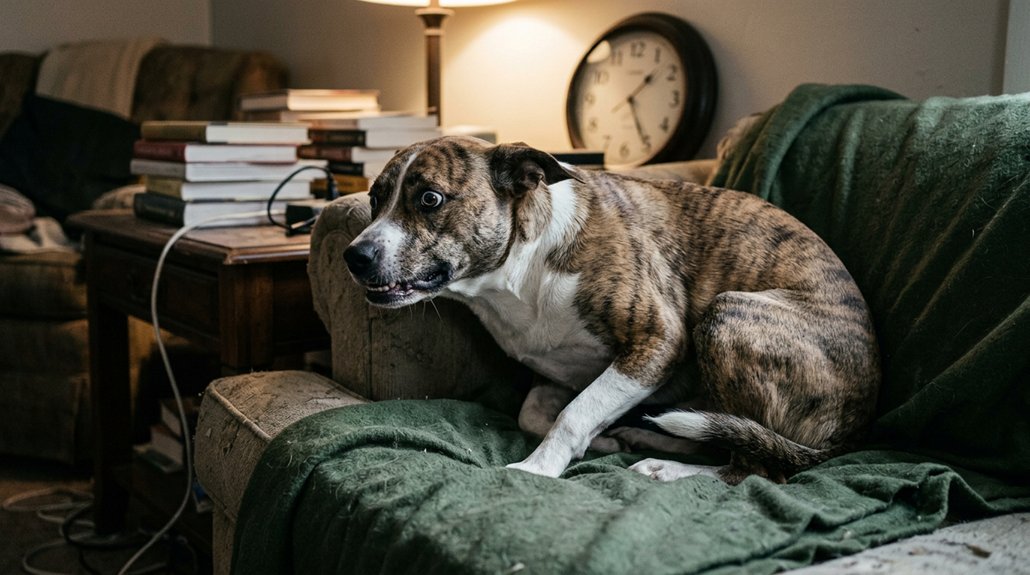
You can spot stress or anxiety in your dog by observing increased vocalization, like whining or barking, without apparent reasons. Monitor for excessive panting, drooling, or licking when it’s neither hot nor after exercise. Body language cues such as cowering, tail tucking, or freezing are key indicators, along with behaviors like pacing or seeking refuge. Acknowledge these signs as stress impacts both the mental and physical health of dogs. Understanding these cues can enhance your pet care knowledge.
Key Takeaways
- Increased vocalization, such as whining or barking, can indicate discomfort or stress in dogs.
- Excessive panting or drooling without exercise or heat may signal anxiety.
- Dogs displaying cowering, tail tucking, or freezing show signs of stress.
- Seeking refuge behind people or objects can indicate a dog’s perceived lack of safety.
- Behavioral changes like pacing, restlessness, or agitation are signs of canine anxiety.
Recognizing Stress in Your Dog
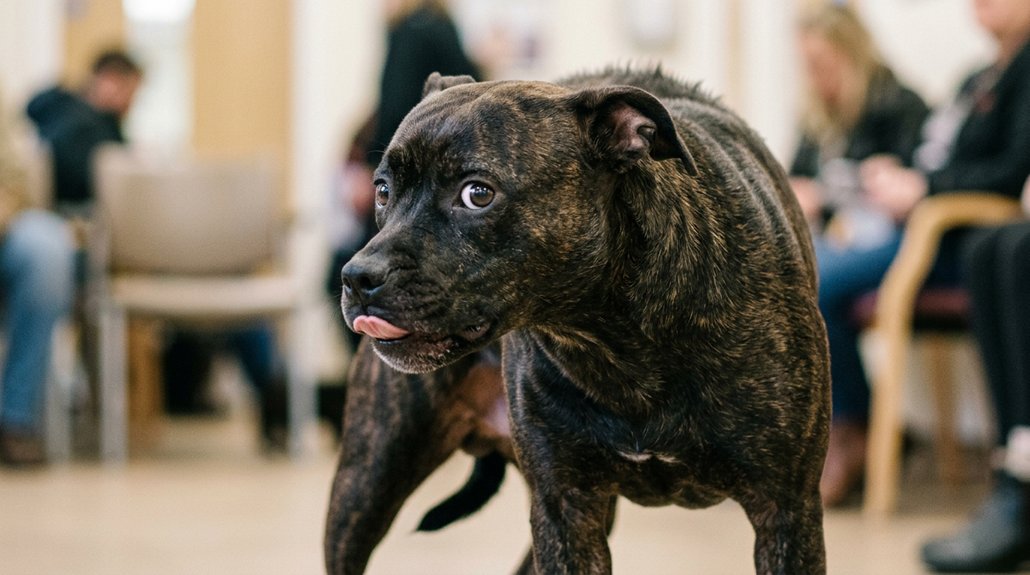
How can you tell if your dog is stressed? Recognizing stress in dogs involves observing distinct changes in dog behavior. The stress response might manifest through body language: cowering, tail tucking, or shifting weight. These signs of discomfort are essential indicators. Behavioral cues, such as increased vocalization like whining or barking, often accompany these signals. Physical symptoms, including panting, drooling, or excessive licking without exercising or heat exposure, also suggest anxiety. Agitation or fear may lead to pacing or restlessness, highlighting an inability to settle due to stress. Additionally, stressed dogs might seek refuge behind trusted individuals or objects, indicating a perceived lack of safety. Understanding these signs allows you to identify and address your pet’s stress effectively.
Common Triggers of Dog Anxiety
While it’s not uncommon for dogs to experience anxiety, understanding the common triggers can greatly aid in its management. Environmental changes, like moving homes, and routine disruption, such as a new family member, often elevate stress levels. Noise sensitivity to loud sounds like thunderstorms and fireworks can trigger intense fear-based responses. Unfamiliar situations and social interactions with unfamiliar people or animals can be anxiety-inducing, particularly in poorly socialized dogs. Separation distress affects 14-20% of dogs, causing significant anxiety when they’re left alone. Medical issues, including pain or hormonal imbalances, may also elevate anxiety, stressing the importance of regular veterinary checks. Additionally, past trauma can imprint fear, surfacing as anxiety in various scenarios, making consistent care essential.
Behavioral and Physical Signs of Dog Stress
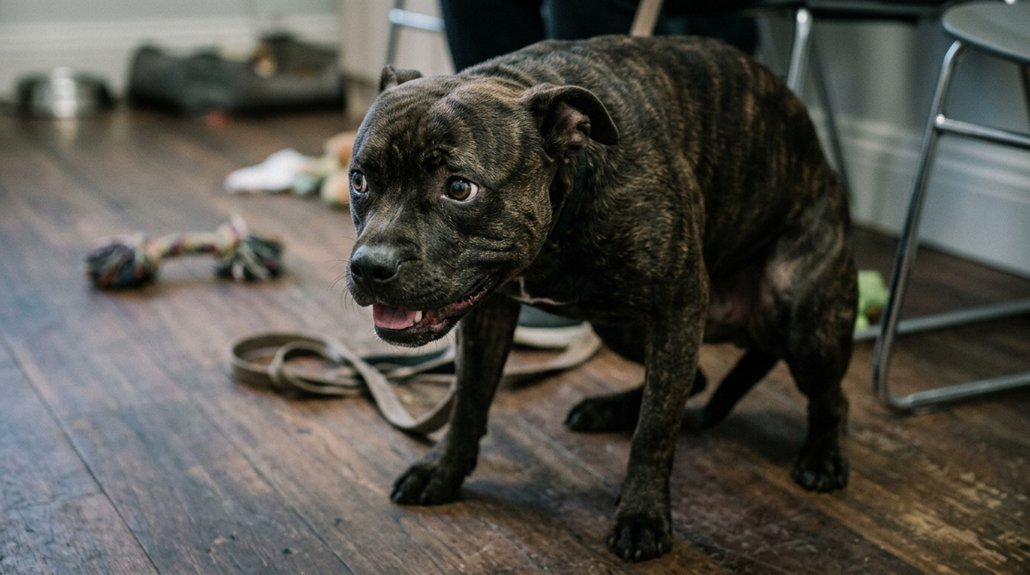
To effectively manage your dog’s wellbeing, it’s vital to identify stress signals and recognize the accompanying physical symptoms that may indicate anxiety. Stress in dogs often manifests through behaviors like excessive panting, pacing, or increased vocalization, while physical signs include gastrointestinal issues and noticeable changes in grooming habits. Understanding these symptoms is essential to addressing the emotional impact stress has on your dog and ensuring their environment fosters comfort and security.
Identifying Stress Signals
Recognizing the stress signals in your canine companion is essential for their well-being. Behavioral indicators, like pacing, excessive barking, or avoidance, suggest stress that requires prompt stress management and calming techniques. Left unchecked, anxiety might spur destructive actions such as chewing or digging, especially with separation anxiety.
Here’s a breakdown of observable behaviors and their implications:
| Behavior | Implication |
|---|---|
| Pacing | Restlessness, anxiety |
| Excessive vocalization | Discomfort, need for attention |
| Avoidance behaviors | Fear, stress-related diversion |
| Destructive activities | Anxiety-driven, coping mechanism |
| Changes in grooming | Stress sign, requires intervention |
Understanding these cues helps in mitigating stress through effective management strategies. Calm your dog with techniques like structured playtime or soothing music to alleviate anxious behaviors. Awareness and proactive management can vastly improve your pet’s quality of life.
Recognizing Physical Symptoms
A dog’s physical symptoms of stress can provide critical insights into its emotional state. Recognizing these signs enables you to address and manage environmental factors contributing to your dog’s anxiety. Observing excessive yawning, drooling, or licking may indicate stress. Body posture changes, such as cowering or tail tucking, often signal discomfort. Dilated pupils, rapid blinking, and pinned-back ears are critical markers of a stressed dog. Unexplained panting, even when the dog hasn’t been exercising, can reveal heightened anxiety. Additionally, if your dog hides behind people or objects, it’s likely seeking refuge from stressful situations. Effective stress management starts with identifying these signs, allowing you to create calming environments that promote your dog’s well-being and emotional stability.
Emotional Impact on Dogs
Understanding the emotional landscape of your dog is just as important as spotting physical signs of stress. Canine emotions can manifest through behaviors like excessive vocalization, pacing, or destructive actions. These signals indicate their discomfort and the necessity for stress management. Physically, your dog may show signs like panting, trembling, and dilated pupils. Overgrooming, along with increased shedding, is common. Urgent urination, defecation, or gastrointestinal upset may arise under anxiety. Recognizing body language such as cowering, tail tucking, or seeking refuge is essential for evaluating your dog’s emotional state. If left unaddressed, stress can lead not only to behavioral challenges but also long-term health issues, underscoring the need for effective management strategies to guarantee your dog’s well-being.
Body Language Signals of Dog Anxiety
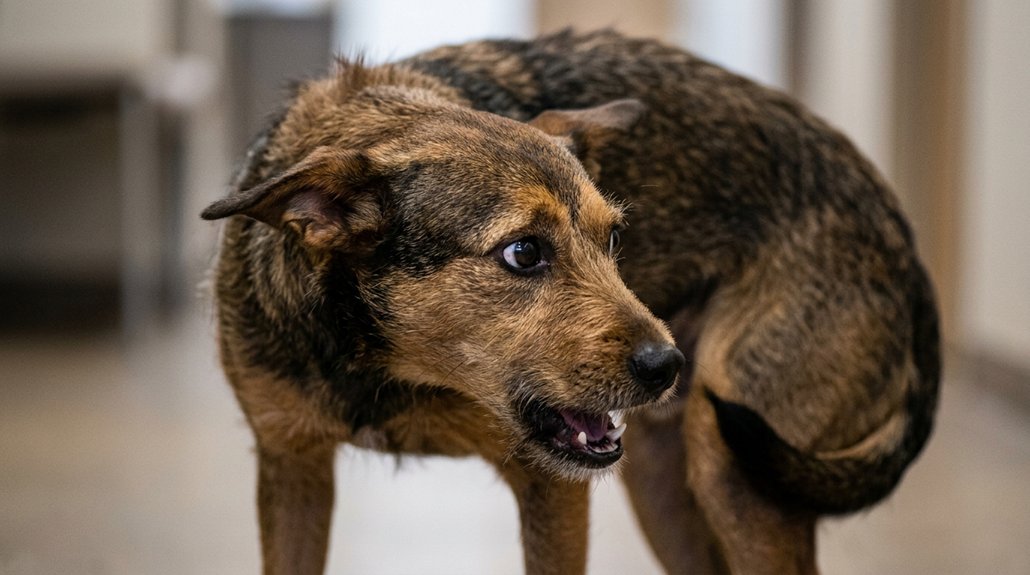
When observing canine behavior, it’s crucial to pay attention to specific body language signals that may indicate anxiety, as these can provide valuable insights into your dog’s emotional state. Recognizing fear signals such as freezing or slowing down can highlight when your dog feels threatened. Appeasement gestures like lip-licking or leaning away during direct eye contact signal discomfort and attempts to defuse potential tension. Hesitation indicators, including a lifted paw, reveal internal conflict or unease about a situation.
- Crouched posture or tail-tucking: signifies a threat response, as your dog tries to appear smaller.
- Lowered body approach: suggests a mix of curiosity and fear when nearing intriguing yet intimidating stimuli.
- Freezing in place: a powerful indicator of uncertainty and anxiety.
Why Stress Isn’t Just Hard on Your Dog Emotionally
You might not realize it, but chronic stress in your dog can lead to serious physical health issues such as gastrointestinal problems, weakened immunity, and increased disease risk due to the prolonged release of cortisol. Behavioral changes, including aggression and destructiveness, can further deteriorate their emotional and social well-being, isolating them from engaging in normal interactions. This stress-induced cycle not only disrupts your dog’s appetite and nutritional balance but also threatens their quality of life, emphasizing the necessity of early intervention and stress management.
Physical Health Impact
While stress might initially appear as an emotional challenge for your dog, its physiological repercussions can greatly affect their health. Elevated stress levels can lead to increased heart rate and elevated cortisol, compromising overall health. These alterations often result in diet changes, with fluctuating appetite impacting weight and nutrition. Prolonged stress can harm your dog’s immune health, leaving them more vulnerable to infections. Furthermore, gastrointestinal disturbances like diarrhea or vomiting are common, further affecting your pet’s nutritional intake.
To understand the tangible impacts:
- Increased cortisol elevates heart rate, affecting cardiac function.
- Gastrointestinal issues lead to improper nutrient absorption.
- Weakening immune system increases risk of illnesses.
It’s crucial to recognize these signs early to guarantee your canine companion’s well-being.
Behavioral Changes Observed
After considering the physical health impacts, it’s important to understand that stress in dogs doesn’t only manifest physically but can lead to significant behavioral changes. Through dog communication, signs like increased vocalization indicate stress; whining or barking often signals overwhelm or the need for attention. You might observe avoidance behaviors, where your dog hides or withdraws, suggesting elevated anxiety levels. Destructive actions, such as chewing furniture or pacing, can stem from environmental stressors, revealing your dog’s struggle with anxiety management. Other behavioral changes include alterations in eating habits, resulting in weight fluctuations if unaddressed. Physical symptoms like excessive panting, drooling, or licking also reflect coping mechanisms for anxiety. Identifying these behaviors is essential for adopting effective anxiety management strategies.
Emotional Well-Being Decline
Although often overlooked, a dog’s emotional well-being is a critical aspect of its overall health, and stress can be a major disruptor. Prolonged stress undermines their emotional resilience, potentially leading to chronic anxiety and behavioral issues. When a dog experiences persistent stress, it may struggle with normal social interactions, exhibiting signs such as hiding or excessive vocalization. The physical manifestations of this emotional toll can include gastrointestinal upset and changes in eating habits. Addressing these stress signs is essential.
- Maladaptive behaviors (hiding, excessive barking) signal emotional decline.
- Chronic stress can exacerbate health issues like gastrointestinal problems.
- Canine therapy offers strategies to bolster a dog’s emotional resilience.
Without intervention, prolonged stress can deteriorate your dog’s quality of life, emphasizing the role of canine therapy in maintaining emotional health.
Steps to Create a Stress-Free Environment for Your Dog
Establishing a stress-free environment for your dog is critical to their overall well-being. Creating routine is essential; consistency in meals, walks, and playtime reduces stress by providing your dog with predictability and security. This structured approach helps animals understand their daily schedules, minimizing anxiety related to uncertainty. Additionally, design a safe space, like a cozy crate or a quiet room, where your dog can retreat when overwhelmed. A designated area fosters a sense of security and allows your dog to self-soothe during stressful situations, such as thunderstorms or fireworks. Minimize exposure to loud noises and chaotic environments, ensuring tranquility during anxiety-inducing events. Implementing positive reinforcement further cultivates peace by rewarding calm behavior, enhancing your dog’s confidence and promoting a harmonious abode.
Activities to Reduce Dog Anxiety
When trying to alleviate your dog’s anxiety, integrating specific activities into their routine can be highly beneficial. Engaging them in outdoor adventures or structured play guarantees physical exertion and mental enrichment, essential for anxiety alleviation. Likewise, interactive toys and mental exercises, such as puzzle games, effectively redirect nervous energy and promote relaxation techniques. Implementing calming music in their environment can soothe anxious behaviors and create a serene atmosphere.
Integrating specific activities into your dog’s routine can effectively alleviate anxiety and enhance relaxation.
A detailed approach includes:
- Outdoor adventures: Daily walks or hikes to release energy and provide mental stimulation.
- Interactive toys: Enrichment activities like puzzle feeders to distract and calm.
- Calming music: Soft tunes scientifically proven to ease stress and induce tranquility.
Incorporating these elements stabilizes your dog’s emotional state, offering security and comfort.
Preventing Dog Anxiety Before It Starts
Ensuring your dog’s emotional well-being starts with proactive measures that target anxiety before it takes hold. Effective puppy socialization is essential during their formative 3-12 weeks. Introduce them to diverse experiences positively, using treats and praise to foster confidence. Creating crate comfort by establishing a secure retreat enhances your dog’s confidence and independence. Emphasize consistency in daily routines to instill predictability and security. Regular exercise coupled with mental enrichment activities aids in relaxation and lowers the chance of stress-related issues. Gradual desensitization to potential triggers also eases anxiety preemptively.
| Strategy | Benefit | Execution |
|---|---|---|
| Puppy Socialization | Reduces future anxiety | Introduce new experiences |
| Crate Comfort | Provides safe retreat | Establish a designated space |
| Consistent Routine | Increases security | Schedule regular activities |
When to Seek Professional Assistance for Dog Stress
Although many stress-related behaviors in dogs can be managed at home, there are times when professional assistance becomes necessary. If your dog’s stress persists despite your efforts, seeking professional resources is important. Examine your dog’s response to new environments—frequent pacing or shaking may require anxiety management from a certified behaviorist. Should severe signs like growling or lunging appear, it’s imperative to consult a professional immediately to prevent escalation. Tailored strategies are often needed for persistent anxiety issues such as separation anxiety. Additionally, consult a veterinarian if physical symptoms like gastrointestinal upset accompany stress, as these might signify underlying health concerns.
- Persistent stress signs like excessive barking or destruction
- Frequent stress responses in unfamiliar environments
- Severe anxiety symptoms needing tailored support
Frequently Asked Questions
How Can I Stop My Dog From Being Stressed?
Eliminate environmental stressors like loud noises. Utilize dog relaxation techniques, including consistent routines, designated calming spaces, and regular exercise. Professional guidance from veterinarians or behaviorists guarantees an expert approach to manage and alleviate your dog’s stress effectively.
What Is the 3-3-3 Rule for Dog Anxiety?
The 3-3-3 Rule’s about coincidentally identifying specific triggers and observing body language over three phases: settling within three days, establishing routine across three weeks, and building confidence over three months. Patience helps alleviate anxiety scientifically.
How to Relax a Dog?
To relax a dog, create a calming dog environment by using canine relaxation techniques. Offer a safe space with familiar items, maintain a consistent routine, engage in physical activities, use positive reinforcement, and consider natural supplements if needed.
What Do Vets Give Dogs to Calm Them Down?
Just like Harry needed his invisibility cloak, vets might suggest anxiety jackets for your dog. They may also recommend herbal remedies or scent calming, supplemented with training techniques—aiming for scientific harmony in easing your furry friend’s nerves.
Conclusion
Understanding and addressing your dog’s stress is essential, not just for their emotional well-being but also for their overall health. You might think your dog’s just being “overly sensitive,” but stress can lead to behavioral and physical issues if ignored. Creating a nurturing environment and engaging in anxiety-reducing activities can profoundly impact your dog’s life. Don’t hesitate to seek professional help if stress becomes overwhelming. It’s your responsibility to guarantee your dog’s happiness and health.