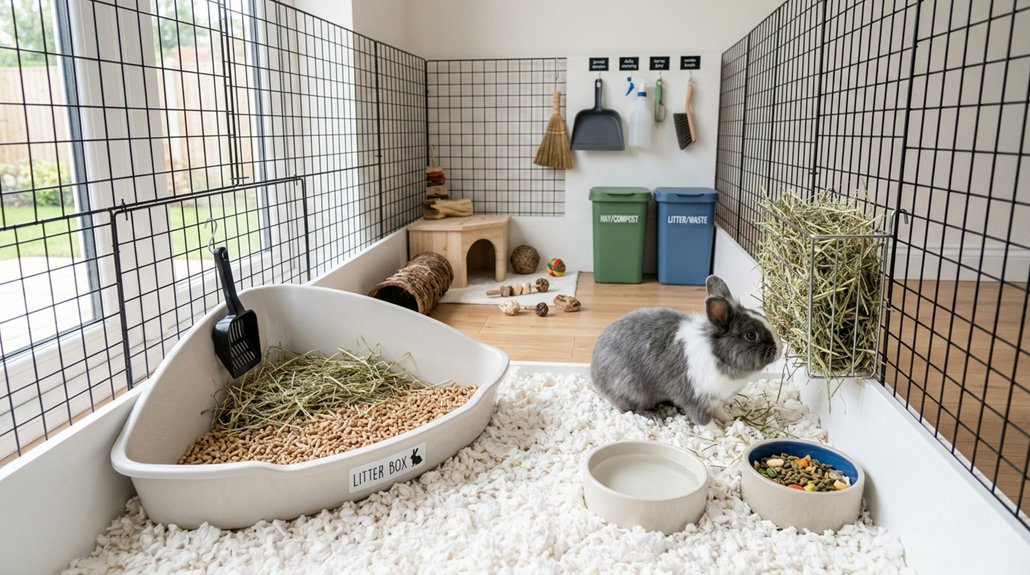
To keep a rabbit habitat hygienic, confirm you have essential supplies like gloves, a scrub brush, and a vinegar solution. Relocate your rabbit safely during maintenance. Clean by removing accessories and soiled bedding, then disinfect surfaces. Regularly assess litter boxes and refresh bedding to prevent fly strikes and infections. Maintain cleanliness with daily spot cleaning and weekly deep cleans. Such vigilance promotes a healthier, odor-free environment for your rabbit, with further insights available.
Key Takeaways
- Schedule weekly deep cleanings and daily spot cleanings to maintain a hygienic rabbit habitat and prevent pest infestations.
- Use rabbit-safe cleaning solutions like a 50/50 vinegar and warm water mixture for disinfecting litter boxes and accessories.
- Replace absorbent bedding regularly, focusing on moisture-prone areas to reduce microbial growth and control odors.
- Monitor your rabbit’s droppings to identify potential early health issues for timely intervention.
- Ensure proper ventilation and avoid excessive moisture in wooden surfaces to prevent mold and maintain a clean environment.
Gather Essential Supplies for Rabbit Habitat Maintenance
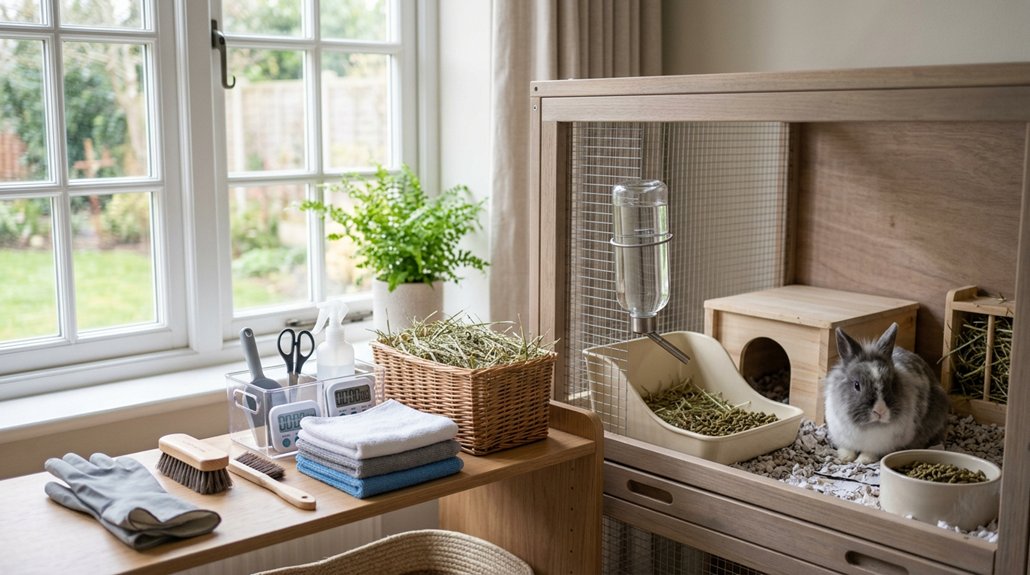
When preparing for rabbit habitat maintenance, it’s crucial to gather essential supplies that guarantee efficiency and hygiene. Establish a cleaning schedule to optimize systematic supply organization. A utility cart facilitates the transport of clean supplies, such as litterboxes and cleaning tools, along with contaminated items, promoting sanitary practices. Equip yourself with disposable or reusable gloves, trash or compost bags, and a scrub brush to enhance antimicrobial efficacy. Integrate a vinegar solution and pet-safe disinfectant to address stains and sanitize surfaces without compromising your rabbit’s health. Maintain a stock of absorbent bedding, like hay or paper bedding, to control odors and sustain cleanliness. Confirm cleaning accessories, such as a broom, dustpan, and paper towels, are readily available to swiftly address any mess.
Move Your Rabbit Safely During Cleaning
When cleaning your rabbit’s habitat, it’s essential to relocate them to a secure temporary space such as an indoor playpen or travel carrier to minimize stress and risk of injury. Make certain the area is well-ventilated, equipped with a comfortable mat or towel, and free from hazardous materials. Monitor their behavior to confirm they remain calm and their physiological parameters remain stable during the interim.
Choosing Temporary Rabbit Space
A reliable indoor playpen or secondary exercise enclosure acts as an effective temporary containment unit for your rabbit during habitat maintenance. This mitigates risk, ensuring both rabbit safety and structural integrity of their usual living space. Temporary enclosures must exhibit robust barriers preventing escape while fostering a stable environment free from hazardous chewing materials. Alternatively, a travel carrier with adequate bedding serves as a feasible, secure refuge. Prioritize aspects such as ventilation to facilitate ideal respiratory function, minimizing stress during transitory periods. Accommodate tactile stimulation using a soft mat or towel, supplemented by a small hay pile for enrichment. Employ anatomically supportive handling techniques, consistently lifting the rabbit by sustaining its front and hindquarters to evade musculoskeletal injury during transfer.
Ensuring Rabbit’s Comfort
Transferring your rabbit safely during cleaning involves measured procedures to maintain their comfort and well-being. Utilize a secure playpen, secondary exercise enclosure, or a travel carrier to secure containment and protection. Guarantee excellent ventilation within this provisional space to facilitate respiratory health and prevent stress-induced hyperthermia. Soft mats or towels combined with a small pile of high-quality hay serve as tactile and nutritive comfort. Support both the front and hindquarters of the rabbit during handling to prevent skeletal injuries, enhancing the rabbit’s perceived security.
Implement grooming techniques to maintain fur hygiene while the primary environment is being sanitized. Introduce enrichment activities within the temporary area to promote mental stimulation and prevent stress from environmental disruption, ensuring the temporary habitat is devoid of hazardous chewing materials.
Step-by-Step Guide to Cleaning a Rabbit Hutch
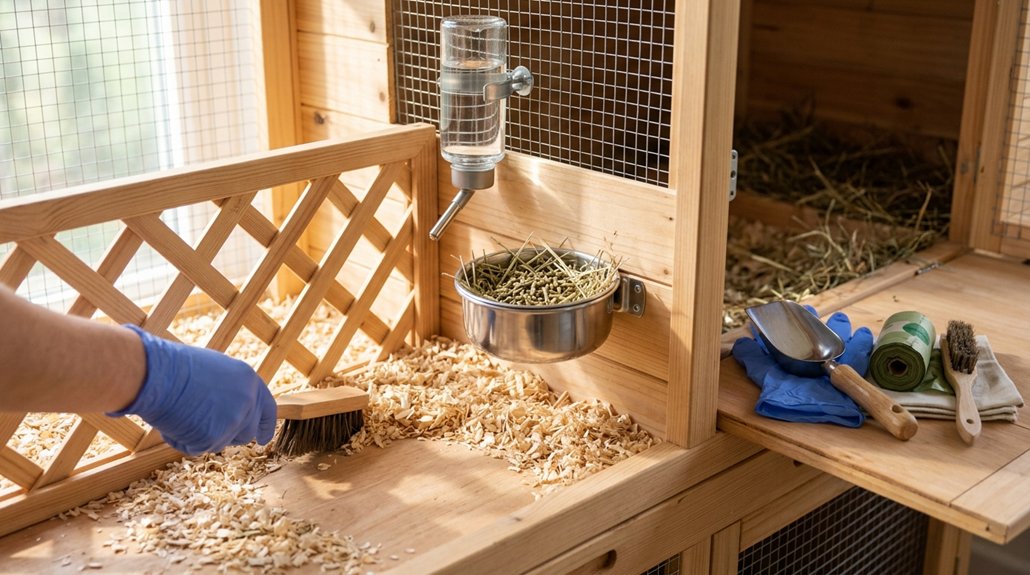
Maintaining a sanitary environment in your rabbit hutch requires a methodical and precise approach to confirm ideal health for your rabbit. Begin by focusing on hutch organization and cleaning frequency. Remove all accessories—food bowls, water bottles, litter boxes, and toys. Scoop out old bedding meticulously. Identify consistently damp zones for deeper disinfection, preventing health hazards. Utilize a vinegar solution or pet-safe disinfectant, systematically cleaning walls, wire panels, and wooden parts.
Scrub all accessories, making sure they’re bacteria-free, and dry each component thoroughly. Avoid moisture to prevent odor and health concerns. Conclude by reintegrating a sterile environment with fresh bedding before your rabbit’s return.
Here’s your emotional checklist for cleaning:
| Step | Checklist Item | Emotional Connection |
|---|---|---|
| 1. Preparation | Remove all hutch accessories | Your rabbit’s safety |
| 2. Disinfection | Target damp zones | Prevent health issues |
| 3. Reassembly | Confirm items are dry | Fresh start for health |
Keep Litterboxes Hygienic and Odor-Free
After achieving a sterile environment in the hutch, direct focus to the meticulous upkeep of your rabbit’s litterboxes to confirm they remain hygienic and odor-free. Begin with litterbox maintenance by employing a 50/50 vinegar and warm water solution. This solution neutralizes odors effectively without introducing hazardous chemicals. Employ an alternating system, swapping litterboxes biennially to maintain visual cleanliness and guarantee efficient odor control. Daily inspections are imperative; remove waste to mitigate fly strike risk originating from urine-soaked bedding. Top off non-soiled litter with fresh hay to promote usage and mitigate olfactory offenses. Discard contaminated litter in plastic-lined trash barrels, managing odors through strategic layering. This routine confirms a sanitary habitat for your rabbit’s ideal health and wellbeing.
Refresh Rabbit Bedding and Hutch Regularly
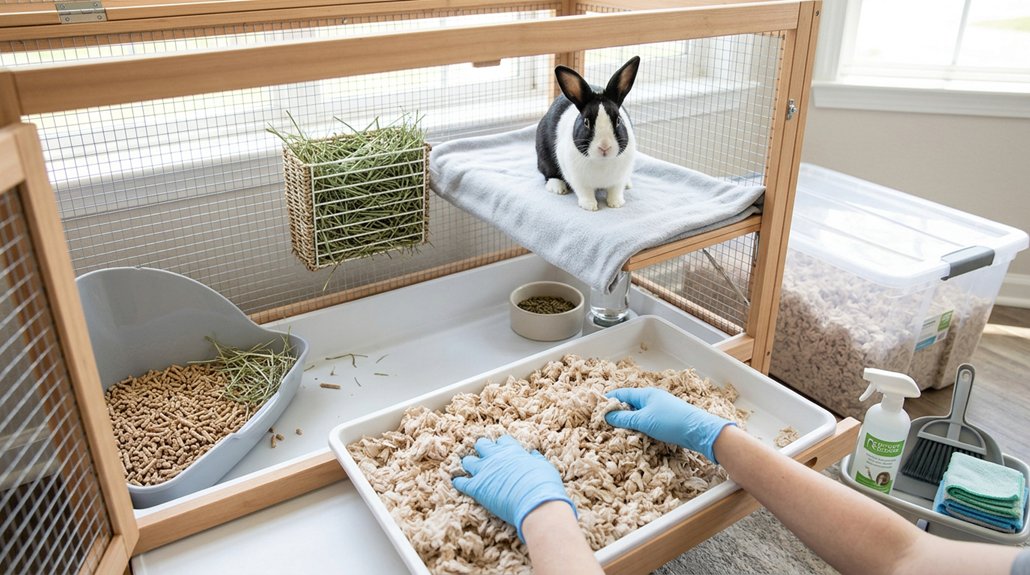
To optimize the health of your rabbit, it is crucial to adhere to a routine schedule for renewing bedding and cleaning the hutch. Weekly full changes of bedding are advised to mitigate hygienic hazards and olfactory discomfort, particularly in areas prone to soiling. Daily removal of contaminated materials, combined with the use of absorbent substrates like hay, effectively decreases moisture accumulation and microbial threats.
Maintain Fresh Bedding
Although often overlooked, regular bedding refreshment is essential for a rabbit’s health and well-being. Selecting effective bedding types like hay, shavings, or paper guarantees ideal moisture control, preventing harmful dampness. Replace bedding weekly to avert odor accumulation and maintain a perfect microbial environment in the hutch. For spot cleaning, target soiled areas daily by removing contaminated bedding and droppings, thereby discouraging pest infestation and promoting hygiene. Enhance bedding layers with a thin newspaper or puppy pad barrier, facilitating future clean-ups by preventing adhesion to surfaces. In warm climates, intensify vigilance by monitoring bedding condition frequently. A dry, clean substrate mitigates pathogenic proliferation risks, safeguarding against respiratory ailments and skin irritations. Your rabbit’s habitat will thrive through meticulous freshness upkeep.
Schedule Routine Cleanings
Maintaining ideal living conditions for rabbits necessitates scheduling routine cleanings of their habitat. Weekly deep cleans of the hutch remove all soiled bedding, waste, and sullied accessories, optimizing sanitation and promoting rabbit health. Daily spot cleaning is vital for managing odors and preserving cleanliness by replacing contaminated bedding and monitoring hutch materials. Replacing rabbit bedding frequently combats urine buildup, making absorbent options like hay or paper bedding advisable. Specific attention during warmer weather reduces fly strike risk through vigilant cleaning frequency. Employ a systematic method of cleaning—designated supplies and a utility cart streamline the process effectively. Regular evaluations guarantee you maintain the health-centric environment essential for your rabbit’s well-being.
| Task | Frequency |
|---|---|
| Deep Clean Hutch | Weekly |
| Spot Cleaning | Daily |
| Bedding Refresh | Frequently |
| Condition Monitoring | Warm Weather Focus |
| Systematic Cleaning | Continuous |
How to Deep Clean Your Rabbit Hutch Weekly
Follow these steps for a thorough cleaning regimen:
- Scoop out all soiled bedding and waste, paying close attention to corners where odors and bacteria hide.
- Use a damp cloth to wipe wooden surfaces without excessive moisture to maintain their integrity.
- Rinse and scrub accessories using warm water, making sure all cleaning residues vanish and pose no threat to your rabbit’s health.
Allow the hutch to air dry thoroughly before reintroduction to guarantee a contaminant-free habitat.
Prevent Rabbit Health Issues With Cleanliness
To safeguard a rabbit’s health through cleanliness, it’s crucial to implement a regimented cleaning schedule. Regular cleaning reduces the risk of fly strike and urinary tract infections caused by accumulated waste. Fresh bedding and hay minimize odors that attract pests, while consistent litter box maintenance prevents dirty fur and skin problems. Track droppings for early signs of health issues, ensuring prompt care. Rabbit-safe cleaning solutions, such as a vinegar and warm water mix, maintain hygiene without chemical exposure.
| Task | Frequency |
|---|---|
| Daily Spot Clean | Remove soiled bedding |
| Weekly Deep Clean | Refresh entire habitat |
| Litter Box Check | Prevent skin issues |
Implement these strategies for rabbit health and cleanliness benefits.
Frequently Asked Questions
What Is the 3 3 3 Rule for Rabbits?
The 3-3-3 rule guarantees new rabbit safety and health. First three days: acclimate to the enclosure design. Following three weeks: observe rabbit behavior for illness. Afterward, three vet checks confirm health, guaranteeing disease prevention and management.
How to Keep a Rabbit Enclosure Clean?
Transform your rabbit’s palace to avoid aromatic catastrophes by prioritizing litter training and rigorous habitat maintenance. Conduct a daily hygienic purge, facilitate advanced ventilation strategies, and employ proper cleaning protocols to maintain ideal health conditions for your furry companion.
How Do You Say “I Love You” in Rabbit Language?
To say “I love you” in rabbit language, recognize rabbit communication cues. Observe relaxed posture, gentle nuzzles, and grooming behavior. Understanding rabbit behavior signifies mutual affection. Engage through tactile stimuli, enhancing their wellbeing, promoting a reciprocal bond.
Why Do Rabbits Scream at Night?
Rabbits scream at night due to heightened nocturnal activity and threat perception. Abrupt nocturnal sounds can trigger their instinctual fear response. Understanding rabbit behavior and reducing environmental stressors are essential for mitigating anxiety-induced distress vocalizations in their habitat.
Conclusion
Guaranteeing your rabbit’s living environment is pristine is like fine-tuning a delicate ecosystem. By implementing meticulous hygiene practices, you safeguard their health, reducing risks of ailments like bacterial infections or respiratory issues. Regular maintenance, from cleaning litterboxes to rejuvenating bedding, creates a habitat that promotes longevity and wellness. Imagine your rabbit’s hutch as a vibrant, miniature biome; nurturing it with care guarantees a thriving, harmonious environment for your rabbit to flourish. Consistent cleanliness fosters ideal health.