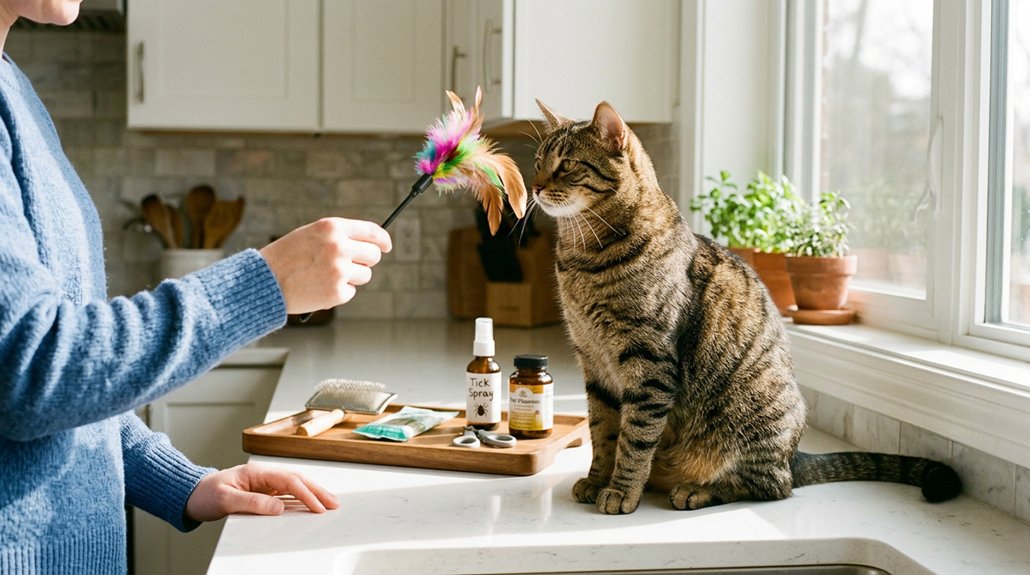
To keep your cat healthy, guarantee a balanced diet with high-quality food meeting AAFCO standards, and combine wet and dry options. Schedule regular vet visits for essential vaccines and check-ups. Create a cat-friendly home with vertical spaces and safe environments. Use the best parasite prevention tailored to your cat’s lifestyle. Monitor your cat’s weight and behavior actively. These steps form a solid foundation for wellness, and there’s more to explore for an even healthier life.
Key Takeaways
- Schedule annual vet visits for vaccinations and health screenings to ensure early detection of potential health issues.
- Maintain a balanced diet with AAFCO-compliant wet and dry foods, limiting treats to promote overall health.
- Use flea treatments and worm prevention tailored to your cat’s lifestyle and age to prevent parasitic infections.
- Provide vertical spaces and scratching posts to encourage natural behaviors and mental stimulation.
- Monitor weight and behavior changes regularly to detect and address health issues early.
Provide a Balanced, Cat-Approved Diet
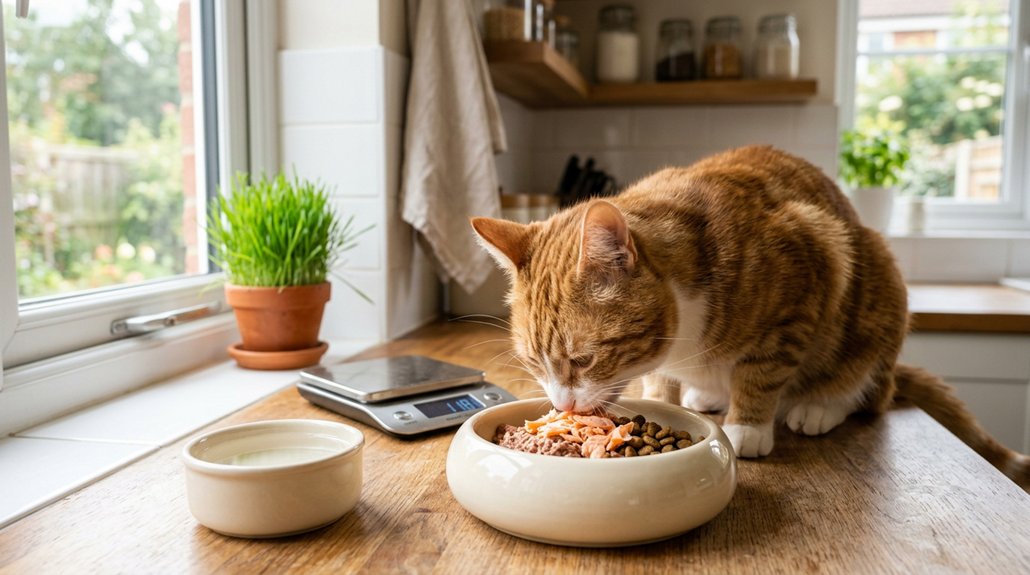
Guaranteeing your feline companion receives a balanced, cat-approved diet is essential for their overall well-being, especially since cats are obligate carnivores requiring animal-based proteins to thrive. To meet their nutritional needs, choose a high-quality cat food that complies with AAFCO standards, assuring essential nutrients throughout all life stages. Incorporating both wet food and dry food offers numerous benefits, like providing moisture and reducing the chances of urinary issues that can arise from relying solely on dry kibble. Wet food not only adds essential moisture but also enhances protein sources critical for your cat’s health, helping maintain muscle and organ function. Remember, treats should only make up 5-10% of your cat’s diet to guarantee dietary balance without compromising health.
Schedule Regular Vet Visits
Regular vet visits are a cornerstone of effective cat health care. Early detection of health issues is essential, as felines often conceal symptoms until they become severe. During those first vet visits, your cat should receive important services like vaccinations, microchipping, and spaying or neutering. Core vaccinations such as Panleukopenia, Herpesvirus, Calicivirus, and Rabies will guarantee peak feline health from a young age. Non-core vaccines, like Bordetella and Chlamydia, might be recommended based on your cat’s lifestyle and risk factors. An annual check-up usually suffices for healthy adult cats, but seniors and outdoor cats might need more frequent evaluations. These routine visits build a complete health profile, enabling necessary adjustments in your cat’s care and diet as they age.
Design a Cat-Friendly Home

While regular vet visits lay the groundwork for your cat’s health, creating a cat-friendly home environment complements those efforts by addressing their physical and emotional well-being. Start by incorporating vertical playspaces like cat towers and shelves that foster climbing, stretching, and exploration. This not only boosts their physical activity but also enhances mental stimulation. Integrate cat furniture, such as scratching posts, to channel their natural behavior and protect your home’s furnishings. Make sure your home is free from hazardous plants and toxic substances to prevent unintentional harm. Designate cozy sleeping areas with soft bedding in various locations for comfort and security. Finally, keep litter boxes clean and appropriately placed, following the one box per cat plus one extra rule for ideal hygiene.
Choose the Best Parasite Prevention Methods
With a myriad of parasite prevention methods available, selecting the most effective one requires careful consideration and professional guidance. Regular veterinary check-ups are essential in identifying tailored flea treatments and worm prevention strategies that match your cat’s specific health needs. Your veterinarian can assess your cat’s age and lifestyle, ensuring you select products that are both safe and effective, especially if you have a kitten.
Common parasites like fleas, ticks, and intestinal worms can lead to significant health issues if untreated. Initiate preventative treatments at the onset of flea and tick season to ward off infestations. Stay alert for signs of parasitic infections, such as excessive scratching or weight loss, to facilitate prompt intervention. Always prioritize early action to maintain your cat’s wellness.
Track Your Cat’s Health and Behavior

Although it might seem simple, maintaining a close eye on your cat’s health and behavior is vital for catching potential issues early. There are several proactive steps you can take:
- Weight Monitoring: Regularly check your cat’s weight to prevent obesity and related health problems. A healthy weight is critical for long-term well-being.
- Behavior Tracking: Daily observation of your cat’s activities can reveal health concerns. Unusual lethargy or behavior changes should prompt a visit to the vet.
- Litter Box Habits: Any changes in urination or defecation frequency might indicate health issues, requiring prompt veterinary attention.
- Health Diary: Keeping detailed logs of eating, drinking, and grooming patterns helps in recognizing early signs of underlying problems.
These practices guarantee you’re well-prepared to manage your cat’s health effectively.
Frequently Asked Questions
What Is the 3-3-3 Rule for Cats?
The 3-3-3 rule outlines feline adjustment over three phases: three days feeling overwhelmed, three weeks of exploring and revealing personality, and three months achieving comfort and routine. It aids cat companionship by fostering patience and understanding.
What Preventive Care Do Cats Need?
Cats need regular vet visits to catch health issues early and maintain wellness. Prioritize dental care to prevent periodontal disease. Consider vaccinations, spaying or neutering, and monitor behavior to guarantee your cat stays healthy and happy.
What Is “I Love You” in Cat Language?
Imagine your cat slowly blinking, purring as they lay beside you, or rubbing their head against your leg. These are powerful feline body language cues and cat vocalizations that softly whisper “I love you.”
What Color Cat Is Least Desired?
In feline adoption trends, black cats are often the least desired due to superstitions impacting cat color preferences. These biases, termed “black cat syndrome,” result in longer shelter stays, despite their charming features and personalities. Adopt black cats.
Conclusion
By embracing these preventative care tips, you’ll help guarantee your feline companion’s well-being and longevity. Isn’t investing a bit of time and effort in their health worth it for the joy they bring into your life? A balanced diet, regular vet visits, and a safe, enriched environment are all essential. Additionally, effective parasite prevention and attentive monitoring of their health and behavior can make a significant difference. Remember, a healthy cat is a happy cat—and a happy cat means a happier you.