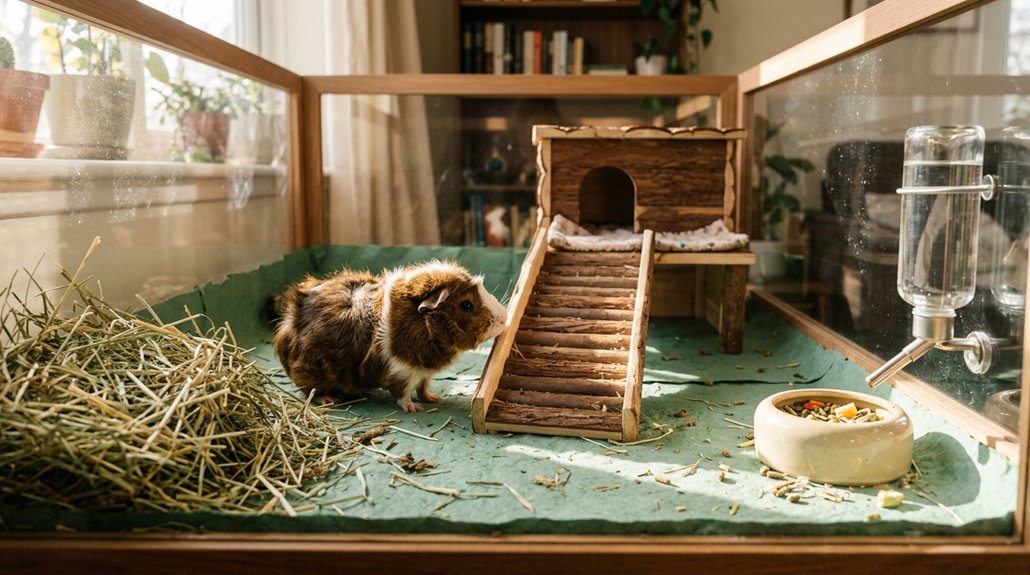
You should clean your guinea pig’s cage fully every 3 to 4 days, with daily spot cleaning to remove soiled bedding and waste. This routine helps manage odors and ammonia buildup, vital for your pet’s health. Use guinea pig-safe cleaning products and adapt your schedule based on bedding types and the number of pets. Ensuring daily access to fresh hay and water is essential. Discover more to refine your cleaning routine and enhance your guinea pig’s habitat.
Key Takeaways
- Perform a full cage cleaning every 3 to 4 days to manage odors and ammonia buildup.
- Conduct daily spot cleaning by removing soiled bedding and waste from high-traffic areas.
- Adjust cleaning frequency based on bedding type; fleece requires more frequent washing than wood pellets.
- Larger groups of guinea pigs may need more frequent cleaning due to higher waste production.
- Use guinea pig-safe cleaning products to disinfect surfaces during weekly deep cleans for optimal hygiene.
Basic Needs for Guinea Pig Cage Care
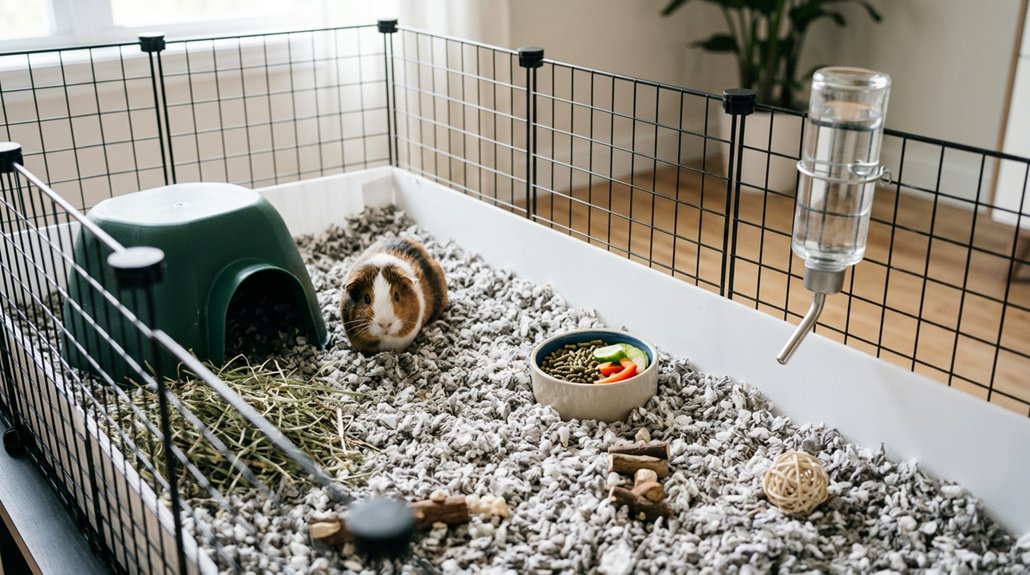
Guaranteeing your guinea pig’s cage is properly maintained requires understanding its basic care needs. Begin by equipping the cage with essential cage accessories such as chew toys, hiding spots, and tunnels. These not only provide enrichment but also assist in directing waste to specific areas, simplifying cleaning. Daily spot cleaning involves using appropriate cleaning supplies to remove soiled bedding, especially under accessories and corners. Monitor for damp spots; they might indicate the need for an adjustment to your pet’s water setup or increased cleaning frequency. Employing a vinegar-water solution as a disinfectant is effective for sanitizing the environment without chemical hazards. Precision and routine in maintaining habitat hygiene guarantee your guinea pig’s health and comfort, reducing odors and promoting a fresh living space.
How Often Should You Clean Guinea Pig Cages?
Maintaining a guinea pig’s cage not only involves understanding its basic needs but also determining the appropriate cleaning schedule. A full cleaning every 3 to 4 days is critical for odor control and preventing ammonia buildup, which can lead to respiratory infections or bumblefoot. Use specialized cleaning products safe for guinea pigs, guaranteeing all surfaces are thoroughly cleaned and disinfected. The frequency of cleaning may vary with bedding types; fleece, for instance, might require more frequent washing. If you keep multiple guinea pigs, assess and adjust your routine based on increased waste production. Adhering to this schedule guarantees a hygienic environment, reducing the risk of health issues. Cleaning regularly keeps your guinea pigs healthy and their living area safe.
Keeping Things Fresh With Daily Spot Cleaning
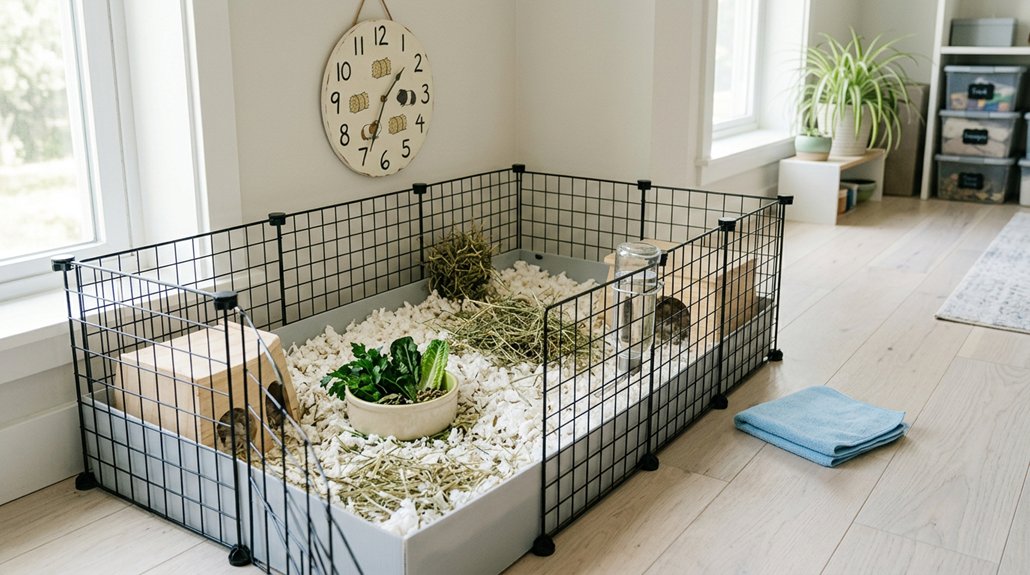
To maintain a hygienic living space for your guinea pigs, daily spot cleaning tasks are imperative. Focus on removing soiled bedding and waste from high-traffic areas using a small scoop or dustpan for efficient waste management. Replace old bedding with fresh material to guarantee your pets have a comfortable habitat while strengthening your bond with them.
Essential Daily Clean Tasks
A few essential tasks must be performed daily to keep your guinea pig’s environment clean and invigorating. Implementing a systematic daily organization guarantees peak cleanliness. Start by using appropriate cleaning supplies like a small food or litter scoop to efficiently remove soiled bedding and droppings. This targeted approach maintains the habitat’s hygiene and minimizes odors. Incorporate the habit of renewing your guinea pig’s hay daily to replace any soiled portions, thereby preserving a comfy bedding area. Confirm access to clean, fresh water by replenishing the water bottle, mitigating the risk of bacterial contamination. Regular engagement in these tasks promotes your guinea pig’s well-being while strengthening your bond. Consistency in these practices upholds a healthy living space.
Maintaining Hygienic Living Space
Begin your daily spot cleaning routine to uphold a hygienic living space for your guinea pigs. Adhering to essential hygiene practices, focus on high-traffic areas like corners and beneath hideouts where droppings accumulate most. Efficient pest control begins with removing feces and soiled bedding promptly, ensuring your pet’s environment stays fresh.
Use a small scooping tool for easy removal of waste materials and bolster your pet’s comfort by replacing old hay with fresh bedding daily. This routine minimizes the need for extensive weekly cleanings and strengthens your bond with your guinea pigs. Maintain a tidy habitat through:
- Regularly inspect and clean corners for waste.
- Refresh bedding to prevent odors and discomfort.
- Engage daily for a healthier, pest-free cage.
Weekly Deep Cleaning for a Happier Pet
While maintaining your guinea pig’s well-being, conducting a weekly deep cleaning of their cage becomes paramount. Effective cleaning techniques involve removing all bedding and washing hideouts with a safe solution like diluted vinegar. This prevents odors and hygiene issues that can impact your pet’s health. Pay attention to the number of guinea pigs and their habits; larger groups or messier pets might require more frequent cleanings. For bedding, provide a fresh 2-inch layer of absorbent material over 1-inch of litter to guarantee comfort and moisture control.
Consider this process as part of bonding activities; maintaining a clean environment strengthens your relationship with your pet. A hygienic habitat not only contributes to their health but also fosters a happier, cleaner living space for your guinea pig.
Adapt Cleaning Frequency by Bedding Type
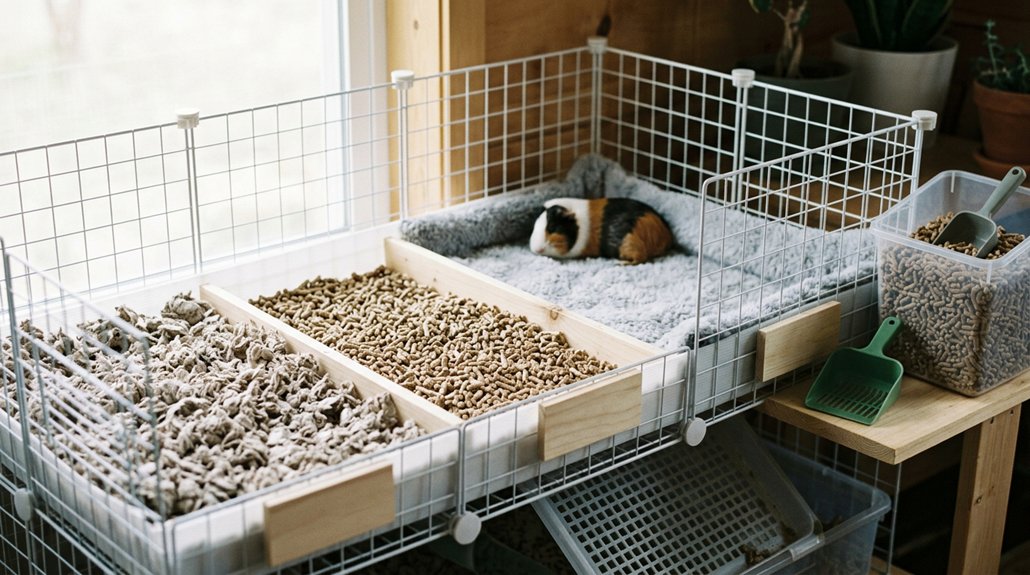
The effectiveness of maintaining guinea pig habitat greatly hinges on the type of bedding you use, which directly affects cleaning frequency. Bedding materials vary in moisture control and odor retention capabilities, impacting cleaning schedules. Here’s a concise guide:
- Fleece Bedding: Requires washing every few days to manage odors and maintain freshness. It’s less absorbent, demanding meticulous moisture control.
- Wood Pellets: With superior absorbency, these may need less frequent cleanings. However, regular spot checks guarantee a clean, healthy environment.
- Sawdust & Newspaper: While sawdust absorbs moisture quickly, frequent replacements, especially in high-traffic areas, are essential. Similarly, combining newspaper with hay simplifies waste management but demands frequent changing.
Opt for disposable bedding in feeding zones to reduce overall cleaning frequency and promote ideal hygiene.
What Your Guinea Pig Breed Means for Cleaning
Recognizing what your guinea pig breed signifies for cleaning routines can optimize habitat maintenance and health management. Breed characteristics play a significant role in waste management and dictate how frequently you should clean. For instance, skinny pigs, lacking fur, tend to produce more waste and, consequently, require more frequent cleaning than their coated counterparts. Similarly, long-haired breeds need rigorous cleaning and grooming to prevent matting, influencing your care routine. Some breeds may be prone to health issues like urine scalding or bumblefoot when hygiene is neglected, demanding more meticulous waste management. By understanding these breed-specific traits, you can create effective cleaning strategies—such as choosing absorbent bedding types—to enhance odor control and align with waste production patterns, ultimately safeguarding your pet’s well-being.
Tips to Evolve Your Cleaning Routine
To effectively evolve your cleaning routine, focus on personalizing your cage cleaning schedule to suit your guinea pig’s specific needs, as different breeds produce varying waste levels. Experiment with different bedding and litter combinations to find the most absorbent and effective option that reduces cleaning frequency while ensuring comfort. Stay informed by engaging with the community to adopt proven cleaning methods and materials that enhance your pet’s habitat hygiene.
Personalize Your Habit’s Schedule
Tailor your guinea pig’s cage cleaning schedule to fit both their needs and your availability. Prioritize schedule flexibility by monitoring their waste output and cleaning habits. The initial setup should involve daily spot cleaning and a thorough clean every 3 to 4 days. However, personalization remains key. Here’s how:
- Observe Hydration and Waste Patterns: Excessive moisture or leaks might signal more frequent cleaning needs.
- Enhance Your Routine: Align the full cage cleanings with your weekend schedule while maintaining consistent spot cleaning at convenient times.
- Incorporate Community Insights: Gather advice from fellow guinea pig owners and adapt your approach to find what best supports your pet’s health.
Refine your strategy based on observation and shared knowledge for maximum cleanliness.
Experiment With Bedding Options
Utilizing varied bedding materials is critical for maximizing cleanliness and comfort in your guinea pig’s habitat. Experiment with fleece, wood pellets, or Carefresh to achieve superior odor control and simplified cleaning. Evaluate your guinea pig’s behavior to identify best solutions for your specific needs. Strategic bedding combinations, like layering newspaper with hay, enhance waste management and serve as comfort layers for your pet. Incorporate disposable systems in high-traffic areas to streamline cleanup and minimize waste accumulation. Guarantee a bedding layer of approximately 2 inches overlays a 1-inch absorbent litter layer, maximizing moisture control. Regularly assess your chosen bedding materials’ effectiveness, adapting as necessary for diverse requirements linked to guinea pig breed variations in waste production.
Adapt to Guinea Needs
Evaluating bedding options provides excellent groundwork for addressing the individual needs of your guinea pigs. It’s essential to tailor your cleaning strategies around their specific guinea habits. Monitor their drinking and urination patterns closely—excessive moisture or odor may necessitate cleaning every 2-3 days. Here’s how you can adapt effectively:
- Assess Cage Population: Larger groups or exceptionally messy guinea pigs require more frequent attention. Adjust your cleaning schedule accordingly.
- Spot Clean Strategically: Observe which areas of the cage accumulate waste rapidly. Modify your spot cleaning routine to focus on these zones.
- Utilize Absorbent Bedding: A bedding layer of around 2 inches over a 1-inch litter base efficiently manages moisture and controls odor, aligning with their hygiene needs.
Engage regularly with your guinea pigs, fostering a clean, comfortable environment.
Frequently Asked Questions
How Long Can You Go Without Cleaning a Guinea Pig Cage?
You shouldn’t go more than a week without cage maintenance, as neglecting hygiene practices can lead to harmful ammonia buildup. Regular cleaning every 3 to 4 days guarantees a healthy environment, preventing respiratory issues for your guinea pig.
What Is the Main Cause of Death in Guinea Pigs?
Respiratory infections are the main cause of death in guinea pigs. You’ve got to be aware of common illnesses impacting guinea pig health, like pneumonia, gastrointestinal stasis, and urinary tract infections, to guarantee proper care and prevention.
What Are 5 Signs Your Guinea Pig Is Happy?
Forty percent of guinea pig behavior can indicate happiness through signs like popcorn jumping, purring, exploring, engaging with owners, and maintaining a healthy appearance. Recognizing these happy pig signs guarantees better care and understanding of your pet’s needs.
Do Guinea Pigs Recognize Their Owners?
Yes, guinea pigs recognize their owners through visual cues and sounds. Guinea pig behavior shows they respond to your voice and engage in bonding activities. Strong owner bonding enhances recognition, evident by purring and popcorn jumps when you’re nearby.
Conclusion
Maintain your guinea pig’s health and happiness by adhering to a tailored cleaning schedule. While you might think deep cleaning weekly is excessive, it mitigates odors and prevents bacterial buildup, safeguarding your pet’s well-being. Adapt cleaning habits according to bedding type and guinea pig breed, as some breeds may require more frequent care. Embrace daily spot cleaning to guarantee a consistently fresh environment. Ultimately, a strategic approach guarantees both pet wellness and your peace of mind.