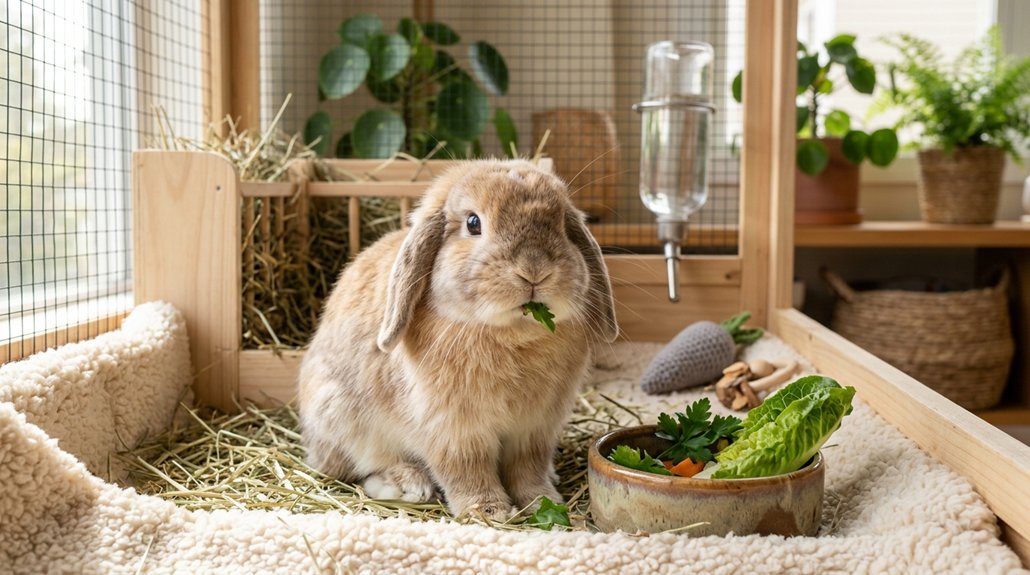
To care for a pet rabbit, guarantee a spacious cage with solid floor and absorbent bedding. Provide daily mental and physical enrichment with toys and exercise. Maintain a balanced diet with quality hay, pellets, and greens. Regular grooming prevents stress and health issues. Handle rabbits gently, supporting their chest and hind legs. Monitor for illness signs like lethargy. Guarantee stable temperatures, avoid drafts, and secure travel carriers. Discover more detailed insights ahead.
Key Takeaways
- Provide a spacious habitat, ensuring a secure area with at least 24 square feet for exercise.
- Ensure a diet of 80% fresh grass hay, supplemented with leafy greens and plain pellets.
- Allocate 3-5 hours daily for outside-of-cage activities to enhance social and physical well-being.
- Regularly groom and handle your rabbit gently to build trust and maintain health.
- Use safe chew-proof toys and puzzles to stimulate mental and physical engagement.
Understanding Your Rabbit’s Basic Needs
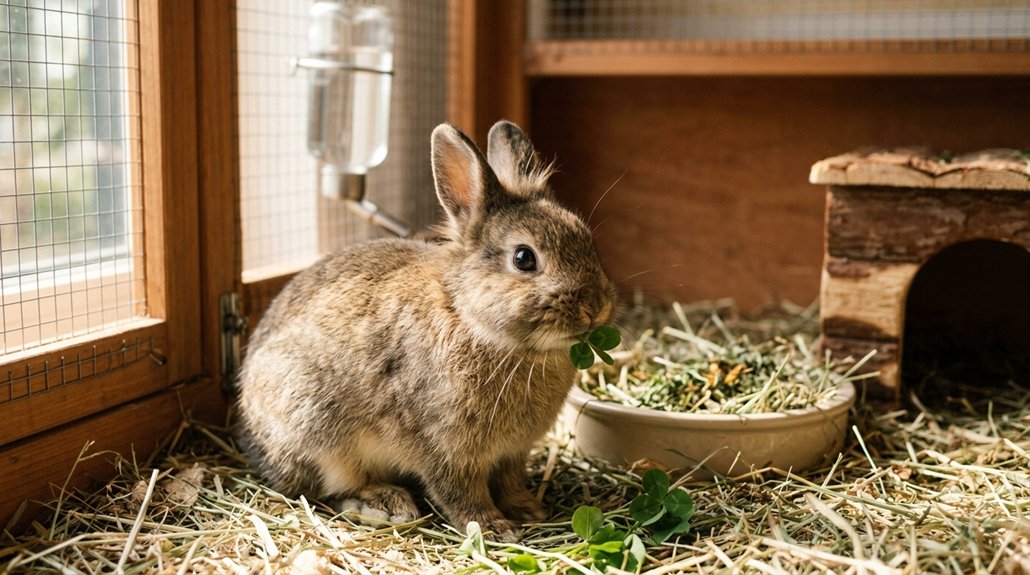
While understanding your rabbit’s basic needs is essential, it’s important to focus on several critical aspects of their care. Observing rabbit behavior is key to identifying bonding cues and ensuring their social needs are met. Engage them with environmental enrichment activities to stimulate mental and physical exercise. Allocate at least 3-5 hours daily for outside-of-cage activities to facilitate interaction and reduce stress. Recognize signs of contentment such as relaxed posture and purring, indicating successful bonding. Prioritize social needs by providing companionship, either from humans or another rabbit. Interact regularly, creating a secure atmosphere where rabbits thrive indoors. Avoid isolation and extremes in temperature that induce stress, compromising well-being. Maintaining this routine has tangible effects on your rabbit’s overall health and happiness.
Setting Up the Perfect Rabbit Habitat
Creating an ideal rabbit habitat requires attention to several key elements to promote well-being and comfort. First, guarantee a spacious living area, with a minimum cage size of 2’ x 2’ x 4’ for an average 5 lb rabbit. This size facilitates ample movement and stretching. Use solid floor cages lined with absorbent bedding to prevent foot injuries. Establish a designated exercise area of at least 24 square feet for daily physical activity, ideally in proximity to the enclosure for seamless exploration. Maintain a stable environment with temperatures between 60-70°F. Position the habitat in a quiet, well-ventilated area, avoiding direct sunlight and drafts. Regular cleaning is necessary for hygiene, employing a newspaper-lined litter box filled with grass hay.
Must-Have Supplies for a Comfortable Rabbit Home
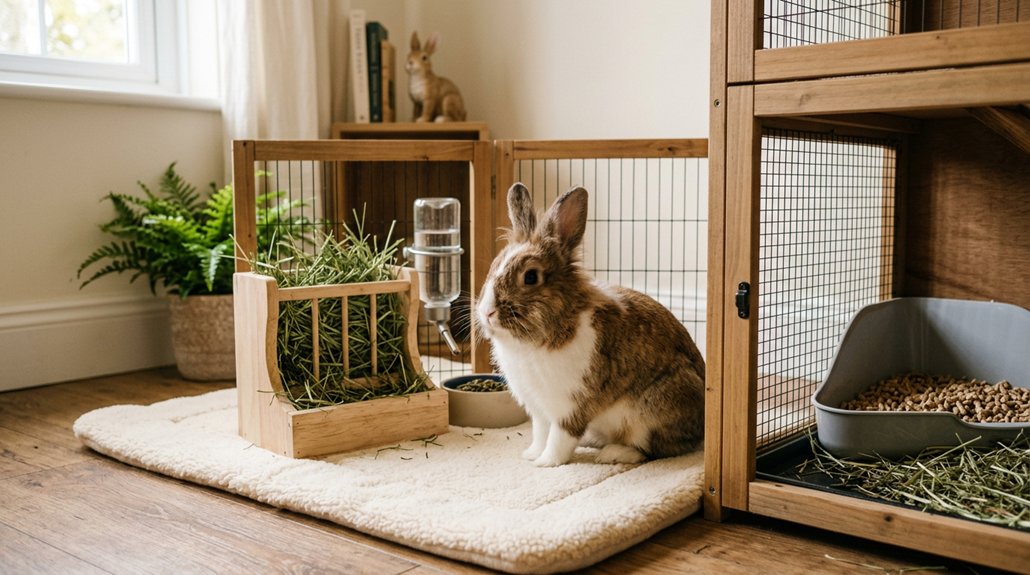
Equipping a comfortable rabbit home necessitates several essential items. Begin with a spacious cage or exercise pen, no smaller than 4ft by 2ft, ideal for an average 5 lb rabbit. Such space allows necessary movement and comfort. A sturdy litter box, like the Frisco High Sided Cat Litter Box, should be filled with safe paper-based litter and hay, serving dual purposes. For hydration, provide a heavy crock to offer fresh water continuously. The inclusion of chew proof toys, such as cardboard boxes, willow balls, and tunnels, promotes mental stimulation, mitigating boredom. Additionally, rabbit habitat essentials include hiding spots, like tunnels or covered beds, ensuring your rabbit has secure and comfortable resting places, enhancing their overall well-being.
Selecting a Healthy Diet for Your Rabbit
Ensuring your rabbit has a balanced diet is essential, as it directly impacts their overall health and well-being. Begin with proper hay selection; opt for quality fresh grass hay, such as Timothy or orchard grass, which should constitute 80% of their daily intake, promoting digestion and dental health. Introduce a vegetable variety gradually; aim for one cup of safe leafy greens like romaine lettuce per two pounds of body weight daily. Pellet types should be chosen with care—select plain pellets without colorful bits or added sugars, offering about 1/4 cup per five pounds of rabbit weight. Adhere to a consistent feeding frequency. Additionally, provide fresh water in a heavy dish to prevent tipping, supporting daily hydration and avoiding adverse dietary impacts.
Socializing and Bonding With Your Rabbit
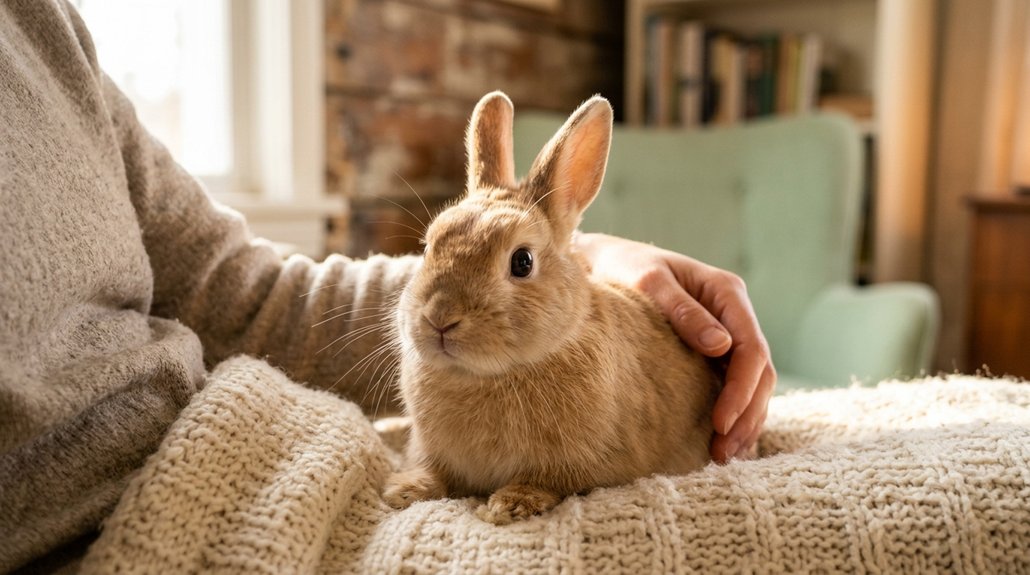
Why is it essential to understand the dynamics of socializing and bonding with your rabbit? As social animals, rabbits require thoughtful interaction to fulfill their emotional needs. Using specific bonding techniques can enhance your relationship:
- Gradual Introductions: Systematically introduce your rabbit to new environments and family members to minimize stress and facilitate trust building.
- Recognize Social Cues: Learn to identify comfort signs like “binkies” and discomfort signals like “thumping” to adjust your interactions accordingly.
- Interaction Games: Engage your rabbit in playtime that respects their comfort zone while fostering bonding through gentle, supportive handling.
- Patience and Consistency: Allocate 3-5 hours daily to respond to social cues, ensuring a positive and secure connection is maintained through persistent efforts.
Keep Your Rabbit Healthy With These Grooming Tips
Maintaining ideal health for your rabbit involves several essential grooming practices. Employ the correct grooming tools to efficiently manage your rabbit’s coat. Long-haired breeds necessitate daily brushing techniques to mitigate shedding and prevent hairball complications. For short-haired types, a weekly regimen suffices. Nail trimming is vital. Utilize cat nail trimmers monthly, avoiding the quick to guarantee comfort.
Spot clean fur to remove dirt, but don’t bathe your rabbit, as water exposure can be detrimental. Regularly inspect ears for debris to prevent potential health concerns. Establishing a grooming routine fosters trust, alleviating stress and enhancing the grooming experience. Here’s a concise overview:
| Task | Frequency | Tools/Methods |
|---|---|---|
| Brushing | Daily/Weekly | Brushes/Combs |
| Nail Trimming | Monthly | Cat Nail Trimmers |
| Ear Cleaning | Routine Inspection | Soft Cloth |
| Spot Cleaning | As Needed | Damp Cloth |
Addressing Common Rabbit Health Issues
To effectively address your rabbit’s health issues, it’s essential to recognize early symptoms of illness such as gastrointestinal stasis, respiratory infections, and dental problems. Monitor for changes in eating habits, nasal discharge, or litter box patterns, which may require immediate veterinary attention. Preventive measures, including vaccinations and regular health check-ups, play an important role in avoiding serious diseases like RHDV2.
Recognizing Illness Symptoms
How can you tell when your rabbit isn’t feeling well? Symptom awareness is essential for illness prevention in rabbits, as they often hide signs of sickness. Key symptoms requiring attention include:
- Lethargy and Appetite Loss: If your rabbit is unusually inactive or refusing food for more than 12 hours, seek veterinary care.
- Abnormal Stool: Diarrhea or overly dry pellets indicate digestive issues. Perform a dietary review and consult a vet.
- Respiratory Distress: Symptoms like sneezing, nasal discharge, or difficulty breathing require prompt evaluation by a vet.
- Pain Indicators: Teeth grinding, a hunched posture, or reluctance to move suggest discomfort and need a veterinary check.
Early detection and response to these signs safeguard your rabbit’s health and longevity.
Preventive Health Practices
Even though caring for a rabbit may seem straightforward, preventive health practices are essential for averting common ailments. Adherence to vaccination schedules, such as the Rabbit Hemorrhagic Disease Virus 2 vaccine, is vital for protection against viral threats. Implement routine check-ups with a vet to detect early signs of illness. Behavioral monitoring is equally important; watch for refusal to eat or shifts in litter habits as indicators of health issues. Prioritize dental care, as overgrown teeth can lead to severe complications. Consider spaying or neutering to mitigate reproductive health problems and reduce aggression. Finally, maintain cleanliness in your rabbit’s habitat to prevent infections. Recognizing illness requires familiarization with symptoms like lethargy or diarrhea for timely veterinary intervention.
Safe Handling and Transport for Your Rabbit
To guarantee your rabbit’s safety during handling, always support both the front and hindquarters when lifting; this prevents injury and maintains comfort. For transport, select a sturdy, chew-proof carrier and introduce your rabbit to it at home to foster familiarity. Secure the carrier in a stable environment during travel to mitigate stress and avoid unnecessary movement.
Proper Lifting Technique
Approaching your rabbit with a calm demeanor is essential, given that rabbits are sensitive prey animals. Proper lifting techniques prevent handling fears and guarantee safety. Follow these steps for secure handling:
- Approach calmly: Approach your rabbit from the side, not the front, to avoid startling it.
- Support correctly: Place one hand under the chest and the other under the hind legs. This dual support secures the rabbit, minimizing stress.
- Optimize position: Hold your rabbit close to your body. This proximity not only calms but reduces the risk of struggling.
- Avoid harmful grips: Never lift by the ears or scruff—this can injure and increase handling anxieties.
Practicing patient, gentle movements builds trust, reducing the likelihood of struggling or nipping.
Stress-Free Travel Tips
When transporting your rabbit, guaranteeing their safety and comfort is paramount. Rabbit anxiety can be mitigated through meticulous travel preparation. Use a hard, chew-proof carrier like the Petmate Compass Fashion Kennel for ideal carrier safety. Confirm the carrier is spacious and well-ventilated; insufficient space escalates stress levels. Implement calming techniques by draping a light cloth over the carrier, establishing a dark, secure environment. Guarantee environment stability by avoiding direct sunlight or drafts, maintaining temperature control between 60-70°F. Regular hydration breaks are essential on extended journeys, alleviating discomfort and preventing the onset of dehydration. Monitoring these critical factors guarantees your rabbit’s physical wellbeing and psychological ease during travel, considerably reducing anxiety and enhancing their overall transport experience.
Enriching Your Rabbit’s Life With Toys and Activities
While enriching your rabbit’s life can greatly enhance their well-being, it’s essential to provide a diverse array of engaging stimuli to satisfy their natural behaviors and needs. Ensuring toy variety is important; include untreated wood or cardboard toys to provide chew satisfaction and prevent boredom. Implement activity rotation to maintain interest, invigorating your rabbit’s environment with new cognitive stimulation options.
- Encourage exploration and exercise through tunnels and hiding spots, facilitating natural exploration encouragement.
- Foster interactive bonding via gentle fetch or obstacle navigation, promoting physical activity alongside social play.
- Introduce puzzle engagement through problem-solving toys, requiring your rabbit to access treats, and thereby enhancing cognitive enrichment.
These practices will elevate your rabbit’s quality of life, ensuring robust mental and physical stimulation.
Frequently Asked Questions
Can Rabbits Be Trained to Use a Litter Box?
Absolutely, you can guide rabbits to gracefully attend to their needs using litter box training. Observing rabbit behavior is essential; place the litter box where they naturally eliminate, reinforcing their habit to enhance successful litter box habits effectively.
How Can I Tell if My Rabbit Is Stressed?
Observe your rabbit’s body language for stress indicators like flattened ears, excessive grooming, teeth grinding, or thumping. Changes in appetite or hiding more than usual can also suggest your rabbit is experiencing stress.
What Should I Do With My Rabbit During Vacation?
Guarantee excellent, efficient rabbit care by securing a reliable sitter or boarding service. During vacation preparation, check the provider’s credentials, their competence in rabbit care, and confirm consistent communication. This guarantees a stress-free stay for your pet.
Is It Safe for Rabbits to Be Around Other Pets?
Rabbits can coexist with other pets, but monitor rabbit behavior closely. Prevent stress through gradual pet interactions, as rabbits are prey animals. Introduce them in controlled environments to reduce anxiety and guarantee safety. Observing is vital.
How Do I Introduce My Rabbit to New Environments?
Guarantee rabbit safety by gradually introducing them to new environments. Start with a quiet, secure area, allowing environment exploration under supervision. Monitor for stress indicators, like thumping or hiding. Adjust conditions accordingly to maintain a controlled acclimation process.
Conclusion
Congratulations, you’re now a certified rabbit whisperer—or at least, you’ve grasped the rigorous Ph.D. equivalent in rabbitology. You’ve mastered the art of deciphering the cryptic world of rabbit habitats, supplies, cuisine, and entertainment. By now, your bunny’s likely living in a lap of luxury, pondering existential questions while chewing through your favorite book. Just remember: you’re not really the boss. Your fluffy dictator-in-fur demands nothing but exceptional care and unwavering adoration. Good luck with your adorable overlord!