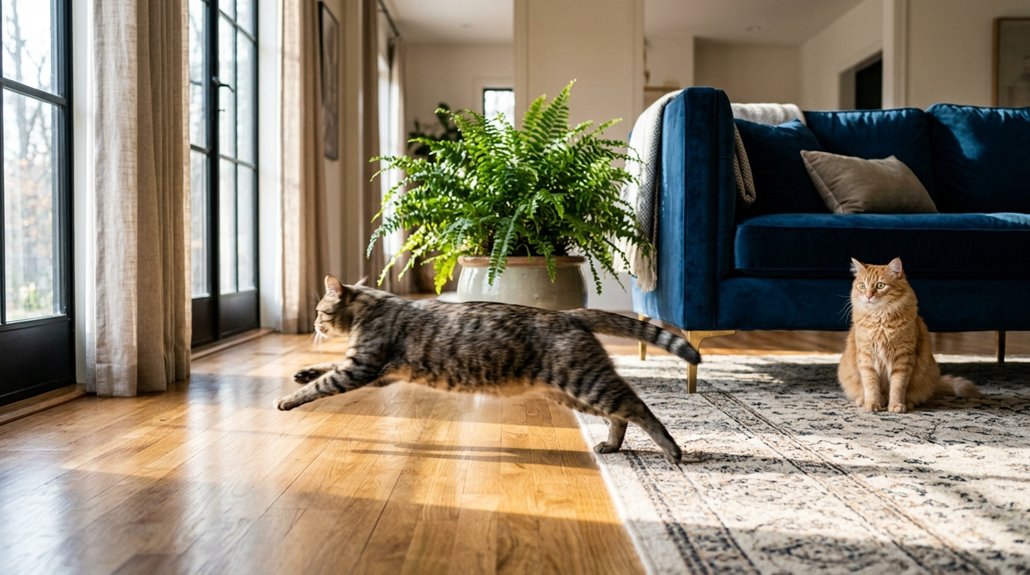
Cats zoom around due to frenetic random activity periods (FRAPs), a normal expression of pent-up energy and innate crepuscular behavior, particularly noticeable at dawn and dusk. It’s common after rest, use of the litter box, or due to sudden noises. Young cats, with high energy levels, experience this more frequently. Monitoring body language helps differentiate between playful and stressed zoomies. Discovering effective energy management strategies can help maintain balance and reduce unnecessary concerns.
Key Takeaways
- Cat zoomies, known as frenetic random activity periods, often occur after rest to release built-up energy.
- Zoomies align with cats’ natural crepuscular activity, typically at dawn and dusk.
- Common triggers include sleep, sudden noises, and post-litter box instincts, especially in younger cats.
- Regular interactive play with toys can manage and redirect excess energy, reducing spontaneous zoomies.
- Monitor body language during zoomies; relaxed playfulness is normal, but tense posture may indicate anxiety or health issues.
Understanding Cat Zoomies
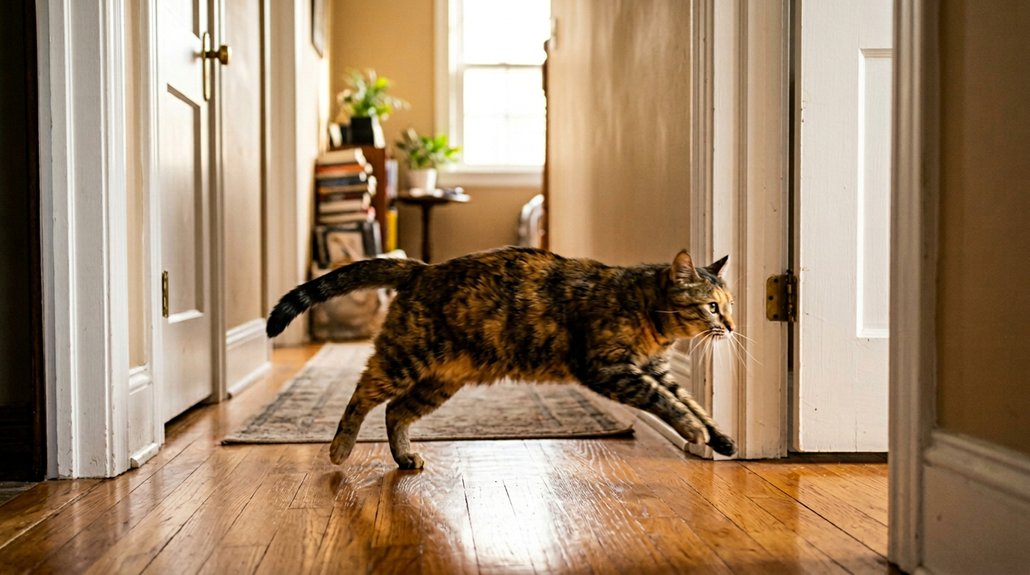
Imagine a small plush toy skittering across the floor—this might give you a glimpse into the frenetic world of cat zoomies. These energetic outbursts, known scientifically as frenetic random activity periods (FRAPs), are intrinsic to feline behavior. They often occur after rest, aligning with cats’ crepuscular nature, when instinctual activity is heightened at dawn and dusk. For felines, zoomies serve as a mechanism to expend built-up energy, especially in younger, more active cats. While observing these bouts, it’s critical to note the cat’s body language. Normal zoomies display relaxed playfulness, whereas tense posture may indicate underlying anxiety or health concerns. By understanding these instinct-driven activities, engaging your cat through interactive play guarantees their well-being.
Why Does My Cat Zoom After Using the Litter Box?
You might notice your cat energetically zooming around the house after using the litter box due to vagus nerve stimulation, which triggers excitement and a burst of energy. This behavior can be a natural, instinctual response, as your cat feels relieved and instinctively compelled to run and play after a toileting session. It’s especially common in younger cats and kittens, who have higher energy levels and are naturally more playful.
Vagus Nerve Stimulation
Ever wondered why your cat suddenly darts around the house after using the litter box? It’s often due to vagus nerve stimulation. When your cat defecates, their vagus nerve may activate, leading to a reflex that sparks excitement and energetic movement. This feline excitement is not unusual; it’s tied to natural patterns aligned with their crepuscular activity during dawn and dusk.
| Term | Description | Impact |
|---|---|---|
| Vagus Nerve | A cranial nerve influencing heart, digestion | Stimulates zoomies |
| Feline Excitement | Enhanced energy from nerve reflexes | Playful antics and darting |
| Crepuscular Behavior | Active during dawn and dusk | Instinctual energy boost |
Understanding this behavior emphasizes your cat’s joy rather than distress, helping you appreciate their playful nature post-litter box.
Energetic Post-Litter Relief
When cats experience energetic post-litter relief, it often leads to an intriguing behavior known as “zoomies.” After using the litter box, this sudden burst of energy frequently occurs due to the stimulation of the vagus nerve, triggering a reflex that results in high activity levels. This excitement reaction, characterized by swift running and playful behavior, is particularly prevalent among younger cats. They possess higher energy levels and naturally tend toward playful expressions. Zoomies often align with normal crepuscular activity patterns, making these energetic episodes common around dawn and dusk. Though this behavior is generally normal and indicative of natural instincts, keep an eye out for any signs of distress or discomfort—consult a veterinarian if your cat seems unusually stressed after litter box use.
Common Triggers: What Causes Zoomies?
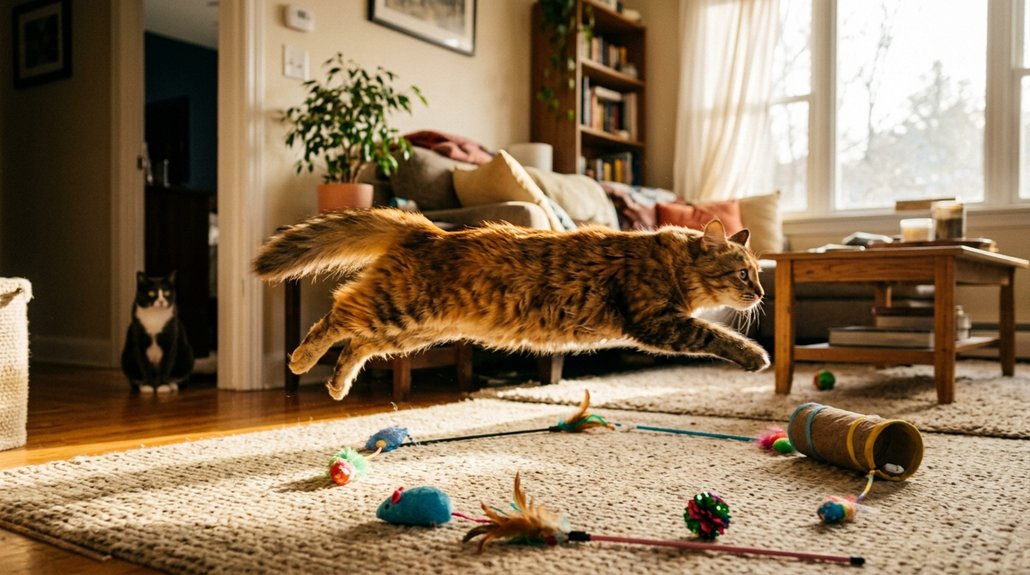
You’ll find that zoomies in cats often result from two main factors: energy release mechanisms and environmental or instinctual triggers. After long sleep periods, your cat experiences built-up energy that needs an outlet, aligning with their natural activity peaks during dawn and dusk. Additionally, zoomies can be prompted by external stimuli like sudden noises or natural cat instincts, such as excitement after using the litter box.
Energy Release Mechanisms
Cats, known for their bursts of energy that take form as zoomies, exhibit this behavior primarily as a mechanism for releasing pent-up energy. Following 12 to 18 hours of restful sleep, they experience an innate need for energy release, which is strategically aligned with their crepuscular activity patterns, typically seen at dawn and dusk. This behavioral expression often manifests after specific triggers, like the aftermath of using the litter box, where stimulation of the vagus nerve can activate playful charges around the house. Additionally, juveniles and kittens display more frequent zoomies due to their elevated energy levels. Observing these patterns, one can conclude that the zoomies are a complex behavioral expression of energy release, essential for fulfilling their instinctual and physiological requirements.
Environmental and Instinctual Triggers
Apart from the physiological need to release pent-up energy, several environmental and instinctual triggers can catalyze the spontaneous bursts of activity commonly known as zoomies. Environmental stimuli, like sudden noises, the presence of catnip, or interactions with other pets, often provoke these active periods. Additionally, the act of using the litter box may stimulate the vagus nerve, leading to a burst of excitement. Younger cats, with naturally higher energy levels, frequently exhibit zoomies as an extension of their instinctual behavior to hone hunting skills through play. Cats’ crepuscular nature means they’re most active during dawn and dusk, aligning their bursts of energy with instinctual hunting practices. These movements are influenced by their unique feline anatomy, allowing for rapid, agile movements.
How Excess Energy Leads to Zoomies
An impressive 12 to 18 hours of sleep each day positions cats as masters of rest, yet this prolonged downtime contributes to the need to expel excess energy in bursts known as zoomies. These hyperactive episodes are often linked to energy management challenges in indoor cats lacking exposure to natural activity alternatives. Crepuscular by nature, cats display heightened activity at dawn and dusk, releasing pent-up energy through intense, playful sprints that mimic instinctual hunting behavior. Regular interactive play sessions can greatly diminish the frequency and intensity of these episodes by providing valuable physical and mental stimulation. Without such outlets, the accumulation of excess energy can result in spontaneous zoomies, transforming your home into a stage for their lively antics.
Strategies to Redirect Your Cat’s Energy
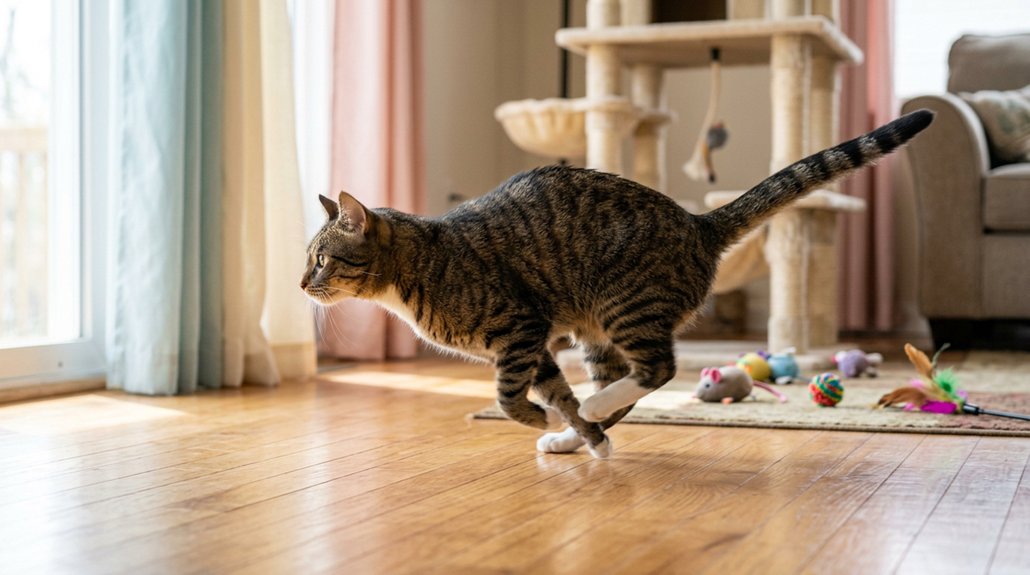
To effectively manage your cat’s zoomies, establishing a consistent playtime routine is essential. Interactive toys like wands and lasers can play a key role in directing their energy towards constructive activities. Regular engagement not only promotes physical activity but also helps in moderating their unpredictable bursts of energy.
Establish Playtime Routine
Establishing a consistent playtime routine is essential for channeling your cat’s energy and preventing those unpredictable zoomies. Regularly scheduled playtime offers numerous benefits, like reducing stress and supporting a healthier emotional state. To effectively maintain your cat’s energy levels, follow these scheduling tips:
- Multiple Short Sessions: Engage your cat in several brief play periods each day instead of one long session to sustain energy levels evenly.
- Interactive Activities: Use toys such as wands or laser pointers to stimulate hunting instincts, enhancing both mental and physical health.
- Treat Dispenser Toys: Encourage physical and mental challenges during mealtime with treat dispensers, making the experience enjoyable.
- Toy Rotation: Regularly rotate toys to keep playtime fresh and exciting, ensuring sustained interest.
Implementing these strategies can alleviate hyperactivity.
Use Interactive Toys
Release your cat’s energy in productive ways by utilizing interactive toys, which are vital tools for managing those unpredictable zoomies. Interactive play with wand toys and laser pointers taps into your cat’s hunting instincts, channeling excess energy into focused engagement rather than chaotic bursts. Toy variety is important; rotating various toys keeps your cat stimulated, reducing boredom that often results in spontaneous activity. Puzzle feeders add an intricate dimension to mealtime, demanding mental effort that aids in managing energy outside play sessions. Implement treat dispenser toys to further encourage active play, promoting both physical exercise and mental enrichment. Short, frequent interactive play sessions throughout the day emulate natural hunting behaviors, effectively balancing your cat’s energy levels while maintaining a harmonious environment.
When Are Zoomies a Sign of Anxiety?
How can you tell when your cat’s zoomies are linked to anxiety rather than mere playfulness? Understanding anxiety indicators and observing behavioral patterns is essential. Frantic or uncoordinated movements during zoomies can signal stress. Look for these specific signs:
- Tense posture: Your cat might adopt a stiff stance.
- Dilated pupils and flattened ears: These are common anxiety indicators.
- Puffed-up tail: This suggests your cat is on high alert.
- Excessive vocalizations or hiding: These behaviors often accompany anxious zoomies.
If your calm cat suddenly has a burst of zoomies, there could be underlying anxiety. Consider environmental factors or changes that might trigger such episodes. Observations like these are vital to distinguishing between playful energy and potential anxiety-driven behavior.
Managing Zoomies in Smaller Living Spaces
Managing your cat’s zoomies in smaller living spaces requires strategic planning. With limited room, investing in cat furniture like trees or shelves is vital. These vertical spaces offer safe exploration while minimizing chaos from sudden energy bursts. Incorporate energy outlets by establishing routine enrichment through interactive toys and active play sessions. Treat puzzles and engaging toys serve as effective environmental enhancements by providing mental stimulation that can reduce zoomie episodes. Additionally, aligning feeding schedules with your daily routine helps balance your cat’s activity, lessening disruptions from spontaneous dash sessions. Regular, structured play periods fulfill their natural hunting instincts and prevent boredom, essential in a confined environment. Optimize these strategies to manage your cat’s energy effectively in any spatial constraints.
How Playtime Reduces Zoomies
Having strategically organized your living space for ideal feline exploration, addressing the root cause of your cat’s zoomies through dedicated playtime becomes the next logical step. Regular playtime sessions offer numerous playtime benefits, primarily aiding in energy management by helping cats expend built-up energy. To effectively channel your cat’s chaotic energy:
Unleash your cat’s energy with dedicated playtime for ideal feline exploration and blissful rest.
- Interactive toys like wand toys and laser pointers provide vigorous physical activity.
- Treat puzzles engage their minds, offering mental stimulation.
- Structured routines align playtime with natural daylight, easing restfulness at night.
- Consistent frequency prevents sudden energy surges during inconvenient times.
Do Cats Outgrow Zoomies?
Despite common beliefs, cats typically don’t outgrow zoomies completely. Age factors considerably influence the frequency and intensity of these energetic bursts. In kittens and younger cats, high energy levels and a natural drive for play and exercise make frequent zoomies a regular occurrence. As cats grow older, especially entering their senior years, they may experience zoomies less often due to decreased energy levels. A well-structured daily play routine during their younger years can aid in managing their exuberance effectively. However, verify to monitor older cats, as excessive zoomies could indicate underlying health issues. Throughout a cat’s life, an enriched environment and consistent play can help manage their natural tendencies, maintaining a healthy balance in their activity levels.
How to Recognize and Respond to Zoomies?
Understanding why cats experience zoomies can help in recognizing and responding to this behavior effectively. Zoomies are brief episodes, lasting just a few minutes, which are part of normal cat behavior. They often occur after rest, at dawn or dusk, or post-litter box use. Here’s how you can manage this:
- Monitor Zoomies Duration: Keep an eye on how long the activity lasts to guarantee it doesn’t signal distress.
- Maintain Cat Safety: Make certain your home is free of hazards like sharp objects and open windows where a cat might accidentally get hurt.
- Distinguish Behaviors: Look for tense posture or unusual vocalizations to rule out anxiety.
- Channel Energy: Engage your cat with regular playtime and interactive toys to reduce frequency.
Frequently Asked Questions
Why Is My Cat Zooming Around the House?
Your cat’s zoomies are a display of cat behavior driven by energy release. These bursts tap into their hunting instincts and playtime habits, providing a natural way to expend energy typically after sleep or during active periods.
What Is “I Love You” in Cat Language?
In cat communication, “I love you” can be a symphony of slow blinks, gentle purrs, soft meows, and raised tails, a concerto of affection echoing common feline behaviors, indicating trust and bonding between you and your cat.
What Is the 3-3-3 Rule for Cats?
The 3-3-3 rule describes a newly adopted cat’s behavior adjustment period, spanning feline acclimatization in three stages. Initially, cats may hide, then explore and socialize, eventually exhibiting exercise habits reflecting their true, settled behavior.
Do Zoomies Mean a Cat Is Happy?
Zoomies are like fireworks of joy in cats, clearly indicating happiness. This behavior channels innate play energy, showcasing healthy cat behavior that emphasizes their need for exercise. A content cat often partakes in these energetic bursts gleefully.
Conclusion
In addressing your cat’s zoomies, you’re uncovering a fascinating facet of feline behavior. Zoomies often manifest as a natural outlet for pent-up energy, with factors like post-litter box relief and environmental stimuli playing key roles. By channeling this energetic burst through interactive play and guaranteeing ample space, you’re not just mitigating potential chaos but also fostering a more balanced environment. While some cats may outgrow zoomies, recognizing and adapting to this instinct guarantees a harmonious home.