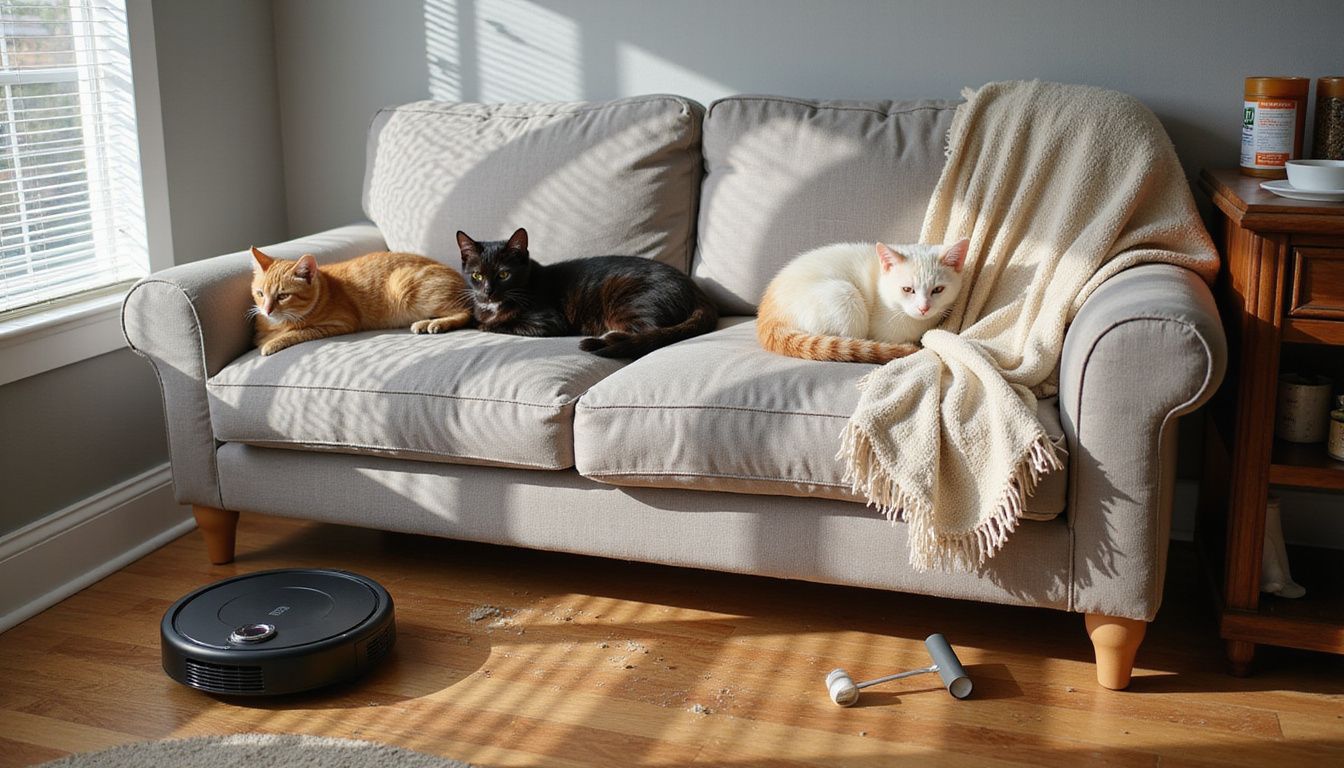
Ever look around your living room and wonder how one small cat made so much fur?
Maybe you’re standing at a pet store shelf right now, litter box in your cart, wondering if you’re really ready for this. That worry is normal, and it’s smart to think it through before you bring a cat home.
Here’s a little secret I can share: keeping a clean house with cats isn’t about being a neat freak. It’s about a few smart habits done consistently, and once you build them into your day, the mess stops feeling like a losing battle.
A multi-cat household needs one litter box per cat plus one extra. Self-cleaning options like the Litter-Robot can handle up to four cats and cut down on constant scooping. Your cleaning routine doesn’t need to be complicated or time-consuming.
Grab a cup of coffee, and let’s walk through this together. I’ll show you exactly what works for shedding, odors, and litter mess, so you can adopt with confidence instead of dread.
Key Takeaways
- Scoop litter boxes daily and use self-cleaning models like Litter-Robot to control odors and cut down on constant scooping.
- Brush cats two to three times weekly and use washable furniture covers to catch loose fur before it embeds deeply.
- Apply enzyme-based cleaners to break down urine and feces at the molecular level, eliminating odors instead of masking them.
- Place spill-proof mats under food bowls and litter boxes to contain mess, prevent water damage, and simplify weekly cleaning.
- Wash cat bedding weekly in hot water, vacuum pet-hair furniture two to three times weekly, and use air purifiers with carbon filters for fresher air.
Managing Litter Box Mess
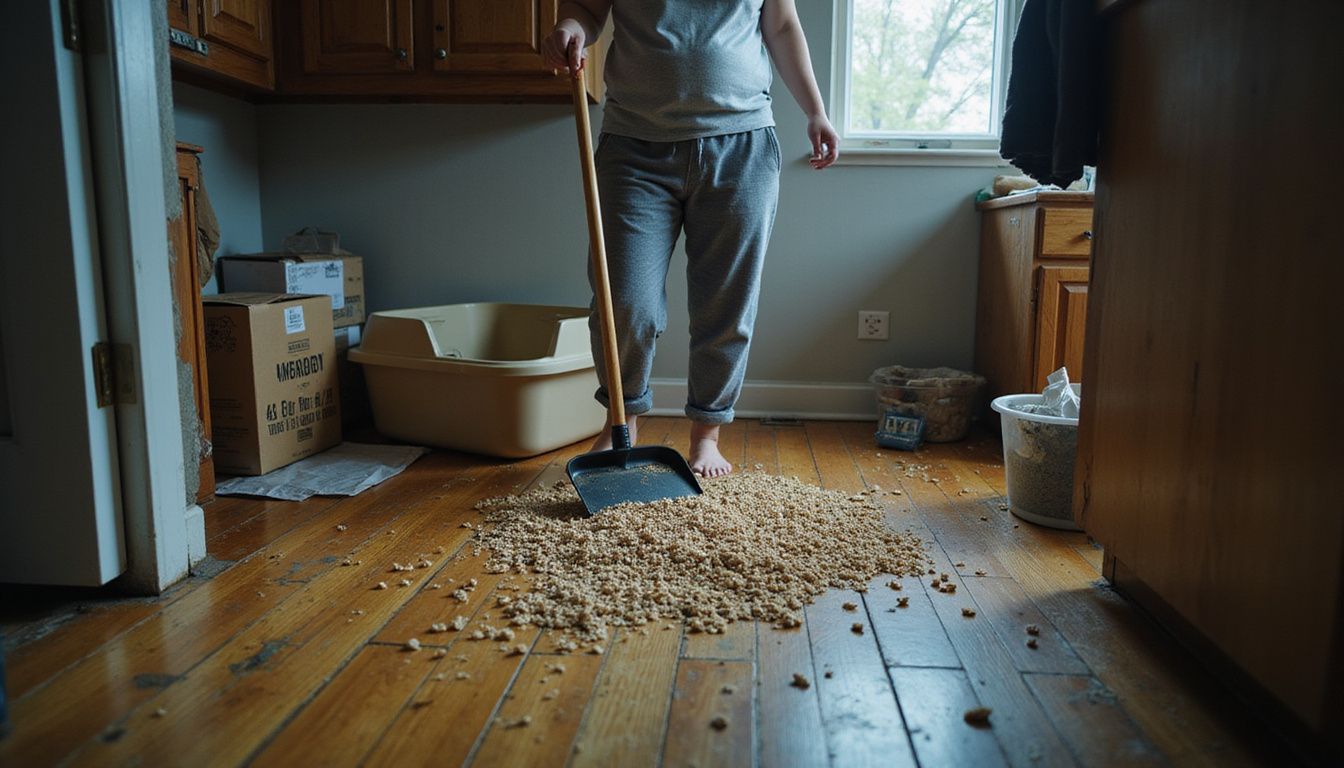
Your cat’s litter box demands attention daily. Litter tracking spreads everywhere, and odors build fast without a solid plan.
How often should I scoop my cat’s litter box?
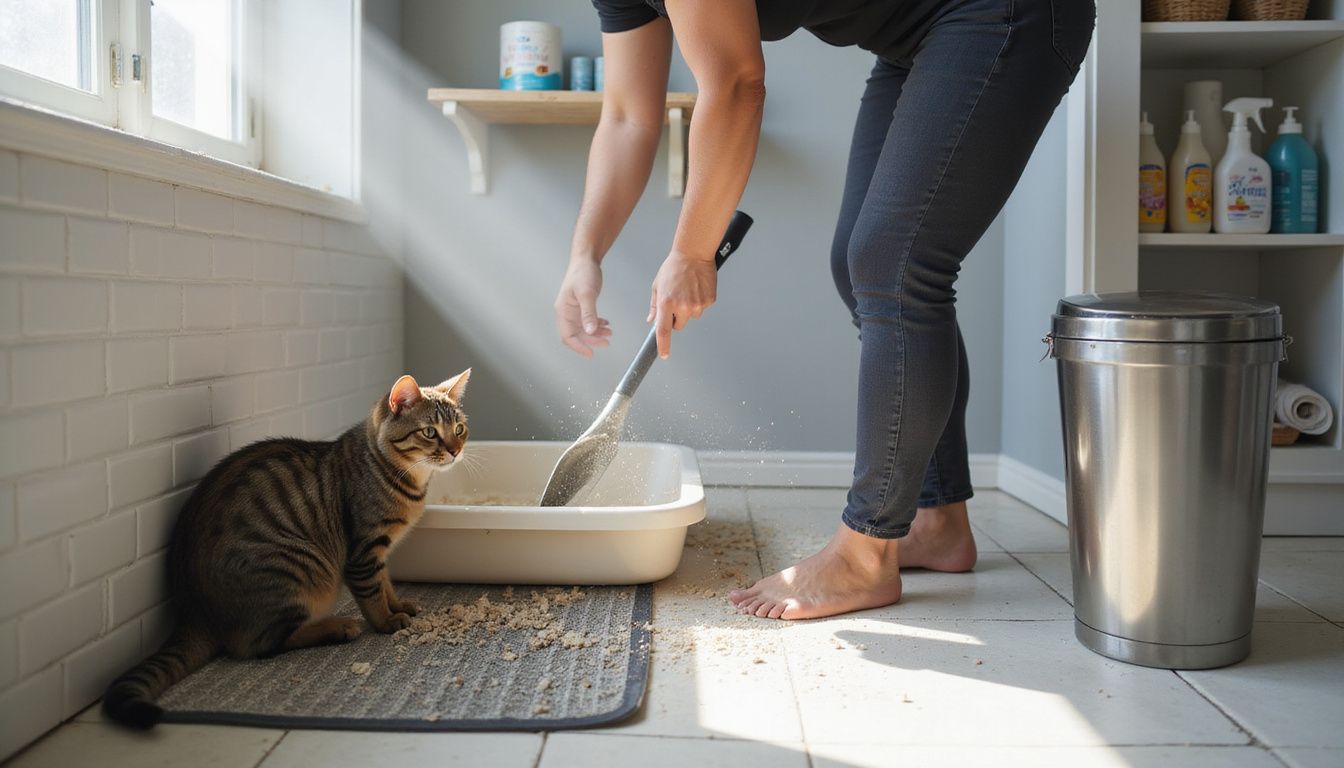
Scooping your cat’s litter box daily keeps odors under control and makes your cleaning routine manageable. Waste exposure increases odor issues fast if you skip this step. Make it part of your morning or evening habit.
High-quality litter works best for this daily routine. It traps smells and clumps better than cheap alternatives. A consistent schedule prevents messes from becoming overwhelming, and you’ll notice your home stays fresher when you stick to it.
Self-cleaning litter boxes like the Litter-Robot reduce exposed waste time, but they still need your attention around the box area. These automatic units improve odor control significantly and encourage regular use by every cat in your home.
A two-cat household tested this over six weeks, comparing daily manual scooping against an automatic self-cleaning unit. Exposed waste time dropped from an average of 18 hours a day to under 2 hours. Daily odor complaints fell from 4 out of 7 days to just 1 out of 7 days, and maintenance time near the box shrank from 10 minutes daily to only 3 minutes.
“Swapping to the automatic unit cut the time I spent at the box by about two thirds, and the apartment smelled better almost immediately, even with two cats.”
Those numbers show why automatic units work so well in multi-cat homes. Monthly cleaning of hidden areas near the litter box catches problems before they grow, so check your litter components regularly and swap out old litter completely every few weeks.
Deep cleaning the box itself stops bacteria buildup that causes stubborn smells. Spill-proof mats under the box catch stray litter and make daily upkeep easier. Daily scooping, weekly spot checks, and monthly deep cleaning together create a solid routine that keeps your space clean and your cats happy.
How can I reduce litter tracking around the house?
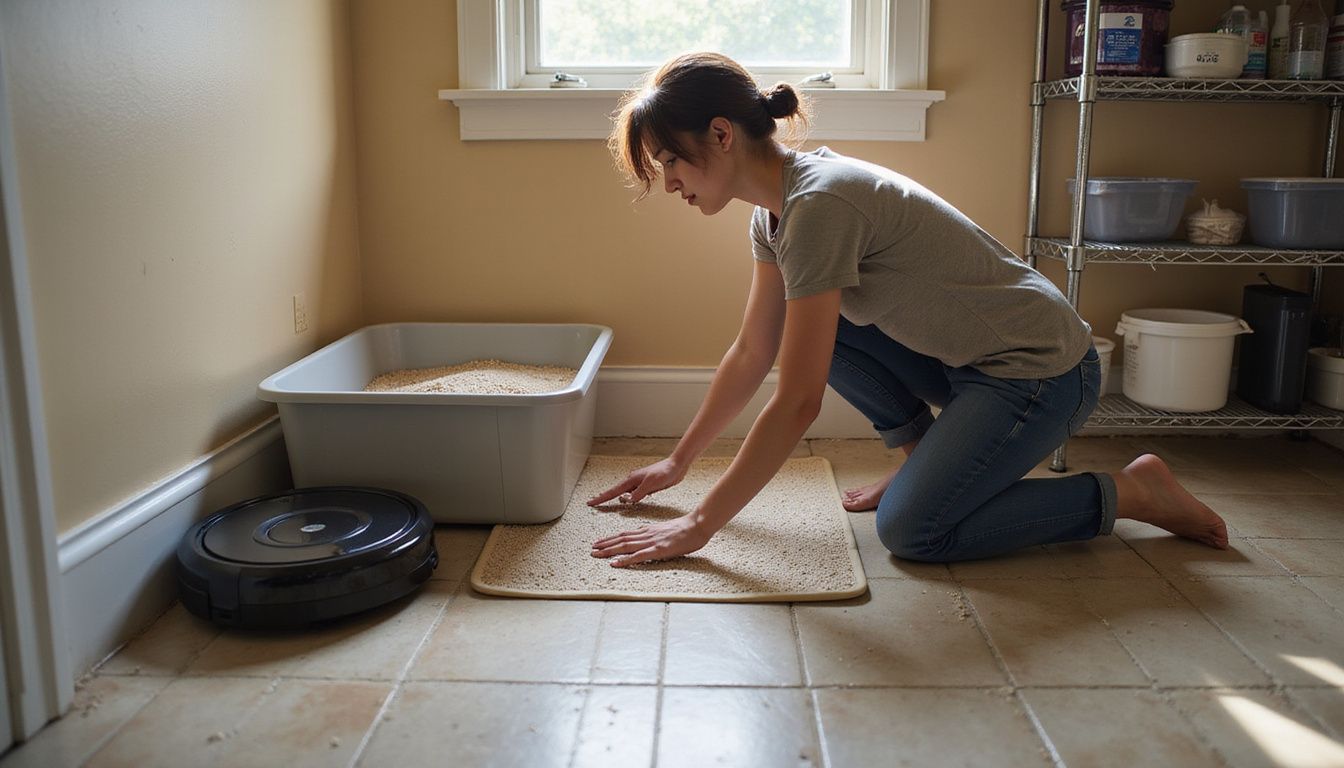
Litter tracking happens when your cat walks out of the box with granules stuck to their paws. You can stop this mess before it spreads with a few smart moves.
- Place a LitterTrap Mat directly outside your litter box to catch stray litter before it reaches your floors.
- Keep litter levels moderate, not overfilled, so your cat tracks fewer granules when exiting the box.
- Position your litter box in an area with good airflow to help dust settle faster.
- Use silicone or waterproof mats under the litter box for easy cleanup of escaped litter.
- Space multiple litter boxes throughout your home to reduce territorial issues and prevent tracking in one spot.
- Try automatic self-cleaning litter boxes like the Snow+ model to minimize dust and loose granules that stick to paws.
Here’s a tip that makes a bigger difference than most people expect: switch your litter type. According to 2026 veterinary and feline behavior experts, large pellet litters made from pine, paper, or coarse silica stop tracking at the source. The heavy granules can’t wedge into a cat’s paw pads or cling to their fur the way fine clay dust does.
Pair that switch with a robotic vacuum for daily pickup, and you’ll handle most stray litter before it ever spreads. Your cleaning schedule should include daily mat checks and weekly deep cleaning around the litter area, which sets you up nicely for the next challenge: controlling shedding.
Controlling Shedding

Your cat sheds hair everywhere, and that’s just part of the deal. The right brushing routine and furniture protection stop most of the fur from taking over your home.
What is the best way to brush my cat to reduce shedding?
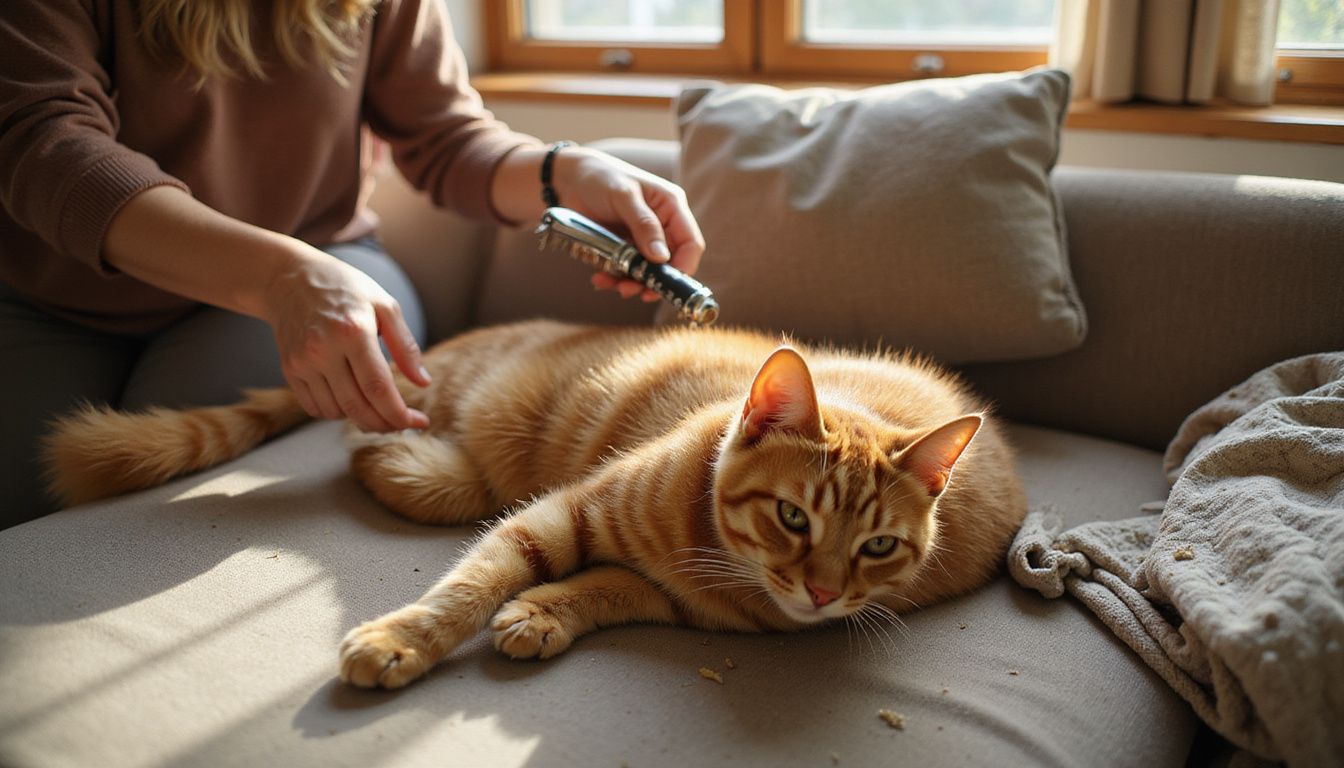
Brushing your cat regularly catches loose hair before it gets stuck in furniture and floats through your home. Consistent grooming reduces shedding dramatically and keeps your living spaces cleaner.
- Brush your cat two to three times each week for the best shedding control and healthier fur.
- Pick grooming tools suited to your cat’s coat type since short-haired and long-haired breeds need different approaches.
- Groom your cat in their favorite resting spot to catch loose fur right away.
- Long-haired cats benefit a lot from routine brushing since it helps prevent hairballs and matting.
- Empty vacuum filters and swap covers weekly so brushing works alongside your other cleaning tasks, not against them.
One household with a long-haired and a short-haired cat tested this over eight weeks. They brushed both cats three times weekly and rotated machine-washable couch covers every week. Before starting, clearing a favorite cushion took an average of 22 lint roller passes a day. After eight weeks, that dropped to just 6 passes a day, and vacuuming time on the living room furniture fell by 35 percent.
“Brushing and the washable covers made the sofa usable again after a day. I spend far less time vacuuming, and the couch looks cleaner between washes.”
That combined approach shows real results when you tackle shedding from more than one angle at once.
How do furniture covers help with cat fur?
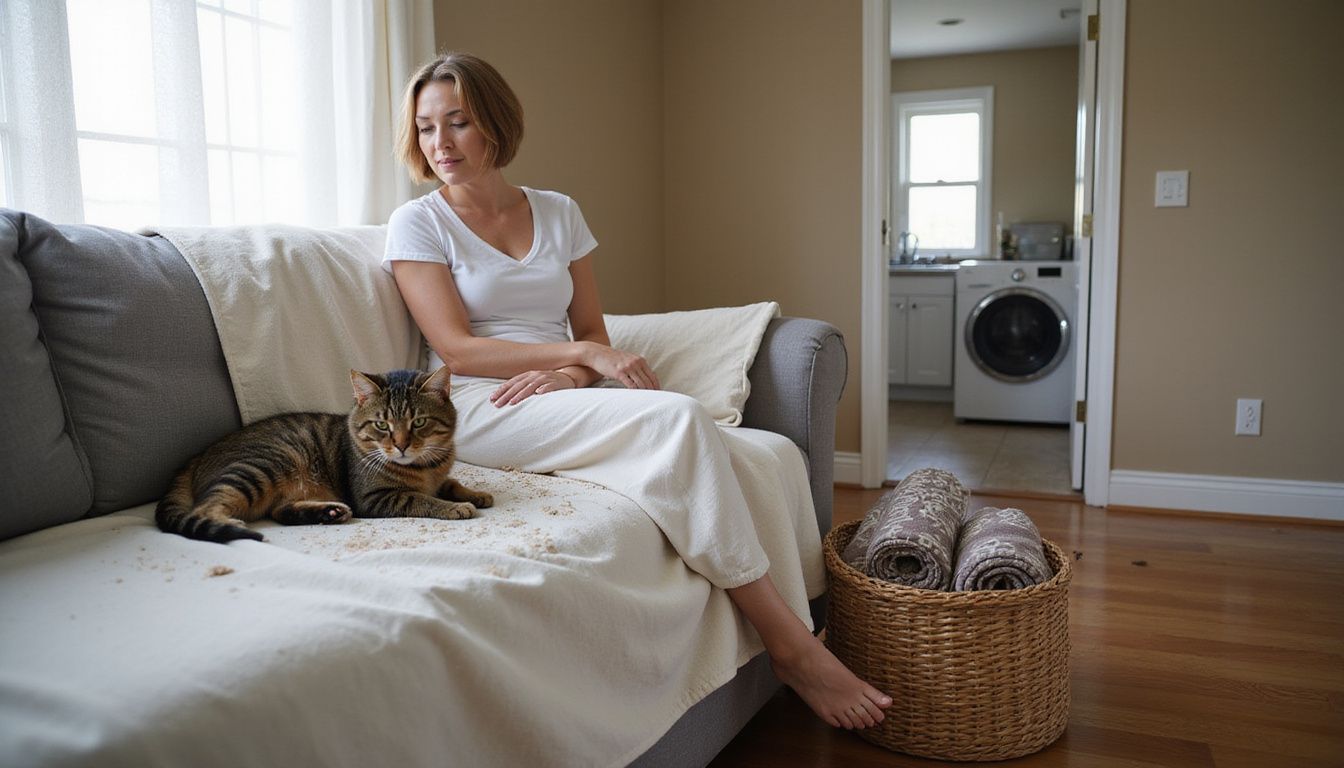
Brushing your cat cuts down on shedding, but furniture covers catch the fur that still escapes. Washable slipcovers and blankets create a barrier between your cat’s fur and your upholstery.
This simple trick means cat fur stays on the covers instead of digging deep into your couch or chairs. Toss them in the washing machine weekly to clear out dander and odor particles.
Rotating washable throws keeps your seating areas fresh without expensive deep cleaning. Fabric covers act like shields, making spot-cleaning quick and painless.
Your cat’s favorite resting spots stay protected because the covers catch fur before it spreads to other surfaces. Refreshing blankets before fur piles up stops the buildup before it takes over your home.
Covers work especially well in multi-cat homes since they handle extra shedding from several furballs at once. This approach fits right alongside other tools like pet air purifiers and enzyme-based cleaners, all working together to keep your home fresh for you and your new feline friend.
Reducing Odors
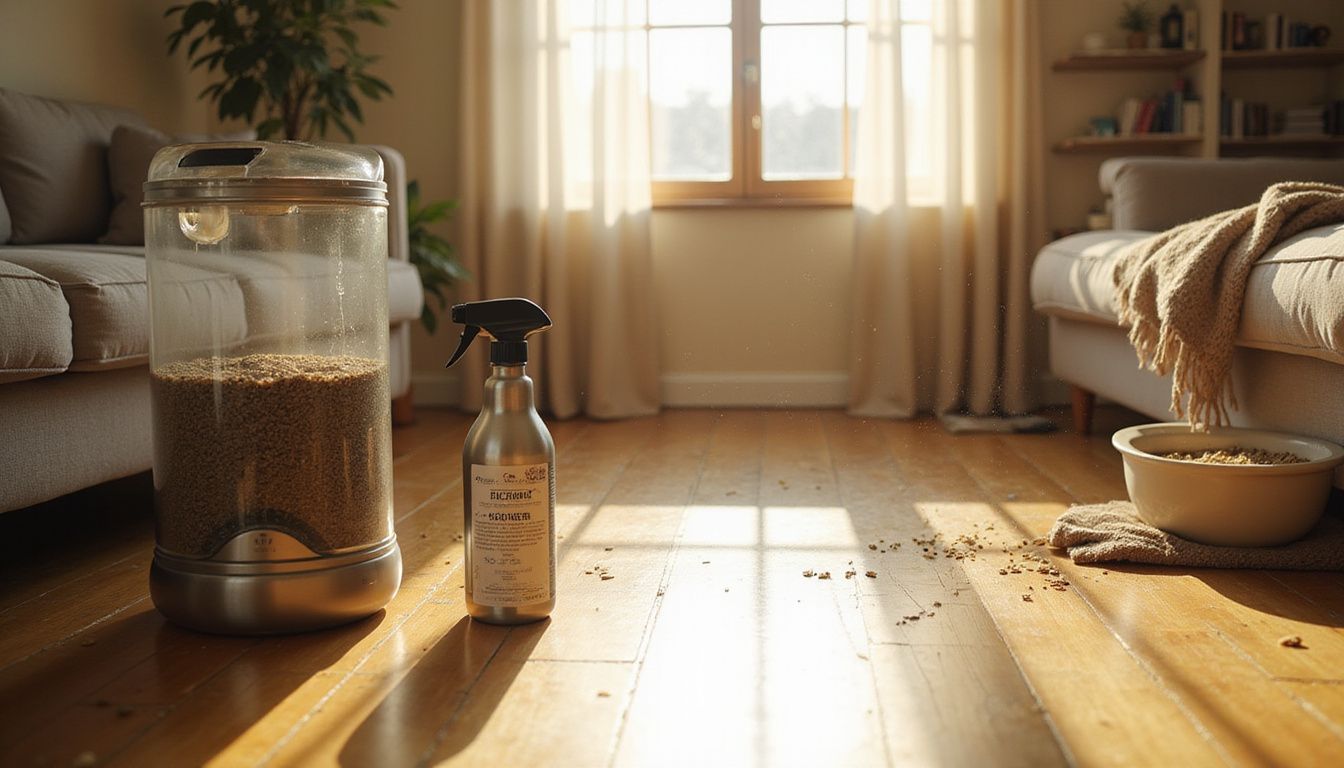
Your nose knows when something’s off, and cat odors can take over a home fast. Enzyme cleaners break down the source of smells, while air purifiers with carbon filters work behind the scenes to keep your air fresh.
How do enzyme cleaners work on litter box odors?
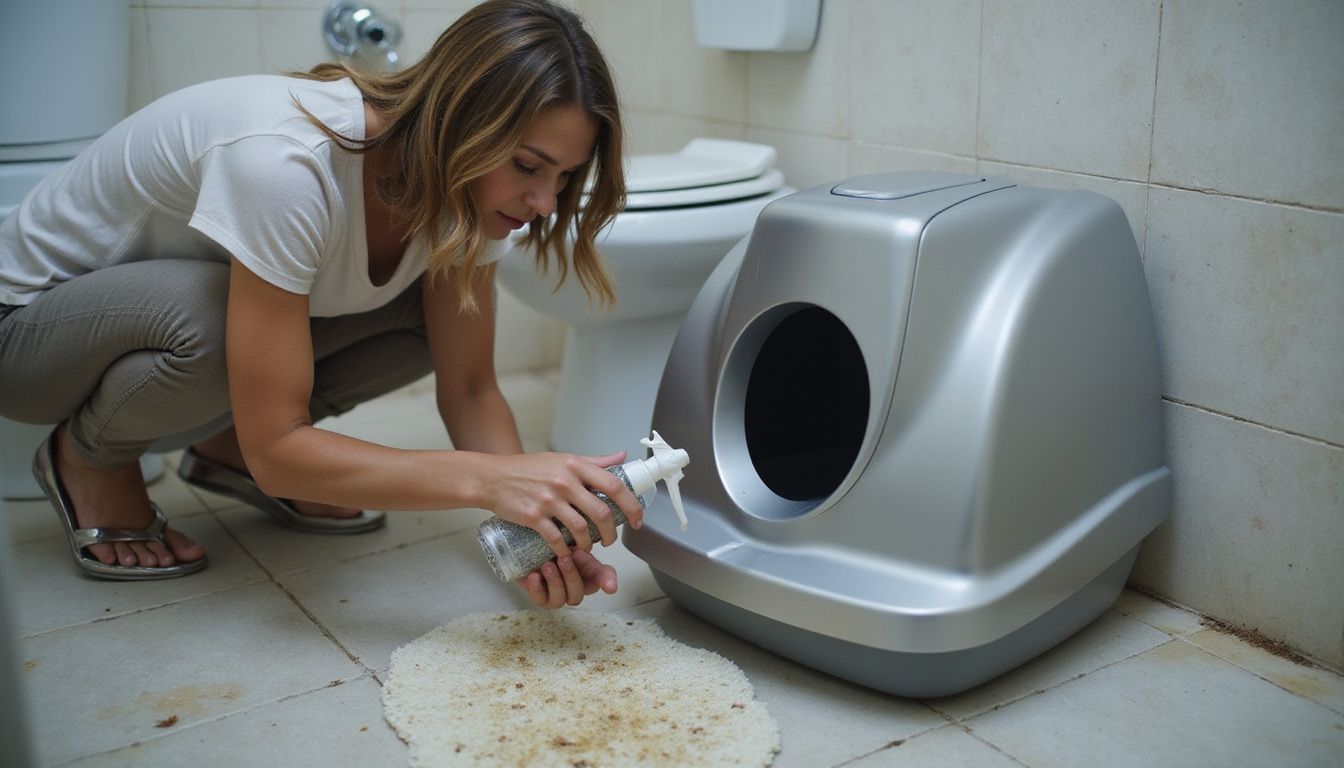
Enzyme-based cleaners tackle litter box odors at their source by breaking down organic material that creates those stubborn smells. They work differently than heavy fragrances, which only mask the problem instead of solving it.
Enzymes are natural proteins that attack urine, feces, and vomit residue at a molecular level. According to veterinary hygiene experts, specific proteins like protease and urease break uric acid down into carbon dioxide and water. Here’s why that matters: if even a trace of uric acid survives, your cat can still smell it and will mark that exact spot again.
Products like the Snow+ automatic self-cleaning litter box pair well with enzyme cleaners to keep your space fresh. The cleaners neutralize odors completely instead of leaving your home smelling artificially perfumed, and this proves especially useful in homes with more than one cat.
| Approach | 8-Week Cost | Odor Control Score (out of 5) |
|---|---|---|
| Enzyme cleaner plan | $34 (spray, cloths, deep-clean supplies) | 4.2 |
| Masking spray plan | $44 (air freshener refills and sprays) | 2.8 |
One owner summed it up well: “Spending a little on enzyme cleaner felt cheaper and more effective than constantly replacing air freshener refills.” Enzyme cleaners are safe for most surfaces you’ll find in cat homes, from tile to carpet to soft furnishings.
Apply them anywhere accidents or litter tracking happen, and they’ll clear the smell at its root. Pair enzyme cleaners with spill-proof mats and a solid litter routine, and you’ll have a fresh-smelling home that welcomes both you and your new feline friend.
Can air purifiers with carbon filters improve indoor air quality?
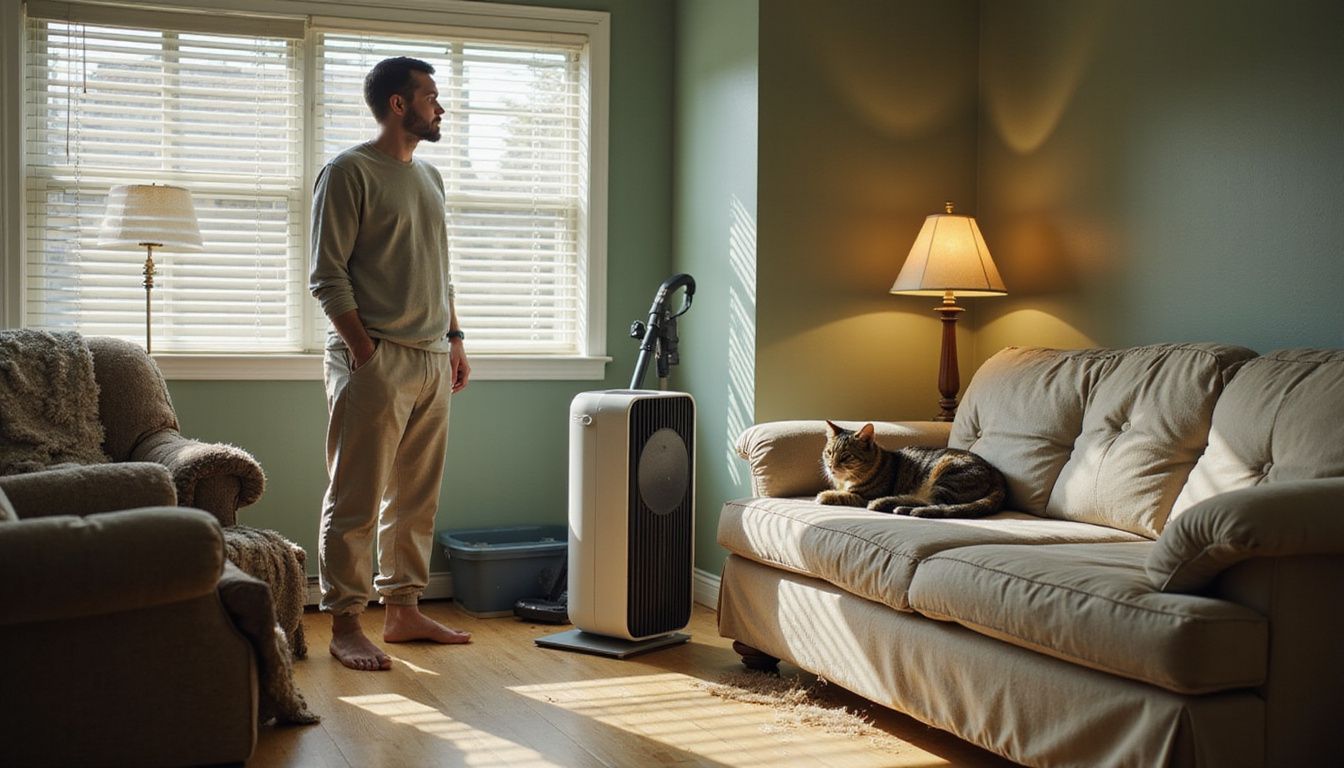
Air purifiers with carbon filters work hard to tackle the invisible stuff floating around your home. They pull in air, trap floating dander and hair, and filter out the odors cats leave behind.
HEPA and carbon filtration together create a powerful team for cleaning the air you breathe. Here’s a tip worth knowing before you buy: according to recent indoor air quality hardware reviews, you need a purifier with a pellet-based activated carbon filter to truly eliminate heavy ammonia and volatile organic compounds from litter boxes. Cheaper carbon-coated mesh filters mostly catch dust and won’t neutralize strong pet odors, so check the specs before you spend your money.
Place your purifier where it supports natural airflow instead of tucking it in a corner. Your living room, bedroom, or any room where dander and odors build up will benefit most.
- Choose a purifier with a pellet-based carbon filter, not just carbon-coated mesh.
- Set it up in the room your cat spends the most time in.
- Keep manual vacuuming and brushing going too, since purifiers work best as a backup, not a replacement.
Think of your air purifier as the backup player on your cleaning team, not the star. Washing cat beds, scooping litter boxes, and maintaining feeding areas with spill-proof mats all work together with this technology to create a truly clean space for you and your cat.
Keeping Feeding Areas Clean
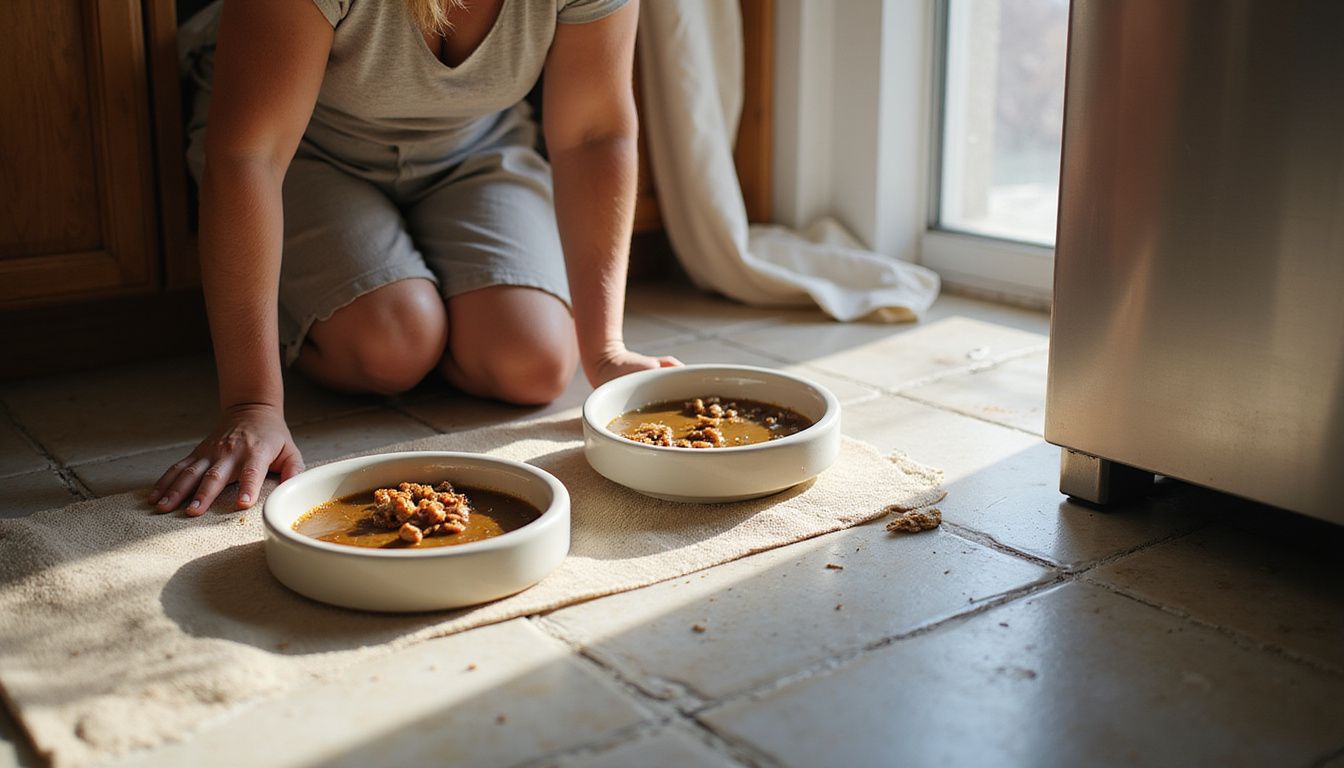
Your cat’s feeding area can become a magnet for mess, spills, and odors if you don’t stay on top of it. A spill-proof mat under your cat’s bowls stops food and water from spreading across your floors, which makes cleanup faster and easier.
How often should I wash my cat’s food and water bowls?
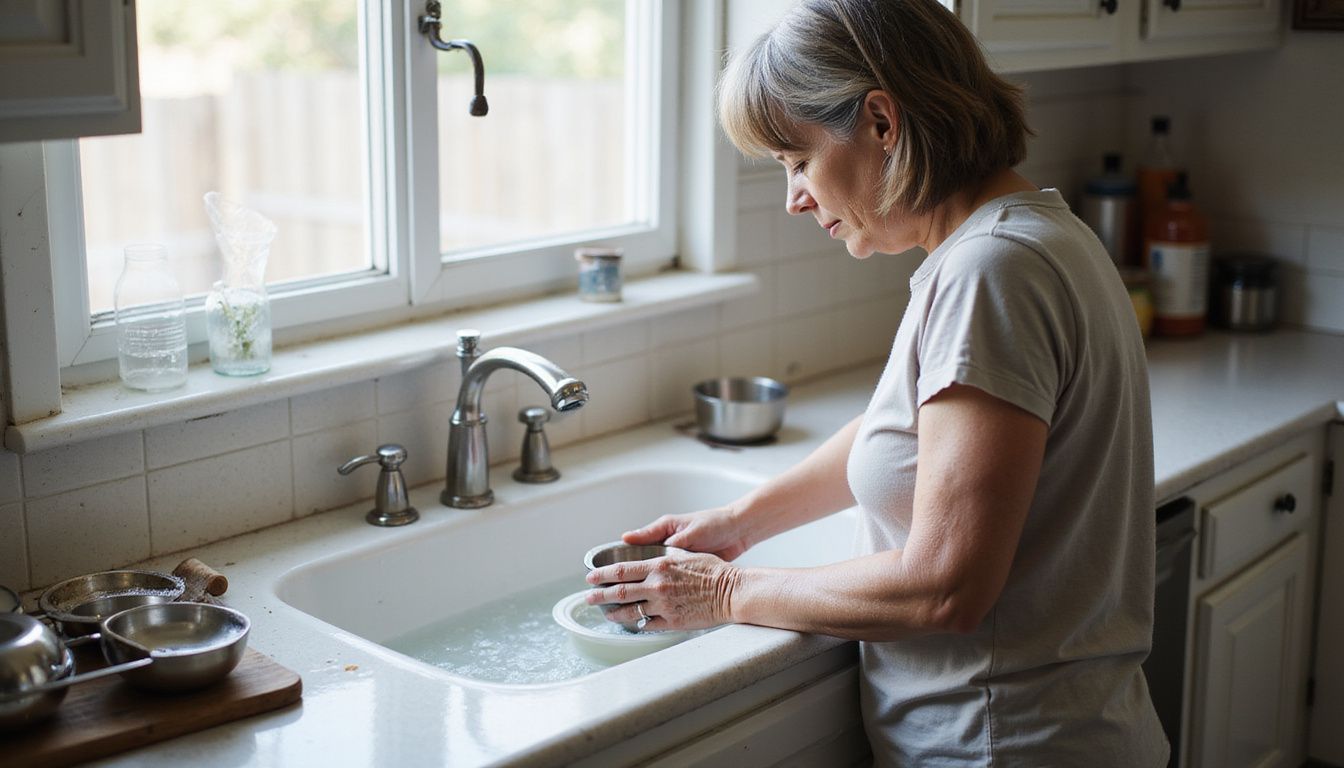
Here’s something that might surprise you. According to a landmark National Sanitation Foundation household germ study, pet food and water bowls rank as the fourth germiest spot in the entire home. Left unwashed, they can grow a slimy biofilm loaded with bacteria like E. coli and salmonella.
That’s exactly why washing bowls weekly (daily is even better) keeps bacteria from building up and keeps your feeding area fresh. Stainless steel or ceramic bowls work best because they resist bacteria growth better than plastic.
Pet-safe, unscented dish soap cleans bowls without leaving harmful residue behind. Swap out the water daily and clean the bowls during each water change for top hygiene, and check for cracks or chips during your weekly routine since damage traps bacteria in hard-to-reach spots.
If you have multiple cats, bump up your cleaning schedule to stay ahead of odor problems. An automatic pet feeder or a wireless weight-sensing pet fountain can help you manage feeding and water times, but hand-washing bowls remains essential for keeping things sanitary.
Think of weekly bowl washing as preventive care, much like brushing your cat or using spill-proof mats to catch mess before it spreads. It takes just minutes, yet it makes a real difference in your cat’s health and your home’s cleanliness.
What are the benefits of using spill-proof mats under bowls?
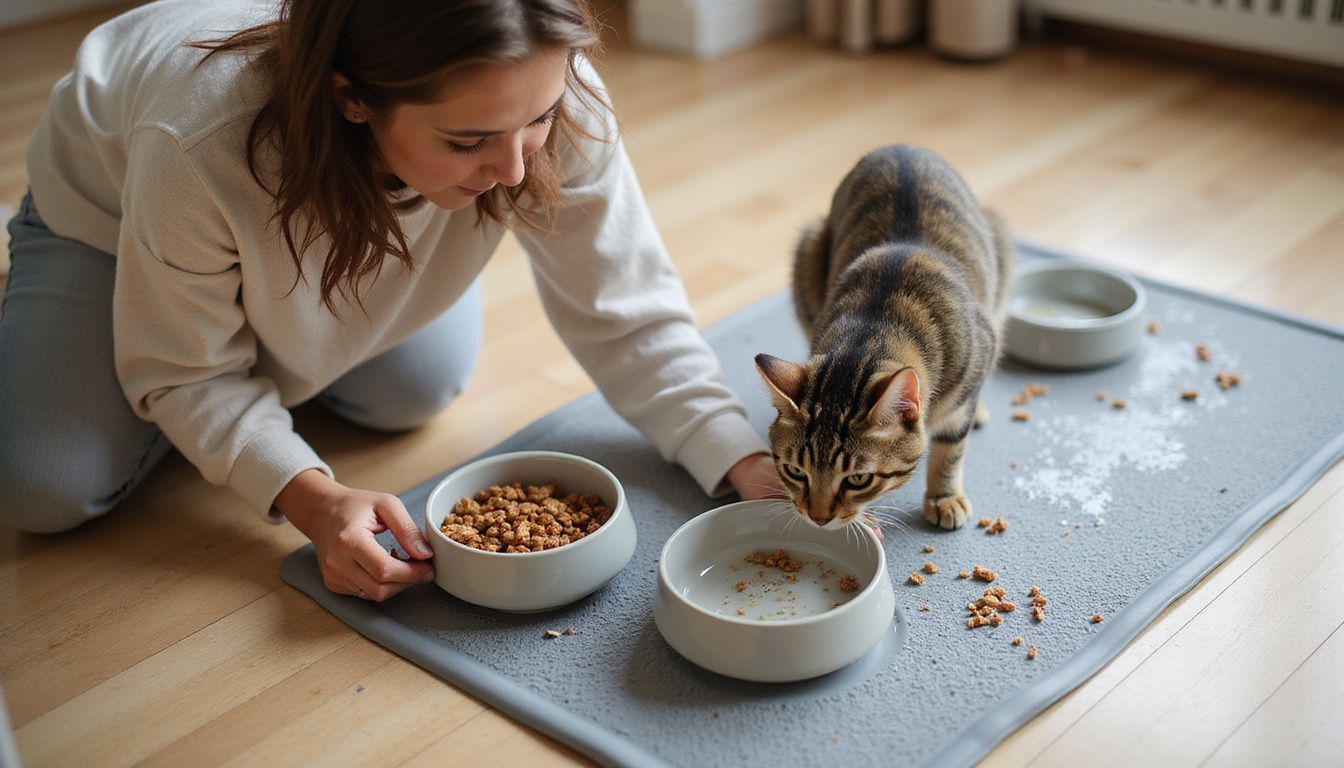
Spill-proof mats turn your feeding area into a clean, organized zone that protects your floors from water damage and stains. These mats make cleanup effortless, even with multiple cats sharing the space.
- Silicone or waterproof mats stop water from seeping into your flooring and reduce slipping hazards.
- Mats contain spills and crumbs right where they land instead of letting them spread.
- Your feeding zone stays visually tidy because mats create a defined boundary for bowls.
- Wiping down mats takes seconds, and you can wash them weekly along with the bowls.
- Mats help keep ants and pests away by containing food messes that might attract unwanted visitors.
In multi-cat homes, mats become essential for keeping feeding areas separate and cutting down on competition over food and water. They’re especially useful with kittens, who tend to splash water everywhere at mealtime.
Maintaining Soft Surfaces
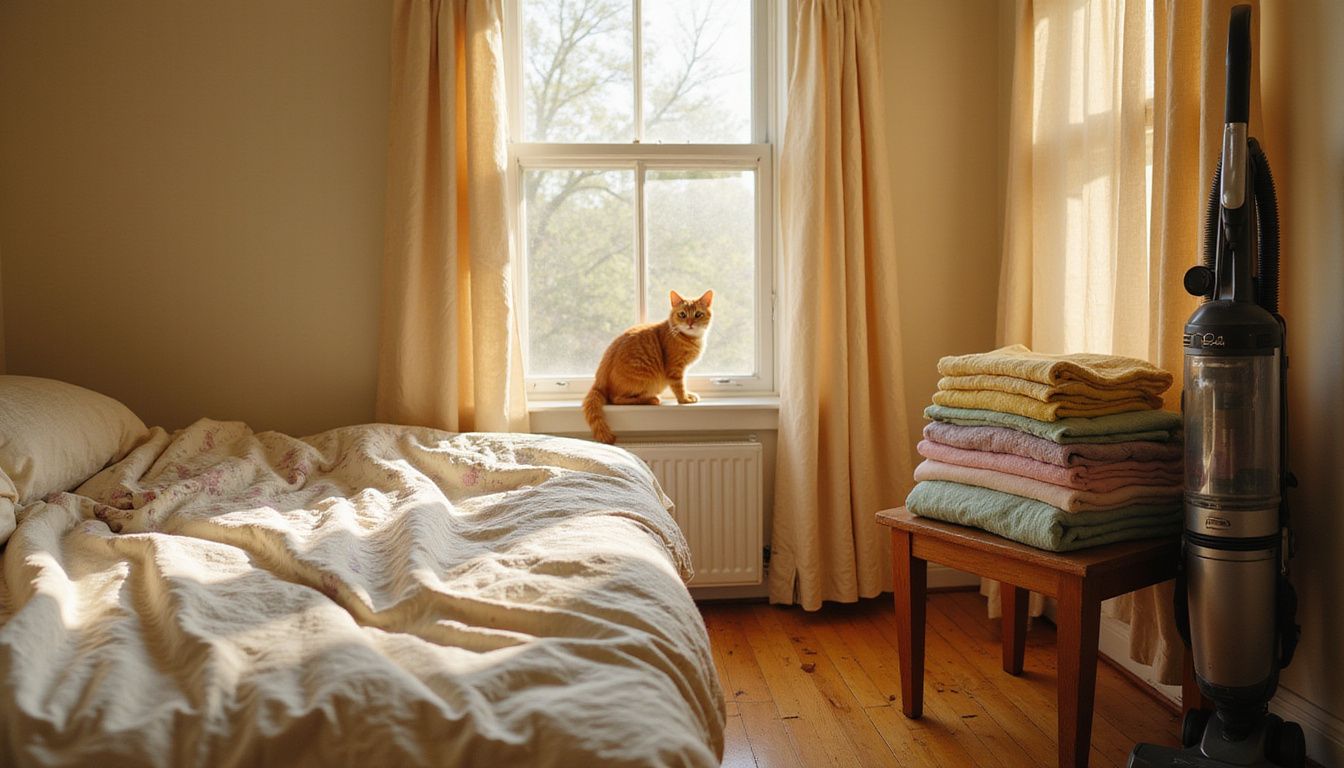
Your cat sheds fur on blankets, cushions, and beds constantly, so washing these items regularly keeps your home fresh and clean. A good vacuum tackles cat hair from carpets and furniture, making your living spaces feel new again.
How often should I wash blankets, cushions, and cat beds?
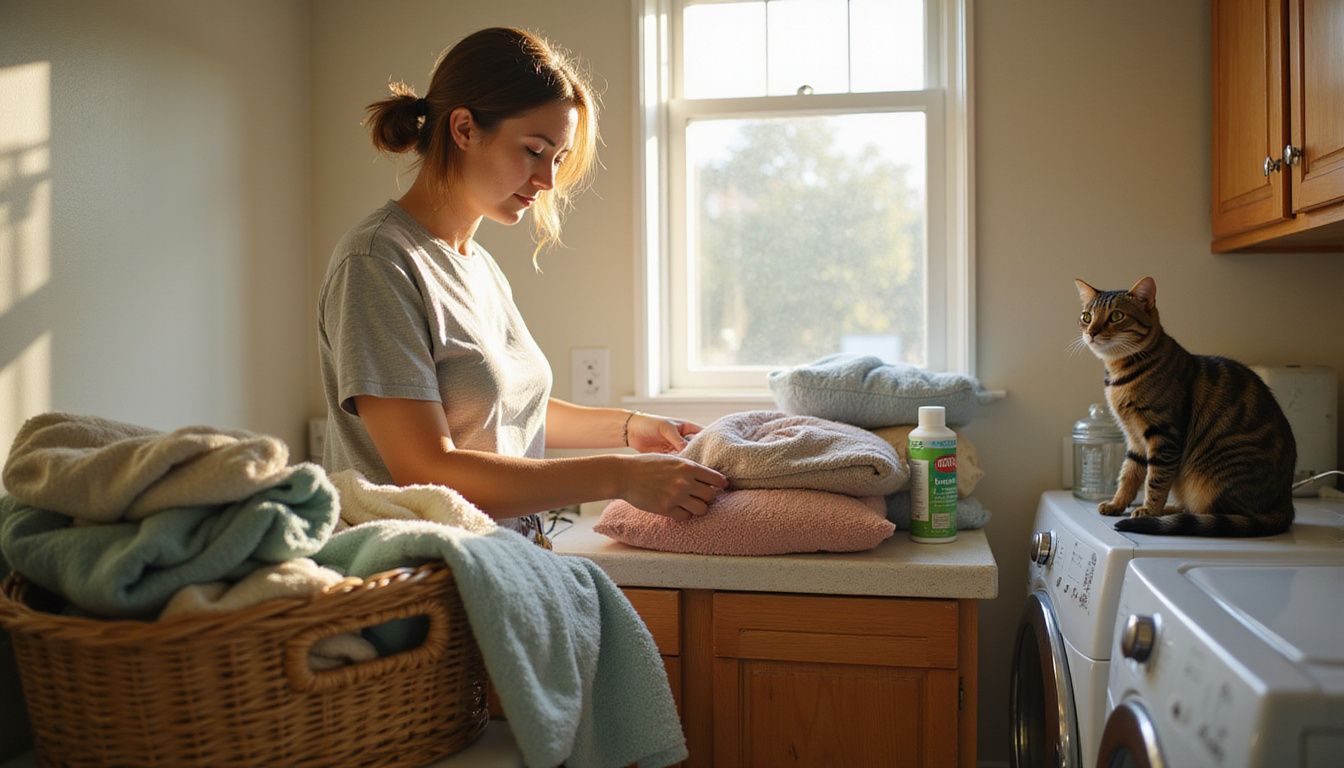
Washing cat bedding weekly keeps your home fresh and clears out embedded fur, dander, and odors before they build up. This matters even more if you have multiple cats or notice heavy shedding during certain seasons.
High-traffic cat zones need extra attention, so wash those blankets and cushions more often than other soft surfaces. Rotating washable throws prevents one spot from collecting too much hair and smell.
Here’s a detail most cleaning guides skip. According to allergy management guidelines from the Mayo Clinic, you need water at least 130°F to actually kill dust mites, break down dander allergens, and destroy any flea eggs hiding in the fibers. A cool rinse just won’t cut it for allergy control.
Use a gentle, pet-safe laundry detergent since harsh chemicals can irritate your cat’s skin. If your cat naps on one particular cushion or bed most of the day, that spot needs washing sooner than the rest.
Products like carefresh bedding materials work well for cat beds because they absorb moisture and odor naturally. Washing and rotating these surfaces regularly stops dander from piling up in one area, and that makes a real difference in how your home smells and feels.
What is the best way to vacuum carpets and furniture with cats?
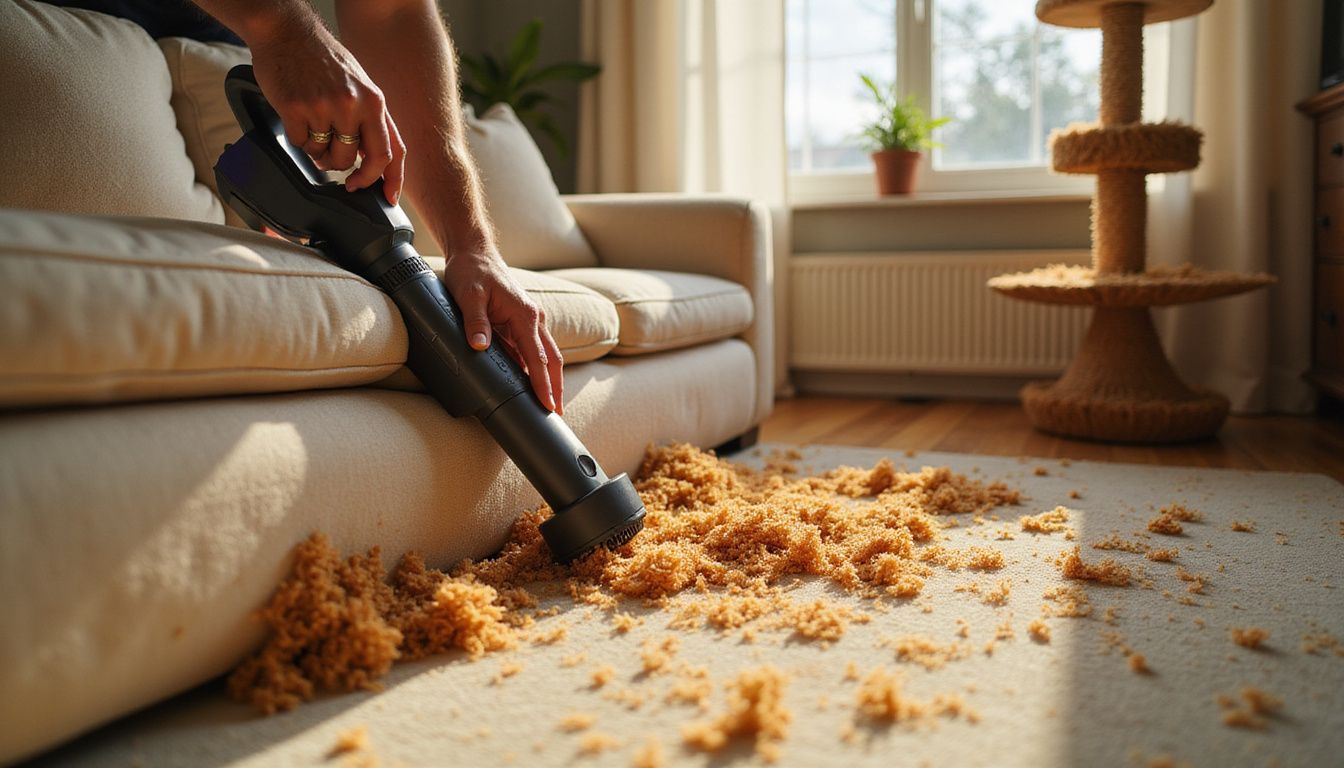
Once your soft surfaces are fresh and clean, tackling leftover hair needs a solid vacuuming plan. A vacuum built for pet hair becomes your best friend for managing fur on carpets and furniture.
- Pick a vacuum with strong suction that targets pet hair on floors and upholstery alike.
- Vacuum high-contact fabrics and cat tree surfaces two to three times a week.
- Focus on sofa seams, cushion edges, and cat trees since these spots collect the most hair.
- Use a specialized attachment for fabric seams, rugs, and window perches where hair hides easily.
- Increase your vacuuming schedule during shedding seasons when fur piles up faster.
- Empty vacuum filters regularly to keep suction strong and cut down on airborne allergens.
Spot-vacuum your cat’s favorite resting areas whenever you notice fur starting to build up. Robotic vacuums can handle daily maintenance between your deeper weekly cleaning sessions, which reduces airborne dander in the spaces where your cat spends the most time relaxing.
Conclusion
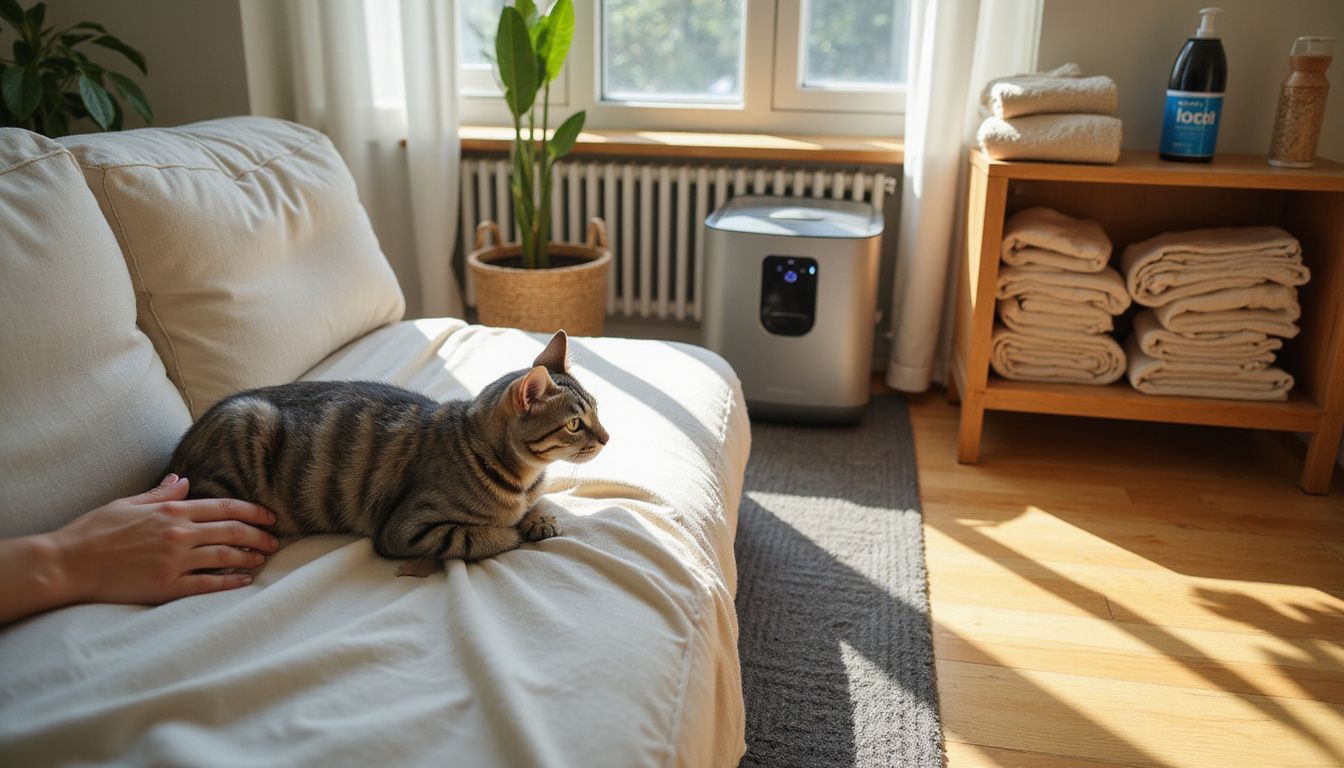
You now have the tools to turn your home into a clean, fresh space that works for both you and your cat.
Daily litter scooping, regular brushing, and smart use of enzyme cleaners tackle the three biggest challenges cat owners face. Spill-proof mats, air purifiers with pellet-based carbon filters, and self-cleaning options like the Litter-Robot cut down on your workload while keeping odors at bay.
Small habits matter more than perfection.
A quick vacuum pass on high-traffic fabrics twice a week and hot-water blanket washes prevent buildup before it becomes a problem. Start with one or two strategies from this guide, then layer in more as you find your rhythm.
A clean house with cats is absolutely within your reach, and your future cat will thank you for it.
FAQs
1. How do I stop cat hair from taking over my house?
Brush your cat regularly, about 2-3 times per week if you can. Regular brushing can reduce loose fur around your home by up to 60%, which is a real game-changer. A pet dryer box or browsing Instagram pages like interiorswithcats can give you more ideas for managing shedding.
2. What is the best way to control litter box odor?
Scoop that litter box every single day, no exceptions. Self-cleaning boxes like PetSnowy and CritterCare handle the dirty work automatically, which is honestly a lifesaver if you’re not home during the day.
3. Can technology really help with cat care and cleanliness?
Absolutely, and it’s easier than you think. A wireless weight-sensing pet fountain tracks your cat’s water intake so you can spot health issues early, and a feeder-robot keeps meals tidy and on schedule without spills.
4. How does understanding cat behavior help keep my house clean?
Cats scratch to maintain their claws and mark their territory, so it’s completely natural. Place scratching posts where they already like to spend time, and you’ll protect your furniture from most of the damage.
5. Are there payment options for pricier cat cleaning gadgets?
Many pet brands partner with Affirm to offer payment plans, which makes higher-end tools like automatic litter boxes (typically $250 to $500) easier on your budget. Pet expert Lori Gardner often says the right tools save you so much time and stress that they pay for themselves.