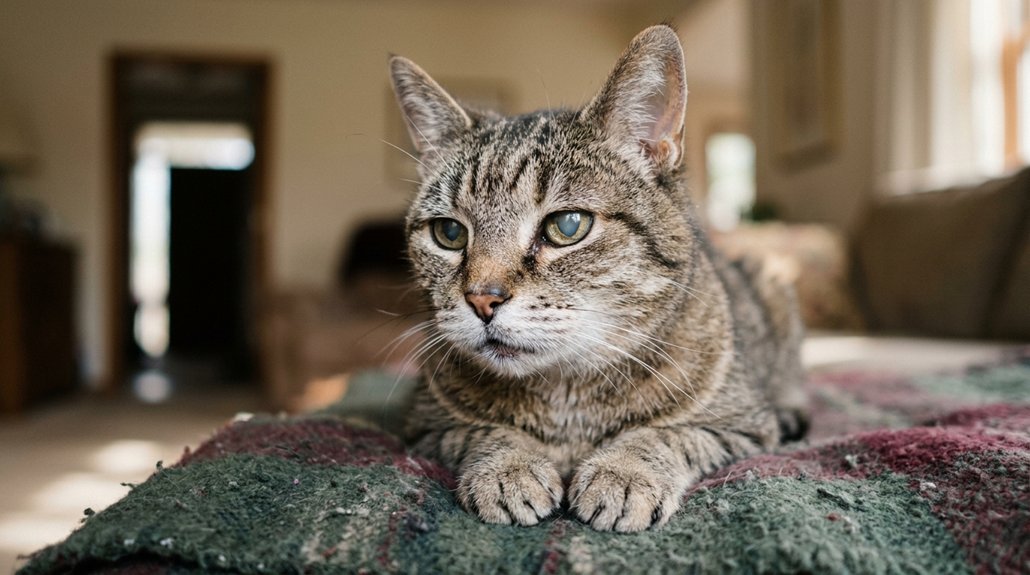
If your cat’s sleeping considerably more than usual, showing reluctance to play, or struggling with mobility, these may signal accelerated aging. Rapid weight changes or declining dental health can also be concerning indicators. Watch for vision or hearing loss through unresponsive behavior or bumping into objects. Behavioral shifts, like increased vocalizations or anxiety, suggest underlying issues. Understanding these signs can guide you to help your feline companion age gracefully and discover more essential insights ahead.
Key Takeaways
- Increased sleep beyond 16 hours daily can indicate mobility issues or other health concerns.
- Rapid weight changes, either gain or loss, may signal underlying health problems like organ dysfunction.
- Noticeable decline in dental health, such as bad breath or reluctance to eat, may suggest aging-related issues.
- Signs of sensory decline, like bumping into objects or ignoring sounds, could indicate accelerated aging.
- Behavioral changes, including irritability, disorientation, or excessive vocalizations, may reflect faster-than-normal aging.
Excessive Rest and Mobility Issues: Identifying Reduced Activity Levels
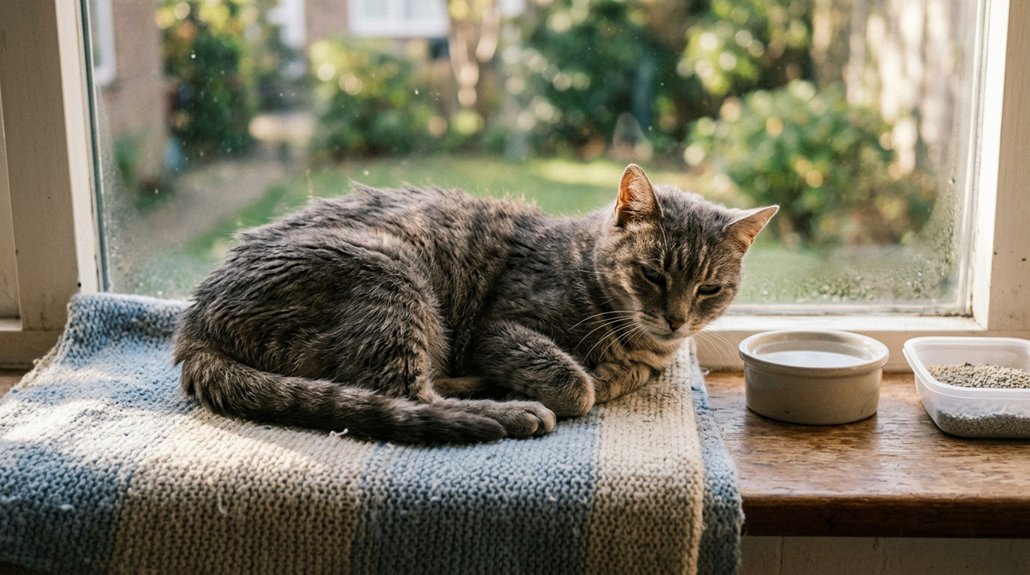
As cats age, it’s crucial to monitor their activity levels for signs of excessive rest and mobility challenges. While senior cats often sleep approximately 16 hours daily, sleep patterns that exceed this norm could signal health issues. Observing activity indicators like decreased playfulness or reluctance to engage can point to potential mobility concerns, such as arthritis, hindering their movement. Often, cats experience muscle loss, primarily in the hindquarters, aggravating jumping or climbing difficulties, thereby promoting a more sedentary lifestyle. It’s important to adapt their environment by ensuring easy access to essentials like food, water, and litter boxes to accommodate decreased mobility efficiently. Regular veterinary check-ups are vital for early detection and management of these activity-related changes in aging cats.
Spotting Rapid Weight Changes: When to Be Concerned
A noticeable change in your senior cat’s weight can be an important indicator of underlying health issues. Rapid fluctuations, whether loss or gain, necessitate vigilant weight monitoring. Hyperthyroidism, diabetes, and organ dysfunction are potential culprits, demanding prompt veterinary consultation. Their reduced caloric needs and slower metabolism mean unintentional weight gain is a risk if not carefully managed. Conversely, weight loss warrants immediate attention, given it could signal medical problems including organ issues. Regular health assessments play a crucial role in ensuring stable weight, enabling timely detection of potential concerns. Consistent weigh-ins offer invaluable insights into your cat’s well-being, helping you maintain their health through timely interventions when necessary. Don’t overlook significant weight changes—act swiftly to protect your cat’s health.
Is Your Cat’s Dental Health Declining? What to Watch For
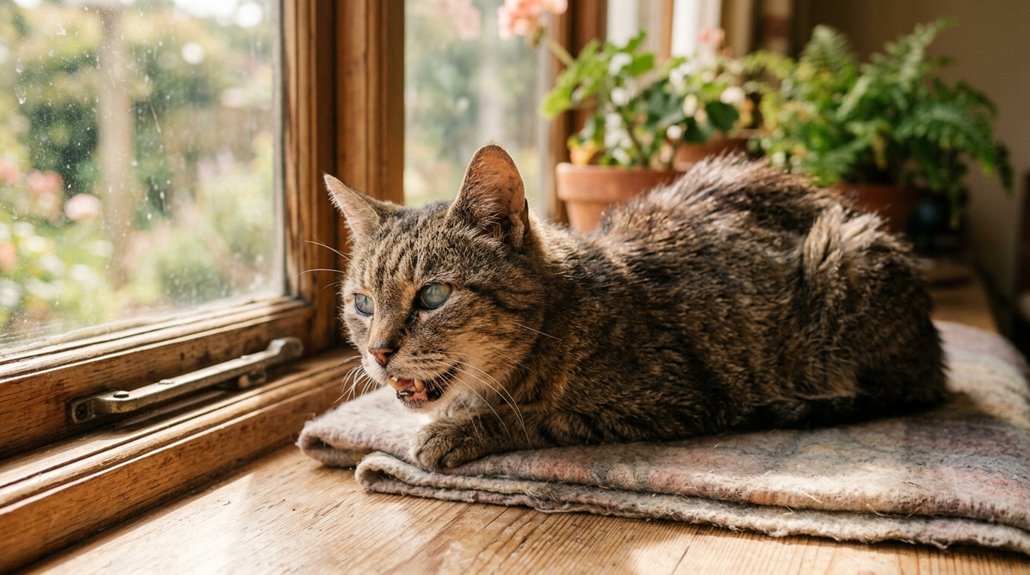
Ever wondered whether your cat is experiencing dental decline? Cats as young as 4-5 years may develop dental disease without proper dental care. Nearly all felines over five face dental issues if their oral hygiene isn’t regularly maintained. Watch for signs like bad breath, reluctance to eat, or chewing on just one side of the mouth. These can indicate serious problems such as gingivitis or periodontal disease. Untreated, these conditions can cause tooth loss and significant pain, compromising your cat’s overall well-being. To safeguard against these issues, guarantee regular dental assessments, ideally every six months for senior cats. Changes in diet and reduced grooming in aging cats further necessitate vigilant attention to oral hygiene practices to prevent accelerated aging.
Vision and Hearing Loss: Watch for These Signs
Although often unnoticed by pet owners, senior cats may gradually lose their vision, detectable only when they start bumping into objects or failing to respond to visual cues. Indications of declining eyesight include excessive blinking, pawing at the eyes, or a cloudy appearance possibly due to cataracts, usually around age 9. Hearing loss can be inferred when your cat shows unresponsive behavior to auditory cues or seems disinterested in engaging with familiar voices. Monitoring these changes is essential, as sudden blindness might signal severe conditions like high blood pressure or diabetes and needs immediate medical intervention.
Senior cats may lose vision gradually, detected by bumping into objects or ignoring visual cues.
- Excessive blinking or pawing at eyes
- Cloudy eyes, potential indicator of cataracts
- Unresponsive to familiar auditory cues
- Eyesight issues often linked to neurological conditions
Regular check-ups are important for early detection and management.
Behavioral Changes: Recognizing Unusual Temperament Shifts
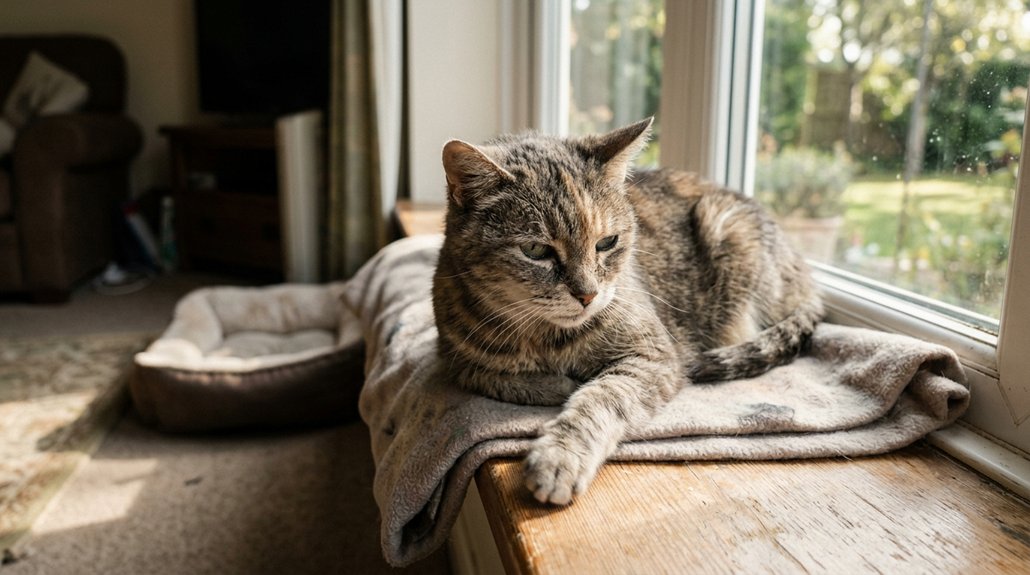
As cats age, their behavior can markedly change, providing essential insights into their overall health. Recognizing unusual temperament shifts in your senior cat is important. Mood swings, manifested as increased irritability or aggression, may signal underlying discomfort or health issues needing veterinary attention. Anxiety or restlessness, evident through pacing or excessive grooming, might indicate cognitive dysfunction linked to aging. Disorientation, where cats appear confused about using the litter box or performing familiar tasks, is another symptom of cognitive decline affecting their quality of life. Social withdrawal, where they retreat into solitude rather than seeking interaction, suggests emotional or behavioral changes. Excessive vocalizations, particularly at night, can also indicate anxiety or confusion, prompting a need for strategic interventions.
Sensory Decline: Hearing and Vision Concerns in Aging Cats
Aging in cats is often accompanied by sensory decline, particularly in hearing and vision, which can start as early as age 9. A gradual deterioration might initially be subtle: your cat may not respond to sounds or could exhibit unusual behavior such as excessive blinking or bumping into things. It’s essential to conduct a hearing assessment and vision evaluation regularly, as conditions like cataracts and glaucoma can progress unnoticed.
Consider these signs:
- A lack of reaction to usual sounds could indicate hearing loss.
- Pawing at eyes may suggest discomfort or vision issues.
- Bumping into objects might mean visual impairment.
- Changes in their awareness of surroundings could signal urgent issues.
Regular veterinary check-ups guarantee any sensory decline is detected and addressed promptly.
Frequently Asked Questions
At What Age Do Cats Start to Show Signs of Aging?
You’ll notice signs of aging in cats around 7 to 10 years old. Providing senior care and monitoring feline health during these years guarantees they maintain quality of life as they move to their senior and super-senior stages.
What Is the 3-3-3 Rule for Cats?
The 3-3-3 rule for cats outlines a structured adjustment timeline post-adoption: three days to acclimate, three weeks to feel comfortable, and three months to fully integrate. Your patience aids their smooth adjustment and social behavior development.
What Age Is Considered Very Old for a Cat?
Isn’t it ironic that “very old” starts at 15 for cats when that’s their prime for enjoying geriatric care and feline nutrition tweaks? Understanding these aspects guarantees both wellness and a longer, fulfilling life for your cat.
At What Age Do Cats Deteriorate?
Cats often begin deteriorating health-wise around age 7-10. For effective senior care, monitor indicators like mobility and cognitive decline. Prioritizing cat health early can mitigate potential issues as they age, especially after reaching their super-senior years.
Conclusion
As your cat ages, it’s essential to watch for signs of accelerated aging. Like a clock winding down too swiftly, excessive rest, rapid weight changes, and declining dental health can indicate issues. Pay attention to vision and hearing loss, as well as behavioral shifts. Early detection is key to ensuring a better quality of life. Always consult your veterinarian for guidance tailored to your cat’s unique needs, ensuring they age gracefully and comfortably.