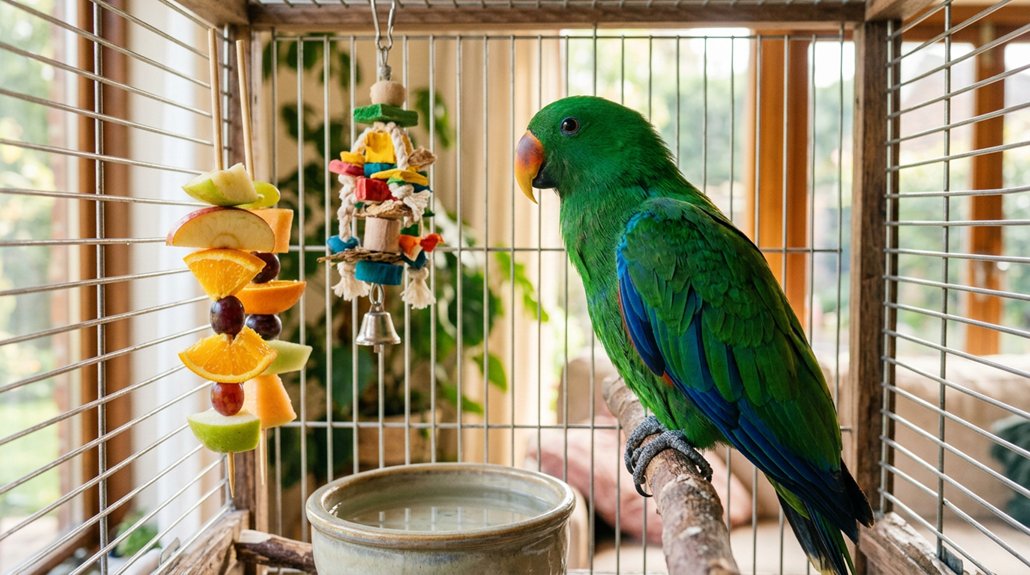
Most pet birds need at least 1–2 hours of supervised out-of-cage time and direct interaction each day, though small species like finches or canaries may need only brief contact. Budgies, cockatiels, and lovebirds usually do best with 1–2 hours, while larger parrots such as cockatoos, macaws, Amazons, and conures often need 3–6+ hours. Your schedule should stay predictable, because consistent daily care matters most, and there’s more to match if you want the right fit.
Key Takeaways
- Most pet birds need 1–2 hours of supervised out-of-cage interaction and exercise daily.
- Small birds like budgies, cockatiels, and lovebirds usually need 1–2 hours of attention.
- High-need parrots, such as cockatoos and macaws, may require 3–6+ hours of daily interaction.
- Finches and canaries often need only brief daily contact, about 15–60 minutes.
- Birds also need predictable daily feeding, cleaning, enrichment, and supervision to stay healthy.
How Much Time Do Pet Birds Need?
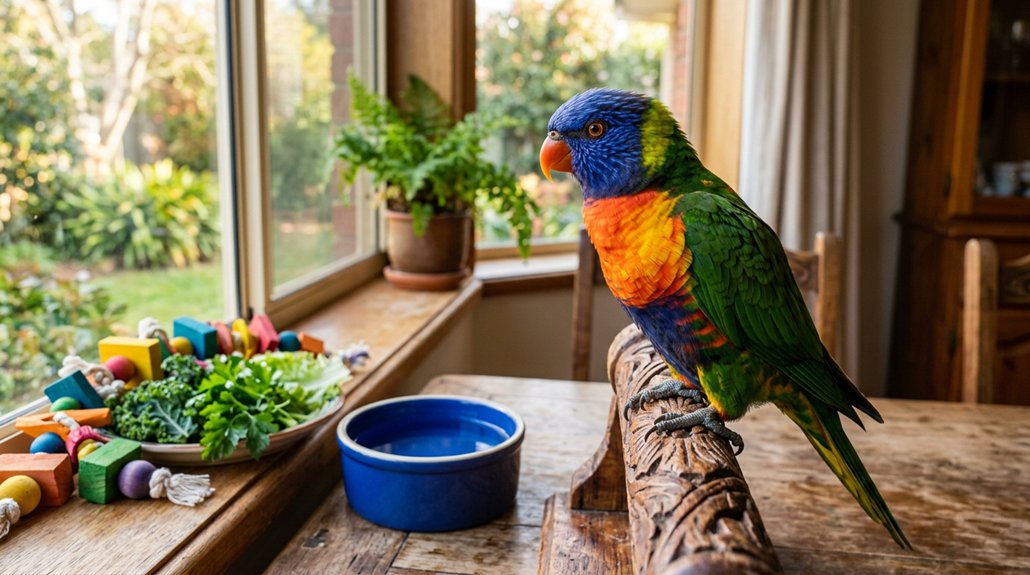
Most pet birds need at least 1–2 hours of out-of-cage interaction and exercise each day, but the exact time commitment depends on species and temperament. You should provide consistent morning and evening feedings, fresh water, cage spot-cleaning, and at least one play or training session. These routines support behavioral rhythms and reduce boredom-related problems. Smaller species may be managed with about an hour of daily care centered on feeding, cleaning, and brief social contact. Budgies, cockatiels, and lovebirds usually need more supervised time and shorter interactions throughout the day. Highly social parrots may need several hours. Weekly deeper cleaning, toy rotation, nail checks, and baths add sensory enrichment and help maintain long-term health.
Which Pet Birds Need the Most Attention?
You’ll find that high-need parrots, especially cockatoos, macaws, Amazons, and conures, require the most daily attention, often 3–6+ hours of direct interaction. If you keep medium parrots like budgies, cockatiels, or lovebirds, you should plan for at least 1–2 hours of supervised out-of-cage time and play each day. Finches and canaries need the least human attention, but if your schedule involves long shifts or frequent travel, parrots generally aren’t a suitable match unless someone else can provide consistent daily social time.
High-Need Parrot Species
Large parrots such as macaws, cockatoos, and some Amazons are among the most attention-intensive pet birds, typically needing 3–6+ hours of direct social interaction and supervised out-of-cage time each day to reduce the risk of screaming, feather plucking, and severe boredom. If you’re considering parrot companionship, you must plan for consistent, high-quality behavioral enrichment and close daily contact. Medium parrots, including conures, African greys, and Eclectus, usually need at least 2–4 hours of focused attention, training, and enrichment. Small parrots such as budgies, cockatiels, and lovebirds often need 1–2 hours, though social birds may require more. Because many parrots live 20–60+ years, these needs are long-term. If you work long or rotating shifts, high-need species aren’t a safe fit without dedicated daytime care.
Daily Interaction Expectations
Daily interaction needs vary widely by species: canaries and finches generally do well with about 30–60 minutes of social or visual contact per day, while budgies, cockatiels, and lovebirds usually need at least 1–2 hours of out-of-cage time, play, and basic training. If you keep a larger parrot, you should expect several hours of focused interaction daily to reduce boredom, screaming, and destructive behavior. Break this time into 2–4 short sessions, since multiple contacts improve training and help you read bonding cues more accurately. If you can’t provide consistent engagement because of long work shifts, you shouldn’t choose a high-need species. Ambient enrichment can support wellbeing, but it won’t replace direct social time, handling, and predictable daily attention from you.
How Much Out-of-Cage Time Do Birds Need?
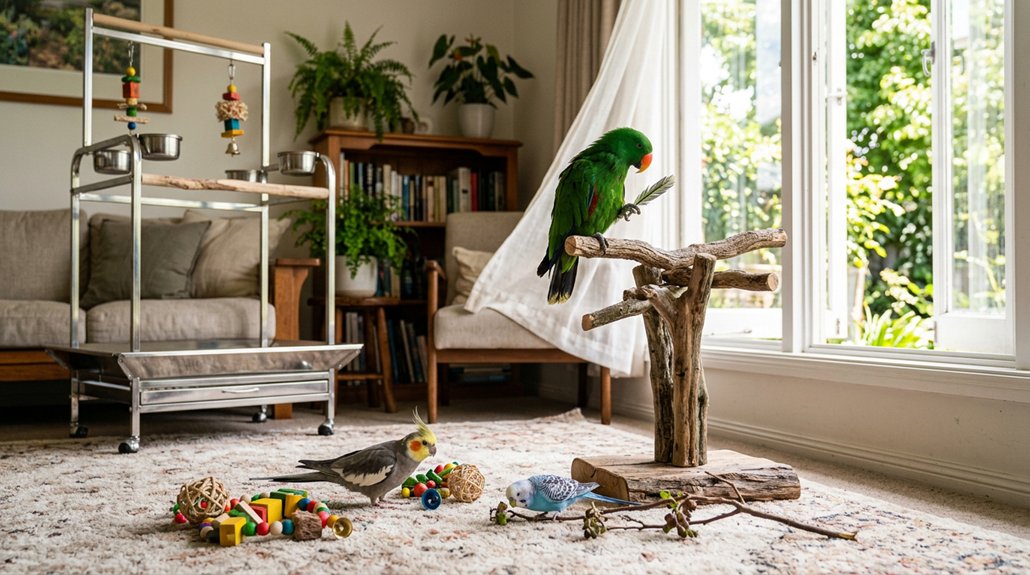
Most pet birds need at least 1–2 hours of supervised out-of-cage time each day, and highly social parrots such as conures, cockatoos, macaws, and Amazons often need 3 or more hours to stay mentally healthy. If you keep budgies, cockatiels, or lovebirds, aim for 30 minutes to 2–3 hours daily, split into short sessions to limit boredom. Finches and canaries may need only brief, supervised periods of 15–30 minutes, or visual freedom in a large aviary. Birds kept alone usually need more time than flocked species. You should increase time gradually with flight training and monitor mirror interaction, since both can reveal stress or overexcitement. Always supervise the session, and give your bird a cage that feels like a secure retreat when playtime ends.
What Makes a Bird-Safe Routine?
You should keep a predictable daily schedule with consistent wake, meal, out-of-cage, and bedtime times, because routine lowers stress and makes changes in health or behavior easier to detect. Your daily care should also include fresh food and water, removal of uneaten perishables, liner replacement, a quick cage safety check, and at least one short enrichment or training session. You’ll need to adjust the routine to the bird’s species, age, health, and temperament, and schedule weekly and monthly tasks such as toy rotation, deeper cleaning, weigh-ins, and perch or nail checks.
Daily Care Schedule
A bird-safe routine hinges on predictable timing: a consistent wake time, two main meals, two supervised social or play sessions, and a regular bedtime, because routine lowers stress and supports stable behavior. You should keep consistent timing for feeding, cleaning, and supervised playtime so your bird can anticipate the day. Plan 1–2 hours of supervised out-of-cage time daily; parrots often need more, while budgies and cockatiels may do well with 30 minutes to 3 hours. Give fresh water and food, remove uneaten perishables, spot-clean the cage, and replace tray liners each day. Build weekly and monthly maintenance into the schedule, including toy and health checks, baths, cage wipe-downs, perch rearrangement, and toy rotation to support welfare and prevent boredom.
Safe Routine Habits
A bird-safe routine is predictable, sanitary, and closely supervised: uncover the cage and offer the first feeding with daylight, keep wake, play, and bedtime consistent, and cover the bird 30–60 minutes after the last evening activity to reduce stress and help it anticipate care. Use consistent timing for meals and rest.
- Provide supervised play for 1–2 hours daily, more for larger parrots.
- Follow a cleaning schedule: change liners daily, wash dishes, and deep-clean weekly.
- Do safety checks on toys and perches; rotate toys monthly and remove wear.
- Use refuge training so the cage stays a secure retreat, with no open windows, fans, or pets nearby.
How Do You Enrich a Bird’s Day?
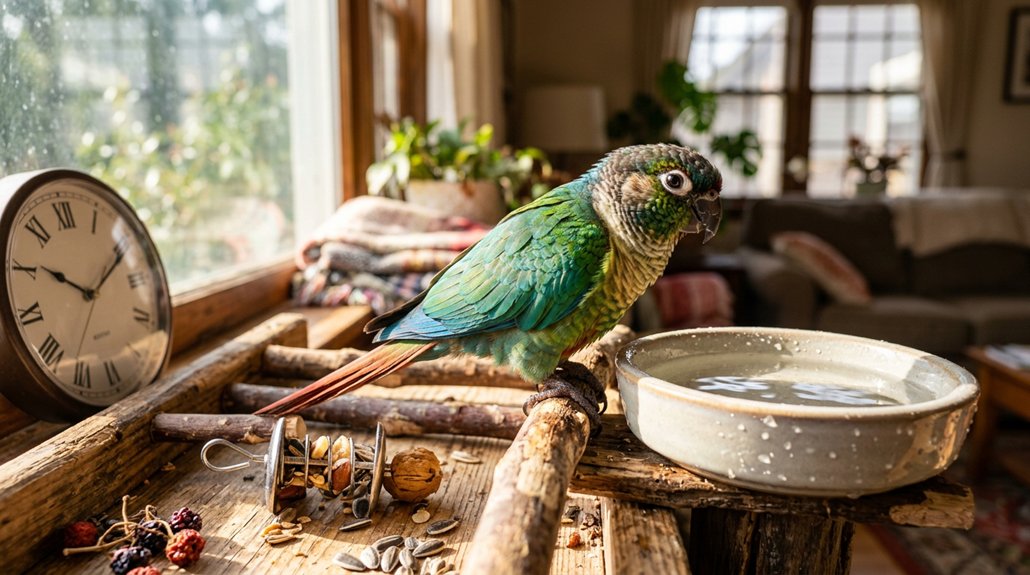
Enrichment should build a bird’s day around movement, foraging, learning, and social contact. You should give 1–2 hours of supervised out-of-cage time daily, split into short sessions. Use a play stand near family activity.
| Enrichment | Dose | Purpose |
|---|---|---|
| Foraging challenges | Daily | Search, problem-solve |
| Sensory stations | Daily | Bathing, misting, greens |
| Toys | 3–5 weekly | Rotate, prevent boredom |
| Training | 5–15 min | Cues, tricks, skills |
| Sound | As needed | Companionship |
Offer positive-reinforcement training with clicker or treats. Rotate chewable, puzzle, foraging, and shreddable toys twice weekly. Move food locations, add baths or misting, and provide background sound. Keep the area safe; remove open windows, pets, and fans. Preserve the cage as a rest zone with consistent wake, sleep, and feeding routines.
What If You’re Short on Time?
If your schedule is limited, you should still provide at least 1–2 hours of focused interaction and out-of-cage time per day for small parrots, divided into multiple short sessions, with larger parrots needing more. If you work full-time, use a morning window and an evening window, plus supervised weekend play.
- Budgies, cockatiels, and lovebirds need moderate daily attention.
- Keep cages in a busy room for background enrichment and passive socialization.
- Use foraging toys, rotated puzzles, and hung food when you can’t supervise.
- Choose species carefully; canaries and finches tolerate limited bonding, while large parrots need extensive daily contact.
This approach doesn’t replace handling, but it does maintain welfare when time’s tight.
Signs Your Bird Needs More Interaction
Even with a careful daily routine, some birds still show that they’re not getting enough social contact or stimulation. You should watch for persistent screaming or other vocalization triggers that last more than a week, especially when they escalate during your presence. Repeated feather picking, plucking, or excessive preening over days to weeks can indicate boredom. If your bird sits on the cage floor, shows altered perching behavior, ignores toys, or stops foraging for treats, it likely needs more enrichment and out-of-cage time. Biting, lunging, or fearful reactions during normal handling suggest unmet socialization needs. Noticeable weight loss within a week, reduced appetite, or withdrawal can also reflect stress. These signs warrant more daily interaction and, if they persist, a veterinary assessment.
How to Choose a Bird for Your Schedule
Choosing the right bird starts with an honest match between species needs and the time you can reliably provide each day. If you can spare only brief contact, canaries or finches are appropriate. If you can commit 1–2 hours daily, budgies, cockatiels, or lovebirds may fit. Large parrots aren’t suitable unless you can provide several hours of interaction, stimulation, and decades-long care. 1. Assess work shifts and commute adjustments. 2. Confirm a roommates agreement for noise, cleaning, and out-of-cage access. 3. Evaluate children, dogs, open windows, and travel frequency. 4. Choose supervised, bird-safe routines you can sustain long term. If your schedule is variable, arrange family or pet-sitter support before choosing a high-demand species. Predictable care matters more than occasional long sessions.
Frequently Asked Questions
What Is the 3 3 3 Rule for Birds?
The 3-3-3 rule means you give birds three daily social sessions, or three short training sessions, and for new birds, 3 days, 3 weeks, 3 months of gradual adjustment, using behavioral cues and enrichment activities.
Can I Leave My Birds Alone for 2 Days?
No—you can’t leave your birds alone for 2 days; it’s a disaster waiting to happen. They need daily food, water, social enrichment, and checks. If you must, arrange emergency planning with a bird-experienced caregiver.
What Is the 60 40 Rule for Birds?
The 60/40 rule means you keep your bird out of the cage about 60% of waking hours and inside about 40%, balancing exercise, rest, enrichment schedules, and flight training; you’ll adjust for species and behavior.
How Much Time Should I Spend With My Pet Bird?
You should spend 1–2 hours daily with your bird; parrots often need several hours, while finches need less. Training sessions and social interaction should be brief, repeated, and consistent, not sporadic or neglected.
Conclusion
So, when you bring a bird into your home, you’re inviting a small, bright life into your daily rhythm. You need to offer time, space, and attention each day, even if only in focused, predictable intervals. A well-timed routine, out-of-cage exercise, and quiet enrichment can keep your bird’s mind alert and its body steady. If your schedule’s tight, choose a species that fits it. Your bird’s welfare depends on consistency.