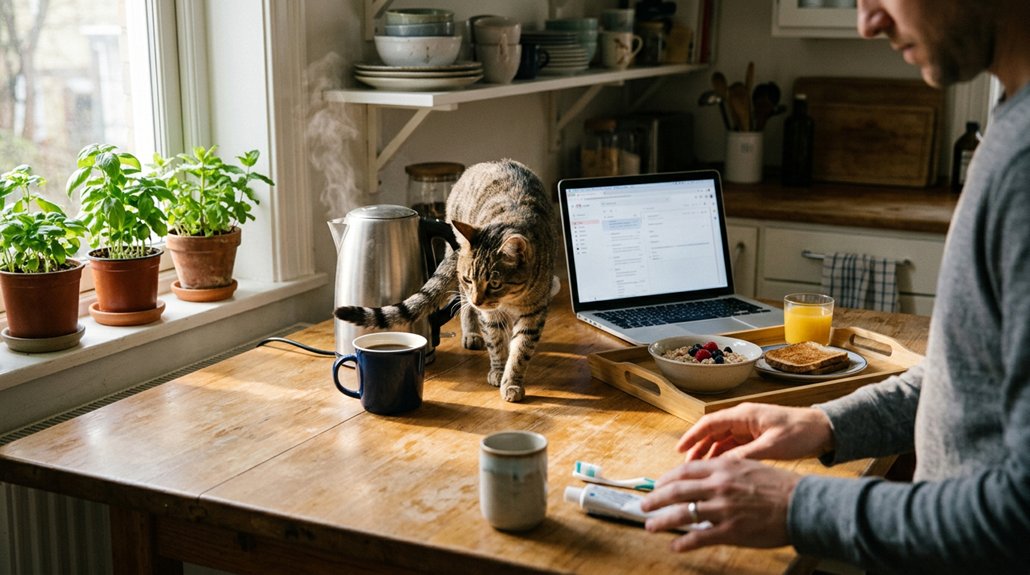
Living with a cat reshapes your routine considerably. You’ll need structured feeding schedules to support your cat’s digestive health and emotional stability. Regular playtimes engage their hunting instincts and reduce stress, fostering a balanced social life. You must be attentive to subtle behavioral changes for early health intervention and maintain scheduled vet checkups for preventive care. By incorporating these aspects, you enhance the human-animal bond and guarantee a harmonious living environment. Discover additional strategies for a thriving partnership.
Key Takeaways
- Cats require a consistent feeding schedule, impacting daily meal planning and monitoring eating habits.
- Structured playtimes enforce routines that cater to a cat’s physical and mental health.
- Cat interactions necessitate adjustments in social activities to ensure regular bonding and engagement.
- Routine veterinary visits become a key part of maintaining a cat’s health and well-being.
- Environmental adaptations are needed, such as creating safe spaces for the cat’s comfort and security.
Understanding the Impact of Cat Ownership on Your Daily Routine
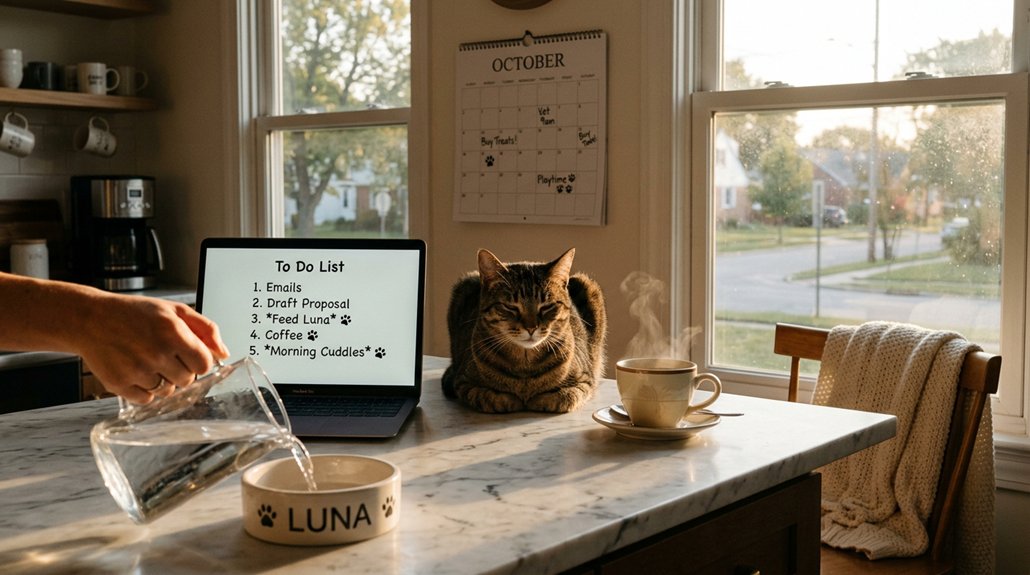
Owning a cat greatly influences one’s daily routine, requiring the introduction of structured schedules for feeding and play that benefit both the feline and the owner. Cat communication is subtle yet critical in deciphering their emotional needs. Routine adjustments, like defined playtime and enrichment activities, cater to these needs, fostering trust and reducing feline anxiety. Owner flexibility in accommodating these schedules facilitates effective stress management and guarantees the cat remains physically and mentally healthy. Understanding feeding habits and key indicators in playtime benefits, such as increased activity, aids health monitoring. These routine incorporations not only satisfy your cat’s emotional needs but also bridge gaps in the human-animal dynamic, synchronizing your schedules for mutual enrichment and a harmonious coexistence.
Integrating a Regular Feeding Schedule for Your Cat
Establishing a consistent feeding schedule is essential for your cat’s digestive health and anxiety management. Feeding at regular intervals allows you to monitor dietary intake, observe behavioral cues, and promptly identify any gastrointestinal disturbances. Furthermore, structured mealtimes contribute to a stable environment, reducing stress and reinforcing trust in the human-animal relationship.
Consistency in Mealtime Routine
A regular feeding schedule is essential for your cat’s ideal digestive health and emotional well-being. Establishing precise meal timing aligns with innate feeding preferences, fostering a stable environment. Consistent routines inform predictable patterns, significant in observing deviations in eating habits. By feeding the same two meals daily, you pinpoint anomalies that signal possible health concerns. This regimen builds trust, reinforcing your bond while enhancing your cat’s sense of security.
Incorporating puzzle feeders at meals stimulates cognitive engagement, reducing stress-induced behaviors. These feeders naturally extend eating duration, aiding a structured and healthier feeding routine. Through regular scheduling, you mitigate anxiety-related disruptions, vital for your pet’s holistic well-being. Ultimately, consistency at mealtime underpins emotional stability, ensuring your feline’s contentment and mental equilibrium within their habitat.
Impact on Digestive Health
When you maintain a regular feeding schedule, your cat’s digestive health benefits considerably. By dividing meals into specific times daily, you’re aligning with their natural eating habits, thereby optimizing digestive health. Understanding your cat’s dietary preferences and nutritional needs lets you tailor feeding practices to promote effective digestion. Consistent meal timing fosters stable digestive rhythms, essential for preventing issues like vomiting or diarrhea.
Feeding practices incorporating portion control and healthy choices support weight management, preventing obesity-related complications. Utilizing digestion tips, such as engaging your cat with puzzle feeders, can enhance mental stimulation and slow eating pace. Observing changes in appetite or weight becomes easier, allowing early intervention in health concerns. Overall, structured feeding contributes positively to their well-being.
Structured Feeding Reduces Anxiety
Cats experience significant health benefits from well-structured feeding practices, including the alleviation of digestive issues. By establishing a consistent feeding schedule, you’re directly influencing your cat’s anxiety levels. Predictability in meal timing fosters security, essential for psychological stability. Cats exhibit specific meal preferences that cater to their natural instincts; accordingly, offering multiple small meals aligns with these preferences.
The effects of feeding time are profound: consistent feeding reduces stress-related behaviors like aggression and lethargy while enhancing monitoring of eating habits. This regularity assists in identifying any deviations that might signal health concerns. Gradual adjustments should mitigate any stress when adapting your schedule. Integrating structured feeding into your routine not only supports your cat’s mental health but also aligns with their physiological needs.
Maintaining Daily Play and Exercise Time With Your Cat
Starting and sticking to a regular play schedule with your cat can optimize their physical and emotional health. Scheduling interactive playtime in the morning and evening is vital to satisfy your cat’s hunting instincts, providing essential mental engagement and physical exercise. Engaging in structured play sessions prevents boredom-related stress and stimulates mental faculties. To maintain consistency, employ interactive toys or puzzle feeders during your absence; this not only keeps them mentally engaged but also alleviates feelings of loneliness. Regular playtime strengthens the cat-owner bond and aids in behavioral management, reducing anxiety and excess energy. Additionally, a predictable play routine enhances overall well-being by introducing environmental consistency, thereby minimizing stress from unforeseen changes and creating a stable, fulfilling routine.
Keeping Your Cat Healthy With Scheduled Vet Checkups
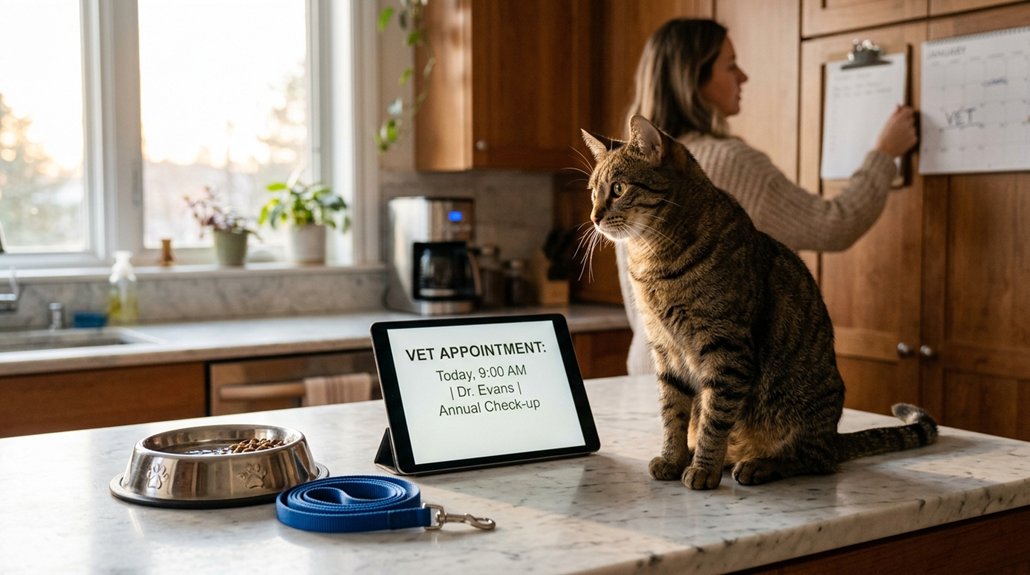
As you incorporate play and exercise into your cat’s routine, integrating regular vet checkups becomes equally important for their overall health. Scheduled wellness checks are essential for preventive care and monitoring your cat’s health. These visits allow for early detection of potential issues and timely intervention, effectively using health monitoring to establish baseline health metrics. Regular veterinary evaluation confirms any deviations in behavior, weight, or appetite are promptly addressed. Adhering to a vaccination schedule during these checkups is vital, safeguarding your cat against common diseases and parasites. For healthy adult cats, annual visits suffice, while kittens and senior cats require more frequent evaluations. Consistent veterinary care not only maintains physical well-being but also guarantees a predictable routine, mitigating anxiety.
Creating a Clean, Cat-Friendly Living Space
Creating a cat-friendly living space involves more than just providing food and shelter; it requires a strategic approach to cleanliness and environmental enrichment. Effective litter box management is fundamental in promoting hygiene and enhancing your cat’s comfort. Consistently clean and well-placed litter boxes reduce stress and prevent undesirable elimination behaviors.
In addition, implementing environmental enrichment through interactive toys and climbing structures is vital. These features stimulate your cat’s natural instincts, mitigating boredom-related issues. Regular vacuuming and surface cleaning are imperative to minimize allergens and odors, fostering a healthier living environment.
Incorporating vertical spaces, such as cat shelves or window perches, expands your cat’s territory. Safe, quiet retreats like cozy beds are essential for alleviating anxiety and providing security.
Interpreting and Addressing Behavioral Changes in Your Cat

While crafting a cat-friendly environment supports your feline’s physical needs, understanding and addressing behavioral changes are equally important for their overall well-being. Behavioral indicators like hiding, aggression, or excessive grooming can point to stress or health problems. Regular interaction is critical for spotting shifts in behavior, enabling early intervention in stress management and health concerns. Consider the following to monitor potential issues:
| Behavior | Potential Indicator | Action Required |
|---|---|---|
| Excessive Grooming | Stress or Allergy | Consult veterinarian |
| Aggression | Anxiety, Fear | Implement stress reduction |
| Hiding | Illness, Fear | Adjust environment |
| Feeding Changes | Health Issue | Check with a vet |
| Litter Box Avoidance | Stress, Medical Issue | Review routine, consult vet |
Consistent routines in feeding and play reduce anxiety, safeguarding your cat’s emotional stability.
Balancing Your Social Life With Your Cat’s Needs
Although balancing your social life with a cat’s needs may seem challenging, implementing a structured routine can mitigate potential stressors for your feline companion. Consistent feeding and play schedules are essential, ensuring your cat feels secure and engaged despite your social engagements. Establish designated interaction periods, such as morning and evening playtimes, to maintain your bond amidst outings.
Limit spontaneous interactions during work hours, fostering a predictable environment. This helps reduce stress and prevent behavioral issues associated with abrupt changes. Utilize engaging puzzle feeders or special toys to create positive associations with solitude. Gradually introduce new activities or visitors, keeping your cat’s routine stable. By honoring their innate need for structure, you support both social engagement and enduring feline companionship.
Preparing for Changes: Helping Your Cat Adjust to New Environments
To facilitate your cat’s adjustment to new environments, it’s essential to implement gradual routine adjustments to minimize stress responses. Guarantee access to safe spaces, allowing your cat to retreat when needed, as this fosters a secure attachment to the new setting. Employ positive interaction strategies, such as rewarding with treats, to reinforce a positive association with novel experiences.
Gradual Routine Adjustments
When introducing changes to your cat’s environment, gradual routine adjustments are essential to minimize stress and guarantee a smooth changeover. Gradual increases in time spent outside their familiar environments should be implemented strategically. Start with brief periods, and expand them incrementally. This methodology allows cats to acclimate to new stimuli without becoming overwhelmed. Positive reinforcement, through treats, can mitigate anxiety when you leave the house. Reinforce stability by mimicking workday attire and activities during practice outings, further anchoring their perception of routine. Slow introduction of new toys or activities offers enrichment, fostering adaptability without stress. Consistency in feeding schedules and playtimes is pivotal, as maintaining these constants assures your cat stability and decreases anxiety during changes.
Safe Spaces for Retreat
Implementing gradual routine adjustments is essential in aiding cats during environmental changes; yet, another vital aspect lies in offering well-structured safe spaces for retreats. These safe zones serve as anxiety relief havens for your feline, providing comfort areas to promote environment familiarity. Security placement within your home is critical, allowing multiple retreat options that facilitate stress reduction and ease shifts during household changes. By employing specific adjustment techniques, such as familiar bedding or secluded hiding spots, you enhance these retreats’ efficacy.
| Retreat Options | Benefits |
|---|---|
| Familiar Bedding | Comfort & Stress Relief |
| Hiding Spots | Security & Seclusion |
| Elevated Spaces | Visibility & Safety |
| Quiet Corners | Reduced Disturbance |
| Multiple Locations | Behavioral Monitoring |
Careful behavioral monitoring guarantees you’re supporting your cat’s adjustment strategy effectively.
Positive Interaction Strategies
Facilitate seamless changes for your cat by incorporating positive interaction strategies. Implement gentle handling and affectionate play to establish trust and promote emotional security. When introducing new environments or individuals, encourage scent familiarization with personal items to expand their comfort zone. Use positive reinforcement to support adaptive behaviors, fostering a stable emotional state. Structured engagement through routine bonding—such as consistent feeding and playtime—serves as a cornerstone for stress reduction and integrates seamlessly into the new surroundings. Always provide a secure environment by maintaining established habits, allowing your cat to adapt at its own pace. These strategies cultivate a nurturing context, reinforcing your cat’s emotional resilience and easing adjustments, ultimately ensuring their peace of mind and behavioral balance.
Building Routine Bonds With Consistent Interaction
Establishing a consistent routine is paramount in forming strong bonds with your cat and ensuring their psychological well-being. Engage in bonding activities by incorporating interaction variety into your schedule. Implement playful routines and daily rituals, such as regular feeding and grooming sessions, which serve as trust building exercises. Sensory engagement through toys or treats helps provide routine enrichment, offering companionship benefits that lower anxiety levels.
Regular interaction is essential, not only for strengthening emotional bonds but also for promoting behavioral stability. A predictable schedule allows you to recognize changes in behavior early, facilitating stress reduction and health monitoring. By gradually introducing new activities, you encourage smoother adaptation and enhance the emotional connection between your cat and their environment, ultimately ensuring a more satisfying coexistence.
Ensuring a Safe and Comfortable Home for Your Cat
Forming a consistent routine aids in establishing familiarity, but creating a stable environment at home is equally vital for a cat’s overall well-being. Start by cat proofing your home, eliminating hazards to guarantee safety. Implement cozy hideaways for refuge, fostering territorial stability. Safe toys serve as an outlet for energy and curiosity, critical for stress reduction and cognitive engagement. Enrichment activities, such as interactive play or supervised outdoor exploration, provide necessary mental and physical stimulation. Maintain scent familiarity to reduce anxiety, ensuring familiar household smells remain constant during changes. Incorporating calming sounds, like soothing music or TV background noise, can further ease solitude-related stress. Regular observation allows identification of stressors, enacting timely environmental adjustments to enhance your cat’s comfort.
Frequently Asked Questions
What Is the 3-3-3 Rule With Cats?
The 3-3-3 rule guides feline adaptation, suggesting initial stress phases. In 3 days, expect typical cat behavior like hiding. By 3 weeks, they explore more. In 3 months, they’re integrated, showing true personalities and behavioral changes.
What Did Albert Einstein Say About Cats?
Did you know Einstein believed that cat companionship enriched life’s visible soul? He appreciated feline behavior for its honesty, stating a cat reliably purrs when content, contrasting unpredictable human emotions. Isn’t that an intriguing observation from a physicist?
What Color Cat Is Least Desired?
Black cats, due to cultural superstitions and cat preferences, are least desired. Perceptions impact behavior, associating them with bad luck, less photogenic appeal, and resulting in substantial shelter populations, thereby presenting adoption challenges within animal behavior studies.
What Is the 3:2:1 Rule in Cats?
The 3:2:1 Rule involves cat behavior essentials: three daily interaction sessions for stimulation, two feeding times for stable feline needs, and one grooming session to build trust and manage stress. This routine balances emotional and physical health.
Conclusion
Embracing a cat into your life is akin to adjusting the gears of a delicate clock. Each tick aligns your routine with their instincts, harmonizing feeding schedules and playtimes into a rhythm that nurtures both you and your feline companion. Your home transforms into a haven of enrichment, much akin to an intricate ecosystem where every element reflects balance. Through consistent interaction, you forge an unspoken contract, ensuring a dynamic yet predictable environment that fosters mutual well-being and contentment.