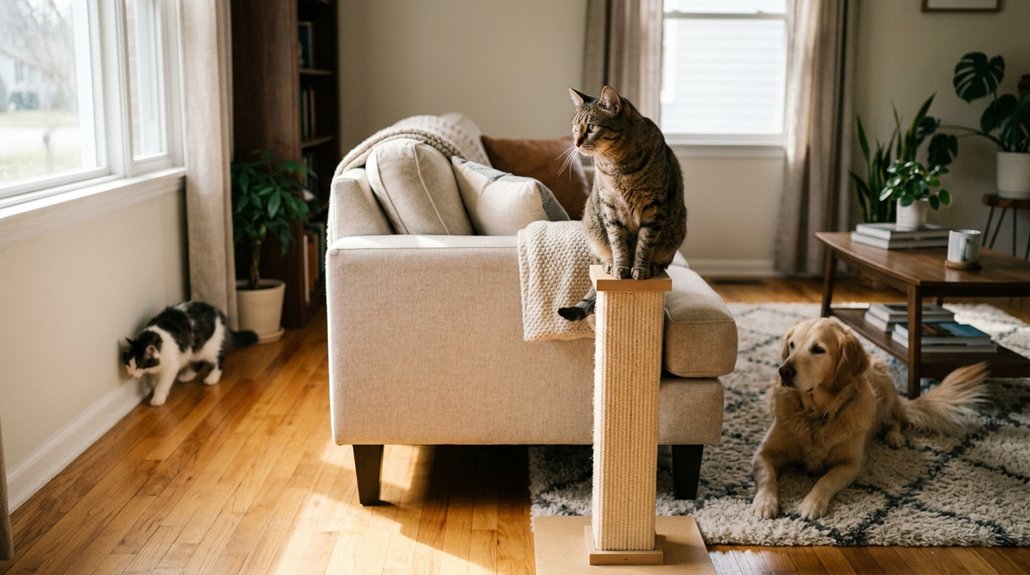
To introduce a cat to other pets, first prepare a secure sanctuary space with bedding, toys, and separate feeding areas. Begin with scent familiarization by swapping bedding and gradually move feeding bowls closer. Conduct supervised meetings using barriers like gates and reward calm interactions. Watch for stress indicators and manage resources to prevent territorial behavior. Implement controlled introductions and increase interaction time as comfort grows. To master the process, guarantee a consistent routine and positive reinforcement throughout. Discover more about effective introductions ahead.
Key Takeaways
- Isolate the new cat initially to allow for stress-free acclimation before direct interactions with other pets.
- Swap bedding or toys for scent exploration to aid in familiarization between pets.
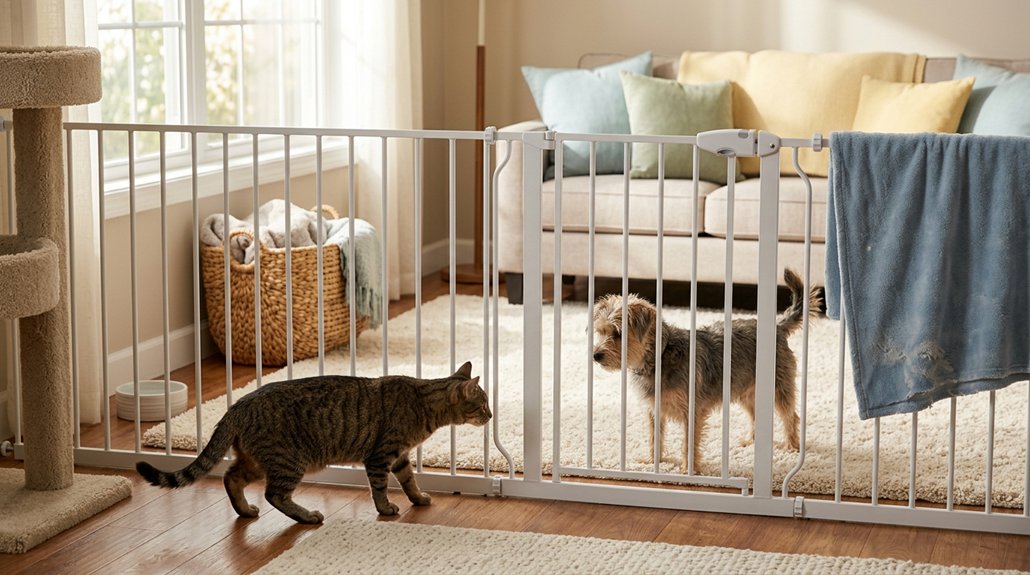
- Conduct supervised meetings using barriers like baby gates to control early interactions and ensure safety.
- Reward calm interactions with treats to build positive associations and encourage peaceful coexistence.
- Monitor body language and vocalizations to identify stress indicators and address potential issues quickly.
Preparing Your Home for a New Cat
When introducing a new cat to your home, it’s essential to establish a secure sanctuary space to help them acclimate comfortably. This dedicated area should be thoughtfully designed with cat-proofing essentials: secure a room with a sturdy door to prevent unwanted escapes and remove hazardous items like toxic plants and fragile objects. The sanctuary setup should include necessities such as a litter box, food and water bowls, and comfortable bedding. Providing safe toys and hiding spots, like tunnels or boxes, allows the cat to retreat and feel secure, especially when stressed. Establish a consistent feeding routine alongside your resident cats. Maintain separation initially to allow scent familiarization, fostering a peaceful and stress-free acclimation process for both new and existing feline residents.
Introducing Scents First
Successful integration of a new cat into a multi-pet household begins with a strategic approach to scents. Scent exploration is essential for familiarizing each pet with the other’s presence without direct confrontation. Here’s how to initiate this process effectively:
- Start with Isolation: Keep the new cat in a separate room to allow your resident pets to acclimate to its scent from a distance, ensuring a stress-free environment.
- Scent Swapping: Every few days, exchange bedding or toys between the new cat and resident pets to encourage scent exploration and establish recognition.
- Scent Soakers: Provide items like blankets and scratching posts for the new cat to infuse its scent and create territorial comfort.
- Positive Reinforcement: Employ calming techniques by rewarding calm behavior with treats or praise during exposure to each other’s scents.
Establishing Feeding Rituals for Positive Associations

As your pets grow accustomed to each other’s scents, it’s essential to establish a structured feeding ritual that fosters positive associations. Begin by placing feeding bowls on opposite sides of a closed door to promote shared mealtime experiences. This method allows them to associate the presence of another cat with good things, like eating. Gradually move the bowls closer as both cats exhibit calmness, ensuring their comfort as they engage in scent recognition activities without visual contact. This step is vital for acclimating them to each other’s presence. While monitoring feeding sessions, watch for any stress or aggression. If needed, reset the procedure to maintain a stress-free environment. The “Raising the Curtain” technique can be introduced progressively to enhance their interaction during mealtimes.
Safe Methods for Initial Visual Contact
- Observe Body Language: Carefully watch for stress or aggression, such as hissing or growling, and separate if necessary.
- Gradual Exposure: Longer visual sessions help build tolerance.
- Positive Reinforcement: Reward calm behavior with treats to create positive associations.
- Consistency: Repeat visual sessions regularly until comfort is achieved.
Consistency and patience are essential for a harmonious multi-pet environment.
Conducting Successful Supervised Meetings

When conducting supervised meetings between your cat and other pets, it’s essential to guarantee a calm atmosphere and closely monitor their behavioral cues. Start by choosing a neutral space, keeping the dog on a leash, and providing the cat with an escape route to reduce stress. Use treats and toys strategically to reward and encourage calm interactions, and be prepared to intervene if any signs of aggression arise.
Ensuring Calm Atmosphere
Successfully introducing a cat to other pets begins with creating a calm atmosphere during supervised meetings. Implement distraction strategies by minimizing external stimuli, reducing any unnecessary noise or movements. Using expert-approved calming techniques, such as controlled environments, guarantees a smooth introduction process. Here’s how you can create a peaceful setting:
- Remove Distractions: Eliminate toys, sounds, and excessive movement to help both pets focus solely on each other.
- Use Physical Barriers: Leashes for dogs and baby gates for cats help maintain control and prevent sudden, stressful interactions.
- Gradual Integration: Start with short meetings and slowly increase time as pets exhibit comfort, assuring a stress-free setting.
- Positive Reinforcement: Reward calm behavior with treats to build positive connections between your pets.
This methodical approach establishes an enduring peaceful relationship.
Monitoring Behavioral Cues
While introducing a cat to other pets, monitoring behavioral cues is pivotal to guarantee a smooth change. Carefully observe the body language of both pets for stress signals such as hissing, growling, or tail flicking, which can indicate discomfort or aggression. Initially, keep meetings brief, gradually increasing their duration as both pets exhibit calmness. Engage them with toys or treats to maintain focus away from each other. Implement positive reinforcement by rewarding calm behavior with treats, fostering a positive association with the other’s presence. Be ready to intervene at signs of tension—like increased vocalization—by calmly separating the pets to allow decompression. Use barriers like baby gates initially to ensure both pets feel secure while observing each other.
Increasing Free Interaction Time Gradually
As you gradually increase free interaction time, prioritize monitoring behavioral cues to guarantee your pets remain comfortable. Establishing a consistent
Monitor Behavioral Cues
When introducing a cat to other pets, it is essential to focus on monitoring behavioral cues to guarantee a seamless shift. Keep an eye out for stress signals such as hissing, growling, or retreating, which indicate a need to slow down. By following these steps, you can assess comfort levels:
- Observe Body Language: Look for signs of stress or relaxation, such as tense posture or slow blinks.
- Monitor Behavioral Cues: Identify when actions shift from negative to positive.
- Reinforce Positive Behavior: Use treats and praise to support gentle interactions and build positive associations.
- Adjust Interaction: If tension arises, reduce interaction time and revert to safer stages.
Progress requires patience, astute observation, and positive reinforcement for enduring harmony.
Establish Consistent Routine
Having mastered the art of monitoring behavioral cues, the next step involves establishing a consistent routine that increases free interaction time gradually. Begin by scheduling activities such as mealtimes and play sessions in shared spaces, fostering comfort through repetition. Creating environments where pets can observe one another calmly during feeding rituals encourages positive associations. Aim for 4-5 hours of peaceful interaction before considering unsupervised access. Monitor body language closely, adjusting schedules based on the pets’ reactions to maintain a stress-free atmosphere. Use positive reinforcement to reward calm behavior, ensuring each pet views shared moments positively. If stress or aggression surfaces, don’t hesitate to revert to earlier introduction steps. This consistent routine lays the foundation for harmonious pet relationships.
Gradually Reduce Barriers
To foster a stable and positive environment for your pets, begin by gradually increasing their interaction duration while monitoring comfort levels. This careful approach guarantees a smooth shift for both animals. Here’s how to proceed:
- Supervised Interaction: Observe your pets for 4-5 hours of peaceful behavior before removing barriers, confirming they’re both calm and comfortable together.
- Remove Physical Barriers: Once they display calm behaviors, start removing barriers like baby gates to encourage more natural interactions.
- Monitor Comfort: Watch for any stress indicators. If discomfort arises, revert to earlier steps to maintain a safe environment.
- Separate Resources: Initially keep feeding areas and litter boxes separate to prevent competition and stress during integration.
These steps optimize comfort monitoring and create harmony.
Handling Introduction Challenges
Introducing a cat to other pets can be fraught with challenges that require a thoughtful and methodical approach. Pay close attention to introduction triggers and stress signs like hissing or growling, which suggest a need to pause and perhaps revert to an earlier step. Initially, using baby gates or leashes helps control interactions, promoting a gradual familiarization process without escalating tensions. If conflicts occur, separate the pets immediately, giving them time to calm before reattempting introductions. Reinforce tranquil behavior by offering treats and praise when pets are relaxed around each other. It’s essential to exercise patience; the introduction process should unfold over several weeks if needed. Rushing could exacerbate anxiety and aggression, derailing efforts at peaceful coexistence.
Frequently Asked Questions
What Is the 3-3-3 Rule With Cats?
You need to understand the 3-3-3 rule for cats, highlighting cat behavior and feline stress. It divides adjustment into three phases: 3 days of hiding, 3 weeks of comfort, and 3 months for full integration.
What Is “I Love You” in Cat Language?
In the symphony of feline behavior, “I love you” is expressed through cat communication like slow blinking, purring, and head-butting. Cats’ kneading, following, and resting near you are heartfelt gestures, showing their trust and affection.
What Not to Do When Introducing Cats?
Don’t rush introductions or force direct contact; these common mistakes can heighten aggression. Avoid punishing natural hissing. Guarantee separate resources. Supervise interactions to guarantee they remain calm. Good introduction techniques reduce stress and foster harmonious relationships.
How Long Does It Take for a Cat to Get Used to Other Animals?
It typically takes several weeks to months for a cat to acclimate to other animals. Pay attention to behavioral signs during gradual exposure. This process, dictated by individual temperaments, guarantees comfort and reduces stress.
Conclusion
Introducing a new cat to your existing pets can feel like walking a tightrope, but with patience and the right strategies, harmony is within reach. By preparing your home, relying on scent introductions, and setting up positive feeding rituals, you lay a solid foundation. Safe visual introductions, followed by supervised meetings, help build trust. Gradually increasing interaction time and addressing challenges with care guarantee a peaceful coexistence, transforming your home into a feline-friendly haven.