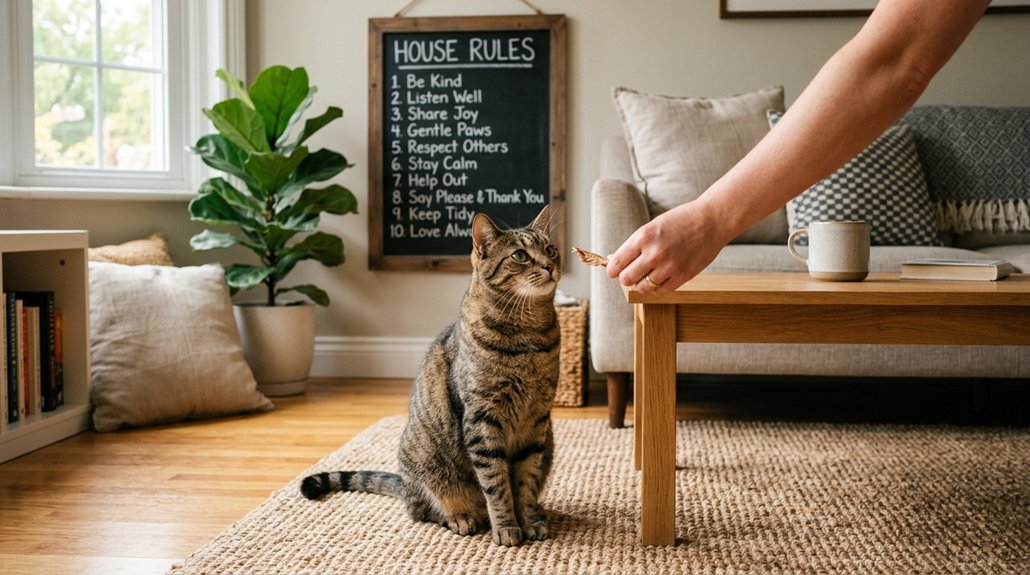
Training your cat to respect household rules starts with understanding their natural instincts. Recognize their hunting and climbing behaviors to create an environment that feels safe and engaging. Establish clear, consistent boundaries using positive reinforcement like treats and play, while remaining patient as your cat adapts. Utilize safe deterrents and timeouts for misbehavior, always aligning with their comfort. By fostering a space that respects their nature, you’ll discover strategies that encourage cooperation and harmony.
Key Takeaways
- Establish clear rules and consistently communicate boundaries to help your cat understand household expectations.
- Use positive reinforcement, like treats and praise, to encourage your cat to follow rules.
- Provide engaging play sessions and environmental enrichment to prevent boredom-related misbehavior.
- Implement timeout strategies to link misbehavior with consequences, reinforcing household rules.
- Create a cat-friendly environment with scratching posts and climbing structures to respect natural instincts.
Understanding Your Cat’s Natural Instincts and Behaviors
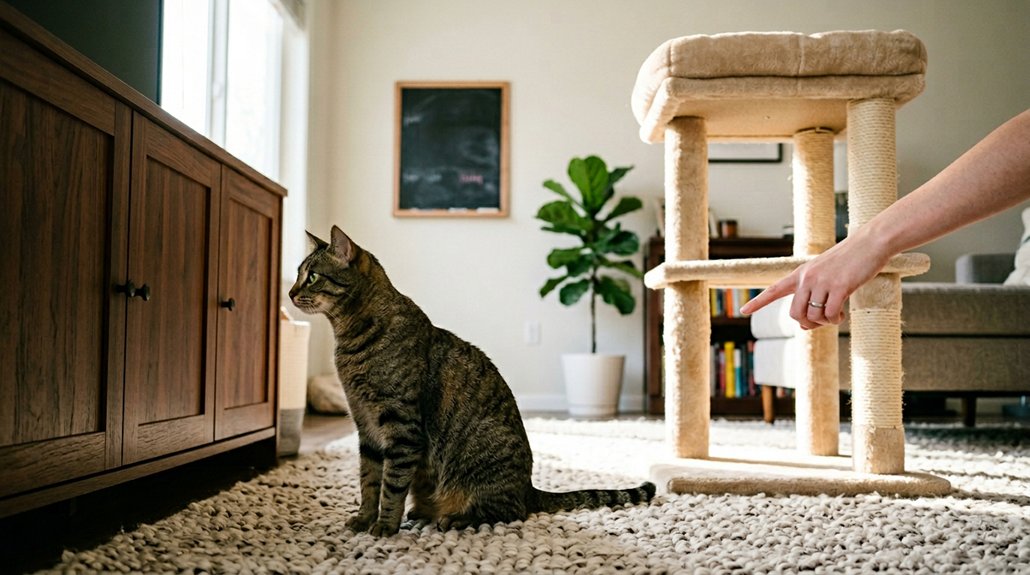
When it comes to understanding your cat’s natural instincts and behaviors, it’s important to remember that these are deeply ingrained and essential to their well-being. Cats thrive on their instinctual behaviors—hunting instincts manifest during play, while climbing tendencies reflect their love for high vantage points. Their sensory perceptions, especially smell and sight, guide them to navigate the world, often marking territory as a way to claim space. Recognizing this solitary nature, as independent hunters, helps in respecting their personal space and need for autonomy. Environment adaptation is significant for them; stability guarantees comfort, reducing stress-induced behaviors. By understanding these natural behaviors, you can create a more harmonious living environment, respecting the core instincts that make your cat unique.
How to Set Initial Training Boundaries for Your Cat
Although establishing initial boundaries for your cat might seem challenging, it’s essential for fostering a respectful and harmonious relationship. Start by clearly defining unacceptable behaviors and practicing consistent boundary communication. Cats are perceptive creatures, often understanding the rules when they’re communicated effectively. Through behavior observation, you’ll identify triggers and instances where boundaries are most needed.
Incorporate positive reinforcement strategies like treats and praise, encouraging them to heed established rules without fear or stress. Balance asserting authority with respecting their natural instincts; this nurtures a cooperative dynamic. Additionally, create an environment that’s both safe and stimulating, accommodating your cat’s needs while drawing clear lines. A consistent and empathetic approach can transform boundary-setting into a positive experience for both you and your feline companion.
Building Consistency Into Your Cat’s Training Routine
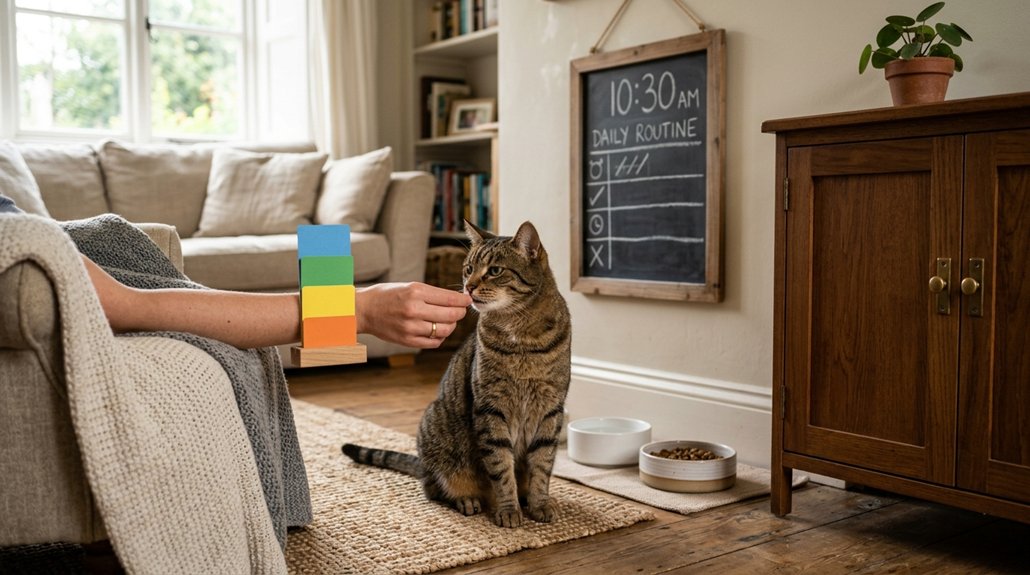
To create a harmonious environment in training your cat, consistency is the key that opens understanding and cooperation. Establish clear rules from the start to help your cat recognize behavioral cues. By sticking to a routine, you reinforce these patterns, making it easier for your feline friend to comprehend boundaries. Use training techniques like positive reinforcement—such as praise or treats—every time your cat respects the household rules. This approach not only encourages good behavior but also strengthens your bond. Keep daily life predictable by maintaining consistent feeding and play schedules. Regular training sessions using methods like clicker training are crucial for instilling good manners. Remember, abrupt changes confuse your cat, so stay steady for effective guidance.
Best Rewards for Encouraging Desired Cat Behaviors
Consistency sets the stage for successful training, but knowing what motivates your cat is the real hook. High-value rewards, like small pieces of cooked chicken or fish, can transform your feline into a focused learner. These delectable treats command attention and serve as potent positive reinforcement. Observe what lights up your cat’s eyes—maybe it’s the crinkle of a treat bag or the swish of a feather wand—and leverage these to reinforce desired behaviors. Interactive toys double as rewards and mental stimulants, making training sessions engaging and effective. Don’t overlook the power of praise and gentle petting; they complement food rewards beautifully, cementing the connection between good behavior and reward while deepening your bond. Your empathetic approach fosters a cooperative and loving environment.
Setting Up a Cat-Friendly Environment for Better Behavior
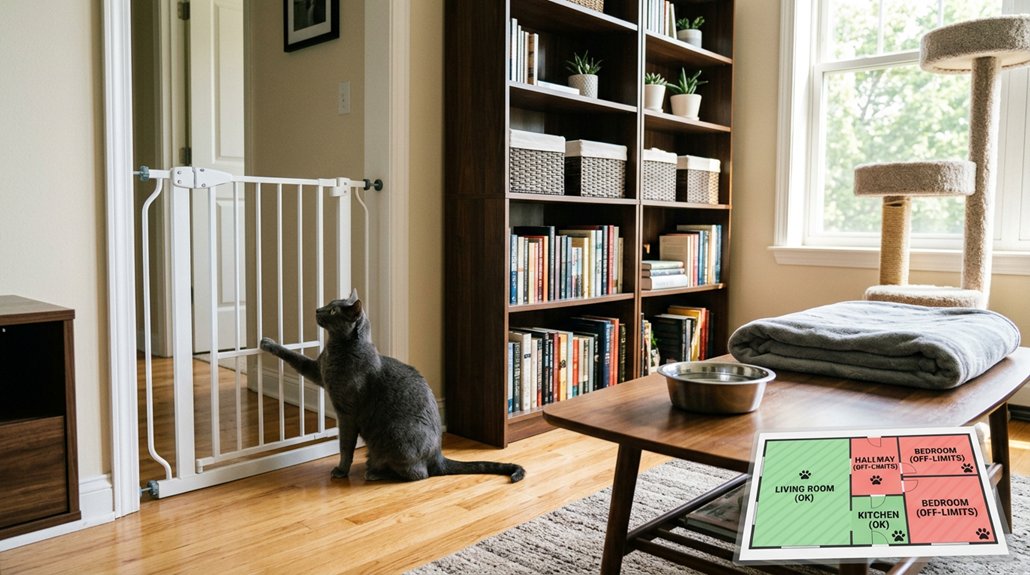
Understanding your cat’s need to explore and express their natural behaviors is key to fostering a harmonious household. By setting up an environment enriched with scratching posts and climbing structures, you cater to their instincts and help reduce misbehavior. An essential element is a sanctuary space where your cat can retreat, stocked with necessities like food, water, and a litter box for comfort and security. Even outdoor-access cats benefit from a reliable indoor toileting routine to prevent accidents.
| Resource | Purpose | Benefits |
|---|---|---|
| Scratching Post | Fulfill scratching instinct | Protect furniture |
| Climbing Tower | Satisfy climbing behavior | Decrease anxiety |
| Sanctuary Room | Safe retreat | Comfort and decompression |
| Litter Tray | Consistent toileting routine | Prevent indoor accidents |
| Environment Enrichment | Engage mentally and physically | Reduce boredom and misbehavior |
Regularly reassess your setup to maintain harmony.
Using Toys to Redirect and Modify Unwanted Cat Behaviors
You might notice that your cat’s energy sometimes spills over into less-than-desirable behaviors, but interactive play sessions can offer a great solution. By introducing stimulating toys like feather wands and treat balls, you’re not just redirecting their attention, you’re nurturing their curiosity and activity levels. Remember, switching up their toys regularly keeps them engaged and can greatly diminish those pesky habits that tend to frustrate both you and your feline friend.
Engaging Interactive Play Sessions
Many cats possess an unquenchable curiosity and a natural hunting instinct that sometimes leads to undesirable behaviors. By incorporating behavioral enrichment and establishing playtime routines, you can redirect their energy. Engaging interactive play sessions provide essential outlets, using toys like feather wands or laser pointers. These not only satisfy instincts but also reduce boredom-related actions like scratching furniture.
Consider these play strategies:
| Strategy | Benefit |
|---|---|
| Regular 15-min sessions | Reduces boredom-related behaviors |
| Puzzle toys | Encourages mental stimulation |
| Toy rotation | Maintains interest, prevents inactivity |
| Positive reinforcement | Reinforces good behavior, establishes rules |
Utilize these insights to help your cat respect household boundaries, fostering a happier, healthier living space for both of you.
Redirecting With Stimulating Toys
When faced with a cat’s mischievous antics, redirecting their energy with stimulating toys can be particularly effective. Your cat’s curious nature often leads them to activities like scratching furniture or climbing curtains. By introducing treat puzzles and engaging feather wands, you offer them an enchanting, healthier outlet. Treat puzzles engage their mind and body, reducing boredom and minimizing unwanted behaviors. Feather wands appeal to their natural hunting instincts, letting them pounce and play in acceptable ways. It’s insightful to note that regular interaction with these toys can focus your cat’s energy positively. Observing your cat’s joy during playtime can strengthen your bond and teach them to navigate household rules enthusiastically. Empathizing with their instincts builds a harmonious living space.
Offering Variety in Play
With a collection of stimulating toys, redirect your cat’s energy toward structured play to enhance household harmony. Offering toy variety caters to their hunting instincts and keeps them mentally engaged. By incorporating feather wands, jingle balls, and puzzle feeders, you provide interactive sessions that steer their focus away from unwanted behaviors, like scratching furniture or knocking over items.
Rotate toys regularly to maintain interest and prevent habituation, encouraging your cat’s curiosity and exploration. Daily play sessions reduce boredom, a frequent trigger of destructive actions. Include both solo play options and interactive sessions with you to fulfill their social needs, decreasing attention-seeking habits. Treat-dispensing toys can serve as both motivation and reward, helping your cat associate their play with positive experiences.
Timeout Strategies for Persistent Cat Habits
Dealing with persistent cat habits can be challenging, but employing timeout strategies might offer an effective solution to redirect such behaviors. Timeout techniques involve gently moving your cat to a less stimulating space, helping them understand when they’re overstepping boundaries. Use behavior modification by saying “No,” “Stop,” or “Get Down” firmly, ensuring these actions don’t scare them but reinforce the message. If your cat gets overly playful, leaving the room signals that playtime’s over, linking misbehavior with the end of fun. Consistently applying timeouts, along with rewards for good behavior, clarifies household rules. These methods help your cat make the connection between negative actions and consequences, fostering better adherence to your household’s expectations.
Safe Deterrents to Gently Discourage Misbehavior
As you’ve established boundaries with timeouts, it’s equally important to introduce gentle deterrents for misbehavior that respect your cat’s comfort and well-being. Employing safe strategies like using a spray bottle can help discourage habits such as plant chewing, while lightweight booby traps on countertops create a surprise without stress. Redirect their attention using favorite toys—it’s the power of positive reinforcement at play. Additionally, the environment can support your training goals by selectively placing scents like citrus or eucalyptus to gently steer them away from undesired spots. Consider activities for environmental enrichment to keep your feline engaged, minimizing unwanted behaviors. It’s not just about discouraging; it’s about fostering a space where positive behaviors naturally flourish and your cat feels nurtured.
Introducing New Routines to Your Cat Gradually
Understanding your cat’s need for predictability makes it clear why gradually introducing new routines is essential. Routine adjustment should start with small changes to avoid overwhelming your feline friend. You can begin by setting a structured feeding schedule, which provides a comforting sense of security. Gradual integration of consistent playtimes can also prevent boredom and unwanted behaviors.
As you shift, keep a close eye on how your cat reacts, adjusting the pace of new activities to suit their comfort level. This creates a safe environment where your cat feels in control. Reinforce positive behaviors with rewards, encouraging acceptance:
- Begin with fixed meal times.
- Schedule daily play sessions.
- Watch for signs of stress.
- Use treats to reward progress.
This thoughtful approach fosters a harmonious household.
Being Patient: Adapting to Your Cat’s Personality
Every cat is a world unto itself, and your ability to recognize this helps create a stronger bond with your feline companion. Tailored training begins with observing temperament, allowing you to address individual quirks. Patience becomes key, as each cat adjusts to boundaries at their own pace. Consistency helps reinforce household rules, but remember some cats might test them more frequently. As you watch your cat’s body language, you’ll discern their comfort level and readiness for training. The 3-3-3 rule can serve as a flexible guideline for adapting expectations based on your cat’s personality and experiences.
| Observation | Tailored Approach |
|---|---|
| Temperament | Adjust training |
| Body Language | Gauge readiness |
| 3-3-3 Rule | Set timeframes |
Patience molds training into a mutual journey.
Frequently Asked Questions
What Is the 3-3-3 Rule for Cats?
The 3-3-3 rule helps you understand cat behavior during their home adjustment. In three days, provide a sanctuary; three weeks, establish routine; three months, build trust. Patience and empathy are key training techniques during this period.
What Is “I Love You” in Cat Language?
Imagine gentle blinks, soft purrs, and affectionate head-butts—your cat’s way of communicating love. In feline affection, these gestures form a language of trust and warmth, showing you’re treasured in their unique world of communication.
What Color Cat Is Least Desired?
You might notice that black cats are often the least desired, affected by coat patterns and adoption myths. Folks sometimes overlook their charm due to superstitions, forgetting that personality is what’s truly important in any loving pet.
Can Cats Lower Cortisol?
Yes, cats can lower cortisol. Imagine the serene comfort when feline behavior includes playful purrs, reducing cat stress. You’ll find empathy in their quiet company, feeling worries dissolve amid soft fur and gentle nudges of affection.
Conclusion
Training your cat isn’t just about discipline; it’s about understanding and coexistence. Did you know that cats can distinguish between 25 different vocal tones? This insight highlights their potential to grasp human cues when given patience and consistency. Remember, creating a harmonious household requires seeing the world through their eyes. Respecting their instincts while gently guiding their behavior builds trust and companionship. Embrace this journey with empathy, knowing each small step brings you closer to a happy, respectful home.