To keep your puppy focused during training, establish eye contact with the ‘Watch Me’ cue and use high-value treats like chicken for positive reinforcement. Begin in a calm environment and slowly introduce distractions while watching your puppy’s body language. Maintain short, fun sessions of 5 to 10 minutes to keep their interest and motivation high. Mixing in new tricks and playful rewards guarantees they remain engaged. With these strategies, you’ll develop a stronger connection and more effective training results.
Key Takeaways
- Use high-value treats to capture and maintain the puppy’s attention during training sessions.
- Incorporate short training sessions, keeping them between 5 to 10 minutes to prevent fatigue.
- Gradually introduce distractions, allowing the puppy to adapt and maintain focus over time.
- Create a calm environment to minimize distractions, enhancing the puppy’s ability to concentrate.
- Use consistent positive reinforcement like treats and praise to reward and reinforce focus.
Mastering the ‘Watch Me’ Cue for Instant Engagement
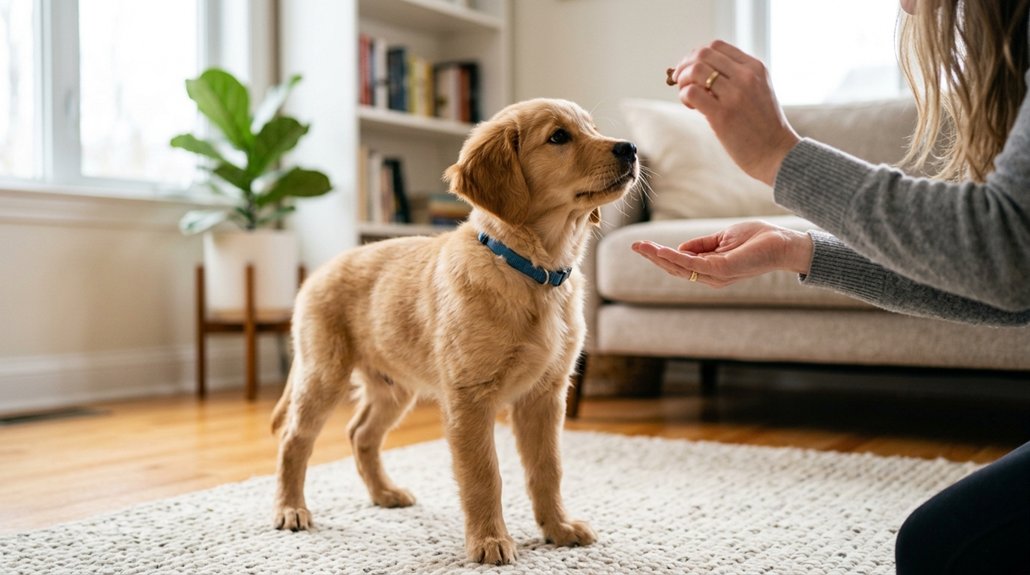
Imagine you’re out for a walk with your puppy, and a squirrel darts across the path—it’s easy for those little eyes to wander. Mastering the ‘Watch Me’ cue will help redirect your pup’s focus back to you. Start in a calm setting, holding a treat at eye level to capture their gaze. As your puppy looks at you, mark the behavior and use positive reinforcement by giving them the treat. This establishes a strong connection between eye contact and reward. Gradually level up the challenge by introducing distractions, rewarding focused attention. Consistent practice integrates the ‘Watch Me’ cue into walks and daily routines. This steady, patient approach transforms potential chaos into focused engagement, keeping both of you in harmony.
Quick Wins: Capturing Attention With High-Value Treats
One key to effective puppy training is using high-value treats to capture their attention quickly and maintain their focus. Start with treat selection—choose small, irresistible treats like chicken or cheese. These should be tiny enough for quick consumption to keep the training seamless. You’ll want to hold the treat close to your puppy’s nose, which naturally draws their focus, then gently raise it to eye level to encourage eye contact. Timing rewards is essential; consistently give the treat immediately when your puppy achieves eye contact or follows a command. This instant gratification helps cement the desired behavior. Gradually add distractions, using these high-value treats to teach your puppy to focus amidst various stimuli, solidifying their training foundation.
Fundamentals of Puppy Focus Training
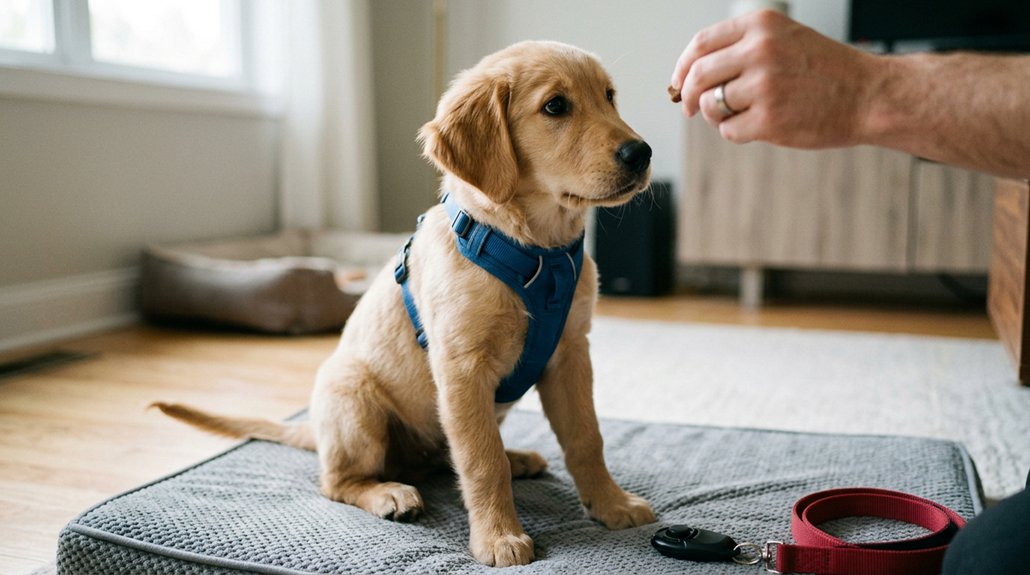
Developing a strong focus in your puppy lays the foundation for successful training. Begin by creating a calm environment to practice attention engagement, minimizing distractions that might divert your puppy’s focus. Use focus techniques like holding a treat or toy at eye level to establish the critical “Look At Me” cue. Reward eye contact warmly, showing how valuable paying attention to you can be. This consistent acknowledgment fosters stronger communication between you and your puppy. As your puppy masters these basics, you can gradually introduce more complex scenarios, ensuring they can still maintain focus. Continuously rewarding them for doing so reinforces their habit of checking in with you, creating a reliable framework for ongoing training success. Practice patience and observe as their focus grows.
Introduce Distractions Slowly for Better Focus
While gradually introducing distractions, you guarantee your puppy isn’t overwhelmed during training. Start in a controlled environment with minimal distractions. As your puppy gets comfortable, incrementally add distraction types, such as toys or sounds, to challenge their focus. Employ attention strategies to help your puppy learn to maintain concentration. Remember these steps:
- Increase Distractions Slowly: Introduce one new distraction at a time to help your puppy build focus gradually.
- Watch Body Language: Pay attention to signs of stress. If your puppy seems overwhelmed, scale back the distractions.
- Reward Consistency: Consistently reward your puppy when they maintain focus amidst distractions, reinforcing good behavior.
Motivate Puppies With Fun, Short Training Sessions
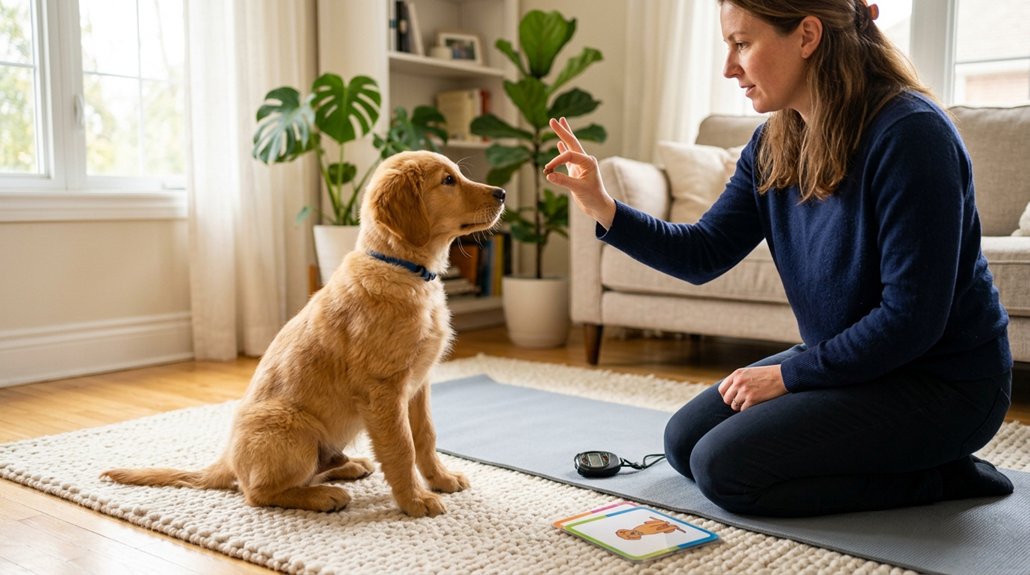
As your puppy becomes accustomed to distractions, it’s important to keep their training sessions engaging and enjoyable. You’ll want to keep these sessions short, ideally between 5 to 10 minutes. This way, you’ll prevent your furry friend from getting frustrated or bored. To keep your puppy motivated, incorporate playful rewards like treats and enthusiastic praise. Engage them with activities that mix training with fun, catching their interest and stimulating their minds. Varying activities by introducing new tricks will keep things fresh and exciting. Remember, frequent breaks allow your puppy to decompress, setting up a positive learning environment. Always aim to end the session on a high note with successful commands or a game, reinforcing positive associations with training.
Keep Training Fun and Motivating
To keep training fun and motivating, guarantee each session is a delightful experience for both you and your puppy. Blend interactive games and positive reinforcement to assure your puppy stays engaged and excited. Use various rewards, from toys to treats, making training a desired part of their day. Here’s how you can elevate training sessions:
- Incorporate Playtime: Short breaks full of fun maintain your puppy’s interest and prevent boredom.
- Brief Sessions: Keep them around 5-10 minutes, perfect for maintaining focus without overwhelming your pup.
- Diversify Environments: Introduce new elements and different locations to keep sessions fresh and challenging.
Frequently Asked Questions
What Is the 7 7 7 Rule for Puppies?
The 7 7 7 Rule keeps your puppy focused by limiting training to 7 minutes, 7 times daily, targeting 7-week skills. It helps combat puppy distractions and guarantees training consistency, making each session engaging and effective.
How Do I Get My Puppy to Focus on Training?
Start with distraction management: train in a quiet place and gradually introduce distractions. Use positive reinforcement with high-value treats to keep your puppy engaged. Consistently reward eye contact to build focus and strengthen your bond.
What Is the 3-3-3 Rule for Puppy Training?
Think of the 3-3-3 rule as a roadmap. It’s vital for helping your puppy adjust in stages, using socialization techniques and reward systems to gradually build comfort, guarantee routine, and nurture trust for effective training.
What Is the Hardest Month of a Puppy?
The hardest month for a puppy is around 4 to 5 months old. You’ll notice heightened energy and curiosity. Puppy behavior becomes challenging with distractions due to teething, socialization needs, and boundary testing, requiring patience and consistency.
Conclusion
Training a puppy to focus is like steering a little sailboat through varying winds; patience and technique lead to smooth sailing. Remember the story of Max, the pup who couldn’t sit still? With consistent short sessions and high-value treats, Max transformed into a star student. Just like a sailor adjusts to the breeze, adapt your methods and introduce distractions gradually. Your puppy’s attention, like the wind, will strengthen with practice and patience, creating a bond as rewarding as the destination.