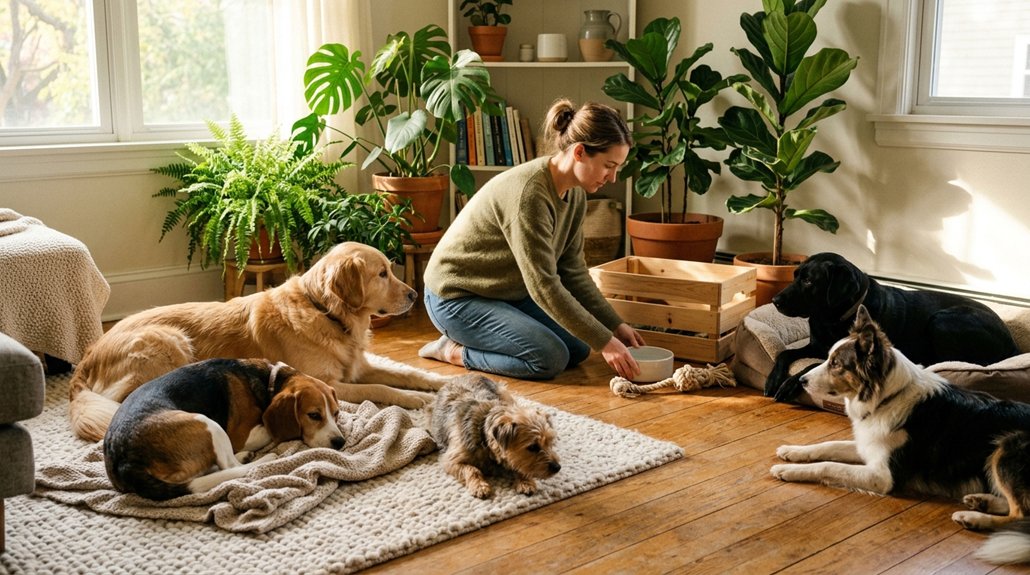
To manage a multi-dog household, you must understand pack dynamics and establish consistent routines. Recognize canine communication signals and address potential conflict triggers like resource guarding. Maintain a structured environment with designated spaces and fixed meal and exercise schedules. Employ conflict management strategies, such as separate feeding locations and monitoring energy levels. Use attention-getting techniques to enhance interactions, and consider expert help for tailored guidance. Discover the nuanced art of fostering household harmony.
Key Takeaways
- Implement consistent feeding and exercise schedules to minimize competition and anxiety among dogs.
- Create designated relaxation spaces with visual barriers to manage overstimulation and reduce stress.
- Monitor body language to identify tension early and redirect behavior during high arousal situations.
- Engage professionals for personalized training and attend workshops to enhance conflict management skills.
- Recognize individual dog personalities and tolerance levels to maintain household harmony and adjust interaction styles accordingly.
Understanding Pack Dynamics in Your Home
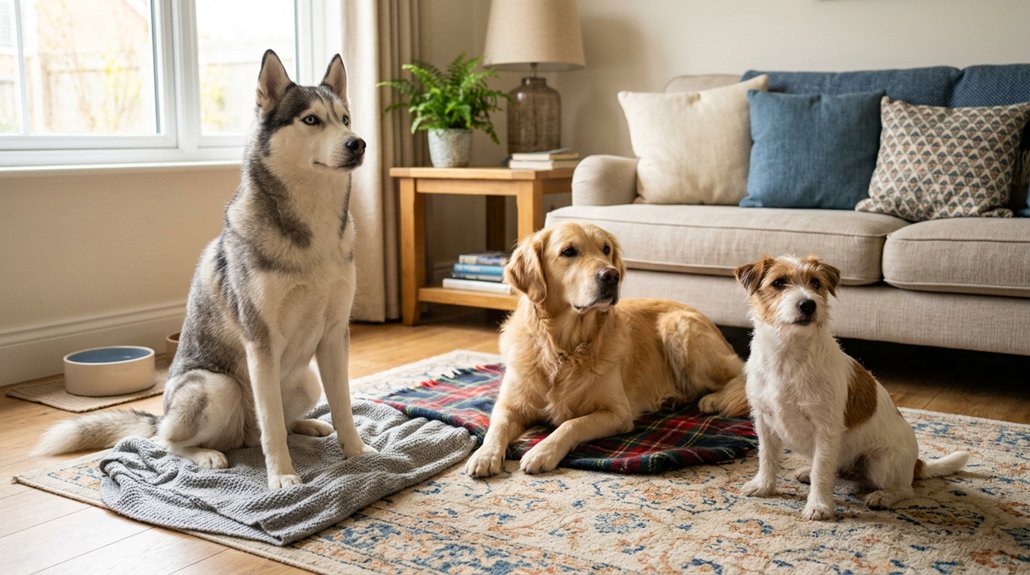
Understanding pack dynamics is fundamental to managing a harmonious multi-dog household. You’ll need keen observational skills to discern the canine hierarchy and social bonding patterns among your dogs. Each dog’s communication signals play a vital role in resolving conflicts and maintaining peace. Breed compatibility should be considered, as it greatly influences pack behavior and individual personalities. While some dogs thrive in cooperative play, others might have higher predispositions for conflict, necessitating thoughtful pairing. Emotional intelligence on your part is essential; reading body language and identifying tension early can prevent disputes before they escalate. By focusing on these elements, you guarantee a safer, more balanced environment for your furry companions, minimizing stress and promoting a genuinely rewarding multi-dog household experience.
Establishing a Consistent Routine
To effectively manage a multi-dog household, it’s essential to implement a consistent feeding schedule and regular exercise times. By providing structured meal times and dedicated exercise sessions, you help your dogs feel secure and reduce their competition for resources. Consistency in these routines promotes better behavior, reduces anxiety, and enhances the overall well-being of all dogs in the home.
Consistent Feeding Schedule
Establishing a consistent feeding schedule in a multi-dog household is essential for maintaining harmony and reducing anxiety among your dogs. By implementing fixed meal timing, you create predictability, which plays a crucial role in anxiety reduction. This routine aids in resource management, minimizing resource guarding and ensuring peaceful feeding behavior. Utilize a thoughtful location strategy by designating separate feeding areas to promote conflict avoidance. Such arrangements focus each dog’s attention on their own meal, reducing competitive tension. Regular feeding times also present valuable training opportunities, reinforcing obedient behavior while dogs wait patiently. Additionally, adhering to a schedule facilitates appetite tracking, enabling early detection of potential health issues through monitoring changes in individual eating habits. Consistency fosters a calm, structured environment.
Regular Exercise Times
Implementing regular exercise times in a multi-dog household is essential for maintaining balance and harmony. Consistent exercise schedules promote physical fitness and serve as vital energy outlets, reducing the likelihood of conflicts. By establishing predictability, dogs experience improved behavior and decreased anxiety. Incorporate playtime variety by including activities such as daily group walks and interactive play sessions, which foster social bonds and enhance interaction skills. Exposing dogs to different exercise types—long walks, agility training, and mental enrichment like puzzle toys—caters to their varying needs and preferences. It’s important to monitor and adjust each dog’s activity levels, ensuring they receive the right physical and mental stimulation. This consistency contributes considerably to sustaining a peaceful, harmonious household environment.
Identifying Common Triggers for Conflict
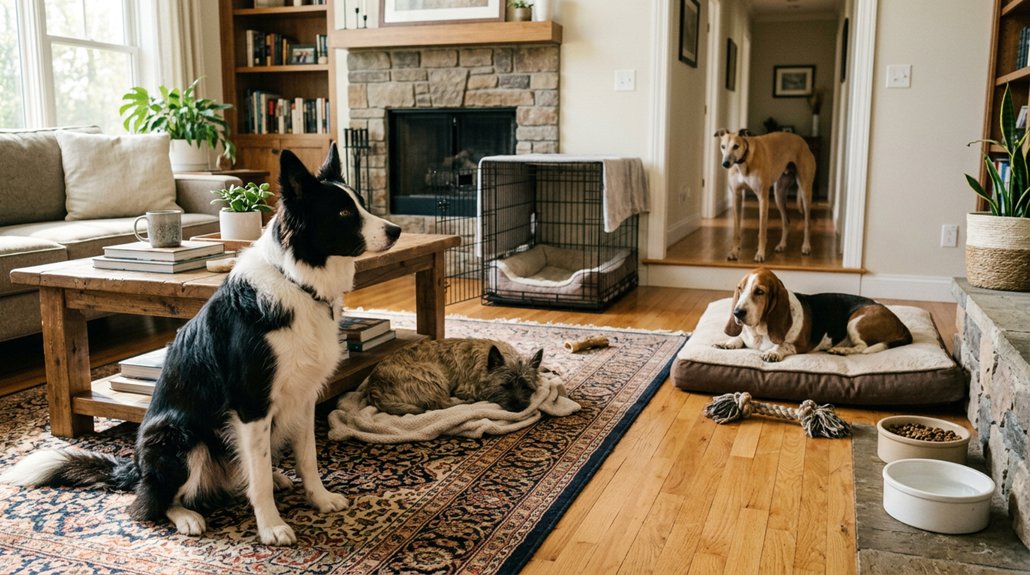
While managing a multi-dog household, it’s essential to identify common triggers for conflict to maintain harmony. Understanding resource guarding is important; conflicts frequently arise during feeding times or when toys are involved. High arousal triggers, such as excited greetings, can escalate into aggressive interactions. Social competitiveness during play can lead to disputes over attention or proximity to humans. Additionally, sleeping disputes over favored resting spots often stir tensions, especially at bedtime. Recognizing individual preferences and tolerance levels is crucial to avoid potential conflict.
Here are three significant triggers:
- Resource Guarding: Often linked to food or toys.
- Arousal Triggers: Commonly occurs in high-stimulation scenarios.
- Social Competitiveness: Driven by competition for human attention during play.
Acknowledging these elements is key to fostering peaceful coexistence.
Strategies to Address and Manage Conflict
When managing a multi-dog household, recognizing strategies to address and manage conflict effectively can greatly enhance the well-being of all pets involved. Identifying common conflict triggers is essential. Employ resource management by using separate feeding locations or times, minimizing food disputes. Establishing designated resting spots for each dog reduces competition for prime sleeping areas. Structuring playtime and interactions helps in managing energy levels, preventing chaotic behavior that might escalate to fights. In the event of a conflict, conduct a thorough assessment to identify and understand contributing factors, ensuring you can effectively reinforce desirable behavior. Redirect dogs during high arousal situations by reinforcing calmness and appropriate interactions, maintaining harmony through consistent behavior reinforcement.
Enhance Dog Interactions With Attention Techniques
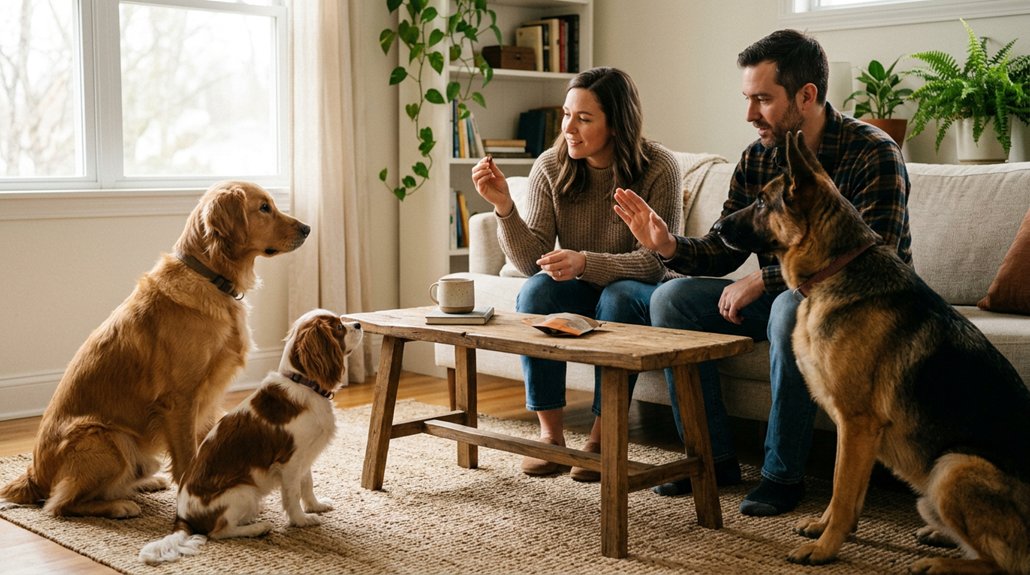
Capturing and maintaining your dogs’ attention is an essential component of managing interactions in a multi-dog household. To initiate effective communication, employ Rock Solid Attention Getter techniques like kissy sounds or leg pats as attention signals. These guarantee your dogs respond promptly, enhancing interactive engagement. Here’s how you can enhance dog interactions:
- Nose to Hand Targets: Teach dogs to boop their noses to your hand, fostering interactive engagement that maintains safe distances and boundaries among your dogs.
- Behavior Reinforcement: Once attention is captured, offer alternatives or reassurances to reinforce desired behaviors, minimizing potential conflicts.
- Observation Skills: Practice recognizing body language during play to intervene when necessary, particularly if discomfort or aggression arises.
Effectively managing attention aids in creating structured, harmonious dynamics in a multi-dog setting.
Teaching Safety and Space Skills
To guarantee safety and comfort in a multi-dog household, it’s critical to implement “Go to Spot” training, which designates specific safe spaces for each dog. By gradually introducing “Pick-Up and Restraint” techniques, you prepare dogs for safe handling and enhance your understanding of their comfort levels. Both methods are essential for reducing the risk of collisions and promoting peace during meal times and daily interactions.
Go to Spot Training
Although managing a multi-dog household can be challenging, implementing Go to Spot training is a strategic method to enhance safety and structure within the home. By designating specific areas for each dog, you reduce anxiety and potential conflicts during busy times, like meal preparation. Utilize multi-dog strategies that incorporate positive reinforcement and training consistency to establish these designated areas effectively. A structured reward system, utilizing interactive tools, can aid in ingraining this behavior, ensuring compliance with safety protocols. To achieve success, adhere to these steps:
- Select Designated Areas: Identify safe, accessible spots for each dog.
- Guide with Positive Reinforcement: Encourage dogs through rewards as they learn to go to their spots.
- Maintain Training Consistency: Regularly practice these skills to uphold household harmony.
This approach cultivates personal space, balancing canine dynamics.
Pick-Up and Restraint
Integrate mild restraint techniques to confirm a safer and more controlled environment in your multi-dog household. Begin with puppy manipulation exercises to familiarize young dogs with touch, reducing handling anxiety. Gradual leash introduction is crucial, paired with positive reinforcement to build comfort. Practice comfortable carries and gentle restraint for safe transportation. These are essential skills that minimize stress, especially when distinct dogs with handling aversions cohabit. Consulting professionals confirms that restraint methods address specific needs effectively and safely. Recognize canine body language to appropriately respect their request for space, maintaining trust. Implement gentle barriers for conflict-free zones during training. Anchoring these practices in your routine fosters an environment where security and understanding flourish, benefiting both dogs and owners.
Lean on Professional Help and Resources
Even though managing a multi-dog household can be complex, leveraging professional help and resources is pivotal to ensuring each dog’s unique needs are met. Seeking professional guidance aids in managing conflicts and creating tailored plans, particularly for dogs experiencing stress or aggression. Here’s how you can effectively utilize these resources:
Utilizing professional expertise is key in managing multi-dog household challenges and addressing individual needs effectively.
- Professional Guidance: Engage with qualified professionals for personalized training and behavioral support. This helps in addressing each dog’s compatibility and socialization needs.
- Community Resources: Participate in community workshops and training sessions to enhance your understanding and skills in managing multiple dogs.
- Observation Practice: Regularly consult with experts and participate in observation practice sessions. This greatly improves your ability to detect and prevent potential issues before they escalate among your dogs.
Creating Peaceful Spaces for Dogs to Relax
When managing a multi-dog household, creating designated spaces for each dog is essential to guarantee they have a peaceful area to relax and recharge. Start by setting up cozy corners or using crates for each dog to have alone time, reducing overstimulation. Implement visual barriers such as indoor gates to prevent direct interactions that might lead to stress or aggression. Enhancing these spaces with calming aids like soothing music or pheromone diffusers can further promote relaxation. Regularly rotating toys and blankets will keep their areas enriched and inviting, fostering a sense of ownership and security. By methodically designing these spaces, you encourage harmony among your dogs, ensuring each one enjoys a private, tranquil environment in your home.
Managing Conflicts With Stress Reduction Techniques
Because stress considerably contributes to aggression in multi-dog households, effectively managing it can prevent conflicts and promote harmony. Employ stress management and calming techniques to keep your dogs relaxed. Here’s how:
Managing stress in multi-dog homes prevents aggression and promotes harmony.
- Calming Aids: Use natural calming aids like flower essences or herbal remedies (e.g., Valerian, Kava Kava) to reduce anxiety. Consult with your veterinarian for advice, especially in severe cases.
- Safe Spaces: Monitor your dogs’ energy levels and provide separate safe spaces to help those feeling vulnerable or overwhelmed to decompress, reducing potential conflicts.
- Structured Feeding: Establish structured feeding schedules and locations to mitigate stress related to resource guarding. Make certain each dog has its own space during mealtimes to prevent disputes.
Adjust Your Expectations for Harmony
To achieve harmony in a multi-dog household, it’s crucial to set realistic goals and appreciate each dog’s unique traits. Lowering your expectations can lead to a more manageable routine, reducing stress for everyone involved. By acknowledging individual differences, you’ll foster a peaceful environment where each dog can thrive.
Set Realistic Goals
Successfully managing a multi-dog household often requires adjusting your expectations to foster harmony among your dogs. By embracing goal setting and expectation adjustment, you can create a more peaceful environment. Lowering your expectations decreases stress and nurtures positive experiences for both you and your dogs.
Consider these strategies:
- Walk in Pairs: Instead of managing all dogs together, walking them in pairs can reduce chaos and enhance control during outings.
- Hire a Dog Walker: This allows for focused individual attention, making routine management less overwhelming.
- Set Achievable Targets: Focus on each dog’s incremental progress in training, fostering a supportive atmosphere that enhances household harmony.
Embrace Individual Differences
While setting realistic goals establishes a foundation for managing multiple dogs, embracing each dog’s individual differences is vital for creating harmony within your household. Each dog has unique personalities, preferences, and tolerance levels; recognizing these variations is important. Individual training sessions can accommodate these differences, allowing each dog to progress at its own pace without the pressure of competition. It’s essential to adjust your expectations, understanding that some dogs may take longer to bond or adapt.
Providing separate spaces guarantees each dog has a retreat for unwinding, helping to avoid conflicts over resources. Utilizing relaxation techniques tailored to each dog can also promote peace. Accept that not all dogs will become best friends, but managing their individual needs fosters a balanced, harmonious environment.
Frequently Asked Questions
What Is the 3-3-3 Rule With Dogs?
The 3-3-3 rule outlines a dog’s adjustment period: three days for settling, three weeks for acclimation, and three months for full integration. Monitor dog behavior, manage sibling rivalry, and apply training techniques during this time.
What Is the 90/10 Rule for Dogs?
Think of dog behavior like a symphony: 90% should be harmonious interactions and positive experiences. This balance shapes canine communication, nurturing emotional well-being and preventing stress-induced spikes in a dog’s learning and adaptation process.
How Do People Manage Multiple Dogs?
Managing multiple dogs involves understanding dog dynamics and addressing sibling rivalry through consistent training techniques. Establish structured daily routines, feeding schedules, exercise plans, and socialization strategies, while tackling behavioral challenges scientifically to maintain harmony and control.
How Do You Say “I Love You” in Dog Speak?
You express “I love you” in dog speak through canine communication by using affectionate gestures. Maintain eye contact, engage in play, and respond to their vocalizations and body language, encouraging a strong, trust-filled bond.
Conclusion
So, you’ve commenced the science project of managing a multi-dog household, where chaos is your control group and harmony your elusive variable. Remember, you can become the pack’s Einstein by understanding canine dynamics, but don’t expect instant Nobel Prizes. While routines and stress reduction aim to align the planets, professional help is your quantum leap when things defy physics. Ironically, perfection isn’t the endpoint; it’s the ancient art of balancing expectations with unconditional love.