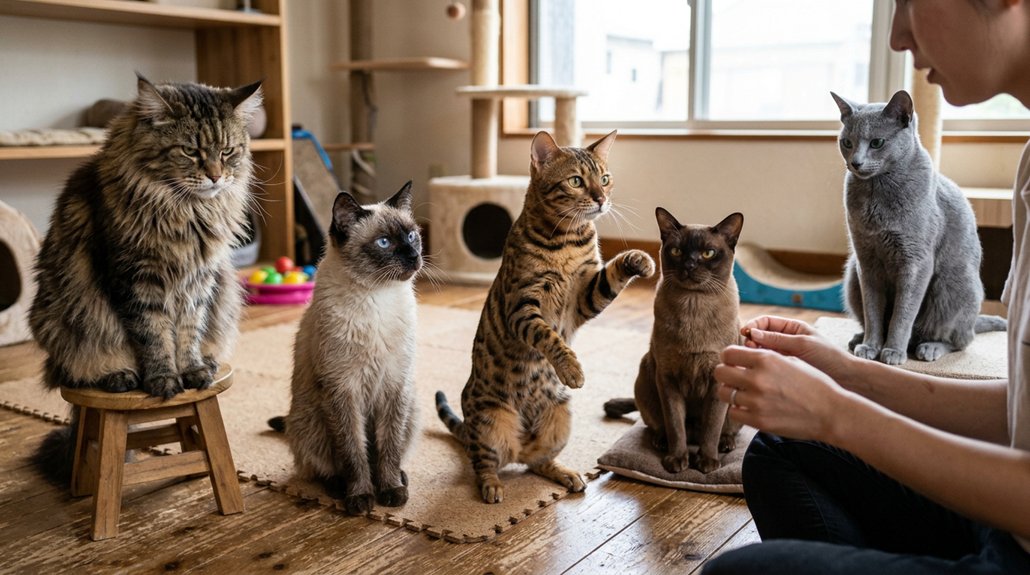
You’ll find Oriental Shorthairs, Bengals, and Devon Rex cats among the hardest breeds to train, due to their stubborn independence and high-energy personalities. For Oriental Shorthairs, emotional bonding helps address autonomy. Bengals require engagement to prevent frustration, while Devon Rex benefit from consistent interaction and mental stimulation. Health-sensitive breeds like Bulldogs need careful handling due to stamina limits. To effectively train these breeds, consider exploring tailored strategies that cater to their specific quirks and needs.
Key Takeaways
- Oriental Shorthairs are hard to train due to their independence, requiring emotional bonding to address autonomy preferences.
- Bengals resist training when engagement needs are unmet, needing energy-focused strategies and intricate patience techniques.
- Devon Rex cats are playful yet stubborn, benefiting from enriched mental stimulation and regular interaction to reduce resistance.
- Breeds like Bulldogs and Persians require short sessions due to health-related stamina limits, affecting their training ease.
- High-energy breeds like Abyssinians need varied, rewarding techniques to sustain interest despite their natural curiosity and independence.
Understanding the Challenges in Training Stubborn Cat Breeds
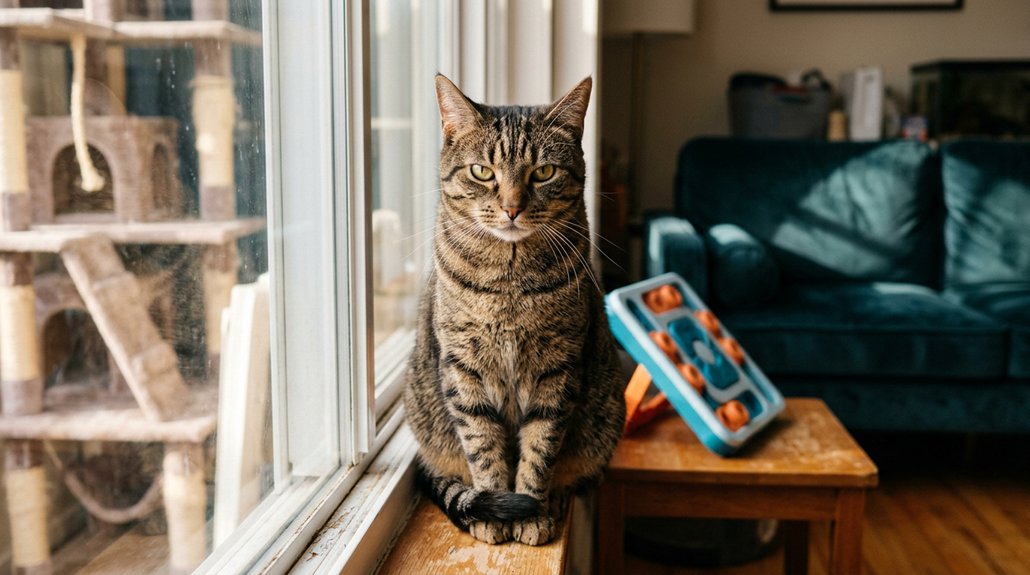
When you’re dealing with stubborn cat breeds, understanding the underlying behavioral mechanics is essential for successful training. Cats like the Oriental Shorthair exhibit unique behavioral quirks, driven by a preference for independence. The emotional bonding process becomes vital when handling such breeds, as their resistance to training often stems from wanting autonomy. Breeds such as the Siamese and Tonkinese demand frequent interaction. When neglected, their social insistence can translate into stubbornness. This underlines the necessity of recognizing the interplay between emotional bonding and the cat’s motivation. Additionally, active breeds like the Bengal may show stubbornness from frustration due to unmet engagement needs. For strong-willed breeds like the Devon Rex, behavioral analysis is key to fostering cooperation and reducing resistance.
Training Strategies Affected by Brachycephalic Health Issues
Considering the specific health challenges associated with brachycephalic cat breeds, training strategies must adapt to their unique needs. Due to conditions like brachycephalic airway syndrome, these cats often struggle with breathing difficulties, necessitating the incorporation of gentle breathing exercises during training. It’s essential that you monitor their health closely, as unresolved issues can affect their behavior and willingness to participate in training sessions. Regular veterinary check-ups are important to preemptively address any emerging health complaints. In addition, their anatomical predisposition to eye diseases means they may resist activities involving close interaction or handling. Tailor your approach by implementing shorter, more frequent sessions to accommodate their stamina limits, ensuring training remains stress-free and conducive to their well-being.
Keeping High-Energy Breeds Engaged During Training
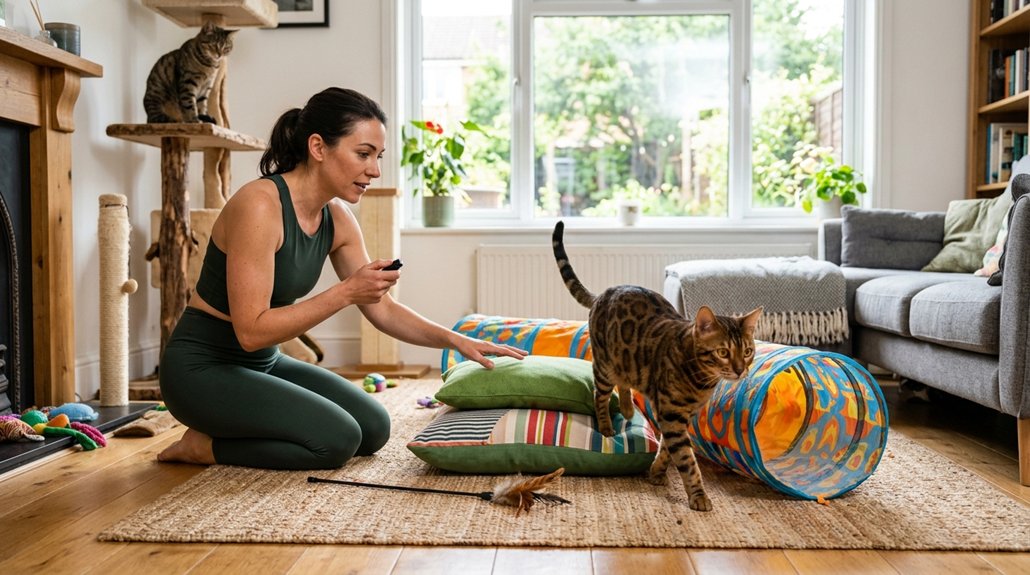
Despite their enchanting charm and spirited nature, high-energy cat breeds like Bengals and Abyssinians pose unique training challenges due to their energetic dispositions and heightened intelligence. To keep these lively felines engaged, utilize reward based techniques, which capitalize on their inherent curiosity and motivation. Short, varied training sessions help sustain interest and minimize distractions, making learning more effective. Incorporate interactive toys and puzzle games to channel their energy, catering to their playful instincts during and between training tasks. Frequent breaks are essential to avoid cognitive fatigue, ensuring your cat remains focused and motivated to learn. By constructing an agile yet structured environment, you’ll foster positive behavioral reinforcement while maintaining your high-energy cat’s enthusiasm and engagement in training.
Managing the Strong-Willed Personalities of Sphynx and Devon Rex
Training strong-willed cats like the Sphynx and Devon Rex requires a nuanced understanding of their distinct personality traits and behavioral patterns. Sphynx cats, with their loving yet energetic demeanor, demand consistent engagement to guarantee effective Sphynx Training. If ignored, their strong-willed nature might present challenges. Devon Rex cats, similarly affectionate, exhibit playful stubbornness, making regular interaction essential for compliance. Behavioral analysis suggests both breeds benefit from enriched mental stimulation; employing interactive games during training sessions can enhance focus and compliance. Consistency in command delivery is critical, as these intelligent breeds may dismiss instructions deemed uninteresting. Effective training hinges on understanding individual personality traits: reward-based strategies work well with Sphynx cats, while Devon Rex may require frequent play breaks to optimize learning outcomes.
Handling the Vocal Nature of Balinese and Tonkinese in Training
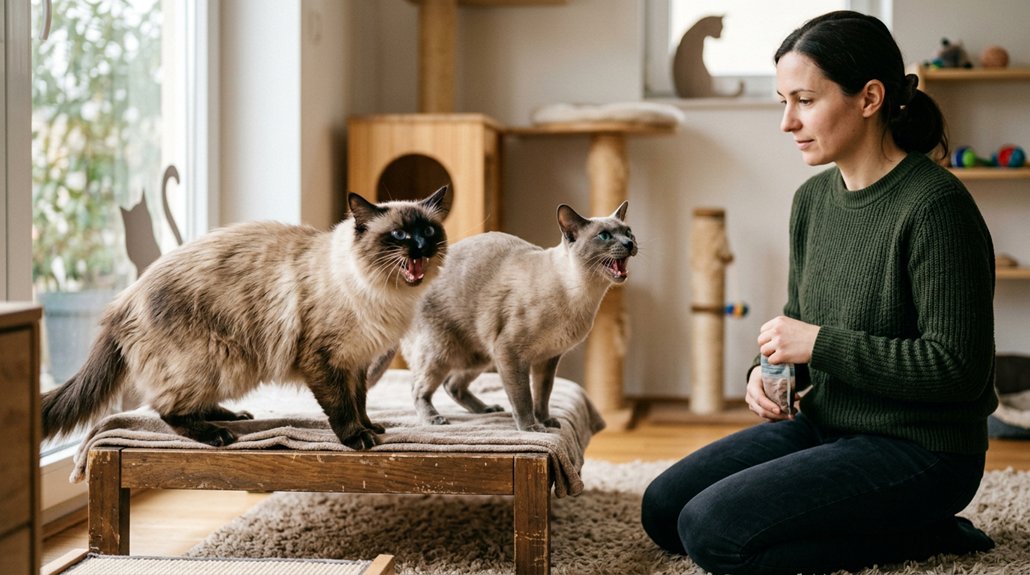
While training Balinese and Tonkinese cats, it’s essential to harness their inherent vocal nature by recognizing these communicative behaviors as opportunities rather than obstacles. Their vocal communication serves as a valuable insight into their needs and emotions. Engage with these expressive breeds by interpreting their vocal cues to tailor your training approach. Employ positive reinforcement techniques, offering training rewards to reinforce desired behaviors. This method not only acknowledges their attempts at communication but also channels their energy constructively. Both breeds thrive on social interaction—incorporating playful training methods can sustain their engagement and prevent defiance. By understanding and integrating their vocalizations into your training strategy, you create a responsive and balanced environment conducive to effective learning.
Training Considerations for Short-Tailed Cats Like the Manx
After addressing the vocal tendencies of Balinese and Tonkinese, it’s important to contemplate the unique challenges posed by short-tailed breeds like the Manx during training. Their distinctive tail structure not only affects their posture but also contributes to potential discomfort during certain activities. This physiological nuance requires tailored training techniques. For instance, focus on non-invasive exercises that don’t demand extensive close contact, as their cautious disposition may resist such interactions. Additionally, the Manx’s urinary and digestive sensitivities necessitate stress-minimized sessions. Strike a balance by creating a positive environment with short, engaging routines emphasizing positive reinforcement. Sustain their social nature with mental stimulation to counter stubborn behaviors. Patience and consistency are pivotal in accommodating their individuality and fostering training effectiveness.
Applying Intelligent Techniques for Resourceful Cats Like Abyssinians
To successfully train an Abyssinian, you’ll want to leverage their innate cognitive capabilities by integrating activities that promote mental stimulation. Recognizing their propensity for exploration and agenda-driven behavior, it’s essential to employ adaptive training techniques, such as interactive toys and puzzle games, which align with their psychological profile. Prioritizing consistent, engaging interactions not only capitalizes on their natural curiosity but also fosters increased receptiveness to complex learning processes.
Encouraging Mental Stimulation
As intelligent and resourceful cats, Abyssinians necessitate a dynamic environment to stay mentally stimulated and prevent boredom-induced behavioral issues. Incorporating interactive puzzles and engaging games can considerably enhance their training experience by challenging their cognitive abilities. Given their high activity level and considerable reliance on mental engagement, employing varied stimulating activities prevents monotony and fosters learning. Clicker training, a method rooted in positive reinforcement, effectively taps into their enthusiasm to learn new tricks. This technique not only reinforces desired behaviors but also provides an energetic outlet. Interactive play, such as fetch or agility courses, satisfy both their physical and mental stimulation needs, essential for their well-being. Additionally, environmental enrichment, including climbing structures, contributes to maintaining their health and happiness.
Harnessing Natural Curiosity
Although Abyssinians are celebrated for their high intelligence and innate curiosity, these traits can transform training into a stimulating yet demanding endeavor. Their cognitive prowess demands an environment rich in interactive play and puzzle toys, essential for channeling mental and physical energy efficiently. These tools exploit their exploratory nature, fostering engagement and cognitive astuteness.
When training, employ positive reinforcement—consistency and rewards form the basis of effective behavior modification in Abyssinians, avoiding punitive methods that can hinder progress. Remember, short and varied sessions suit their attention spans, maintaining their interest and enthusiasm. Agility training offers a dual benefit, catering to their energetic disposition while reinforcing your bond through challenges that engage both mind and body. Embrace their natural curiosity to promote an enriching relationship.
Enhancing Patience and Adaptability in Cat Training
When training challenging cat breeds, understanding their intrinsic behaviors is essential in enhancing patience and adaptability. Consider breeds like the energetic Bengal or Siamese; they necessitate intricate patience techniques and adaptability exercises to navigate their intellectual and playful nature. Stubborn breeds, including the Oriental Shorthair and Tonkinese, benefit from tailored approaches that recognize their persistent tendencies. Implementing consistent routines and positive reinforcement is vital, promoting not just adaptability but also a more harmonious training environment. In addition, breeds displaying independent behaviors, such as the Abyssinian and Somali, require the trainer’s patience to foster a responsive bond. By acknowledging the Devon Rex and Cornish Rex’s curiosity, trainers can develop personalized methods that align with each breed’s distinct personality traits.
Frequently Asked Questions
What Is the 3-3-3 Rule for Cats?
The 3-3-3 rule outlines a timeline for cat acclimatization: first three days for orientation, next three weeks for revealing inherent cat behavior, and three months for full adaptation. Applying training techniques requires patience and understanding behavioral analysis.
What Is the Most Difficult Cat Breed to Own?
Owning a Bengal might be tough due to its independent temperament, demanding continuous mental stimulation. Conversely, the Siberian’s naturalistic characteristics allow for adaptability and resilience, adding complexity but without the same stringent behavioral challenges Bengals present.
How Do I Say “Hi” in Cat Language?
Imagine you’re learning a delicate dance with your feline. Mirror their gestures like blinking slowly, decoding vocalizations akin to soft ‘hellos.’ Understand a gentle rub against your leg as silent camaraderie, an exquisite exchange in cat body language.
What Annoys a Cat the Most?
A cat’s annoyance often stems from disrupted routines, ignorance of vocal cues, and lack of playful interactions. Territorial issues and disregarding feline preferences can intensify stress. Understanding cat behavior guarantees smoother human-feline relationships, respecting their unique boundaries.
Conclusion
Training cats is akin to steering through a diverse, intricate ecosystem. Some breeds, like the tempestuous Sphynx or vocal Balinese, demand keen observation and adaptive techniques. Others, like the agile Abyssinians, require a cerebral approach, much like orchestrating a dance of intelligence. High-energy breeds parallel surging rivers needing direction, while brachycephalic cats resemble gentle breezes requiring delicate handling. Harmonizing with each cat’s unique symphony turns obstacles into milestones, illustrating that patience and insight illuminate the path to understanding.