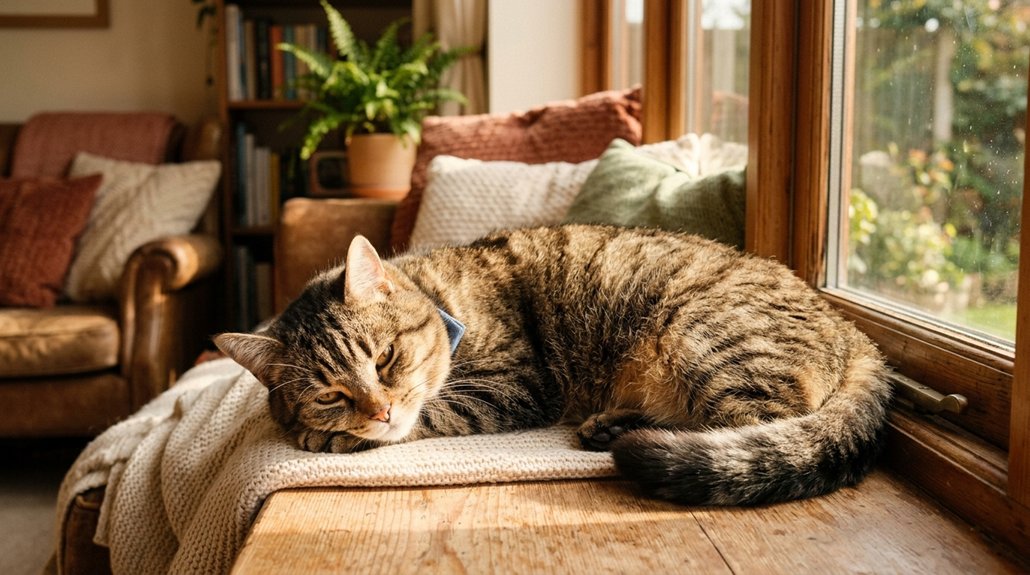
When you’re selecting a cat for the first time, consider breeds like Ragdolls and American Shorthairs. Known for their friendliness and adaptability, they’re well-suited for various households. Ragdolls, with their gentle demeanor, require regular grooming, whereas sleek-coated Siamese need less maintenance. If you prefer a low-key pet, go for a British Shorthair. Also, remember potential health concerns like obesity in Ragdolls. Explore further to discover more about aligning your lifestyle with the ideal breed choice.
Key Takeaways
- Ragdolls are gentle and affectionate, making them ideal for novice cat owners.
- Siamese cats, known for their sociability and low grooming needs, suit active beginners.
- British Shorthairs require low maintenance, fitting well in quieter households.
- American Shorthairs are adaptable, friendly, and great with children or multiple pets.
- Consider each breed’s health issues, such as Ragdolls’ obesity risk, when choosing.
Choosing Your First Cat: Essential Traits
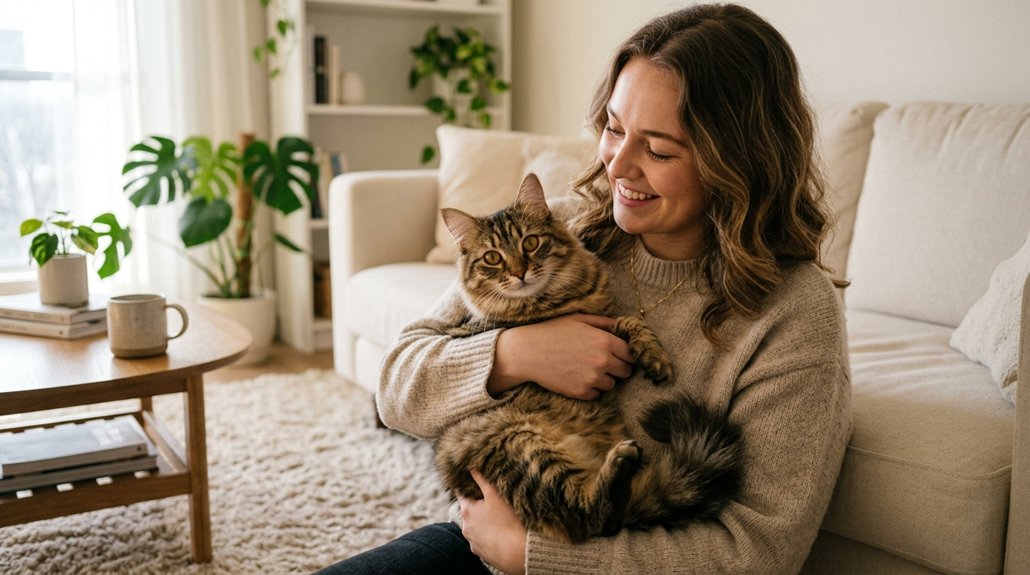
When you’re choosing your first cat, it’s crucial to focus on essential traits that align with your lifestyle and care capabilities. Cat personality traits such as friendliness and adaptability can make the shift smoother. Breeds like Ragdolls and American Shorthairs are exemplary, thanks to their easygoing nature. For first-time owner advice, consider the grooming demands; opt for low-maintenance cats like Siamese or British Shorthair, sparing you laborious care. Further, examine affectionate behaviors, especially if you cherish close interaction—Ragdolls crave being held and cuddled. Pay attention to energy levels, as some breeds adapt to both active and quieter homes. Finally, prioritize sociability, especially if you have other pets or children, with breeds like Scottish Folds offering both friendliness and adaptability.
Beginner-Friendly Cat Breeds to Consider
As you commence on the journey of selecting a cat, it’s important to contemplate breeds well-suited for beginners due to their friendly and manageable nature. Ragdoll Characteristics highlight their gentle demeanor, perfect for those new to cat ownership. Their affectionate nature is complemented by a semi-longhair coat that needs regular brushing, ensuring a bond through grooming. In contrast, Siamese Interactions are characterized by sociability and vocality. These cats thrive on human interaction and attention, making them excellent companions for those who seek engagement. With a short, sleek coat, their grooming requirements are minimal. Both breeds provide different yet manageable experiences, balancing low maintenance with delightful companionship, making them ideal choices for first-time owners seeking compatibility and ease.
How to Match Your Lifestyle With a Cat Breed
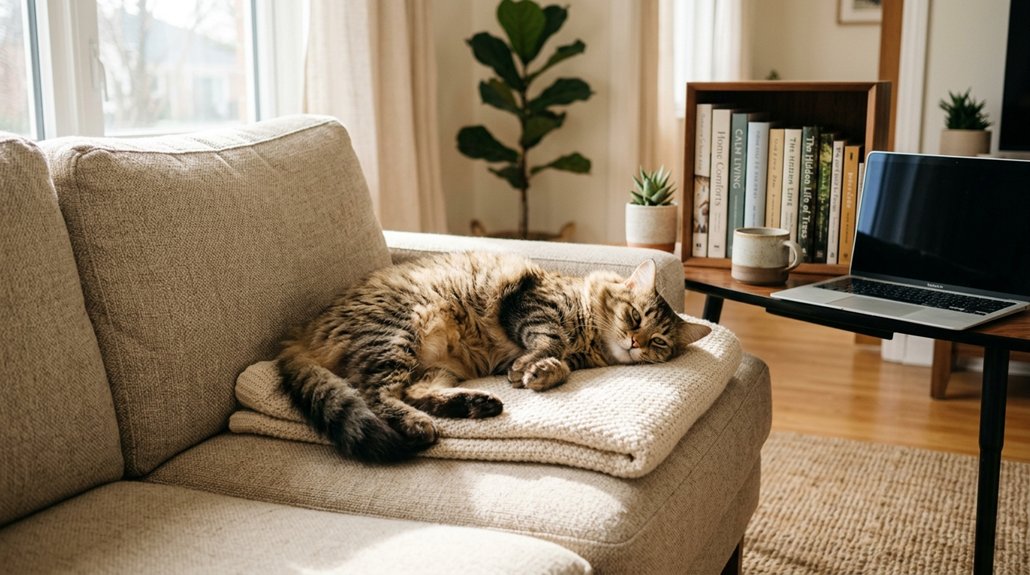
How do you determine the best cat breed to complement your lifestyle? Start by evaluating activity levels. If you’re active and enjoy playtime, consider breeds like the Siamese or Abyssinian that thrive on interaction. For a more laid-back household, British Shorthairs or Ragdolls with their calm demeanor might be ideal. Next, assess grooming needs. Breeds such as Ragdolls with semi-long fur require regular maintenance, while short-haired breeds like the Siamese need less effort. Consider your living space too; compact homes suit Scottish Folds or British Shorthairs, while Maine Coons and Savannahs need more room to explore. Finally, think about your family dynamics—friendly and adaptable breeds like American Shorthairs fit well with children or other pets.
Watch Out for These Common Breed Issues
Though choosing a cat breed with a personality that fits your lifestyle is vital, it’s equally important to be aware of potential health issues that some breeds may face. Understanding breed health and common concerns guarantees your furry friend’s well-being.
Choosing the right cat breed includes considering potential health issues to ensure your feline’s well-being.
- Ragdolls: They’re prone to obesity, so maintain portion control and incorporate regular exercise to sustain a healthy weight.
- Maine Coons: Hypertrophic cardiomyopathy and hip dysplasia are prevalent, making regular veterinary check-ups essential to monitor heart and joint health.
- Siamese: Their unique skull shape can lead to dental issues, necessitating routine dental care to prevent complications.
- Scottish Folds: Cartilage disorders, particularly in the ears, are a concern; careful breeding practices help mitigate these risks.
Your Cat Adoption Checklist: What to Prepare
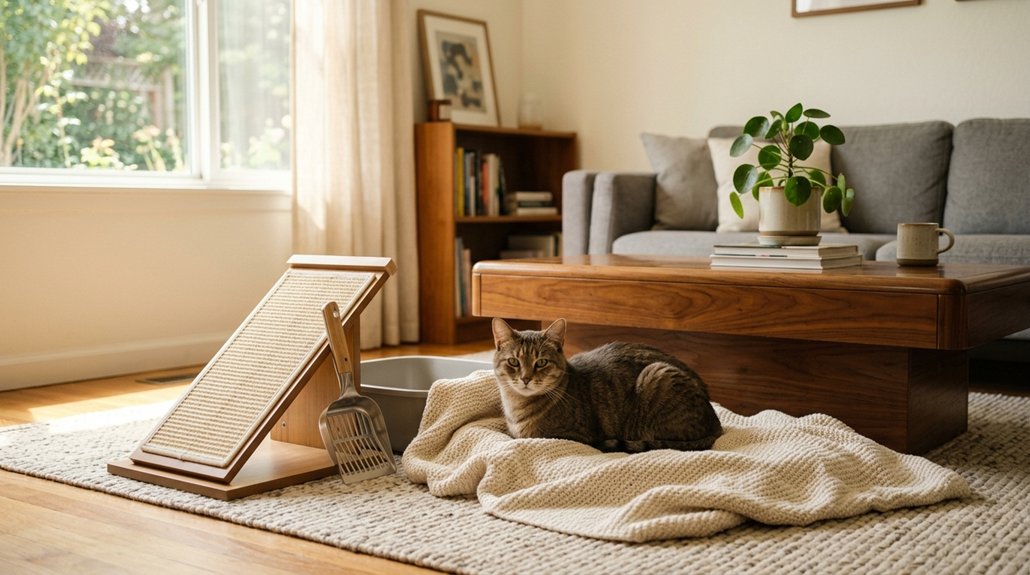
Why is preparation essential before bringing your new feline friend home? Guaranteeing a smooth shift begins with a thoughtful setup, especially in areas like litter box setup and grooming supplies. First, select an appropriate litter box and place it in a quiet, accessible location. Gather essential items such as food and water bowls, scratching posts, and a variety of toys to stimulate play and engagement.
It’s also wise to research breeds like the friendly Ragdoll and low-maintenance British Shorthair, which are ideal for first-time owners. Arrange a safe acclimation space with cozy bedding and hiding spots for comfort. Finally, establish a grooming routine; breeds like Maine Coon, for instance, demand specific grooming. Prioritize regular veterinary checks to guarantee ongoing health.
Frequently Asked Questions
What Breed of Cat Is Best for First-Time Owners?
You should consider friendly breeds like the American Shorthair or British Shorthair. They’re low maintenance cats requiring minimal grooming. Their calm and sociable nature makes them perfect for first-time owners seeking an easy-going, adaptable pet.
What Is the 3-3-3 Rule With Cats?
The 3-3-3 rule is a cat adjustment timeline explaining feline behavior expectations. Initially, cats may hide; then they explore after three weeks. By three months, they’re usually settled and bonded. Understanding each phase helps smooth changes.
What Annoys Cats the Most?
Like whispers of the wind, sudden loud noises and unfamiliar scents annoy cats the most. They treasure serenity and familiar smells, so blasting chaos disrupts their peace, causing stress akin to an interrupted Shakespearean soliloquy.
How Do Cats Say Goodbye?
Cats say goodbye through feline farewell gestures like seeking solitude or quiet vocalizations. You’ll notice changes in cat communication, such as increased affection or retreating to familiar spots, signaling their preference for a peaceful, comforting departure.
Conclusion
Choosing your first cat is like starting a new journey through an enchanted forest. Each breed represents a unique pathway, offering distinct charms and challenges. As you stroll, you’ll find breeds that align perfectly with your lifestyle, like a tailored cloak. Beware of hidden thickets—common health issues—that might require extra care. With a well-prepared adoption satchel, you’re ready to welcome a feline companion who’ll transform your home into a domain of affection and adventure.