
To create the best sleep schedule for your puppy, focus on their growth-driven sleep needs of 18-20 hours daily. Establish a consistent bedtime routine with calming activities, guaranteeing their last meal is three hours before bed. Set up a cozy, secure sleeping environment with appropriate crate size, and utilize white noise to mask disruptions. Consistent potty breaks every 4-6 hours initially support their schedule. These strategies guarantee a healthy sleep routine, with more insights to come.
Key Takeaways
- Puppies need 18 to 20 hours of sleep daily to support growth and development.
- Establish a consistent bedtime routine with calming activities to promote healthy sleep habits.
- Ensure the puppy’s sleeping environment is cozy, dark, and free from noise disruptions.
- Schedule routine potty breaks every 2-4 hours to prevent accidents and reinforce habits.
- Encourage regular daytime naps with structured nap times and a quiet environment.
Understanding Your Puppy’s Sleep Needs
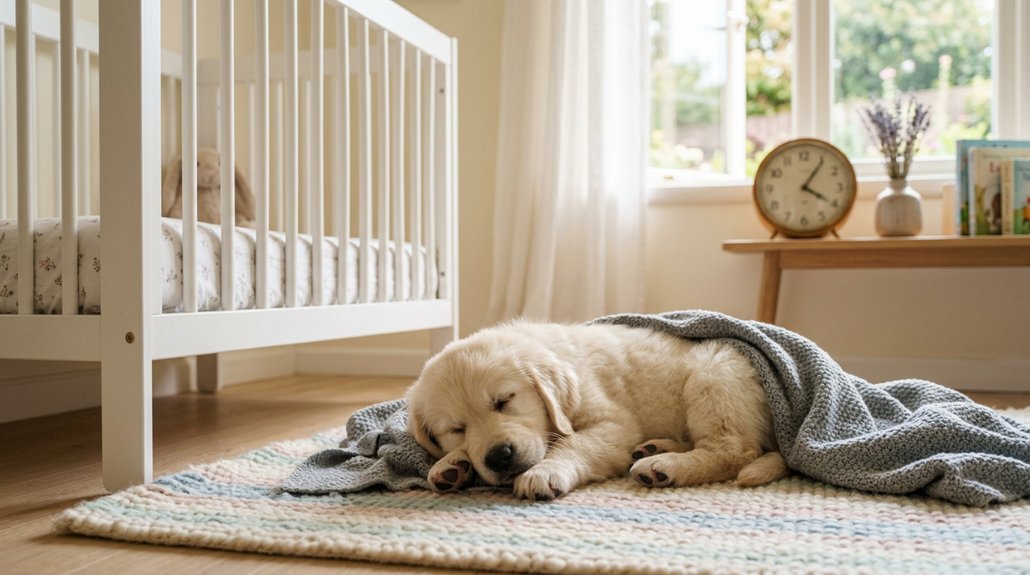
Understanding your puppy’s sleep needs is vital for their health and development. Puppies generally require 18 to 20 hours of sleep daily, primarily to aid in their growth spurts. Their sleep patterns may fluctuate due to environmental factors like noise and temperature, and maintaining emotional comfort in their sleeping area is fundamental. Different breeds often exhibit varying nap frequencies and durations, necessitating observation of breed differences. During early developmental stages, periods of playfulness must be balanced with ample rest. Be mindful of nighttime anxiety, as puppies may wake frequently, impacting sleep quality. This can have significant health implications, as disrupted sleep affects their physical well-being. Make certain your puppy’s environment is conducive to sleep to support their vital developmental needs.
Adjusting the Schedule as Your Puppy Grows
As your puppy grows, modifying their sleep schedule is essential for their ongoing health and development. Initially, young puppies need around 18 to 20 hours of rest, gradually decreasing as they age. By 4 to 5 months, many puppies start sleeping through the night, though they might only manage 4 to 6 hours initially. Adjust bedtime according to age and activity, with plans for frequent naps for younger pups. By 6 months, shift them toward an adult-like routine. Monitoring energy and recognizing signs of fatigue helps you tweak nap times and play sessions, fostering a stable sleep pattern. This approach guides your puppy to the ideal 12 to 14 hours required for adults, promoting a healthier, happier pet.
Creating a Consistent Sleeping Environment
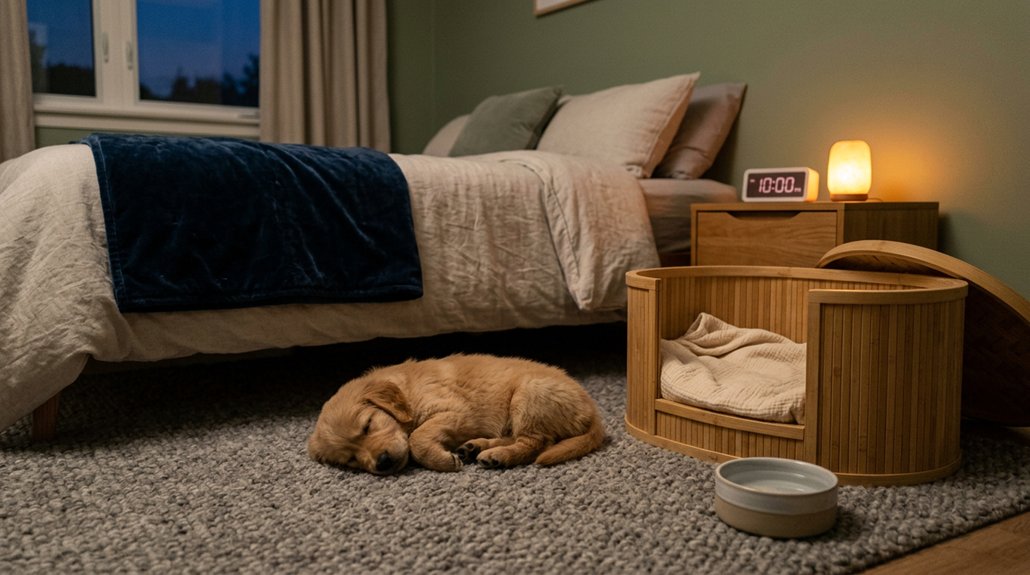
Creating a consistent sleeping environment is essential to ensuring your puppy gets the restful sleep they need for ideal health. A cozy crate with comfortable bedding can greatly reduce puppy anxiety, promoting relaxation and better sleep quality. Consider covering the crate to create a dark, calming atmosphere, minimizing distractions that might disrupt your puppy’s sleep. Using a white noise machine or fan helps mask disruptive sounds, further enhancing crate comfort by providing a soothing background. It’s important that the crate is the right size—not too cramped or too spacious—to prevent discomfort and promote a restful sleep. Position the sleeping area close to family members, offering your puppy the security and comfort they need to adjust to their new environment smoothly.
Setting a Puppy Sleep Schedule
Setting a puppy sleep schedule involves creating a consistent bedtime routine, managing nighttime potty breaks, and encouraging independent sleep habits. By integrating calming activities such as quiet time and ensuring the last meal occurs at least three hours before bed, you help your puppy understand it’s time to wind down. Utilizing crate training not only provides a secure sleeping environment but also fosters the puppy’s ability to sleep independently and helps regulate nighttime waking for bathroom needs.
Establishing Consistent Bedtime Routine
When you introduce a structured bedtime routine for your puppy, you’re laying the foundation for their healthy sleep habits. Start by including calming activities, like a gentle play session or cuddle time, to signal it’s time for sleep. Feeding should happen no later than three hours before bedtime to aid digestion and prevent nighttime disturbances. Right before bed, a final potty break is essential. Incorporate a soothing chew toy to further ease your puppy into sleep mode. Using nighttime music, such as a white noise machine, can create a comforting environment. Consistency is key; establish a regular bedtime so your puppy can benefit from security and predictability. This routine helps your puppy develop a sound sleep pattern essential for their growth.
Managing Nighttime Potty Breaks
Even though puppies are adorable bundles of energy, they do require nighttime potty breaks to prevent accidents and teach them bladder control. Establishing a nighttime routine is essential for promoting puppy relaxation and ensuring adequate rest. Aim for 1-2 low-key outings to reinforce that nighttime is meant for sleep, not play. This helps minimize disruptions and encourages deeper rest.
Monitor how long your puppy can comfortably go between breaks, gradually extending the intervals as they adjust. A calm potty break right before bedtime also supports a consistent routine, giving your puppy a chance to eliminate and settle down for the night. Coupled with regular feeding and potty schedules, this approach not only fosters healthy sleep patterns but also nurtures good nighttime habits.
Encouraging Independent Sleep Habits
While a consistent bedtime routine might seem repetitive, it’s essential in teaching your puppy independent sleep habits. Using puppy sleep training techniques like calming activities, coupled with a final potty break, signals that it’s time to sleep. Puppies need 18 to 20 hours of daily rest, so schedule naps throughout the day. Place your puppy in the crate at the same time every night—creating predictable conditions to alleviate nighttime anxiety. Limit your interaction during nighttime potty breaks to discourage play, teaching your puppy night is solely for sleep. As your furry friend matures, gradually extend the potty break intervals at night. This approach helps puppies gradually adapt to longer undisturbed sleeps, ensuring they develop healthy independence while boosting their overall well-being.
Importance of Routine Potty Breaks
To support your puppy’s house training and prevent accidents, it’s essential to maintain regular potty breaks every two to four hours. This routine, particularly post-meal, helps build your puppy’s confidence and strengthens their understanding of appropriate bathroom habits. By consistently guiding them to a designated potty area, you’re setting the foundation for successful house training and minimizing stress for both you and your pup.
Consistency Prevents Accidents
Establishing a routine for potty breaks is essential for preventing accidents and developing healthy habits in puppies. Adhering to a consistent schedule every two to four hours helps your puppy learn potty communication and guarantees effective accident prevention. Routine breaks following meals, playtime, and activity changes reinforce bathroom habits. Such consistency helps your puppy’s internal clock adjust, fostering reliable timing.
Here’s how to coordinate effective breaks:
| Suggested Time | Activity Trigger |
|---|---|
| Every 2-4 hours | Routine check-in |
| Immediately after meals | Digestive cues |
| Post-playtime | Energy expenditure |
| Change in activity | shift awareness |
| Before bedtime | Nighttime prevention |
Monitoring these habits supports their well-being. Identifying patterns can pinpoint potential health issues, emphasizing the health-oriented nature of routine.
Supports House Training
A regular schedule of potty breaks is essential for supporting your puppy’s house training journey. Scheduling potty breaks every two to four hours, especially after meals and playtime, is critical for effective house training. Puppies typically need to relieve themselves shortly after eating, so precise potty timing aligned with feeding is fundamental. Consistent routines minimize in-house accidents and teach your puppy where to go. Designate a specific outdoor potty area to strengthen this habit, making it clear to your puppy where relief should occur. Employ reinforcement techniques like praising and rewarding your puppy each time they successfully potty outside. Early and frequent breaks, combined with reinforcement, lay a foundation for successful house training and promote your puppy’s health.
Builds Puppy Confidence
When you maintain routine potty breaks every two to four hours, you do more than just prevent accidents; you establish a predictable pattern that builds your puppy’s confidence. Frequent trips outdoors after meals and activities serve as routine reinforcement, promoting strong bathroom habits. This regularity eases anxiety since your puppy learns exactly when and where they should go, directly enhancing their confidence. A structured schedule is key—over time, as your puppy matures, you can gradually extend the intervals between breaks. This helps develop their bladder control, by fostering an environment where your puppy feels steady and secure. Nighttime breaks, reduced to one or two, help guarantee deeper, restful sleep, contributing to improved overall well-being.
Implementing a Relaxing Bedtime Routine
One fundamental aspect of ensuring your puppy gets a good night’s sleep is implementing a relaxing bedtime routine. Effective puppy relaxation techniques include calming pre bedtime activities like a gentle play session or a serene stroll that doesn’t overstimulate their minds. Here’s a table that outlines key steps:
| Step | Activity | Purpose |
|---|---|---|
| 1 | Calm potty break | Signal it’s bedtime |
| 2 | Chew toy or frozen mat | Promote relaxation |
| 3 | Final meal 3 hours early | Aid digestion |
Provide a soothing environment by using a crate cover and a white noise machine to minimize distractions. Limit stimulating activities an hour before bed, ensuring a peaceful atmosphere that encourages sleep. Following these strategies helps your puppy develop healthy sleep habits.
Handling Nighttime Puppy Wake-Ups

Although nighttime wake-ups are a common occurrence for puppies, understanding how to handle them effectively can foster healthier sleep routines. Expect them to need potty breaks every 4-6 hours initially, gradually extending as they mature. Maintain crate comfort and manage nighttime fears by keeping potty breaks low-key. Use minimal light and speak softly to avoid overstimulation. Limit these breaks to 1-2 times a night. If your puppy barks or whines in their crate, wait for a brief silent period before responding. This approach prevents reinforcing attention-seeking behaviors. Establish a consistent pre-bedtime routine, including a bathroom break with low-energy activities, signaling to your puppy that it’s time to settle down for the night. This consistency is key for restful sleep.
Encouraging Daytime Naps
Balancing a puppy’s nighttime and daytime sleep needs effectively requires understanding their natural sleep patterns. Puppies generally need 18 to 20 hours of sleep daily, so encouraging regular daytime naps using effective nap time techniques is imperative. Establish structured nap times to help regulate energy levels and enhance nighttime sleep consistency. Create a quiet, distraction-free environment for these naps. Incorporate short, engaging playtime stimulation before nap time to tire them out, promoting better daytime rest. Monitor their sleep patterns to adjust nap durations—aim for 3 to 4 naps daily, especially in the early weeks. This approach not only aids your puppy’s physical and behavioral development but also establishes a balanced sleep routine vital for their growth and well-being.
Solving Common Puppy Sleep Challenges
Successfully addressing common puppy sleep challenges requires understanding and patience to promote a healthy sleep routine. Puppies need 18 to 20 hours of sleep daily, essential for their growth and behavior. Whining solutions often involve timing your responses. Wait for a pause in whining before offering comfort, reinforcing desired behavior. For crate comfort, make certain the crate feels safe; introduce daytime crate training for naps and feeding to lessen anxiety. Incorporate a calm bedtime routine with a final potty break, gentle play, or chew toys to reduce nighttime disruptions. Gradually extend the time between potty breaks, aiming for uninterrupted sleep by 4-5 months. These strategies encourage longer rest periods, fostering a well-adjusted and healthier puppy.
Building a Strong Bond Through Sleep Training
Establishing a strong bond with your puppy through sleep training is essential for their emotional and physical well-being. By building a consistent routine, you create a safe environment that promotes trust and security. Ensuring your puppy sleeps near you at first offers nighttime reassurance and strengthens your connection. Engage in bonding activities like gentle play or comfort activities before bed. These pre-bedtime routines also serve as sleep cues, helping your puppy relax and associate nighttime positively.
| Bonding Activity | Sleep Cue | Trust Building |
|---|---|---|
| Gentle Play | Bedtime Routine | Proximity |
| Comfort Snuggles | Soothing Music | Responsive Care |
| Chew Toys | Dimmed Lights | Consistent Routine |
| Soft Talk | Calming Scents | Security |
Monitoring and responding to their needs fosters a deeper bond, resulting in happier sleep patterns.
Frequently Asked Questions
What Is the 7 7 7 Rule for Puppies?
The 7 7 7 rule is a puppy sleep and ideal routine guideline: 7 hours of night sleep, 7 hours of activity, and 7 hours of rest. It supports balanced growth, preventing overstimulation and enhancing their health and development.
What Is the 10 10 10 Rule for Puppies?
The 10 10 10 rule for puppies helps balance their energy: 10 minutes of play, followed by 10 minutes of calm downtime, and then sleep for 10 minutes. This encourages healthy puppy sleep patterns and establishes ideal nap times.
What Is the 3-3-3 Rule for Puppies?
The 3-3-3 rule involves your puppy taking three days to adjust to new surroundings, three weeks to establish trust, and three months to settle. Implement sleep schedules and training techniques during this period to promote adjustment.
What Is the Hardest Month of a Puppy?
You might be wondering what the hardest month of a puppy’s life is… It’s unquestionably the first. You’ll tackle puppy development challenges, endure sleepless nights, and face behavioral hurdles. Expert advice can ease this chaotic yet rewarding journey.
Conclusion
In steering your pup’s sleep schedule, consistency is key—your dedication lays the foundation for their well-being. Imagine their routine as a compass, guiding restful nights and energizing days. You’ve got the knowledge; now craft the perfect sleep environment, prioritize regular potty breaks, and embrace those adorable daytime naps. Remember, proper sleep training isn’t just about rest—it’s about nurturing a healthy, happy bond. So, stay patient, stay persistent, and watch your puppy thrive.