Adopting a cat is more than just offering a home; it involves addressing their unique health and behavioral needs. You’ll need to create a comfortable environment, establish a consistent routine, and plan for unforeseen medical expenses. Understanding their adoption history can guide you in managing their behaviors. Expect to face challenges like stress-induced health issues, but nurturing your cat leads to a rewarding bond. Continue to discover ways to make this journey fulfilling.
Key Takeaways
- Cats may have hidden behavioral issues due to past trauma; patience is crucial for their emotional recovery.
- Unexpected medical expenses can arise; an emergency fund prevents financial strain and ensures care.
- Understanding vocal and body language helps interpret needs and strengthens the human-cat bond.
- Creating a comfortable environment with vertical spaces and quiet retreats reduces stress for newly adopted cats.
- Consistent routines and gradual socialization ease transitions and help address past neglect or anxiety.
Guidelines for Your Cat’s First Week at Home
When bringing a new cat into your home, ensuring a smooth change is essential for their well-being. The first week involves critical adjustments where your cat’s comfort and security are prioritized. Start by providing a safe, quiet space to help them acclimate, minimizing stress. Allow gradual exploration of your home, initially limiting access to smaller areas, fostering a secure environment. Stick to a consistent feeding schedule, maintaining the same diet they had at the shelter, to prevent gastrointestinal issues. Closely monitor their behavior for signs of stress or discomfort, such as hiding or appetite changes, indicating they might need extra support. Don’t forget to schedule a vet visit within this period to address any potential health concerns early on.
Creating a Welcoming Space for Your Cat
To guarantee your cat’s comfort, assess your home for spaces that suit their resting needs, such as providing appropriately-sized beds. Incorporating vertical spaces like shelves or cat trees will cater to their instinctual need to climb and survey their territory. Additionally, preparing a quiet retreat with consistent, accessible litter boxes and guaranteeing hazardous items are out of reach is essential for their safety and emotional well-being.
Space Considerations for Comfort
A significant aspect of adopting a cat involves ensuring that your living space caters to the feline’s need for comfort and security. Assess the environment for cozy nooks and vertical space, essential for a cat’s exploration and relaxation. Cats naturally seek elevated areas, so incorporating cat trees or specialty shelves enhances comfort by offering varied levels for perching. Additionally, larger beds and intimate spaces serve their preference for close cuddling, promoting contentment and ease. Evaluate and maintain consistency in the placement of essentials like litter boxes and food to support a smooth shift. By accommodating these spatial needs, you’ll foster an environment where your cat feels secure, reducing stress and promoting well-being as they adapt to their new home.
Preparing a Quiet Retreat
Establishing a quiet retreat is essential when introducing a new cat to your home. Creating a peaceful environment helps your cat acclimate without undue stress, promoting cat safety and ensuring their emotional comfort. Designate a specific room or area to act as their sanctuary, complete with cozy bedding, litter boxes, and safe toys. This setup minimizes anxiety during the initial adjustment period. Keep the space free from loud noises and disturbances; cats are highly sensitive and thrive in calm atmospheres. Integrate vertical elements such as cat trees or shelves, allowing your feline friend to observe their surroundings safely. Consistency in furnishings and litter choices fosters stability, maintaining a comforting, predictable environment vital for your newly adopted cat’s wellbeing.
Tackling Health Issues Early On
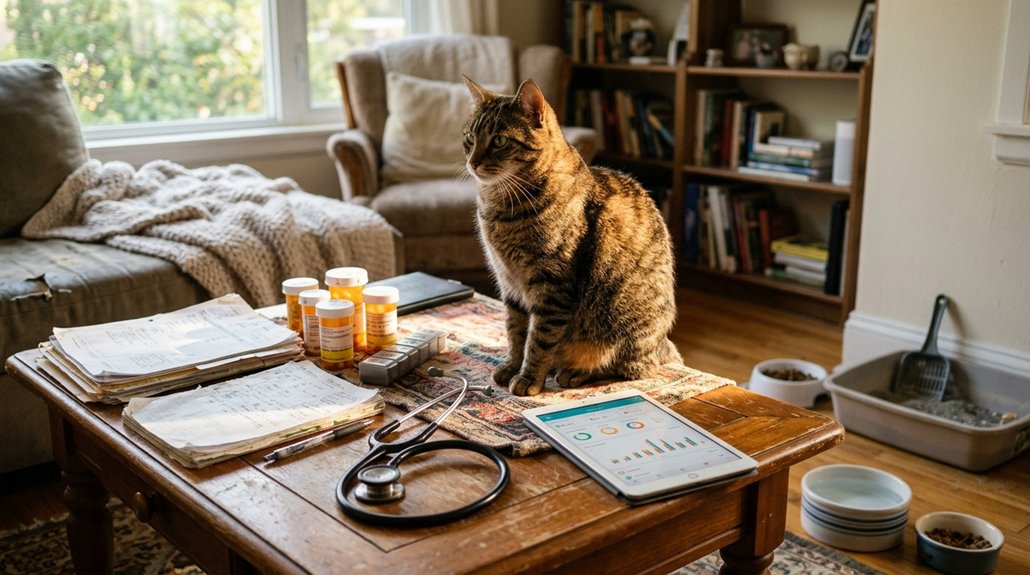
When bringing a newly adopted cat home, it’s essential to prioritize their health by addressing potential issues early on. Implement health monitoring and preventive measures by scheduling an immediate vet visit. Detect early signs of upper respiratory infections and confirm vaccinations and health evaluations are current. Though shelters perform initial checks, hidden issues can surface after adoption. Regular observation of your cat’s behavior and appetite is critical, as cats often conceal illness until symptoms progress. Plan for unforeseen medical expenses to avoid costly emergency treatments, particularly outside regular hours. Stress from adapting to a new environment can trigger health problems, demanding immediate and meticulous care.
Schedule an immediate vet visit and monitor behavior to protect your newly adopted cat’s health.
- Watch for changes in appetite or behavior
- Budget for unexpected vet expenses
- Confirm vaccinations are up-to-date
- Monitor for respiratory symptoms
Manage Your Cat’s Unique Behaviors
To effectively manage your cat’s unique behaviors, it’s essential to adapt to their natural patterns and preferences. Recognize how their communication styles, like specific vocalizations, reveal their needs, and be attentive to behavioral changes, as these can signal stress or health issues. By maintaining a consistent environment and routine, you can reduce stress and foster a harmonious relationship, especially considering a cat’s crepuscular nature and attachment needs.
Adapting to Feline Patterns
Cats are naturally crepuscular, meaning they’re most active during dawn and dusk, which can lead to disruptions in your nightly routine as they engage in early morning grooming or playful antics. Understanding their crepuscular activity is critical for managing your cat’s behavior. Adaptation involves recognizing their vocalization cues for attention, which reflect different attachment styles. For instance, some cats vocalize for lap time, desiring closeness, while others value independence. Litter preferences must be respected to guarantee comfort. Additionally, be vigilant for stress indicators, such as altered social conduct or increased vocalizations, to address potential issues promptly. By understanding these nuances, you enhance their well-being and foster a harmonious relationship.
- Monitor crepuscular activity
- Decode vocalization cues
- Cater to attachment styles
- Acknowledge litter preferences
Addressing Behavioral Changes
Behavioral shifts in newly adopted cats are not uncommon and often stem from the stress of moving into a new environment. Recognizing behavioral triggers and stress signals is key to managing these changes effectively. Many rescue cats have encountered trauma, which can manifest in altered vocalizations or unpredictable routines. Establishing a consistent routine is essential, as cats are crepuscular, often showing heightened activity at dawn and dusk. Adjusting to these patterns can reduce nighttime disturbances. Monitor litter box habits and grooming behaviors; deviations might signal discomfort or health issues needing attention. Remain patient, as preferences may evolve over time. By responding to unique behaviors and stress signals, you’ll enhance your cat’s comfort and happiness in their new habitat.
Understanding Communication Styles
Interpreting feline communication is essential for maintaining a harmonious relationship with your cat. Cats express themselves through a mix of vocal cues and body language, each tailored to signal their needs or moods. Understanding these signals allows you to respond appropriately, strengthening your connection. Observing meows, purrs, and even silence can provide crucial insights into their emotional and physical state. Equally important is reading their body language—note the tail position, ear orientation, and general posture. Many cats use vocalizations to express desires for attention or playtime, reflecting their social needs.
- Meows: Different tones indicate demands or discomfort.
- Purring: Often a sign of contentment.
- Tail Position: Upright or flicking may show excitement or irritation.
- Ears: Forward means interested; flattened signals fear or aggression.
Planning for Your Cat’s Expenses
When considering bringing a feline friend into your home, planning for your cat’s expenses is an essential step that guarantees you’re financially prepared for their needs. Effective budget planning is important, as the average annual cost can range from $500 to $1,000 for essentials like food, supplies, and routine veterinary care. For financial preparedness, it’s wise to have an emergency fund set aside for unexpected medical emergencies since costs can exceed a thousand dollars. Spaying or neutering your cat costs $50 to $300, but it helps mitigate long-term health issues. Regular preventive healthcare, with necessary vaccinations and checkups, is critical to avoid costly treatments. Finally, consider investing in pet insurance, which often ranges from $20 to $60 monthly.
Decoding Your Cat’s Adoption Story
While each cat available for adoption carries a unique story, it’s crucial to recognize how these backgrounds—often involving stray or neglected situations—can deeply impact their behavior and emotional needs. Cats’ adoption history holds clues that reveal potential socialization challenges and behavioral red flags. Trauma impact from past experiences often necessitates fostering patience and understanding. Even if shelters conduct health evaluations, post-adoption health considerations, like stress-induced illnesses, should still be anticipated.
Understanding a cat’s past is key to addressing their behavior and emotional needs post-adoption.
- Observe for any withdrawn or aggressive behavior which may indicate unresolved trauma.
- Note changes in appetite as a stress or health indicator.
- Be aware of any litter box issues that might suggest anxiety or past neglect.
- Prioritize gradual socialization techniques to ease their adjustment into the new environment.
Balancing Challenges With the Joys of Cat Ownership
Adopting a cat isn’t just about bringing home a pet; it involves embracing both the joys and challenges inherent in feline companionship. You’ll need to adapt to a cat’s behavioral quirks and steer through health issues like stress-induced upper respiratory problems following adoption. As cats profoundly impact household routines, particularly in multi-cat environments, understanding their social dynamics is essential. Cats, especially those from shelters, may bring complex past experiences influencing behavior and emotional responsiveness. Adjusting your expectations is important for managing this emotional investment. Yet, nurturing your cat can lead to unanticipated fulfillment, deepening bonds and enriching life. Embrace these challenges, as they often yield enduring joy and heartfelt memories, making cat ownership a rewarding journey.
Frequently Asked Questions
What Is the 3 3 3 Rule for Adopting a Cat?
The 3 3 3 rule outlines a cat’s adjustment period: three days to adapt, three weeks to start showing personality, three months to feel at home. Use bonding techniques like play and routine to ease this adjustment.
What Is “I Love You” in Cat Language?
“I love you” in cat language is expressed through feline communication like slow blinking, purring, kneading, or following you around. Cat behavior such as grooming and nibbling shows trust, affection, and a desire for companionship.
What Color Cat Is Least Desired?
Black cats are often the least desired due to societal biases, impacting cat color preferences and adoption challenges. Shelter cat statistics reveal these cats stay longer, despite breed popularity trends showing no correlation between color and temperament.
Where Should a Cat Sleep First Night?
Make certain your cat’s first night is stress-free by setting up a cozy cat bed in a quiet, low-traffic area. This helps them establish comforting sleeping habits, reducing stress and acclimating them to their new environment.
Conclusion
Remember, adopting a cat is a marathon, not a sprint. By preparing adequately during the first week and tackling health issues, you’ll pave the way for a harmonious relationship. Managing unique behaviors and planning for expenses guarantees both your and your cat’s well-being. Understanding their adoption story enriches this journey. While challenges will arise, the joy of companionship outweighs them. With patience and insight, you’re crafting a rewarding bond that lasts a lifetime.