
To avoid delays when adopting a cat, guarantee you’re well-prepared with all necessary documents, including ID and proof of residence. Familiarize yourself with local shelters’ requirements and make initial inquiries. Select a suitable adoption time, aiming for less busy periods. Maintain proactive communication with shelter staff and be flexible with appointments. Be open-minded about cat personalities to increase compatibility chances. Ready your home for the new arrival, and there’s more to explore for a seamless adoption process.
Key Takeaways
- Complete all necessary paperwork and gather documentation before starting the adoption process.
- Research and choose reputable local shelters to minimize potential delays.
- Schedule and attend meet-and-greet appointments at off-peak times for faster service.
- Prepare your home and supplies ahead, ensuring readiness for immediate adoption.
- Communicate clearly with shelter staff to understand and meet all adoption requirements.
Overview of the Cat Adoption Process
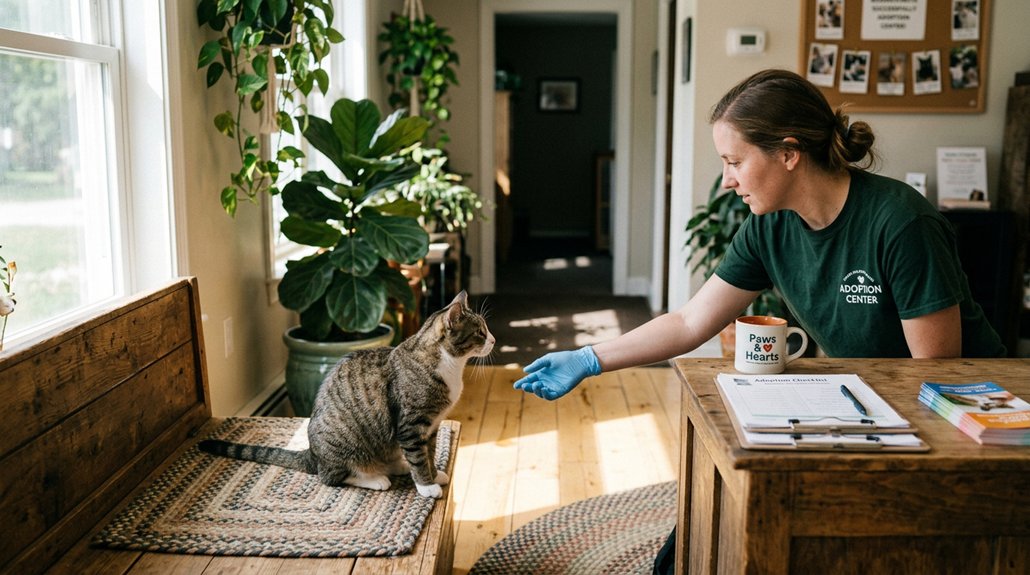
When considering adopting a cat, it’s important to understand the thorough steps involved in the process, as they guarantee the welfare and health of the animal. Start by selecting a reputable shelter or rescue organization, where you can learn about available cats, their behavior, and debunk adoption myths. Filling out an application form is next, detailing your living situation and past pet experiences to identify compatibility. Interviews or home visits may be conducted, ensuring the environment suits the cat’s needs. Paying an adoption fee covers essential health services, including spaying/neutering and vaccinations, which are crucial for feline wellbeing. Be patient; shelters often impose waiting periods, preventing impulsive decisions and promoting harmonious matches, thereby emphasizing responsible adoption practices and reducing potential delays.
Prepare Essential Documents and Details
After familiarizing yourself with the thorough cat adoption process, it’s time to focus on gathering the necessary documents to streamline your adoption experience. Create a detailed document checklist, including a valid ID, proof of residence, and any relevant rental agreements that permit pet ownership. This guarantees compliance with shelter requirements. Be ready to fill out an adoption application; application tips highlight the importance of including personal details, pet preferences, and your animal care background to expedite the process. Investigate specific adoption fees or donation guidelines, as knowing these can speed up processing. Finally, have a clear plan for your future cat’s living arrangements, complete with necessary supplies, to demonstrate preparedness and dedication to health-focused care.
Research Local Shelters and Rescue Organizations
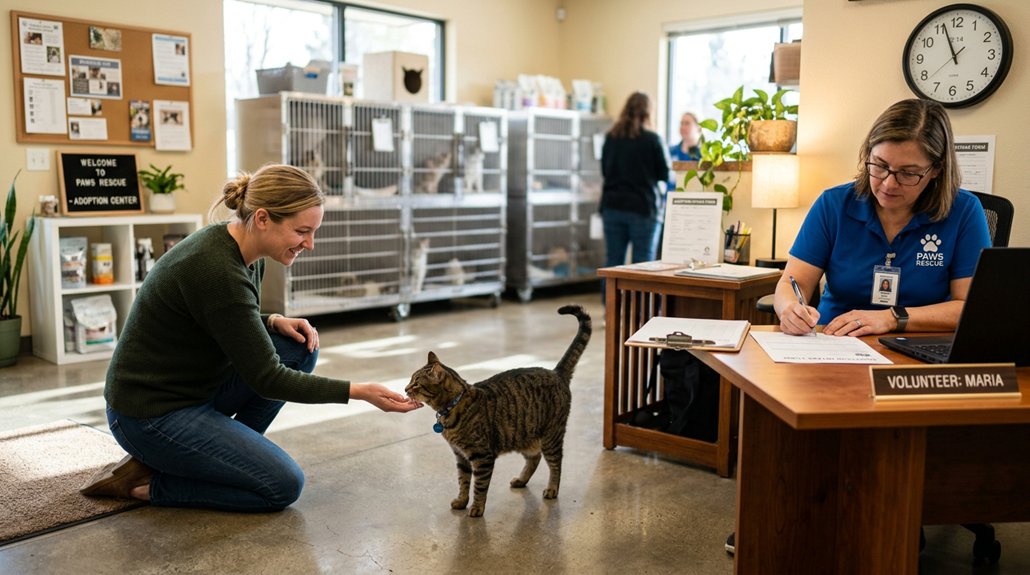
Researching local shelters and rescue organizations is vital for a smooth adoption process, as it allows you to evaluate their reputation and procedures efficiently. By evaluating their adoption requirements early, you’re better prepared to meet any pre-screening conditions, minimizing potential delays. With streamlined access to resources and insights, you can guarantee a healthier and more compatible match with your future feline companion.
Evaluate Adoption Procedures
Understanding the adoption procedures of local shelters and rescue organizations is essential, as each may have unique requirements and timelines that could impact the speed at which you can adopt a cat. Begin by researching these timelines and the required paperwork specific to each shelter. Thorough preparation can considerably reduce delays. Seek out shelters’ websites for profiles of available cats, making sure you identify a suitable match. If you’re interested in specific breeds, contacting breed-specific rescues may streamline the process. Pre-arrange appointments and organize necessary paperwork, such as application forms and vet references, to expedite adoption. By familiarizing yourself with these procedures, you’ll enhance animal welfare and guarantee a healthy, smooth shift for your new feline friend into your home.
Assess Shelter Reputation
To guarantee a seamless adoption process, focus on evaluating the reputation and reliability of local shelters and rescue organizations. Start by examining shelter ratings and online reviews for insights into their reliability and animal care standards. Community feedback on platforms and social media can reveal their engagement and success stories, offering transparency about their operations. Additionally, ascertain accreditation from esteemed bodies like the Association of Shelter Veterinarians, ensuring adherence to professional and ethical standards. Consulting local veterinary clinics can also provide valuable guidance, as vets often have firsthand knowledge of reputable shelters. Investigate their adoption success rates and policies to identify potential obstacles. This detailed research will form the basis of a responsible and efficient adoption experience, helping avoid unnecessary delays.
Explore Adoption Requirements
While starting the adoption journey, gaining a clear understanding of the specific requirements set by local shelters and rescue organizations is vital. Researching these entities helps prepare you for varying adoption forms and processes. Typically, you’ll need to fill out detailed adoption forms and participate in interviews to gauge your readiness. Effective interview tips include demonstrating your commitment to responsible pet ownership and understanding specific requirements like vet references or living arrangements. Prepare to budget between $50 to $200, as adoption fees frequently cover significant veterinary care. Make sure you have all necessary documentation—proof of identity, residency, and pet history—ready to prevent any delays in the process. This preparation guarantees a smoother shift to welcoming a new feline friend into your home.
Select the Best Time for Adoption
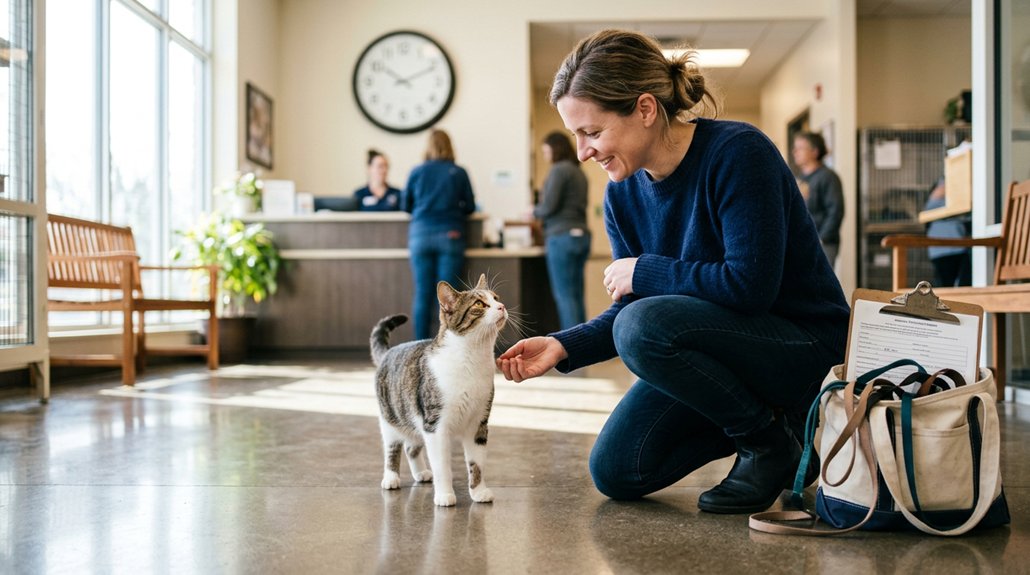
To guarantee a smooth cat adoption process, consider both timing and seasonal factors. Opt for weekends or holidays when shelters are better staffed and aim for early mornings or late afternoons to avoid peak times. Additionally, adopting during less busy seasons like winter can help expedite the process, allowing for a more stress-free experience for you and the cat.
Optimal Adoption Timing
Choosing the best time for adopting a cat requires careful consideration of several factors that can impact the change for both the pet and the owner. Timing strategies are essential in minimizing stress; consider adopting during quieter periods at shelters, such as weekdays or outside major holidays. This guarantees a more focused adoption process. It’s also important to align adoption with your personal schedule. Adopting when you can dedicate ample time to help the cat acclimate, such as during a vacation or long weekend, is beneficial. Actively participating in adoption events can increase your chances of finding the right cat quickly, fostering a supportive atmosphere and reducing delays. Proper preparation in these areas maximizes animal welfare and guarantees a successful change.
Seasonal Considerations
A strategic approach to the timing of cat adoption involves understanding the seasonal variations that can impact both the shelter environment and the newcomer’s adjustment. Spring and early summer mark peak seasonal adoption times, with shelters hosting special events to boost adoptions. It’s vital to embrace event awareness during these times. Conversely, adopting in colder months guarantees a quieter environment, beneficial for personalized attention. The holiday season presents challenges due to busy schedules; it’s important to assess your home’s readiness. Early school year adoption can offer stability as families settle into routines. Promotions like “Adopt a Shelter Cat Month” in June can aid financial considerations.
| Season | Key Insights |
|---|---|
| Spring/Summer | Peak adoption events |
| Colder Months | Quieter, personalized attention |
| Holiday Season | Busy, distracting environments |
| School Year Start | Stable household routines |
Effective Communication With Shelter Staff
Wondering how to guarantee a smooth adoption process? Start by establishing clear communication with shelter staff. Ask detailed questions to understand your potential cat’s behavior and health history—these insights guarantee a good match for your home. Sharing information about your home environment, lifestyle, and pet experience aids staff in tailoring their recommendations, speeding up the process. Flexibility in scheduling adoption meetings is essential, as shelters may need time for specific procedures. Prepare ahead by clarifying requirements like documentation and fees, avoiding unnecessary delays. Promptly responding to any communication from the shelter keeps the process on track. This proactive approach not only guarantees a healthier change for the cat but facilitates better overall outcomes in animal welfare and health.
Stay Open to Different Cat Personalities
While adopting a cat, staying open to different personalities is essential for finding the right match. Cat personality types vary widely, and understanding shy cats, among others, is important. Shy cats might need extra time to acclimate, but with patience and understanding, they often develop deep, affectionate bonds. If you’re looking for a lively companion, playful cats engage easily, offering instant companionship and are ideal for interactive families. Meanwhile, independent cats, requiring less attention, fit well into busier lifestyles, offering low-maintenance companionship. By embracing these diverse personalities, you can find a cat whose unique behaviors enrich your life. This mentality guarantees a fulfilling adoption experience, meeting both the cat’s and your household’s needs effectively.
Schedule and Prepare for Home Visits
Efficient planning is key to minimizing delays during the cat adoption process. Organizing a home visit promptly guarantees you’re meeting the cat in a familiar, calming home environment. Here’s how to streamline visit logistics:
- Schedule promptly: Arrange the home visit soon after your initial inquiry to secure your spot and meet the cat without delay.
- Prepare your home: Designate a quiet space and gather essentials like food, litter, and a cozy bed to welcome your new pet comfortably.
- Coordinate schedules: Align your availability with the shelter’s staff to guarantee a hassle-free visit, emphasizing flexibility.
- Documentation readiness: Have all required paperwork and identification ready to prevent extended timelines or extra visits.
This thorough preparation not only aids in reducing delays but also benefits the cat’s adjustment.
What to Expect at Meet-and-Greet Appointments
After arranging a home visit smoothly, you’ll move to the next crucial step of the cat adoption process: meet-and-greet appointments. These engagements allow you to observe cat behavior firsthand. Employ focused interaction techniques by approaching slowly, at the cat’s level. Sit on the floor, letting curiosity lead them to you. Document observations of body language; a relaxed posture signals comfort. Such interactions guarantee you understand the cat’s temperament better. Remember to bring necessary paperwork and prepare pertinent questions regarding the cat’s background. Timed appointments typically prevent delays.
| Observation | Importance |
|---|---|
| Relaxed Posture | Comfort and openness |
| Slow Approach | Fosters trust |
| Background Questions | Understand needs |
| Timed Schedule | Minimizes delays |
Final Steps in a Successful Cat Adoption
- Prepare Your Home: Set up a welcoming environment with essentials like litter box, scratching post, food, and water dishes.
- Vet Visit: Schedule promptly to address immediate health needs and establish a vaccination and preventive care plan.
- Shelter Communication: Engage proactively with the shelter regarding your application’s status and clarify the process.
- Understand Policies: Respect shelter guidelines concerning adoption timing, including any waiting periods or specific pick-up hours.
Effective planning fosters a smooth shift, nurturing cat bonding from day one.
Frequently Asked Questions
What Is the 3 3 3 Rule for Adopting Cats?
The 3-3-3 rule outlines your cat’s adjustment periods: three days for initial acclimation, three weeks for behavioral normalization, and three months for full integration. Recognizing these phases helps address cat behavior and guarantees a smooth change.
What Is “I Love You” in Cat Language?
In cat communication, “I love you” is expressed through slow blinks, gentle head butting, contented kneading, melodic purring, and affectionate grooming. These are signs of feline affection rooted in trust, bonding, and well-being.
Where Should a Cat Sleep First Night?
Designate a quiet room as your cat’s sleeping location on the first night. Equip it with a bed, litter box, and food. Make certain it’s free from loud noises, creating a calm environment, promoting ideal acclimation and welfare.
What Is the 3-3-3 Rule for Adopted Pets?
Think of it as an odyssey: the 3-3-3 rule describes a changeover period where an adopted pet undergoes behavioral adjustment. Three days of shock, three weeks acclimatizing, and three months finding security in their new home.
Conclusion
In the journey of adopting a cat, time is your ally, not your adversary. By organizing key documents, researching shelters, and communicating openly with staff, you pave the way for a seamless shift. Embrace the spectrum of feline personalities and prepare your home thoughtfully. Anticipate the meet-and-greet appointments as a glimpse into a potential lifelong companionship. Therefore, the path to a harmonious adoption reveals itself as less of a hurdle and more of a harmonious melody.