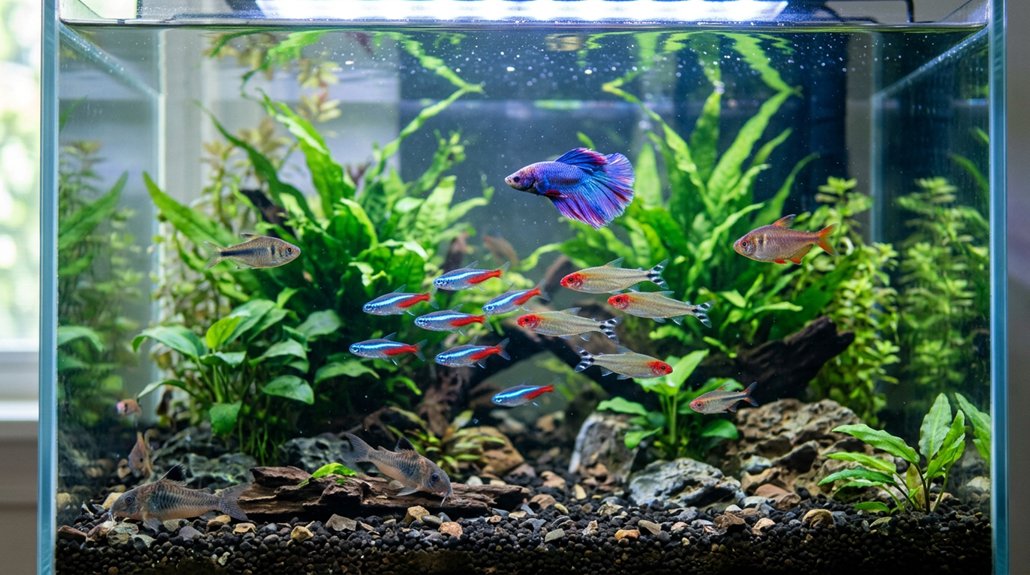
Your fish are usually dying because the tank’s biofilter isn’t fully cycled, so ammonia and nitrite build up and poison them. Test ammonia, nitrite, nitrate, pH, and temperature right away; any detectable ammonia or nitrite means trouble. Do a 25–50% water change with dechlorinated, temperature-matched water, stop feeding briefly, and add extra aeration. Then fix stocking, feeding, and maintenance so the tank stabilizes and your fish can finally thrive.
Key Takeaways
- New Tank Syndrome is the most common cause: immature biofilters let toxic ammonia and nitrite build up quickly.
- Test ammonia, nitrite, nitrate, pH, and temperature daily during the first 4–8 weeks of a new tank.
- Any detectable ammonia or nitrite is dangerous; ammonia above 0.25 ppm or nitrite above 0 ppm needs immediate action.
- Fix spikes with 25–50% water changes, dechlorinated matched-temperature water, no feeding for 24–48 hours, and extra aeration.
- Prevent future deaths by stocking slowly, feeding lightly, avoiding filter crashes, and treating disease only after water quality is corrected.
Why Fish Keep Dying in a New Tank
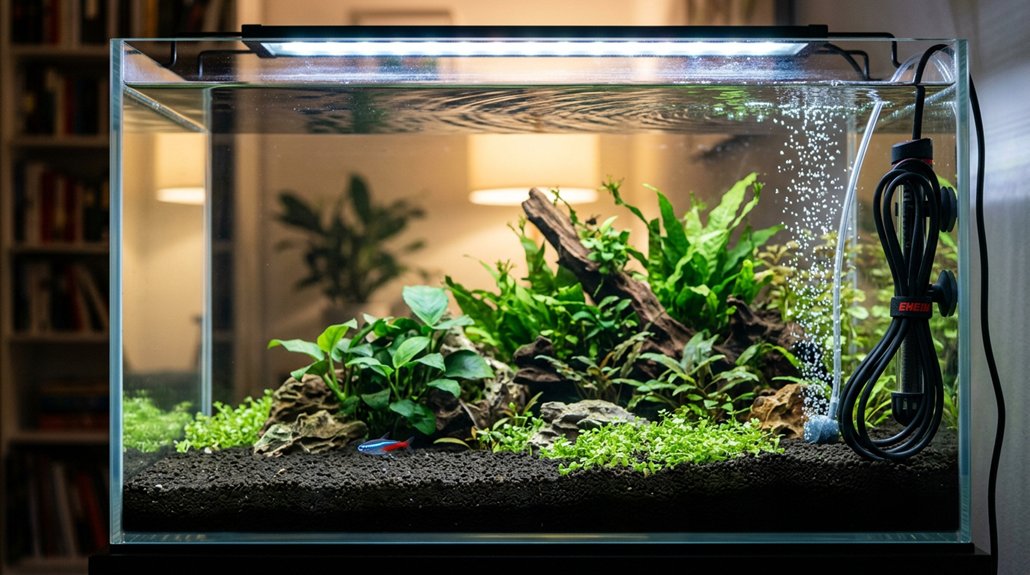
In a new tank, fish often die because the biofilter hasn’t matured yet, so toxic ammonia from waste can build up within days; even 0.25–0.5 ppm ammonia can stress or kill sensitive fish. During tank acclimation, your filter needs 4–8 weeks to grow nitrifying bacteria that convert ammonia to nitrite, then nitrate. If you add fish too quickly, the developing biofilter can’t keep up, and nitrite poisoning can hit fast. Test ammonia, nitrite, nitrate, pH, and temperature daily at setup. Keep ammonia and nitrite at zero before heavy stocking. Add only a few hardy fish at a time, waiting a week or more between batches. Watch for glass reflections, which can add stress, and use partial water changes, less feeding, and established filter media if problems appear.
New Tank Syndrome Signs to Watch For
You should watch for persistent ammonia above 0 ppm or any detectable nitrite, since even 0.25 ppm ammonia can stress fish and signal New Tank Syndrome. If you’re seeing lethargy, gasping, loss of appetite, cloudy water, or sudden deaths after stocking or filter cleaning, your biological filter may be immature or disrupted. Track the normal cycling pattern—ammonia spike, then nitrite peak, then rising nitrate—and test ammonia, nitrite, nitrate, and pH daily or every other day during the first 4–8 weeks.
Common New Tank Signs
New tank syndrome often shows up fast: sudden lethargy, loss of appetite, gasping at the surface, or frantic “spinning” swimming are common warning signs of ammonia or nitrite spikes as the tank begins cycling. You may also notice cloudy substrate, cloudy water, a foul smell, and stressed fish behavior from oxygen depletion and microbial imbalance. If test kits show measurable ammonia with zero nitrite and nitrate, your biological filter isn’t established yet. Young filter media, gravel rinsed in tap water, or abrupt pH swings can crash beneficial bacteria and trigger rapid losses. Act immediately: change up to 50% of the water with dechlorinated water, cut feeding, test daily, and add fish slowly. Keep monitoring until the tank stabilizes, usually within 4–8 weeks.
Cycling Problems And Spikes
When a tank is still cycling, beneficial nitrifying bacteria usually need about 4–6 weeks to establish, so ammonia can rise above 0 ppm and then nitrite can spike before nitrate appears. You’ll usually see the sequence on tests: ammonia first, then nitrite, then nitrate as water parameterstabilization improves. Watch for frantic surface gasping, lethargy, poor appetite, rubbing, spinning, or sudden deaths; ammonia above 0.25 ppm is already dangerous. If you suspect a spike, do up to 50% partial water changes with dechlorinated, temperature-matched water, and cut feeding. Use bacterial supplementation with seeded media or a tested starter to speed recolonisation. Prevent repeat crashes by stocking slowly, fishless cycling, and avoiding overcleaning filters or big chemistry swings that wipe out the colony.
Test Ammonia, Nitrite, and Nitrate Now
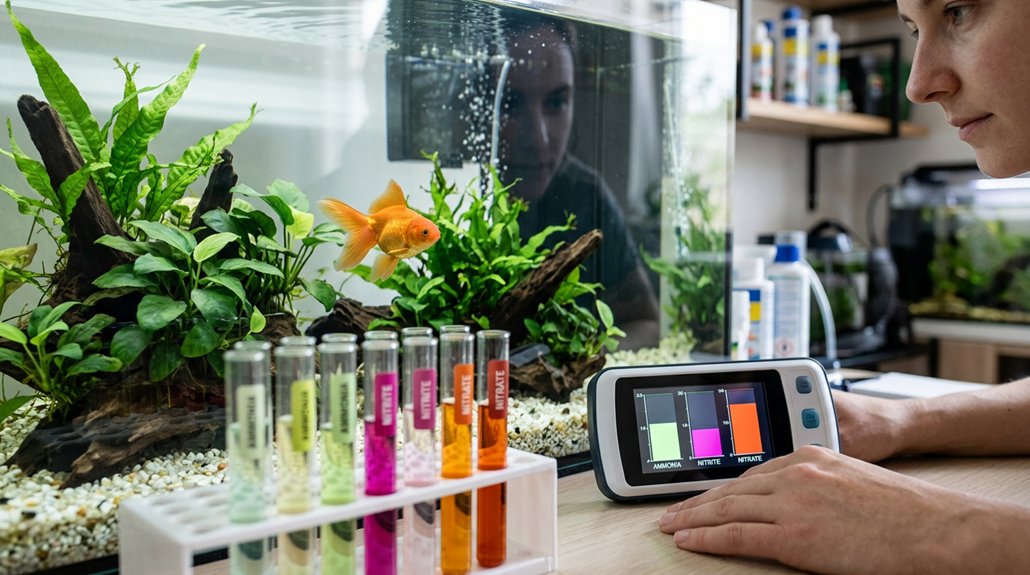
Test ammonia, nitrite, and nitrate immediately with a reliable freshwater master kit using liquid drops, then repeat daily while fish are stressed or dying. You need precise ammonia thresholds: 0 ppm is target, above 0.25 ppm is concerning, and 0.5+ ppm is toxic. Any measurable nitrite above 0 ppm matters, because it can trigger acute stress and rapid deaths. Test frequency should stay daily until readings stabilize. Once ammonia and nitrite fall, watch nitrate; rising nitrate shows the cycle’s progressing, but keep it ideally under about 20–40 ppm. Log date, time, temperature, pH, and each reading so you can spot trends, cycle crashes, and stocking issues. Accurate records make diagnosis faster and help you verify whether your tank’s biology is recovering or failing.
How to Fix Bad Water Fast
If your readings show ammonia or nitrite above 0.25 ppm, cut the toxin load fast with a 25–50% water change using dechlorinated replacement water matched as closely as possible to the tank’s temperature and pH. Test ammonia, nitrite, and nitrate again after the change. Stop feeding for 24–48 hours, vacuum uneaten food and sludge, and remove any dead fish or decaying plant matter. Add rapid aeration with an air stone or stronger filter flow overnight, and don’t shut aeration off. If cycling isn’t complete, use a reputable bottled nitrifying bacteria product or keep doing small, frequent water changes while you test daily. Avoid chemical additives unless the label specifically addresses chlorine or chloramine. Keep working until ammonia and nitrite read zero and nitrate rises.
Stop Overcrowding, Overfeeding, and Stress
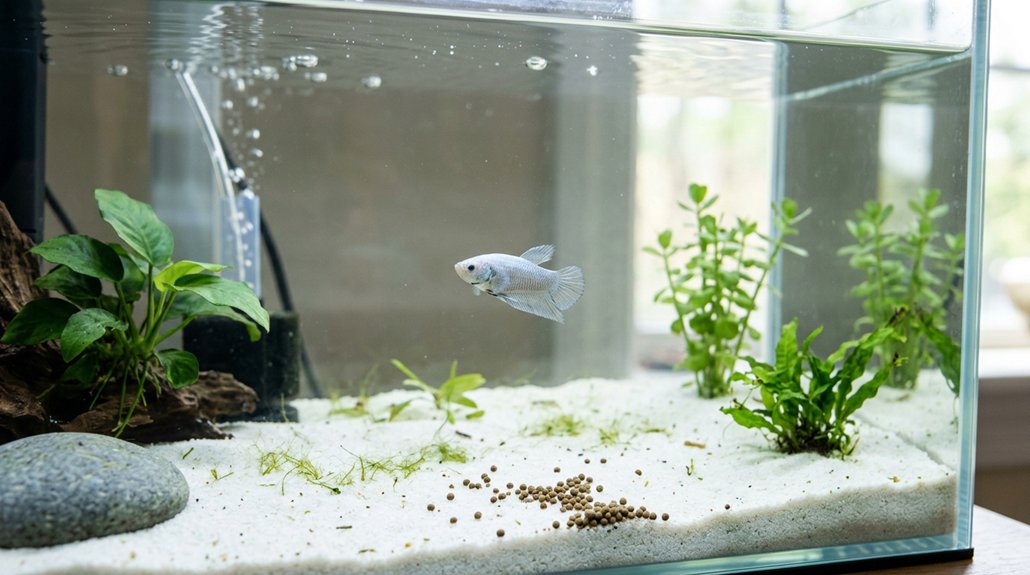
You need to avoid overstocking, because too many fish raise bioload, ammonia, and nitrite faster than your biofilter can handle. Feed only what your fish can eat in 1–2 minutes, remove leftovers quickly, and keep ammonia and nitrite at 0 ppm with immediate partial water changes if they rise. You also need to reduce stress with compatible tankmates, adequate hiding places, and conservative stocking, since crowding and aggression weaken immunity and drive disease.
Overstocking Risks
When a tank is overstocked, the fish load can exceed the biological filter’s capacity, driving toxic ammonia and nitrite spikes and forcing the system to work beyond its limits. You should follow stocking guidelines and check species compatibility before adding fish.
- Start with only a few small fish in a new or lightly stocked tank.
- Avoid adding many fish at once; add 2–4 small fish per week so bacteria can catch up.
- Match stocking to adult size and temperament; 16 fish in 45 L is excessive.
- Test ammonia and nitrite daily, then do 30–50% water changes until the filter matures.
Too many fish also raise waste, nitrate, aggression, and chronic stress, so even “OK” tests don’t mean the tank’s safe.
Reduce Stress Factors
Even a correctly cycled tank can start losing fish if stress keeps piling up. You need to stock conservatively: add no more than 3–5 small fish per week, and judge capacity by adult size, not the outdated “1 cm per litre” rule. Feed only what they finish in 2–3 minutes once daily, or split into two small meals; remove leftovers within 5 minutes and fast them one day a week. Choose compatible species, since bullying and predation suppress immunity. Keep temperature, pH, lighting, and aeration stable; run at least one quiet air pump 24/7. During the first weeks, float new fish 20 minutes, then add tank water slowly for another 20. Low light enrichment and preserved scent trails help reduce startle stress.
Treat White Spot, Fin Rot, and Worms
If you spot white pepper-like dots on the body and fins, treat for ich immediately with a malachite-green/formalin-based or other proprietary ich cure at the label dose for your tank size, and raise tropical temperatures to 78–82°F to speed the parasite’s lifecycle. Use strong aeration, watch medication interactions, and follow quarantine procedures for new fish and invertebrates.
- For fin rot, test ammonia and nitrite at 0 ppm, keep nitrates under 40 ppm, and improve diet.
- Dose a broad-spectrum antibacterial or anti-fungal exactly as directed; finish the full course.
- For visible worms, remove them with tweezers, then apply a specific anti-parasitic for your aquarium volume.
- Recheck water quality, partial-change the tank, and isolate affected fish until symptoms resolve.
Frequently Asked Questions
How to Cure a Dying Fish?
Test ammonia, nitrite, and pH now; if they’re off, do a 25–50% water change, dechlorinate, and quarantine your fish. Use medication baths for parasites or bacteria, plus supportive feeding, only after water stabilizes.
Why Are My Fish Constantly Dying?
Your fish are dying because hidden water toxins are building up fast. You’ve likely got poor filtration, an overcrowded tank, or both. Test ammonia and nitrite daily, reduce feeding, stock slowly, and change water regularly.
How Do I Bring My Fish Back to Life?
You can’t truly bring dead fish back to life; instead, attempt emergency resuscitation by testing ammonia/nitrite, changing 25–50% water, adding oxygen, quarantining weak fish, and using tank revival measures while diagnosing causes fast.
How Does a Fish Act Before It Dies?
You’ll often notice lethargic behavior, loss of appetite, and erratic swimming before death. Your fish may hang at the surface, gasp surface air, clamp fins, fade in color, and show rapid gill movement.
Conclusion
If your fish keep dying in a new tank, you need to act fast. Test ammonia, nitrite, and nitrate, then correct the water before the problem spreads like wildfire. Reduce stocking, feed less, and remove stressors. Watch for new tank syndrome, and treat white spot, fin rot, or worms promptly. Your aquarium isn’t failing you; it’s telling you something’s wrong. Fix the water, and you’ll give your fish the stable environment they need to survive.