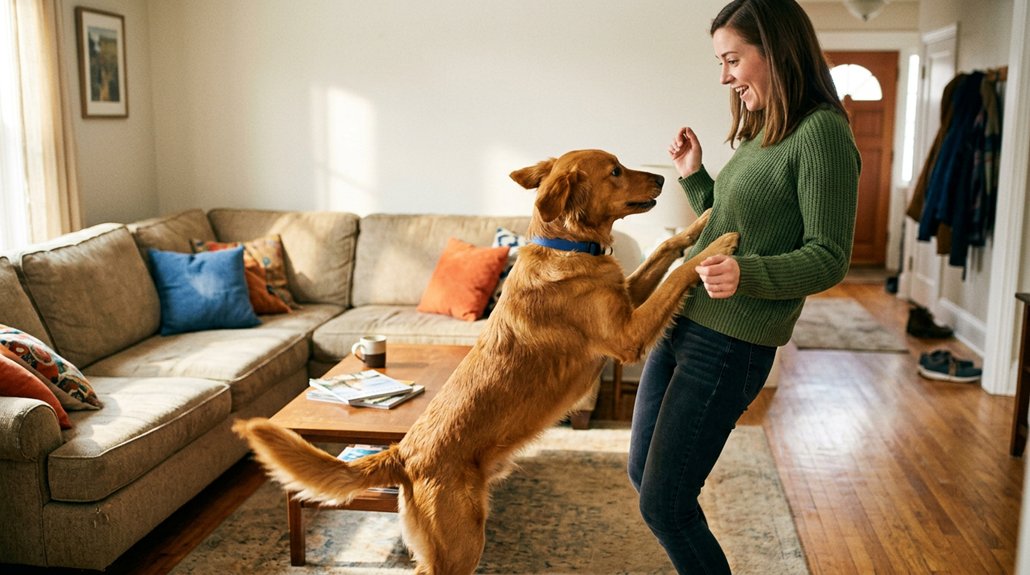
Your dog’s jumping on guests is usually driven by excitement and a craving for attention. This behavior is often unintentionally reinforced by inconsistent reactions from you and your visitors. To curb this, make sure everyone in your home uses consistent commands and rewards calm behavior. Consider incorporating sit commands and regular training sessions for more stable greetings. Managing your dog’s energy through exercise can also help. Explore proven strategies to transform your dog’s greeting habits for good.
Key Takeaways
- Dogs jump on guests for attention due to excitement and lack of proper greeting etiquette.
- Reward only calm behavior and use consistent commands to reinforce appropriate greetings.
- Create controlled practice scenarios to train dogs in managing their excitement around guests.
- Maintain consistent training protocols among all household members to prevent confusion.
- Consult a canine behaviorist for tailored strategies if jumping persists despite training efforts.
Why Your Dog Jumps on Guests and How to Solve It
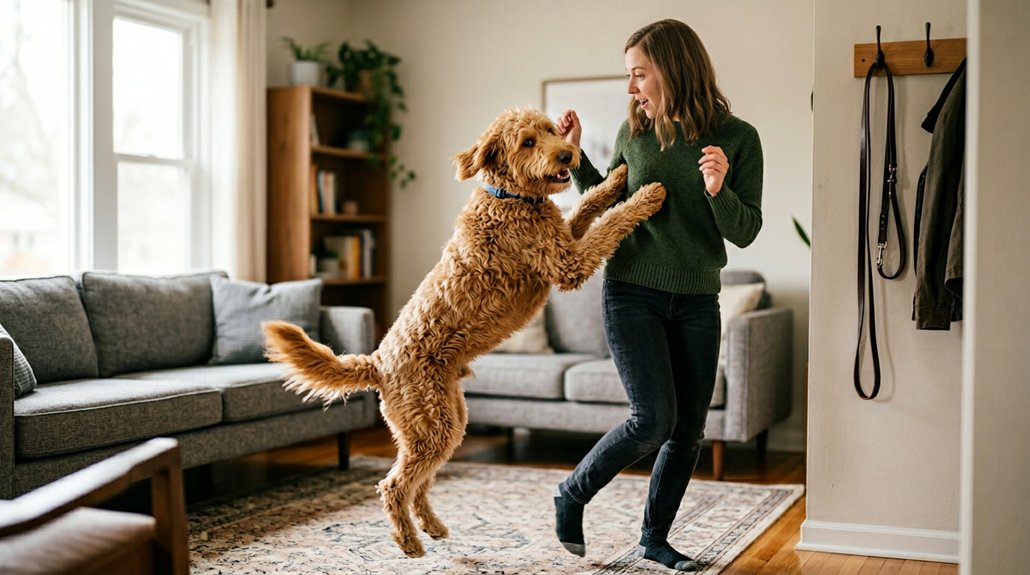
Ever wonder why your dog can’t resist jumping on guests as soon as they walk through the door? Your pup’s energetic dash is often driven by excitement and the desire for attention. Without proper greeting etiquette, dogs don’t realize this behavior might disrupt the welcoming vibe. To manage this, teaching your dog to “sit” when guests arrive can replace jumping with calmer interactions. It’s vital to maintain consistency, ensuring everyone in the household enforces the same rules. Preventing distractions, like keeping your dog on a leash or in another room initially, helps reinforce these lessons. By channeling their excitement into well-mannered behavior, you’re creating a more pleasant environment for everyone and paving the way for your dog’s social success.
Avoiding Unintentional Encouragement of Jumping
Teaching your dog to “sit” when visitors arrive is just part of the solution to encouraging polite greetings. To avoid the unintentional reinforcement of jumping, it’s important to manage attention distraction effectively. When your dog jumps, it might seem cute or friendly, but even laughter or a playful pat can send mixed signals. Consistency in maintaining a greeting protocol with every visitor is critical. Only reward calm behavior, like when all four paws are on the ground, ensuring your dog learns that tranquility earns attention.
Reward only calm behavior; ensure your dog learns that tranquility, not jumping, earns attention.
- Visitors may unconsciously encourage jumping by laughing or petting.
- Family members can slip with inconsistent reactions, fueling the issue.
- Dogs thrive on routine—clearly defined boundaries are fundamental.
- Practice makes perfect—rehearse with visitors to solidify expectations.
Redirect Jumping With Effective Dog Training
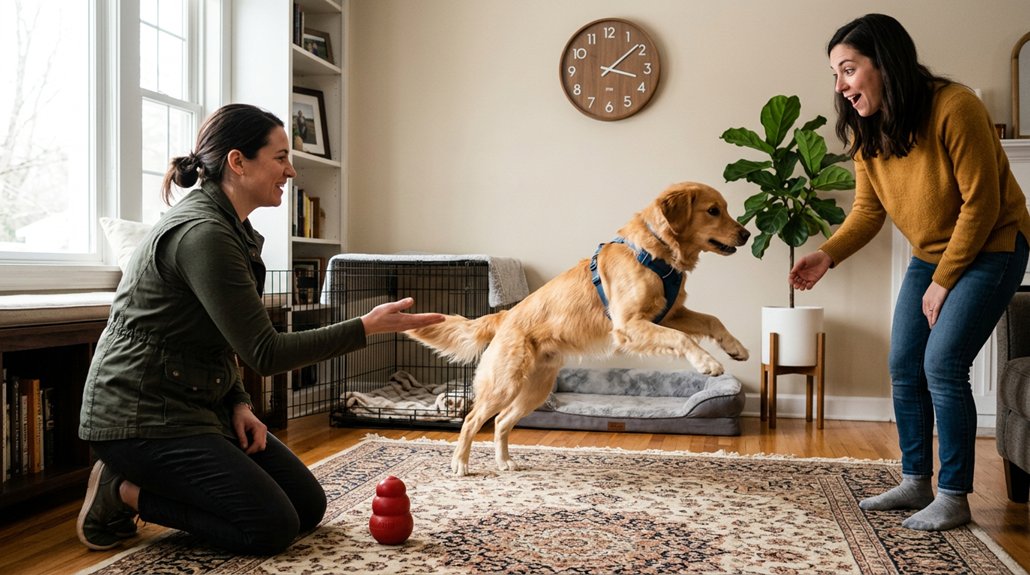
Redirecting jumping requires a blend of consistency, patience, and effective training techniques. To achieve behavior modification, start by using the “sit” command as a substitute for jumping. Reward your dog with treats and praise when they remain seated during greetings. This reinforces the desired behavior. Create controlled scenarios by regularly practicing with friends or family, ensuring everyone employs the same training techniques. Incorporate short, focused practice sessions with positive reinforcement to establish lasting changes, which usually takes about three months. Use treats to lure your dog into sitting and mark the action with verbal praise or a clicker. Manage guest interactions by keeping your dog elsewhere or on a leash until they calmly interact, preventing unwanted jumping.
The Importance of Consistent Training for Non-Jumping Behavior
You’re starting on a crucial journey of training that guarantees your dog learns that calm behavior earns attention, not jumping. It’s important that everyone in your household maintains a unified approach, following the same rules. Consistently rewarding your dog’s appropriate greetings reinforces the desired behavior, helping eliminate jumping over time.
Consistency Ensures Effective Learning
When aiming to curb a dog’s jumping behavior, consistency in training becomes your most reliable tool; every household member must be on the same page to prevent confusion about what’s acceptable. Inconsistent reactions can inadvertently lead to behavior reinforcement of jumping, making the training process unnecessarily long. Your training environment should feel familiar and structured for your dog. Practicing with friends and family guarantees a unified approach, especially across different settings. Here’s what to remember:
- Always use the same commands and rewards to reinforce desired behavior.
- Conflicting signals can be confusing; confirm everyone follows protocol.
- Don’t underestimate the power of patience; changes take time.
- Celebrate small victories, and build upon them for future success.
Consistency solidifies understanding, fostering long-term change.
Unified Approach for Success
While transforming your dog’s jumping habit might seem challenging, adopting a unified approach with consistent training is key to success. It’s essential that all household members apply the same training techniques, as inconsistent responses can confuse your furry friend. By ignoring jumping and rewarding calm behavior, you teach your dog that attention comes only through appropriate actions, reducing the tendency to leap at guests.
Regularly reinforcing desired behaviors like sitting or staying calm during guest interactions sets clear expectations. Practicing with a diverse set of guests helps your dog generalize these behaviors, ensuring they’re consistent no matter who’s visiting. Controlled training sessions using barriers or a leash create a structured environment, minimizing jumping opportunities while instilling proper manners that endure over time.
Training Reinforces Desired Behavior
Training is the bedrock of reinforcing desired behaviors, especially when it comes to curbing your dog’s urge to jump on people. Consistent training with positive reinforcement is essential. Equip yourself with effective training techniques and guarantee clear expectations for your furry friend. Remember, everyone in the household should be on the same page to prevent confusion. Use high-value treats to reward and motivate:
- Watch as your dog sits happily, tail wagging enthusiastically.
- Feel your heart swell with pride as they greet guests with all paws on the floor.
- Enjoy the relief of knowing you’re teaching your dog well.
- Savor the satisfaction when patience, effort, and perseverance pay off.
Behavioral changes take time—often up to three months—but your dedication will lead to peaceful interactions.
Managing Excitement to Prevent Jumping Incidents
Understanding how to manage a dog’s excitement is essential for preventing jumping incidents, especially when guests arrive. High excitement levels can lead your dog to jump as they enthusiastically seek attention. Incorporating exercise routines before guest introductions can markedly help. A long walk or a vigorous game can redirect their energy and reduce hyperactivity.
In addition, consider managing their environment by placing your dog in a separate room or using barriers until they’ve calmed down. Practicing calm greetings in a controlled setting also teaches them to maintain composure. Consistency is key—ensure everyone follows the same approach to reinforce good behavior. By addressing excitement through exercise and structured introductions, you can create a more peaceful scenario when guests visit.
Track Training Progress and Know When to Get Help
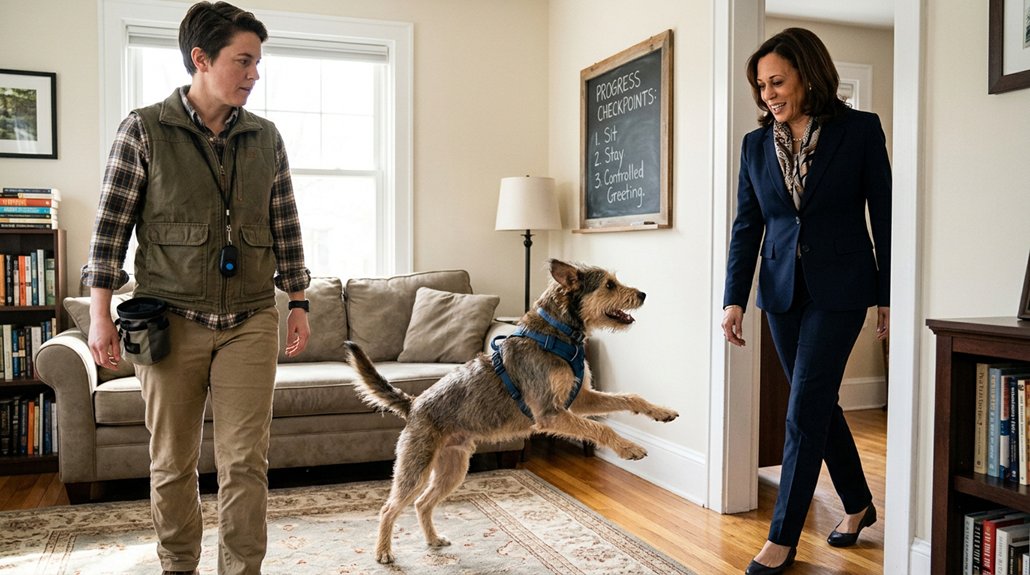
Monitoring your dog’s behavior closely is critical to assess progress during training sessions, especially in situations like greeting guests. Logging these encounters helps you set realistic expectations and identify patterns, making it easier to address consistent issues. If you notice little to no improvement after several weeks, it’s wise to contemplate seeking advice from a professional canine behaviorist to guarantee your training efforts are effective and aligned with your dog’s needs.
Monitor Behavioral Changes
As you work on improving your dog’s behavior, it’s crucial to track changes diligently, recognizing both progress and setbacks. Regularly monitoring the behavior triggers is important for identifying patterns. Keep a journal noting specific instances of jumping and the context around them. Analyze these logs to understand improvement or persistence.
- Observe your dog’s reactions before, during, and after training sessions.
- Document every jumping incident and its context, focusing on any repeat triggers.
- Set achievable goals, like reducing jumping from six to two incidents per month.
- If jumping persists or escalates, consult a professional to craft effective solutions.
Assess your progress every few weeks, adjusting techniques where needed to stay effective and positive. Remember, patience and consistency are key in transforming your furry friend’s behavior.
Set Realistic Expectations
Setting realistic expectations is essential for any training journey, especially when tackling jumping behavior in dogs. Begin by understanding that achieving reliable behavioral changes typically takes around three months. This modification timeline can vary, especially if your dog is a larger breed or has strongly ingrained habits. Track your dog’s behavior consistently to build a clear picture of behavioral expectations and improvement patterns. This tracking reveals the most effective techniques and when adjustments are necessary. Patience, understanding, and consistency are key to this process. Remember, some dogs adapt at a slower pace, which isn’t a reflection of your efforts. If jumping continues or aggression emerges, it’s vital to acknowledge when you might need external assistance for your dog’s well-being.
Seek Professional Guidance
While tracking your dog’s training progress can sometimes feel overwhelming, it’s important to confirm you’re on the right path. Monitoring and documenting your dog’s interactions with guests will help you pinpoint behavioral triggers and adapt learning techniques. If jumping persists despite your efforts, consider seeking professional assistance. A canine behaviorist can offer expert insights and tailored solutions to address your dog’s specific needs.
Consulting a professional becomes vital if you notice safety concerns like aggression or persistent jumping. Expert intervention strategies can prevent dangerous situations. Remember:
- A specialist’s input brings invaluable expertise.
- Early intervention can prevent long-term issues.
- Professional guidance fosters a safer environment.
- Tailored solutions meet your dog’s unique needs.
Reach out for specialist support to promote successful training and safety.
Frequently Asked Questions
How Do I Stop My Dog From Jumping up on Visitors?
To stop your dog from jumping on visitors, address their excessive excitement by reinforcing a sit command. Inconsistent behavior confuses them, so consistency in using treats, ignoring jumps, controlling with a leash, and structured greetings is essential.
How to Train a Dog to Stop Jumping on People?
You’ve got a circus performer on your hands, don’t you? Use positive reinforcement and consistent commands. Keep practicing “sit” with treats and praises. Laugh, but be firm, reminding the pup that aerial acrobatics aren’t appreciated.
What Is the 3-3-3 Rule With Dogs?
The 3-3-3 rule helps you understand dog behavior during their adjustment. Initially, stress and anxiety occur. They’re building trust and learning rules, leading to improved canine communication, and full integration in three months. Be patient.
Why Does My Dog Jump on Guests?
Think of your dog as a social king welcoming visitors to their kingdom. Excitement and jumping are their court customs. Training is key to instilling guest etiquette, controlling jumping triggers, and guiding proper canine behavior.
Conclusion
Training your dog not to jump on guests is like tending to a garden—patience and consistency are your best tools. By avoiding unintentional encouragement, using effective training techniques, and managing excitement, you’re planting seeds for good behavior. Track your progress diligently and don’t hesitate to seek help if needed. With time and effort, you’ll cultivate a well-mannered companion who greets visitors with the same warmth, just without the leap.