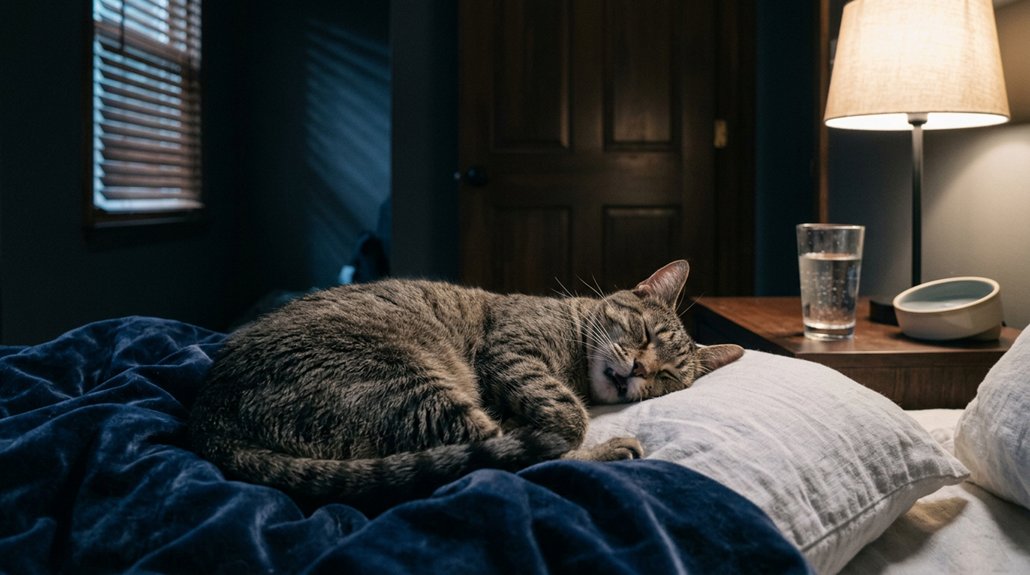
Your cat’s nighttime meowing likely stems from its crepuscular nature, hunger, or stress. Cats are naturally active at dawn and dusk, often driven by hunting instincts. Consistent feeding and enrichment can curb this behavior. Environmental changes, loneliness, or health issues like hyperthyroidism could also be culprits. Automatic feeders and interactive play can help. If your feline friend seems off or in pain, consult a vet. Discover strategies to reduce your cat’s nocturnal vocalizations and guarantee peace.
Key Takeaways
- Cats meow at night due to crepuscular activity, aligning with their natural hunting instincts during dawn and dusk hours.
- Consistent feeding schedules can reduce hunger-driven meowing by ensuring cats have sufficient food available during nighttime.
- Environmental enrichment with toys and climbing structures prevents boredom, reducing energy that contributes to nighttime vocalizations.
- Health issues like hyperthyroidism or Cognitive Dysfunction Syndrome in older cats can cause increased nighttime meowing; regular vet checks are essential.
- Stress from changes, loneliness, or mating calls can heighten nocturnal vocalizations; maintaining a stable environment helps mitigate these behaviors.
Why Are Cats Crepuscular? Understanding Natural Behavior
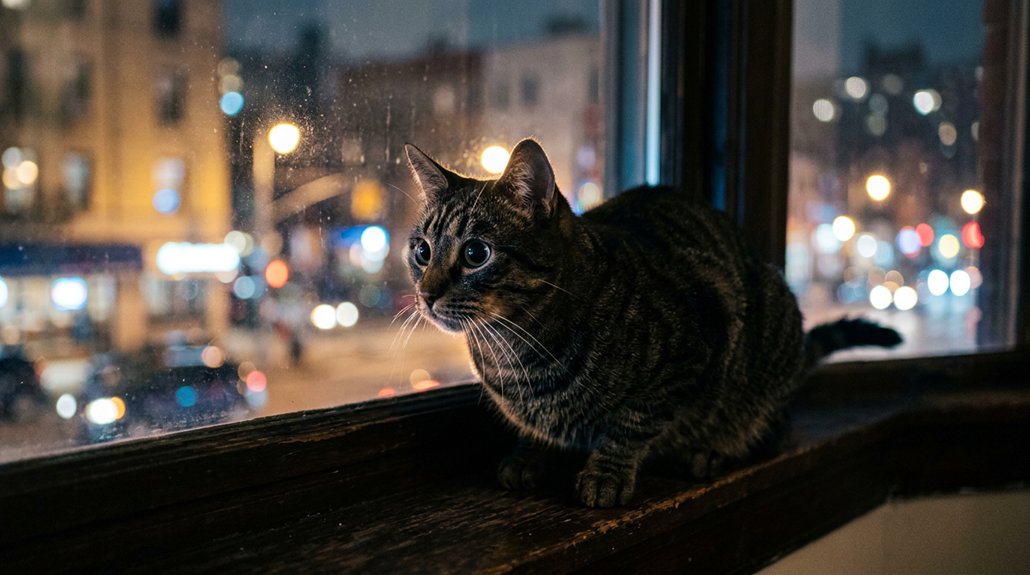
Though it may seem like your feline friend is simply being mischievous, a cat’s crepuscular nature is deeply rooted in its evolutionary biology. Cats display crepuscular behavior as a strategic adaptation to optimize their hunting instincts. In the wild, they target rodents, which are most active during dawn and dusk. This activity pattern leverages low-light conditions, offering increased opportunities to catch prey. While domesticated cats might align their schedules with yours, their innate crepuscular tendencies persist, often resulting in increased nighttime vocalizations. Understanding this natural behavior underscores its benefits for feline survival and emphasizes the importance of accommodating their biological rhythms. Insights into these evolutionary traits can guide you in managing expectations and adjusting routines to mitigate nighttime disturbances.
Is Nighttime Hunger Causing Your Cat to Meow?
You’ve likely observed your cat’s nighttime meowing coinciding with their instinctual hunting periods, often driven by hunger signals. Adjusting the nocturnal feeding schedule could mitigate these vocal interruptions, with solutions including a strategically timed late-night meal or an automatic feeder. By aligning feeding times with crepuscular activity, you may effectively address hunger-related vocalizations, creating a more tranquil nighttime environment.
Managing Feeding Schedule
A cat’s nighttime meowing may be intricately linked to its feeding schedule, as irregular feeding times can exacerbate its predatory instincts during crepuscular hours. Establishing a consistent feeding frequency and precise meal timing is vital in reducing nocturnal vocalizations. By synchronizing meal timing with your cat’s natural activity patterns, you can mitigate the impact of hunger-driven meowing. Automatic feeders serve a critical role, providing consistent nourishment without necessitating your intervention during nighttime hours. This predictability reduces your cat’s need to demand food through vocalizations. Additionally, leaving dry food accessible at night can guarantee continued satiety. Monitor portion sizes and verify your cat’s diet is nutritionally balanced. Adjustments in feeding protocols can greatly reduce nighttime disturbances.
Late-Night Snacking Solutions
One prevalent factor contributing to a cat’s nocturnal meowing is its natural craving for food during the late hours, an instinct amplified by crepuscular feeding patterns. Analyzing hunger cues is essential for mitigating nighttime vocalizations. Optimizing late-night feeding may require structuring meals to maintain stable energy levels. Here’s a scientific approach to tackle nighttime hunger:
- Scheduled Feedings: Establish a precise feeding timetable that includes nighttime snacks, ideally using an automatic feeder to regularly dispense nutritious portions.
- Distributed Meals: Evenly distribute food intake across intervals, reducing abrupt hunger spikes and consequential meowing.
- Overnight Snacks: Consider leaving out dry food before bedtime to preempt hunger pangs and foster a serene nocturnal environment.
Prompt attention to hunger management enhances sleep quality for both feline and owner.
Avoiding Boredom: Keeping Your Indoor Cat Engaged
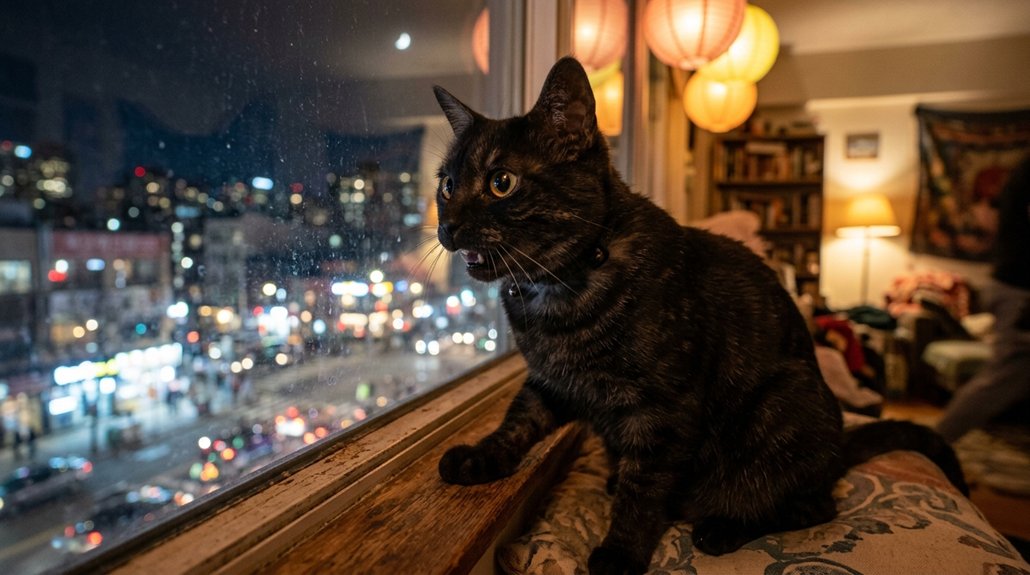
To mitigate nighttime meowing, it’s essential to guarantee your indoor cat’s environment is both stimulating and engaging. Integrating climbing structures, hiding spots, and interactive toys can promote mental and physical activity, reducing restlessness. In addition, daily interactive play sessions, aligned with their predatory instincts, can help dissipate excess energy, leading to a more restful night for both you and your feline companion.
Enriching Indoor Cat Environment
An enriched indoor environment is pivotal for preventing boredom and minimizing nighttime meowing in cats. Strategic incorporation of enrichment activities and sensory stimulation helps satisfy their predatory instincts and cognitive needs. A multi-faceted approach accomplishes this:
- Interactive Toy Rotation: Use puzzle feeders and feather wands to enhance cognitive function and physical activity. Replace toys periodically to sustain interest.
- Vertical Spaces: Install cat trees and shelves for climbing, providing opportunities for safe observation, which is integral to feline behavioral ecology.
- Scratching Posts and Hideaways: Facilitate exercise and nesting behavior by offering diverse textures and retreat spaces, ensuring thorough environmental engagement.
Implementing these strategies not only reduces vocalizations but also promotes an indoor habitat that’s conducive to peak feline health and behavior.
Daily Interactive Play Sessions
While enriching your cat’s indoor environment is essential, incorporating daily interactive play sessions is another effective method for preventing nighttime meowing. Engaging your cat in play mimics their natural hunting instincts, facilitating energy release that curtails excessive vocalizations. Utilize diverse interactive toys like feather wands and laser pointers for stimulating playtimes.
| Play Tools | Purpose |
|---|---|
| Feather Wand | Mimics prey movement |
| Laser Pointer | Triggers chase instinct |
| Puzzle Toys | Fosters mental enrichment |
| Scheduled Play | Aligns with activity peaks |
Schedule play during your cat’s high-energy periods—typically early morning or evening—to align with their circadian rhythms. Consistent engagement not only prevents nocturnal disruptions but also fortifies your human-feline bond. Puzzle toys further mitigate boredom, supporting a balanced, fulfilling indoor existence.
Is Your Cat Lonely or Seeking Attention?
Several factors may contribute to your cat’s nocturnal vocalizations, primarily rooted in feelings of loneliness or the desire for attention. A lack of cat companionship and nighttime anxiety can lead to increased meowing in the wee hours, especially if your feline friend spends long periods alone during the day.
Analyzing these vocalizations reveals potential boredom or insufficient stimulation. To mitigate this behavior, guarantee your cat has enough mental and physical activities. Focus on providing structured interactions:
- Engage in interactive play sessions before bedtime.
- Offer environmental enrichment with toys and climbing areas.
- Create a comforting routine to tackle nighttime anxiety.
Persistent meowing near interaction points, like your bedroom, can signal their need to bond and socialize.
Could Health Issues Be Causing Pain-Related Meowing?
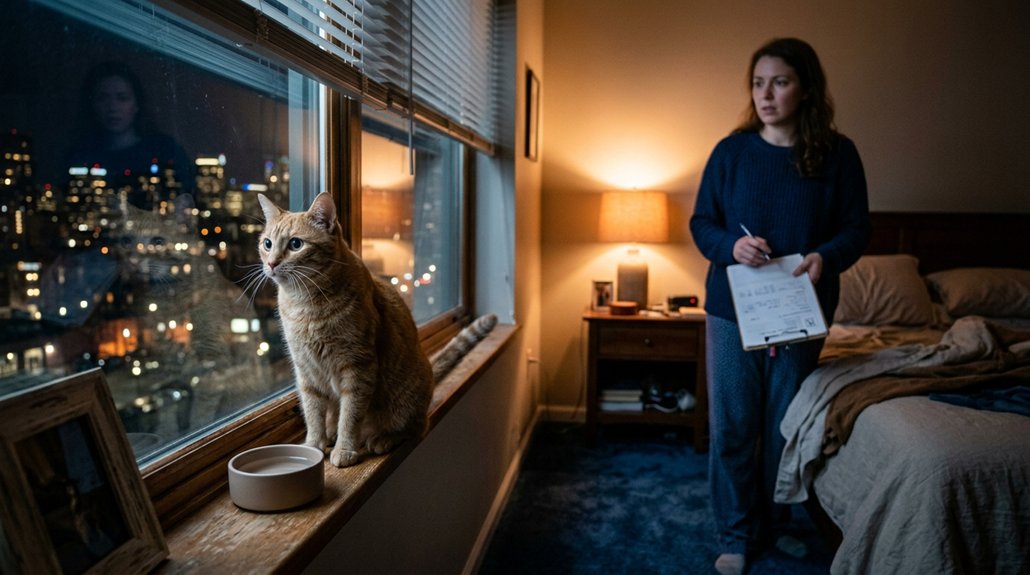
When a cat meows persistently at night, it’s essential to contemplate potential health issues like hyperthyroidism, kidney disease, or urinary tract infections as underlying causes. Pay attention to associated symptoms such as behavioral changes, decreased appetite, or increased attachment, which may indicate pain or discomfort. Prompt veterinary assessment is necessary to rule out or address these common health concerns and safeguard your feline’s well-being.
Common Health Concerns
If your cat’s nighttime meowing is becoming excessive, it’s important to contemplate potential health issues that could be causing pain-related vocalizations. A thorough health assessment can determine if medical conditions are acting as vocalization triggers. Conditions such as hyperthyroidism or kidney disease often lead to these vocal disturbances by inducing discomfort. Additionally, older cats may suffer from cognitive dysfunction syndrome (CDS), further exacerbating nocturnal confusion and meowing.
Consider these potential health issues:
- Hyperthyroidism or Kidney Disease: These conditions can increase vocalization due to pain or discomfort.
- Cognitive Dysfunction Syndrome (CDS): Seen in older felines, causing nighttime disorientation.
- Urinary Problems: Meowing near the litter box may suggest urinary tract discomfort.
Early veterinary evaluation is vital for accurately identifying and addressing these concerns.
Recognizing Pain Symptoms
Understanding the complexity behind a cat’s nighttime vocalizations necessitates an examination of pain symptoms that might underlie these behaviors. Cats often emit specific vocalization patterns, such as wailing cries or persistent meows, as pain signals indicating discomfort from conditions like arthritis or dental issues. Furthermore, systemic health issues such as hyperthyroidism or kidney disease can lead to increased vocalization, urging you to recognize meowing as a potential pain or illness indicator. In older cats, cognitive dysfunction syndrome (CDS) can alter vocalization patterns and cause disorientation. Significantly, if such vocalizations coincide with symptoms like weight loss, appetite changes, or reclusive behavior, it’s critical to consult a veterinarian. Timely identification and intervention are essential for addressing underlying health concerns.
Why Older Cats Meow More at Night
As cats age, their nocturnal vocalizations may increase due to several physiological and cognitive changes. Cognitive dysfunction syndrome (CDS) often affects older cats, leading to disorientation and disruptions in their natural routines. This can result in increased vocalizations, especially at night. Additionally, sensory deficits like diminishing eyesight or hearing exacerbate this behavior, as your cat may meow out of confusion or a need for reassurance.
Senior cats may face:
- Cognitive dysfunction: Disorientation and disrupted routines.
- Sensory deficits: Reduced eyesight or hearing increases confusion.
- Health issues: Conditions like hyperthyroidism or kidney disease causing discomfort.
Changes in sleep patterns may also lead to heightened nocturnal activity. Regular veterinary check-ups are essential, ensuring that increased meowing isn’t symptomatic of dire medical issues.
How Stress and Environmental Changes Lead to Nighttime Vocalization
Cats often respond to stress and environmental changes with increased nighttime vocalization due to their heightened sensitivity to alterations in their surroundings. Environmental triggers such as relocation or introducing new pets can disturb their delicate equilibrium, causing elevated anxiety indicators like vocalization. These disruptions to their routine, whether it’s unexpected noises or changes in feeding schedules, can make them feel insecure. Without sufficient interaction, they might experience loneliness or boredom, further amplifying nocturnal meows. Recognizing the signs of stress in your feline friend is essential; providing a stable environment and reducing stressors can mitigate this behavior. Engage your cat with mental stimulation to address its restless state, thereby decreasing the frequency of excessive vocalization during those wee hours.
Managing Cats in Heat: Understanding Mating Calls
Why do cats seem to suddenly become more vocal and demanding? During a cat’s heat cycle, hormonal influence triggers profound changes in vocalization patterns as they engage in mating behavior. Female cats exhibit reproductive signs through persistent yowling, an evolutionary vocal strategy meant to attract potential mates. Male cats, responding to these auditory signals, demonstrate heightened vocalizations and territorial dynamics. This instinctual communication reflects complex behavioral adaptations essential for reproduction.
Cats increase vocalizations during heat cycles, with females yowling to attract mates and males responding territorially.
To effectively manage such nocturnal vocalizations:
- Identify reproductive signs, such as increased affection or restlessness.
- Consider spaying, eliminating the heat cycle and reducing associated behaviors.
- Recognize breed-specific tendencies; for instance, Siamese cats often vocalize more intensely.
Understanding these dynamics offers insights into mitigating excessive nighttime meowing through proactive strategies.
Play and Interaction: Calming Your Cat Before Bedtime
While understanding the dynamics of a cat’s mating instincts offers valuable insights, addressing their nighttime vocalizations requires different strategies. Primarily, engaging your feline in interactive play sessions before bedtime is essential. By simulating their inherent hunt-eat-sleep cycle, these activities, with interactive toys, can burn off excess energy, reducing nighttime meowing.
Furthermore, incorporating climbing structures and engaging toys throughout the day can mitigate boredom and lessen nocturnal vocalizations. Establishing a consistent evening routine that includes such dedicated playtime initiates calming techniques, signaling your cat it’s time to wind down.
Adding accessible food and water overnight can prevent hunger-driven meows, while evening affection fosters a sense of security. This combination of strategies systematically diminishes your cat’s nighttime calls for attention.
Designing a Sleep-Friendly Cat Space
Crafting an ideal sleep-friendly environment for your feline requires attention to various behavioral and environmental factors. Analyzing your cat’s sleeping habits, it’s beneficial to design a space that maximizes cat comfort while mitigating nocturnal disturbances. Creating a serene area with a cozy bed or blanket in a quiet, dimly lit location encourages restful sleep.
Design a cozy, quiet, dimly lit spot to enhance your cat’s restful sleep.
- Elevating your cat’s environment with shelves or cat trees allows for climbing and exploration which can reduce nighttime activity.
- Interactive toys and puzzle feeders invigorate your cat mentally during the day, utilizing energy reserves that might otherwise manifest as nocturnal restlessness.
- Minimize environmental disruptions; reduce noise and bright lighting to establish a calming atmosphere, ensuring uninterrupted sleep cycles for you and your feline.
Implement these strategies to enhance your cat’s nighttime tranquility.
Frequently Asked Questions
How Can I Stop My Cat From Meowing at Night?
To mitigate nighttime behavior and reduce noise, establish a consistent evening routine, enhance daytime stimulation, and avoid reinforcing meowing. Guarantee basic needs are met, and consult a veterinarian for persistent issues, indicating potential underlying health problems.
What Is “I Love You” in Cat Language?
Picture a gentle symphony: a cat’s slow blink paired with melodic purrs and soft vocalizations. In cat communication, these feline vocalizations signify affection and trust, analogous to humans expressing “I love you,” amidst scientific understanding.
Should I Be Concerned if My Cat Is Meowing at Night?
Yes, you should analyze your cat’s nighttime behavior critically. Feline communication at night might suggest unmet needs or health issues. Make certain a structured environment and consult a vet if the vocalization seems unusual or excessive.
Why Does My Cat Walk Through the House Meowing at Night?
Your cat’s nocturnal behavior, with 70% of their activity occurring at night, is likely driven by vocal communication, as they’re naturally crepuscular. Understanding their instincts and ensuring mental and physical stimulation can mitigate these nightly jaunts.
Conclusion
Understanding your cat’s nighttime vocalizations can be key to a harmonious household. Did you know that around 64% of cats are active during dawn and dusk, aligning with their crepuscular nature? By addressing factors like hunger, boredom, loneliness, and health issues, while also managing stress and mating instincts, you can reduce meowing considerably. Incorporate interactive play and design a restful sleep space to mitigate disturbances. With these scientific insights, you can foster a serene nighttime environment for both you and your feline companion.