
Puppies bite to explore and because they’re teething, but consistent biting can signal underlying issues. To address this, provide chew toys, use high-pitched yelping to indicate discomfort, and redirect their focus with commands. Encourage socialization through classes and maintain a structured play routine. Be vigilant for signs of aggression like growling or snapping, and seek professional help if biting intensifies. Learn more to effectively guide your puppy towards safe, social behavior.
Key Takeaways
- Puppies bite to explore their environment and during teething, typically between 12 to 20 weeks.
- Distinguish play biting from aggression through body language; address aggressive signs like growling immediately.
- Redirect biting behavior with consistent chew toys and structured play routines.
- Utilize training techniques such as time-outs and socialization classes to teach bite inhibition.
- Seek professional help if biting escalates into aggression, ensuring trainers have proper certifications.
Why Puppies Bite and Immediate Steps to Address It
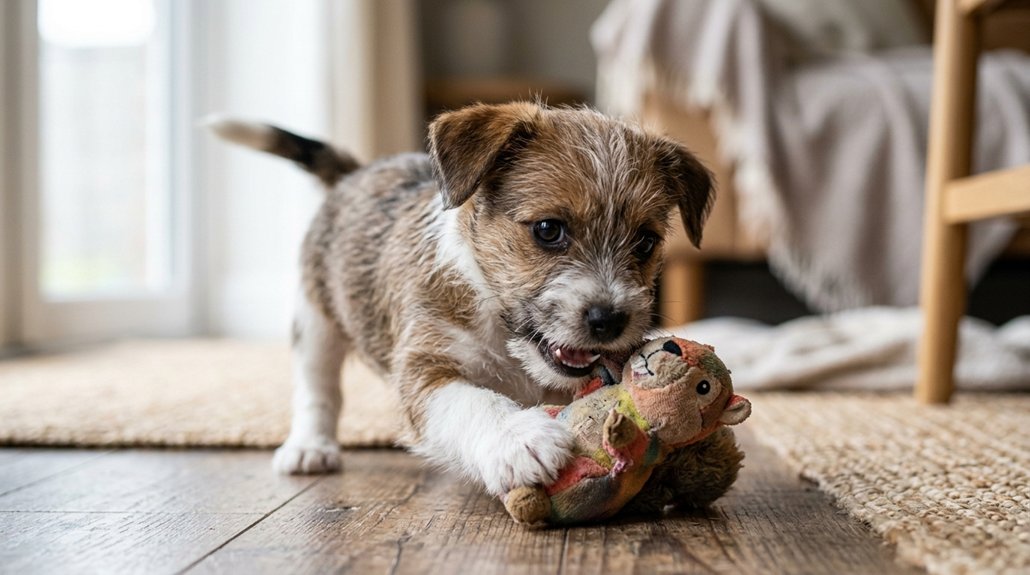
While it’s common for puppies to bite as a means of exploration and play, it’s essential to address this behavior promptly. Puppy exploration often involves using their mouths to interact with their environment, and understanding the biting triggers can guide you in managing this stage effectively. During the teething phase, between 12 to 20 weeks, their gums are tender, increasing their need for oral investigation. To mitigate biting, teach bite inhibition early. If your puppy bites too hard, let out a high-pitched yelp to signal discomfort, helping them recognize their biting limits. Redirect their energy to chew toys or interactive games, such as fetch, which can reduce mouthing. Consistent training and socialization are key elements in tackling inappropriate biting.
How to Identify Safe Play vs. Aggression
How can you discern between harmless play biting and genuine aggression in puppies? Understanding playful signals and aggression indicators is essential. Playful signals include soft mouthing and relaxed body language, like loose tails and flopping movements. In social play, puppies often take turns, engage in playful bowing, and may bite but show submission through actions like looking away or rolling onto their back.
Identifying aggression requires observing distinct aggression indicators. Stiff posture, growling, or snapping suggest more serious intentions. Aggressive biting tends to be one-sided and intense, potentially leading to injury. A rigid body and direct eye contact often signal potential aggression. Monitoring biting behavior‘s context and intensity helps distinguish normal play from harmful conduct, ensuring proper intervention when needed.
Effective Training Techniques for Reducing Puppy Biting
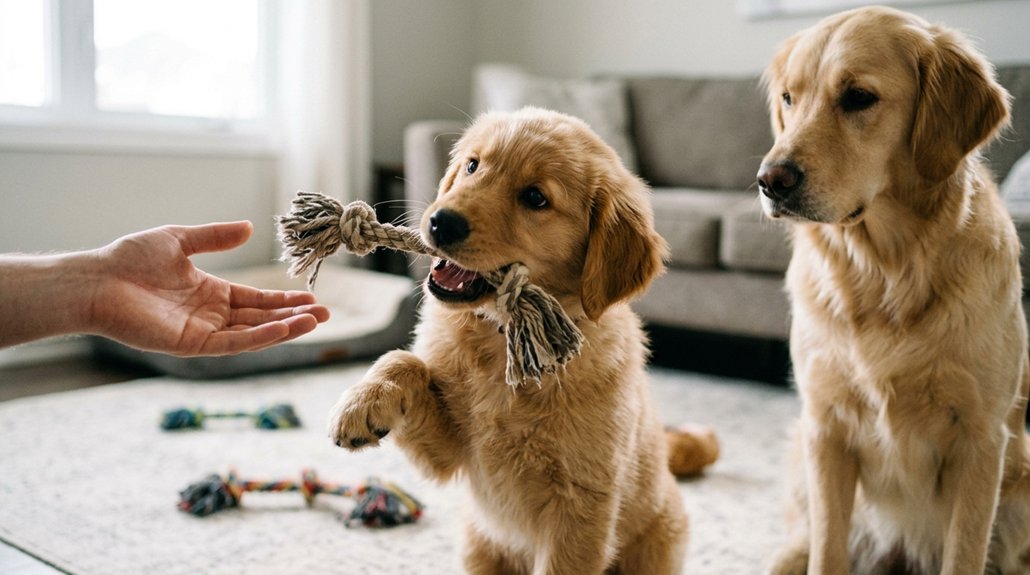
Recognizing the difference between playful and aggressive biting in puppies allows you to effectively address unwanted biting behavior. Teaching bite inhibition involves using high-pitched yelps to mimic the feedback puppies get from their littermates. This technique, combined with providing consistent chew toys, can redirect their urge to bite. Additionally, a reward system using praise and treats reinforces calm and gentle interactions.
Teaching bite inhibition involves yelping like littermates and using chew toys to redirect biting behavior.
For effective training, consider these strategies:
- Implement time-outs immediately when biting occurs to signal that rough play ends.
- Engage in non-contact games like fetch, which satisfy the biting instinct while keeping interactions safe.
- Socialization via puppy classes helps them learn appropriate boundaries and reduces excessive mouthing in various settings.
Through these methods, you reinforce desirable behavior and constructively manage biting.
Creating a Supportive Environment to Curb Puppy Biting
To effectively curb your puppy’s biting behavior, providing safe chew alternatives is essential to satisfy their instinctual need to explore through mouthing. Encourage calm playtime activities that allow for physical and mental engagement without escalating to overstimulation. Establish restful puppy zones that offer a calming refuge, helping to balance energetic moments with necessary downtime for recovery and relaxation.
Provide Safe Chew Alternatives
While it’s normal for puppies to explore the world with their mouths, providing suitable chew alternatives can effectively redirect this natural behavior to acceptable outlets. Chew toy selection is essential, as it should cater to your puppy’s texture preferences while alleviating teething discomfort. Opt for vet-approved toys specifically designed for puppies, such as durable rubber toys, bones, and dental chews. Establish a variety of chew options to keep your puppy engaged and dissuade mouthing on hands or furniture.
Maintain interest by rotating these toys periodically:
- Ensure correct size and texture to match developmental stages, avoiding choking hazards.
- Create a designated chew zone with soft bedding to promote a calm environment.
- Regularly inspect toys for wear to maintain safety and effectiveness.
Encourage Calm Playtime Activities
Playtime is a critical component in establishing a supportive environment that curbs puppy biting. Engage in non-contact play activities like fetch or tug-of-war. These interactive distractions minimize mouthing, fostering positive, mindful interactions. Focus on bite-inhibition techniques; emit high-pitched yelps to signal discomfort, teaching control over bite strength.
Below are activities to take into account:
| Activity | Benefit |
|---|---|
| Fetch | Reduces mouthing, promotes exercise |
| Tug-of-war | Channels energy, teaches controlled biting |
| Mind Puzzle Toys | Provides mental stimulation, curbs boredom |
Utilize toys crafted for chewing to satisfy natural mouthing instincts. Create a calm, overstimulation-free environment, defining clear play boundaries. A structured routine encompassing regular play, mental challenges, and restful breaks guarantees your puppy remains balanced, reducing boredom-induced biting.
Establish Restful Puppy Zones
Creating a restful puppy zone in your home can greatly diminish biting behaviors rooted in overstimulation. By designating specific areas with comfortable bedding and enticing toys, you foster an environment conducive to puppy relaxation. Integrating puppy-proof barriers guarantees a safe, confined space where your puppy can unwind away from distractions. This approach supports healthy sleep patterns and promotes emotional stability, reducing biting driven by hyperactivity.
Regularly schedule quiet times in these zones, allowing your puppy to manage energy levels effectively. Enhance the atmosphere by incorporating calming scents like lavender or chamomile. These measures offer a strategic response to alleviate agitation and energy bursts that manifest as biting.
- Designate confined spaces for security and focus.
- Integrate calming scents to enhance relaxation.
- Schedule consistent quiet times for energy management.
Knowing When It’s Time to Call a Pro
Recognizing signs of problematic aggression is essential, as it often calls for intervention from a professional. If your puppy’s biting has intensified or occurs in response to specific triggers, it’s time to consult a certified trainer or behaviorist who can provide targeted solutions. Finding qualified help guarantees your puppy receives expert care, preventing the escalation of biting into more harmful behaviors.
Signs of Problematic Aggression
Ever wonder when your puppy’s biting might be more than just playful behavior? Pay attention to fear responses, behavioral signals, and any aggression triggers. A sudden behavioral shift, like a gentle puppy suddenly biting more forcefully, warrants professional intervention.
- Aggression outside play: If biting happens when your puppy is approached or touched, it may indicate deeper issues.
- Fear-driven aggression: Growling, snapping, or stiff body language are signs to consult a Certified Professional Dog Trainer (CPDT) or Certified Applied Animal Behaviorist (CAAB).
- Safety concerns: If biting breaks the skin or persists despite training, immediate expert help is needed.
Navigating these signs can prevent further problems and guarantee both your pet’s and your own safety by employing strategic intervention strategies.
Professional Training Benefits
Understanding the nuances of puppy biting behavior is pivotal when evaluating if professional training is warranted. Recognizing when biting transforms into persistent aggression is vital. At this juncture, a certified trainer can implement tailored behavior modification strategies to address specific biting issues. If your puppy’s biting includes injuries, fear-related aggression, or concerning signs like growling, timely intervention is essential. Trainers offer structured classes incorporating effective socialization techniques, which teach bite inhibition in controlled environments. This approach promotes positive interactions with other dogs and people, fostering your puppy’s social adjustment. Ultimately, seeking professional help prevents the formation of ingrained habits, ensuring your puppy matures into a well-mannered companion. Calling a pro early on is a wise investment in your pet’s future.
Finding Qualified Help
When you notice your puppy’s biting behavior escalating to aggression, including signs such as growling or snapping, it’s essential to seek the guidance of a qualified professional. Trainers with the right qualifications, such as Certified Professional Dog Trainers (CPDTs) or Certified Applied Animal Behaviorists (CAABs), offer vital expertise. These professionals conduct thorough behavior assessments to identify the root causes of aggression and tailor specific training plans. Recognize the following signs that indicate the need for expert evaluation:
- Consistent biting in various contexts, indicating unresolved issues.
- Fear-based behaviors or anxiety manifesting as aggressive biting.
- Excessive mouthing despite rigorous training, suggesting deeper developmental problems.
Prompt intervention guarantees your puppy’s behavior aligns with safe and healthy social practices.
Engaging Activities to Prevent Biting
Maximize puppy engagement by integrating a variety of interactive activities into their daily routine to markedly reduce biting behaviors. Employ interactive games like fetch or tug-of-war to channel your puppy’s energy productively and diminish excessive mouthing during unsupervised times. Provide a selection of safe chew toys tailored to different chewing preferences, accordingly fulfilling their instinctual drive to bite and chew. Create a structured daily routine involving consistent play, exercise, and mental challenges to prevent boredom and overstimulation, both of which often lead to biting. Incorporate training exercises with commands like “sit” or “leave it” to redirect focus from biting hands and feet. Additionally, use treat-dispensing toys to engage their mind, diverting attention from unwanted mouthing.
Frequently Asked Questions
How Do You Discipline a Puppy Who Is Biting?
To discipline a biting puppy, utilize positive reinforcement and redirection techniques. Reward gentle play, use chew toys to redirect unwanted behavior, and stop play sessions immediately when biting occurs. If needed, consult a professional trainer for guidance.
What Is the 7 7 7 Rule for Puppies?
The 7-7-7 Rule guarantees puppies, through the school of hard knocks, receive varied socialization experiences. It’s essential for healthy puppy psychology, minimizing biting triggers by optimizing adaptability with seven people, locations, and experiences weekly.
At What Age Does a Puppy Usually Stop Biting?
Puppies usually stop biting around 5-6 months old as they mature and develop more control. Implementing bite inhibition training during critical puppy development stages expedites this shift by teaching them to manage their mouthing behavior effectively.
Should I Tap My Puppy on the Nose When He Bites?
Think of tapping your puppy’s nose as adding fuel to the fire—it ignites excitement and anxiety rather than dousing it. Instead, focus on positive reinforcement to encourage alternative behaviors, promoting a balanced, calm learning environment.
Conclusion
In the journey to curb your puppy’s biting, you’re both student and teacher in this lesson of patience and practice. Like sculpting a masterpiece from clay, you mold behavior with consistency, transforming challenges into harmonious interactions. Equip yourself with knowledge, reinforce with training, and embrace engaging environments. Recognize when expert guidance is needed. Remember, each step forward strengthens the bond with your furry companion, shaping a relationship built on understanding and love.