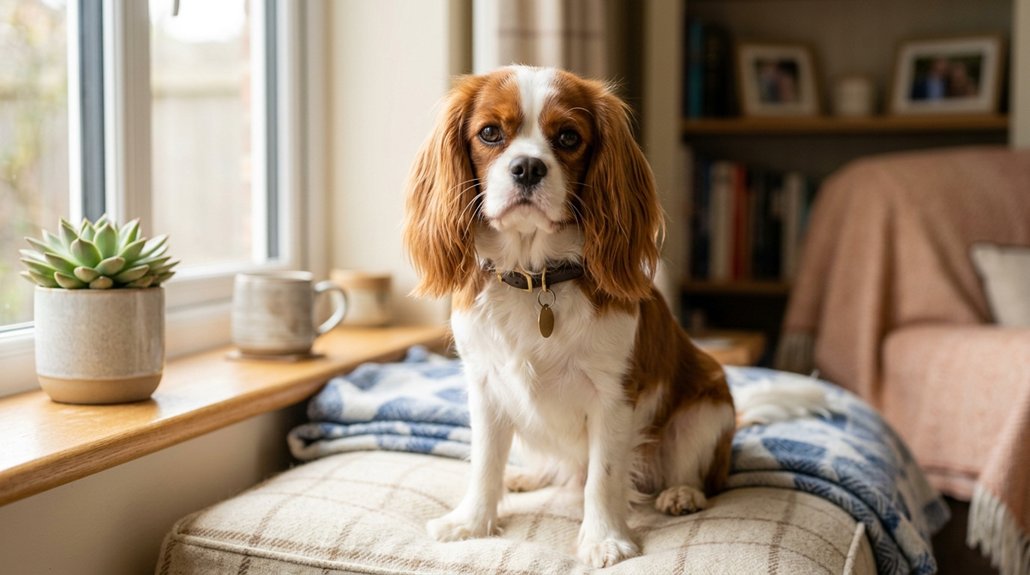
Cavalier King Charles Spaniels are affectionate, social companions. They thrive on human interaction, so gradually increase alone time and provide interactive toys to manage separation anxiety. Establish a grooming routine and offer high-quality food. Early socialization and gentle training build confidence. Make certain regular vet visits and brush their teeth frequently. Prioritize daily exercise and mental stimulation. When choosing a breeder or adopting, verify health screenings and reliability. Discover more essential tips to nurture your Cavalier’s well-being.
Key Takeaways
- Cavalier King Charles Spaniels are affectionate, social, and prone to separation anxiety, needing gradual alone time adjustments.
- Regular grooming and veterinary check-ups are essential to maintain the health and coat of a Cavalier puppy.
- Early and diverse socialization helps Cavaliers adjust to new people and environments, enhancing confidence.
- Training should involve short sessions and gradual solo time to manage separation anxiety effectively.
- Exercise needs include daily walks and mental stimulation through interactive toys and agility training.
Understanding the Affectionate Cavalier Temperament

Cavalier King Charles Spaniels are cherished for their affectionate and loving temperament, an ideal quality for families and individuals seeking a loyal companion. Their cavalier personality traits make them incredibly social animals, thriving on human interaction. They’re known for their affectionate behavior towards children and other pets, which often results in a harmonious household. It’s important to expose them to different people and environments early on, as this helps them develop a balanced demeanor. Being emotionally sensitive, Cavaliers can suffer from separation anxiety if left alone too long. They’re enthusiastic learners, thanks to their obedient nature, making training a positive experience for both you and your pup. Understanding these traits helps guarantee a fulfilling relationship with your Cavalier.
Essential Care Tips for Your Cavalier Puppy
To guarantee your Cavalier puppy thrives, you’ll want to establish a structured routine covering health, grooming, and socialization. Start by providing a safe space, consistent meals with high-quality food, and regular grooming to keep their coat pristine. Alongside this, focus on gentle training methods and diverse socialization experiences to mold a well-rounded, confident companion.
Health and Grooming Essentials
When welcoming a Cavalier King Charles Spaniel puppy into your home, it’s important to establish a routine that addresses their specific health and grooming needs. Regular veterinary check-ups are significant for detecting health issues such as mitral valve disease, syringomyelia, and ear infections, common in Cavaliers. Alongside vet visits, maintaining a consistent grooming schedule is essential. Brush their coat 3-4 times weekly to prevent mats, giving monthly baths to keep them clean. It’s also critical to brush their teeth 2-3 times a week and schedule professional cleanings annually. Regular ear cleaning helps prevent infections, look for signs like scratching or shaking their head. Finally, trim their nails every 3-4 weeks to guarantee comfort and hygiene for your Cavalier.
Training and Socialization Tips
Bringing a new puppy, particularly a Cavalier King Charles Spaniel, into your home involves more than just providing food and shelter; it requires a strong focus on training and socialization. Start socializing your Cavalier by slowly introducing them to various people, environments, and sounds by six weeks. Implement socialization strategies like puppy kindergarten around 3-4 months, which enhances interactive skills. For training, keep sessions short and frequent—about 5-10 minutes throughout the day—using training rewards like treats and praise to teach commands. To tackle separation anxiety, gradually increase solo time and offer interactive toys. Establish a consistent bathroom routine after meals and naps to aid housetraining. These steps guarantee your Cavalier grows up balanced and well-adjusted.
Health Concerns for Cavaliers
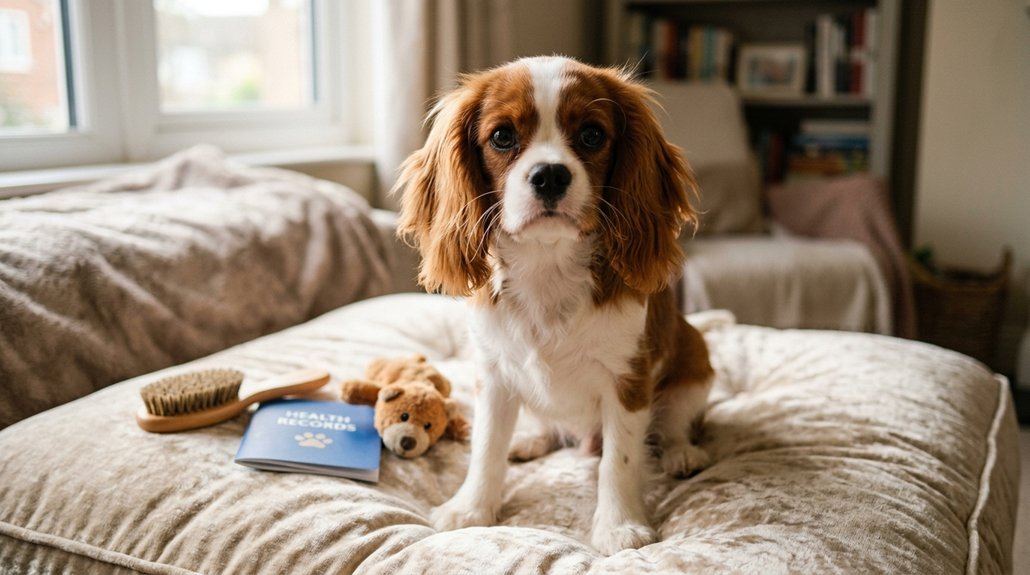
Although Cavalier King Charles Spaniels make delightful companions, it’s important to be aware of the health concerns inherent to this breed. These dogs have several genetic predispositions leading to common ailments that require close monitoring.
Cavalier King Charles Spaniels, while charming companions, carry genetic health risks needing vigilant attention.
- Heart Disease: Cavaliers are often affected by Mitral Valve Disease. Regular veterinary check-ups are necessary for early detection and management.
- Neurological Issues: Syringomyelia is a severe condition affecting their spinal cord and brain. Look for signs like pain and excessive scratching.
- Joint and Ear Problems: Cavaliers are prone to hip dysplasia which impacts mobility, and they frequently suffer from ear infections due to their long ears. Regular ear cleaning helps prevent infections, while early hip assessments are important.
Routine eye exams are also critical to catch conditions like cataracts.
Training Techniques for Your Cavalier Puppy
Taking proactive steps in combating the health challenges faced by Cavalier King Charles Spaniels offers them a happy life. In training your Cavalier puppy, positive reinforcement is key. Use treats and praise during short sessions (5-10 minutes) to keep your puppy’s attention and enthusiasm. Begin with basic commands like “sit,” “stay,” and “come” to develop good manners. Early socialization strategies, such as puppy classes, help your Cavalier adapt to diverse environments and sounds. Consistent practice in different settings strengthens these skills.
| Training Tips | Description |
|---|---|
| Positive Reinforcement | Treats, praise, and play for motivation |
| Short Sessions | 5-10 minutes to maintain interest |
| Basic Commands | “Sit,” “Stay,” “Come” for obedience |
| Socialization | Classes for confidence and adaptability |
| Consistent Practice | Reinforce learning across various settings |
This approach guarantees a confident, well-rounded Cavalier puppy.
Solutions for Common Cavalier Behavioral Issues

Addressing common behavioral issues like separation anxiety and managing prey drive in your Cavalier requires practical strategies and patience. For separation anxiety, gradually increase your Cavalier’s time alone, integrating interactive toys to ease their distress. When it comes to managing prey drive, consistent training and redirecting their attention with games can help them better control their impulses.
Addressing Separation Anxiety
When you’re dealing with a Cavalier King Charles Spaniel’s separation anxiety, understanding their emotional sensitivity is key. Implementing effective socialization techniques and calming strategies can ease their distress. Start by gradually acclimating your Cavalier to alone time:
- Progressive Alone-Time: Begin with short periods, gradually extending the time they spend alone—helping them adjust without fear.
- Interactive Distractions: Provide puzzle feeders or interactive toys to keep them mentally stimulated and occupied, reducing loneliness.
- Consistent Routines: Establish clear departure and arrival patterns to reassure your pet and make changes smoother.
Additionally, teaching commands like “quiet” can manage excessive barking while rewarding calmness reinforces relaxation. Over time, these methods will build confidence, minimizing anxiety when you’re away.
Managing Prey Drive
Ever wonder why your Cavalier suddenly bolts at the sight of a squirrel? It’s due to their ingrained hunting instincts, making prey drive management vital. Start with socialization techniques: early exposure to small animals reduces instinctual chasing. Gradually introduce them in controlled settings, rewarding calm behavior. Training is essential—teach commands like “leave it” to redirect their focus. Consistent, positive reinforcement works best; avoid harsh methods that might heighten anxiety. Engage them with regular exercise and interactive toys to burn off excess energy that can fuel unwanted pursuits. Remember, patience is key. Proper management not only curbs chasing but also enhances your Cavalier’s ability to coexist peacefully with smaller pets, transforming them into well-adjusted companions.
Daily Exercise and Stimulation for a Happy Cavalier
Ensuring a Cavalier King Charles Spaniel remains content and healthy revolves around providing consistent daily exercise and mental stimulation. Implementing effective exercise routines is essential. Follow these guidelines:
Providing daily exercise and mental stimulation is key to a Cavalier’s happiness and health.
- Interactive toys: Keep your Cavalier mentally stimulated with a variety of toys, changing them regularly to maintain interest and prevent boredom.
- Agility training and playdates: Enroll them in agility classes or organize playdates with other vaccinated dogs to enhance their physical agility and social skills. This boosts their confidence and fosters important bonding activities.
- Daily walks and bonding activities: Commit to 30 minutes to an hour of walking daily, integrating these sessions with community interactions. This not only benefits their physical health but also helps alleviate issues like separation anxiety through constant companionship and engagement.
Select the Best Breeder or Adoption Route

Exploring the active lifestyle of your Cavalier King Charles Spaniel naturally leads to contemplating the right starting point for their journey with you—choosing the best breeder or adoption route. Start your breeder selection by prioritizing those who follow responsible practices, guaranteeing health screenings for genetic issues like heart disease and eye problems. Visit facilities to verify clean, safe conditions and request health clearances and family histories. Alternatively, adopting from reputable rescue organizations offers significant adoption benefits, such as socialized and possibly house-trained dogs. Regardless of your route, early socialization and basic training guarantee a well-adjusted pet. Remember, selecting either a careful breeder or a trusted rescue enriches your Cavalier King Charles Spaniel’s life journey, fostering a vibrant, happy companion.
Frequently Asked Questions
Are King Charles Cavalier Puppies Hard to Train?
You won’t find Cavalier King Charles Spaniel puppies hard to train. They usually love (and thrive on) puppy training. Focus on consistent, positive reinforcement to navigate behavioral challenges. Short sessions and early socialization really make a difference.
Are Boy or Girl Cavaliers Better?
You’ll find male temperament as lively as a whirlwind while female personality can be as nurturing as a cozy blanket. The real magic lies in their individual quirks, so focus on socialization and training to guarantee harmony.
What Age Do Cavalier Puppies Calm Down?
Cavalier puppies typically calm down between 6 to 12 months. You’ll observe changes as their energy levels steady and behavior traits mature. Make certain they get plenty of exercise and mental stimulation to promote a calmer disposition.
What Should Cavaliers Not Eat?
You shouldn’t feed Cavaliers chocolate, grapes, raisins, onions, garlic, avocado, or high-fat foods due to risks of cavalier food allergies and toxic reactions. Such snacks can lead to severe health issues, including kidney failure and pancreatitis.
Conclusion
Caring for a Cavalier King Charles Spaniel is like having the world’s most regal teddy bear with endless love and energy! Their affectionate nature and those soulful eyes will melt your heart daily. Master their care, and you’ll prevent a throne of health and behavioral issues from overtaking your life. With expert training and a dash of royal dedication, your Cavalier will reign as the happiest pup. Cherish every wag and cuddle—you’ve got a royal companion for life!