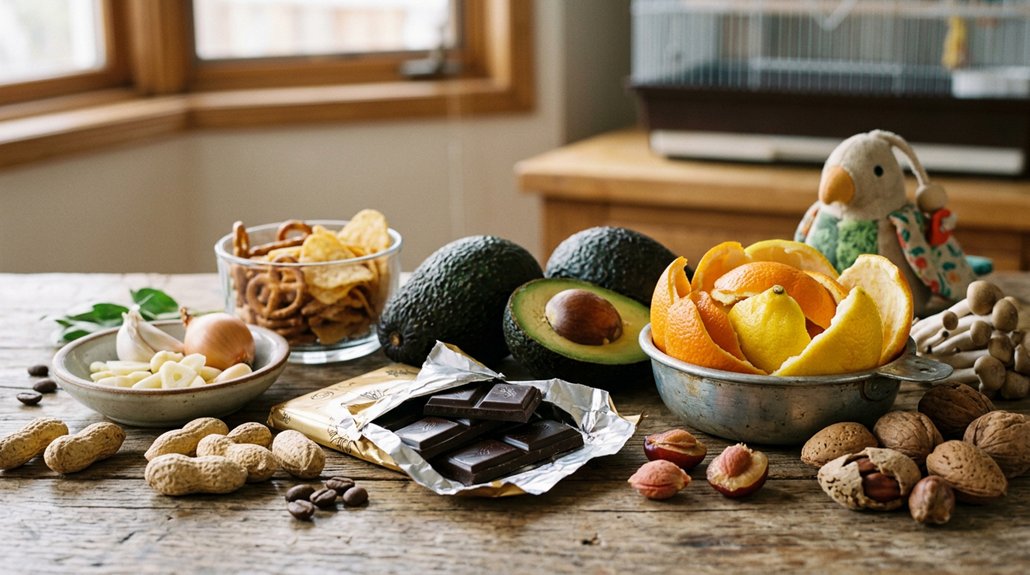
You should never give your bird avocado, chocolate, caffeine, onions, garlic, chives, leeks, scallions, fruit pits, apple seeds, xylitol, alcohol, salty snacks, processed foods, dairy, raw meat, or shellfish. These foods can cause breathing trouble, anemia, seizures, liver injury, dehydration, or sudden collapse, even in tiny amounts. Don’t try home treatment if exposure happens. If you keep going, you’ll see which foods are safest instead and what to do next.
Key Takeaways
- Avocados are dangerous because persin can cause breathing trouble, weakness, collapse, and death in birds.
- Chocolate, caffeine, energy drinks, and xylitol can trigger seizures, heart problems, hypoglycemia, or rapid collapse.
- Onions, garlic, chives, leeks, and scallions damage red blood cells and can cause anemia and weakness.
- Never feed fruit pits or seeds from apples, cherries, peaches, apricots, or plums because they may release cyanide.
- Avoid alcohol, salty foods, and very fatty processed foods, which can cause poisoning, dehydration, and organ failure.
Foods Toxic to Pet Birds
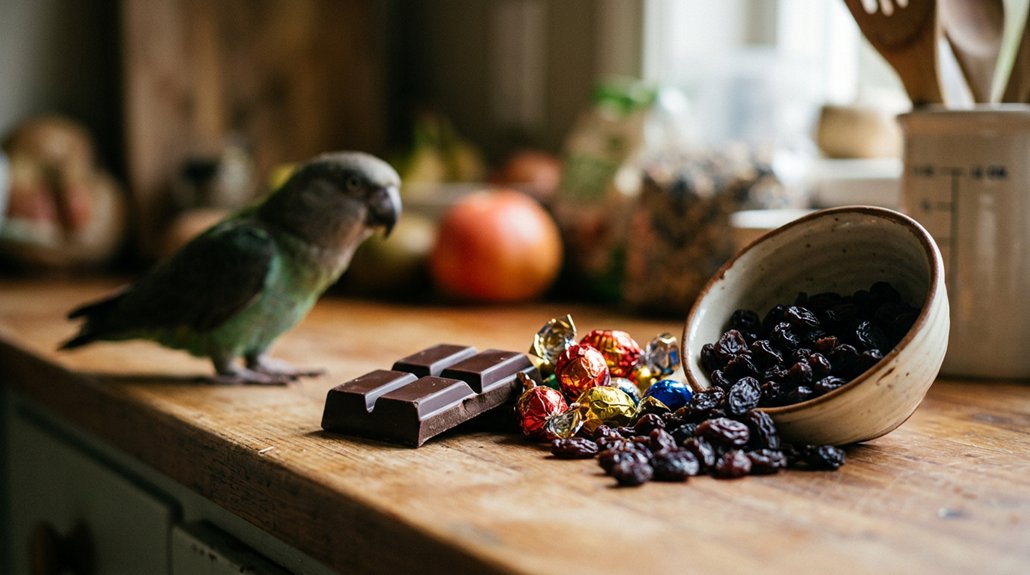
When it comes to foods toxic to pet birds, you must avoid avocado in all forms, because its persin content can cause cardiac damage, respiratory distress, and death within hours. You also shouldn’t offer chocolate, cocoa, coffee, tea, or energy drinks; methylxanthines can trigger tachycardia, tremors, seizures, and fatal arrhythmias even in small amounts. Remove apple, cherry, apricot, peach, and plum pits and seeds before feeding fruit, since cyanogenic compounds are dangerous. Keep onions and garlic away in any form, and never give xylitol-containing products or alcohol. If you’re selecting avian safe alternatives, choose plain bird-safe produce and consult feeding dosage guidance for portion control. Immediate veterinary care’s warranted after any exposure, because rapid deterioration can occur.
Can Birds Eat Avocado?
Avocado isn’t safe for pet birds in any form. You’re dealing with avian sensitivity to persin, a fatty-acid–like toxin found in the flesh, skin, pit, and leaves. No safe dose has been established, so you should avoid all persin sources, including guacamole, avocado toast, and anything that touched avocado.
Avocado isn’t safe for pet birds in any form; avoid all persin sources, including guacamole and avocado toast.
- Signs can begin within hours.
- Exposure is an emergency.
- Cooking doesn’t neutralize persin.
You may see labored breathing, lethargy, weakness, or sudden collapse, and severe cases can progress to cardiac damage, respiratory distress, and death within 12–48 hours. If you suspect any exposure, contact an avian veterinarian or emergency clinic immediately. Because species-specific sensitivity is unpredictable, the safest rule is simple: never offer avocado to any pet bird.
Chocolate, Caffeine, and Other Stimulants
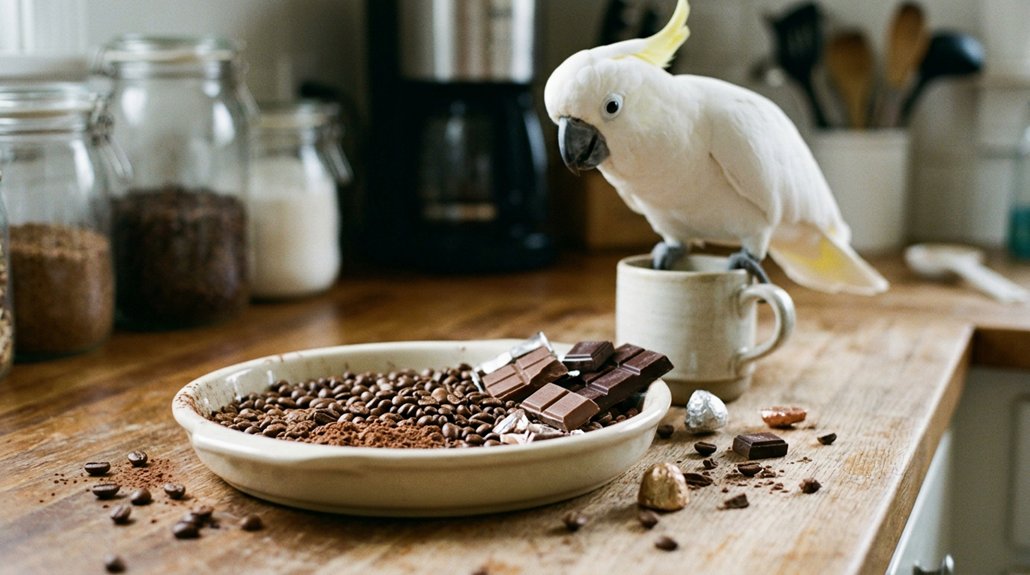
You shouldn’t offer chocolate to your bird, because its theobromine and caffeine content can cause vomiting, diarrhea, tremors, seizures, and death, with darker chocolate posing greater risk. You also shouldn’t give coffee, tea, energy drinks, or any caffeinated product, since even tiny exposures can trigger tachycardia, arrhythmias, hyperactivity, and cardiac arrest. Check labels for hidden stimulants in foods and supplements, and if your bird is exposed, don’t induce vomiting—seek an avian veterinarian immediately.
Chocolate Hazards
Chocolate and other methylxanthine-containing products can be rapidly toxic to pet birds. You shouldn’t offer chocolate, especially dark chocolate, because it contains more theobromine and raises obesity risk if fed as a sweet treat.
- Vomiting, diarrhea, tremors, seizures, and death can follow ingestion.
- Caffeine from coffee, tea, energy drinks, or soft drinks can trigger tachycardia and arrhythmias.
- Restlessness, rapid breathing, and collapse may develop quickly.
Because your bird’s size and metabolism increase susceptibility, even small amounts can become an emergency. Don’t induce vomiting. Contact your avian veterinarian immediately and bring the packaging if you can. Prevent exposure by keeping all chocolate and caffeinated products out of reach, and offer safe treats such as mango, papaya, or grapes instead.
Caffeine Risks
Caffeine and other methylxanthine stimulants can be rapidly toxic to pet birds, and even small exposures may become life-threatening. In avian metabolism, caffeine pathways are efficient enough to trigger abrupt tachycardia, tremors, and collapse.
| Exposure | Main risk | Action |
|---|---|---|
| Chocolate | Theobromine, caffeine | Avoid completely |
| Coffee | Arrhythmias, arrest | Remove access |
| Tea | Tachycardia, distress | Prevent ingestion |
| Energy drinks | Hyperactivity, seizures | Seek care |
| Cocoa grounds | Severe toxicity | Call vet |
You shouldn’t offer any form of chocolate, baked goods, or concentrated caffeine. Darker chocolate is more toxic, but all sources are unsafe. If your bird may have ingested any stimulant, contact an avian veterinarian or emergency clinic immediately; rapid supportive care, fluids, warmth, and oxygen can improve recovery.
Hidden Stimulants
Beyond obvious sources like chocolate and coffee, pet birds can also be exposed to hidden stimulants in everyday foods and products. You must treat these as toxic emergencies; even tiny amounts can trigger severe signs because your bird’s body is small and metabolizes compounds quickly.
- Chocolate delivers theobromine and hidden caffeine, with darker types posing greater risk.
- Coffee, tea, and energy drinks can cause tachycardia, arrhythmias, hyperactivity, and cardiac arrest.
- Xylitol is stealth xylitol in sugar-free gum, candies, peanut butters, and diet foods.
If your bird ingests any stimulant, expect vomiting, diarrhea, tremors, seizures, hypoglycemia, or liver damage. Don’t wait for symptoms. Contact an avian veterinarian or emergency clinic immediately; rapid treatment improves recovery chances and reduces the risk of death.
Onions, Garlic, and Other Allium Foods
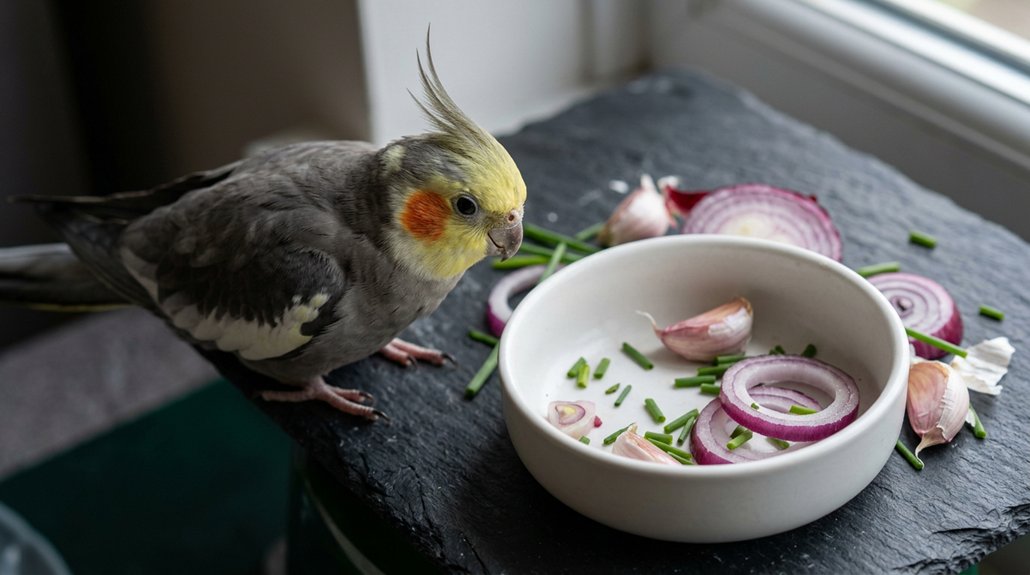
You shouldn’t feed your bird onions, garlic, chives, leeks, or scallions, because all allium foods can cause oxidative damage to red blood cells and trigger hemolytic anemia. Raw, cooked, powdered, dehydrated, or concentrated forms are all unsafe, and even small amounts can lead to delayed weakness, pale mucous membranes, labored breathing, or jaundice-like discoloration. If you suspect ingestion, don’t induce vomiting; contact an avian veterinarian or emergency clinic immediately.
Allium Toxicity Risks
Allium ingredients such as onion, garlic, leek, chive, and related seasonings can be toxic to birds in any form, including raw, cooked, powdered, or dehydrated, because their sulfur compounds damage avian red blood cells and can trigger hemolytic anemia, weakness, and lethargy. You need early detection and ingredient vigilance.
- Watch for pale or yellow-tinged mucous membranes.
- Note labored breathing, dark droppings, and reduced activity.
- Treat any suspected exposure as urgent veterinary concern.
Allium powder in bouillons, sauces, seasonings, and processed snacks can irritate the mouth, esophagus, and crop, and signs may appear later. Don’t wait for symptoms; contact your veterinarian immediately if exposure is known or suspected. Read labels carefully and avoid all foods containing onion or garlic to prevent accidental poisoning.
Raw And Cooked Harm
Even small amounts of onion, garlic, scallions, chives, or related allium seasonings can be dangerous for birds, whether they’re raw, cooked, powdered, or dried. Your bird’s red blood cells can be damaged by sulfur compounds, so no cooking methods make these foods safe, and the nutritional impact isn’t worth the risk.
| Form | Risk |
|---|---|
| Raw onion | Toxic |
| Cooked garlic | Toxic |
| Powdered seasoning | Highly toxic |
| Dried mix | Toxic |
Even tiny portions, especially repeated exposures from flavored foods or scraps, can accumulate and trigger clinically significant anemia in small species. You should check labels for onion and garlic powders, keep human food away, and avoid seasoning-contaminated leftovers. If your bird may have eaten any allium product, don’t induce vomiting; contact an avian veterinarian or emergency clinic immediately.
Warning Signs After Ingestion
Once an allium exposure has occurred, watch closely for signs that may not appear right away. You may see behavioral changes within 1–5 days as hemolysis progresses.
- Lethargy, decreased appetite, or fluffed posture
- Dark droppings, pale mucous membranes, jaundice
- Respiratory signs such as rapid breathing, tail-bobbing, or increased effort
Your bird may also sit on the cage bottom, vocalize less, or resist flying. In severe cases, vomiting, tachycardia, collapse, or marked weakness can develop as red blood cells rupture and oxygen delivery falls. Do not induce vomiting. Contact an avian veterinarian or emergency clinic immediately; treatment is time-sensitive and may require fluids, warming, oxygen, bloodwork, or transfusion. Even subtle changes after onion, garlic, or other allium ingestion deserve urgent evaluation.
Fruit Pits, Seeds, and Cyanide Risks
Fruit pits and kernels from apples, cherries, apricots, peaches, and plums can be dangerous to pet birds because they contain amygdalin, which can convert to cyanide if the seed is chewed or crushed. You should treat every stone fruit as a hazard. Use careful pit removal and immediate seed disposal before offering any flesh.
| Item | Risk |
|---|---|
| Apple seeds | Never feed |
| Stone fruit pits | Never feed |
| Grape seeds | Generally safe |
| Citrus seeds | Generally safe |
Even small amounts of crushed pits raise risk because cracking releases cyanogenic compounds. If you suspect ingestion, contact an avian vet immediately. Watch for sudden respiratory distress, weakness, and rapid collapse. The flesh is safe only after all pits and seeds are fully removed.
Salt, Fat, and Processed Foods
Limiting salt and fat is essential for avian health, because even small amounts of salty human food can disrupt a bird’s electrolyte balance, and repeated exposure to high-sodium items may lead to dehydration, kidney failure, and death. You shouldn’t offer processed snacks, fried foods, butter, or fatty meats.
Salt and fat can quickly harm birds, disrupting electrolytes and straining kidneys.
- High salt can trigger thirst and renal stress
- Excess fat promotes obesity, atherosclerosis, and liver disease
- Seed-heavy treats can cause malnutrition
Use salt alternatives only in bird-safe preparations, and control fat timing by reserving unsalted nuts as rare rewards. For medium birds, one almond or walnut daily is enough; small birds need only tiny slivers. Prioritize low-fat fruits and vegetables instead of fast foods, which often contain additives and excessive sodium. Amazons and Quakers are especially vulnerable to lipid-related disease, so strict dietary limits matter.
Xylitol and Alcohol Poisoning Risks
Xylitol and alcohol are both dangerous to pet birds and should never be offered, even in trace amounts. You’ll find xylitol in sugar-free gum, some peanut butters, candies, and baked goods; it’s strongly suspected to trigger avian hypoglycemia, liver injury, and rapid collapse. Because your bird’s metabolism is fast and toxic thresholds aren’t well defined, even a small exposure can cause weakness, tremors, seizures, and death. Ethanol absorption is also hazardous: tiny amounts from fermented foods, vanilla extracts, alcoholic sauces, or unattended drinks can lead to respiratory depression, ataxia, hypothermia, coma, and fatal respiratory failure. If exposure is suspected, don’t induce vomiting. Contact an avian veterinarian or emergency clinic immediately, and provide the product packaging and estimated amount.
Dairy, Meat, and Shellfish Risks
Dairy products should be limited in pet birds because most species lack lactase, so milk, cheese, and yogurt can trigger diarrhea, bloating, and gastrointestinal upset. This lactase deficiency means you shouldn’t treat dairy as a routine food.
Dairy should be limited in pet birds; most lack lactase, so milk and yogurt can cause digestive upset.
- Raw meat and shellfish can expose you to Salmonella and E. coli.
- Shellfish, including shrimp, crab, and mussels, should be avoided unless fully cooked and unseasoned.
- High-fat meats raise obesity and cholesterol risk.
If you offer cooked proteins, keep portions small, plain, and rare. Use only fully cooked poultry without salt, bones, or fatty trimmings. Frequent meat feeding isn’t appropriate for most species, and some birds may be hypersensitive to shellfish. You should prioritize species-appropriate nutrition and avoid uncooked animal foods altogether.
What To Do After Toxic Exposure
If you suspect your bird has ingested something toxic, do not induce vomiting or try home remedies, because birds can’t vomit and these actions can worsen injury or cause aspiration. Your first aid is to call an avian veterinarian or emergency clinic immediately and use emergency contacts ready, including the toxin, amount, species, weight, and packaging. Mention lethargy, labored breathing, tremors, seizures, abnormal droppings, or fluffed posture, and bring the label or a photo. Keep your bird warm and quiet in home containment, away from other pets. Maintain strict trash control to prevent further access. Treatment may require warmed fluids, oxygen, heat support, nutritional support, activated charcoal, or specific antidotes. Don’t wait for symptoms; persin, methylxanthines, and xylitol can cause rapid deterioration within 12–48 hours.
Frequently Asked Questions
What Foods Are Toxic to Pet Birds?
Avoid avocado, chocolate, caffeine, onions, garlic, xylitol, alcohol, salty or fatty human foods, and fruit pits; don’t rely on seed mixtures or citrus fruits. You’ll protect your bird from poisoning, anemia, and organ damage.
What Is the 3 3 3 Rule for Birds?
You’ll usually hear 3-3-3 as 3 minutes’ handling, 3 times daily, for 3 weeks, or as quarantine: 3 weeks apart, vet in 3 days, 3 months biosecurity. It aids flight training and social enrichment.
What Should You Never Feed a Bird?
You should never feed your bird avocado, chocolate, coffee, tea, onion, garlic, xylitol, alcohol, or fruit pits; avocado dangers and chocolate toxicity can be fatal. You’ll also want to avoid any contaminated foods, too.
What Is the Most Toxic Thing to Birds?
Avocado’s usually the most toxic food you can give birds, but household cleaners and scented candles can be even deadlier through fumes. You’ve got to keep both away, since exposure can cause rapid respiratory collapse.
Conclusion
To sum up, you should keep these foods far from your bird’s reach. Avocado, chocolate, caffeine, onions, garlic, fruit pits, excess salt, fatty processed foods, xylitol, alcohol, dairy, meat, and shellfish can all cause serious harm, even in small amounts. If you suspect exposure, you shouldn’t wait—contact your avian veterinarian or an emergency clinic right away. A little caution today can prevent a very 21st-century tragedy tomorrow.