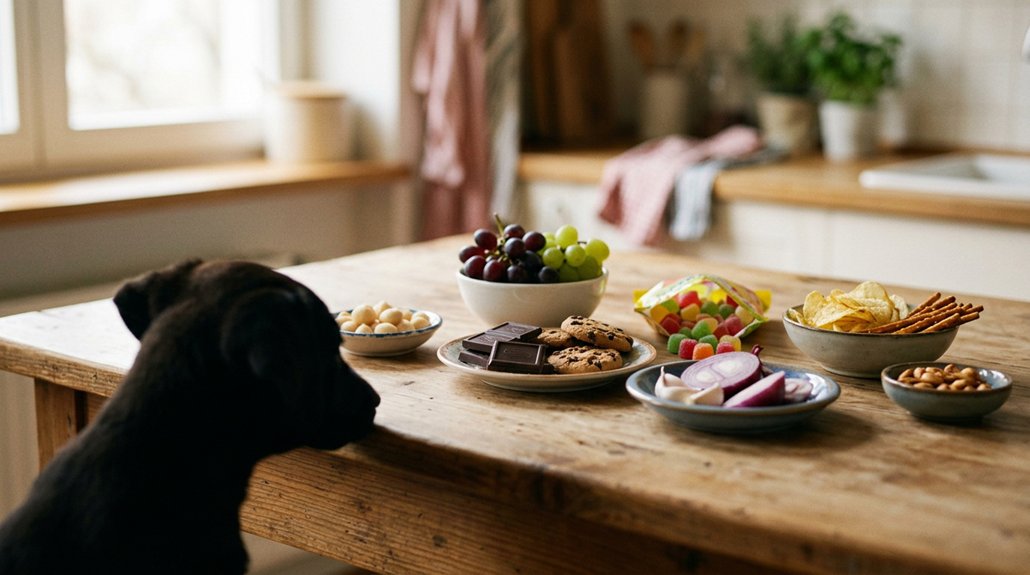
You need to know that certain foods pose serious risks to your puppy. Chocolate and caffeine contain harmful methylxanthines, while xylitol in sugar-free products leads to hypoglycemia. Grapes and raisins can cause kidney failure, and both onions and garlic damage red blood cells. Beware of alcohol, raw yeast dough, and high-fat foods, as they cause gastric distress and more. Curious about more potential hazards and safe alternatives? There are additional insights available to guide you.
Key Takeaways
- Chocolate and caffeine are toxic to puppies, causing symptoms like vomiting and seizures; seek immediate veterinary attention if ingested.
- Xylitol, found in sugar-free products, can cause hypoglycemia and liver damage; urgent vet care is necessary after ingestion.
- Grapes and raisins may lead to sudden kidney failure in puppies; immediate veterinary care is crucial if consumed.
- Onions and garlic can cause anemia by damaging red blood cells; all forms are harmful and require vet intervention if ingested.
- Alcohol and raw yeast dough pose severe risks, like alcohol toxicity and gastric bloat, demanding immediate veterinary attention if eaten.
Why Chocolate and Caffeine Are Deadly for Puppies
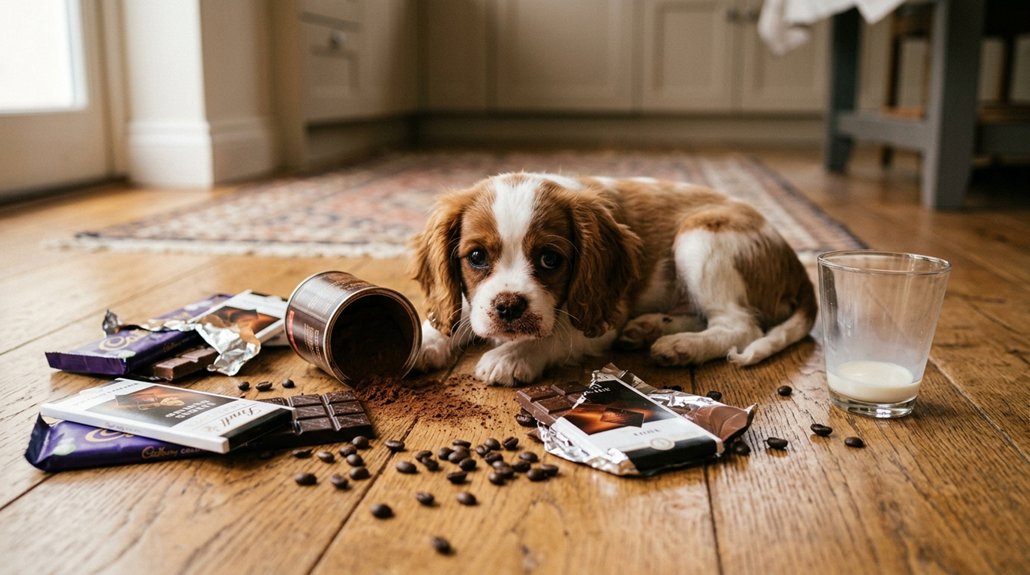
Although it’s tempting to share your treats with a puppy, understanding the serious risks chocolate and caffeine pose is essential for their safety. Chocolate poisoning and caffeine toxicity occur because both contain methylxanthines, substances your puppy can’t metabolize effectively. Even a small piece of chocolate—particularly dark or baking chocolate, which has high theobromine concentrations—can lead to severe symptoms like vomiting, diarrhea, and potentially fatal seizures, appearing within 1 to 6 hours. Similarly, caffeinated drinks like coffee and tea threaten puppies due to their inability to break down these compounds, sometimes resulting in deadly outcomes. If you suspect your puppy has ingested either, seek immediate veterinary attention, as rapid intervention is critical to avoid severe complications or death.
The Xylitol Threat in Everyday Items
Beyond the dangers of chocolate and caffeine, xylitol presents another significant threat to your puppy’s health. This artificial sweetener, often found in sugar-free gum, candies, and baked goods, is extremely harmful. Even tiny amounts can cause rapid insulin release, leading to hypoglycemia. Symptoms like vomiting, loss of coordination, and seizures may arise quickly. Furthermore, xylitol can severely damage the liver, prompting lethargy, rapid breathing, and risking liver failure.
Xylitol, found in sugar-free products, is deadly to puppies, causing hypoglycemia, seizures, and possible liver failure even in tiny amounts.
To protect your pup:
- Check ingredient labels for xylitol in unexpected items like peanut butter and flavored water.
- Seek out xylitol alternatives and safe snacks that exclude artificial sweeteners.
- Be alert for symptoms as they can appear in hours, needing urgent veterinary aid.
- Inform family and friends about xylitol dangers.
Deadly Effects of Grapes and Raisins on Puppy Health
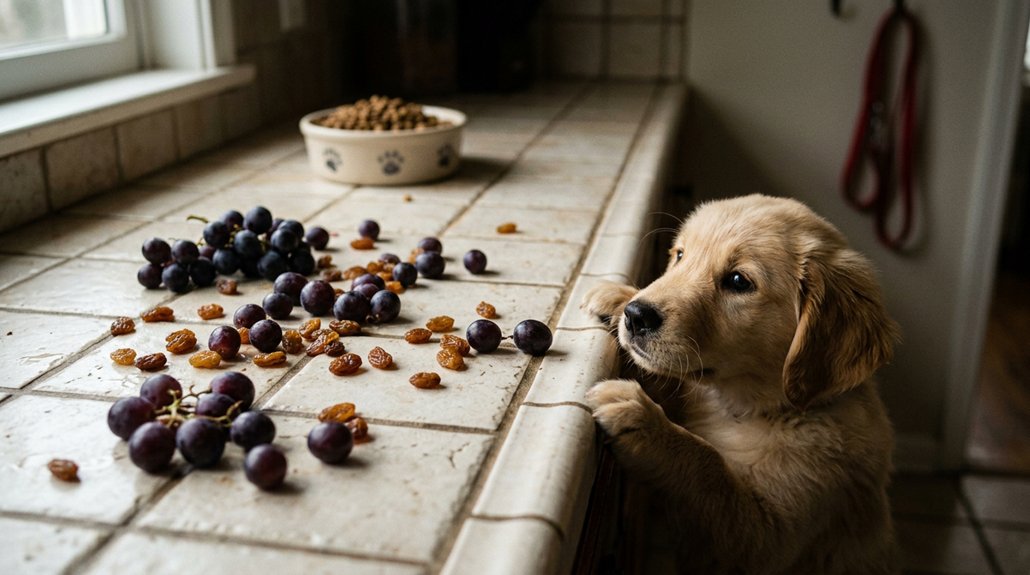
When it comes to protecting your puppy, understanding the risks posed by seemingly harmless foods like grapes and raisins is vital. Grape toxicity and raisin risks are serious threats to your pet’s health. Even a small amount can lead to sudden kidney failure in puppies. The exact toxic compound remains unidentified, making it impossible to predict which dogs will be affected or the safe quantity tolerable. Symptoms of ingestion often surface within 12 hours, including vomiting, lethargy, and diarrhea. In severe cases, this can escalate to dehydration, a refusal to eat, and life-threatening kidney damage. If you suspect your puppy has ingested grapes or raisins, seek immediate veterinary care to guarantee prompt treatment and avoid severe complications.
Onions and Garlic: Hidden Dangers in Your Pantry
You might think onions and garlic add great flavor to your meals, but they’re a hidden danger for your puppy. These ingredients can damage your dog’s red blood cells, causing anemia and other severe health issues, even in small doses. To keep your puppy safe, explore pet-friendly seasoning alternatives like herbs such as basil or parsley.
Toxic Effects on Dogs
Although onions and garlic are staples in many kitchens, they’re perilous for your furry friend. Consuming these alliums results in allium toxicity, damaging your dog’s red blood cells and leading to Heinz body anemia. Watch out for symptoms like:
- Weakness, Vomiting, Diarrhea: These signs may appear within hours.
- Toxic Dose Concerns: As little as 0.5% of a dog’s body weight in onions or 0.1% in garlic is hazardous.
- Forms to Avoid: All types, whether fresh, cooked, powdered, or flaked, are harmful.
- Breed Susceptibility: Japanese breeds, like Akitas and Shiba Inus, face greater risks.
Exercise caution in the kitchen, ensuring alliums never end up in your puppy’s bowl, and seek veterinary care if ingestion occurs.
Alternative Seasoning Options
While onions and garlic might be mouthwatering to humans, they pack hidden dangers for dogs. They contain compounds that can damage your pup’s red blood cells, potentially leading to Heinz body anemia. Even small amounts of onion powder or flakes in food can be harmful, causing symptoms like vomiting, diarrhea, and weakness. It’s essential to avoid these ingredients in your dog’s diet.
Instead, opt for canine safe herbs as healthy flavoring alternatives. Herbs like parsley and basil are wonderful choices, adding flavor without the risk. These can be safely incorporated into your dog’s meals, providing a delightful taste without jeopardizing their health. Always inspect dog food labels carefully to guarantee these toxic ingredients aren’t lingering in your pet’s meals.
Alcohol and Yeast: Hidden Threats in the Kitchen
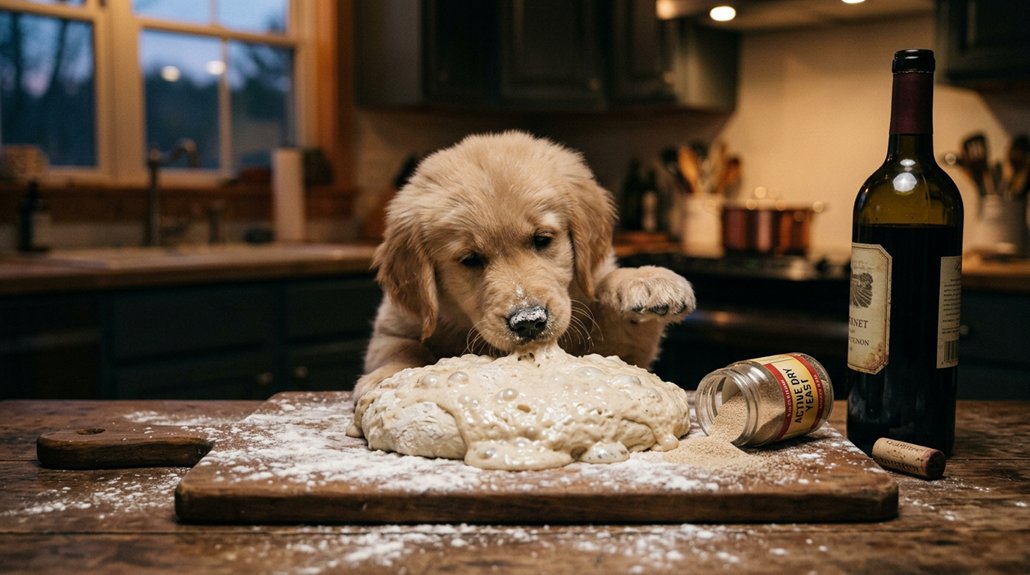
You might not realize it, but alcohol and raw yeast dough pose serious risks to your puppy’s health. Alcohol ingestion can lead to severe symptoms like incoordination and tremors, while raw dough can expand dangerously in the stomach, leading to gastric bloat. Even more concerning, the fermentation of yeast in the digestive system can create alcohol toxicity, so it’s essential to keep these hidden threats far from your curious puppy.
Dangers of Alcohol Ingestion
In the hidden corners of your kitchen lie unsuspected dangers that can put your puppy’s health at serious risk. Alcohol ingestion is a major threat encapsulated within these spaces. You may not realize it, but even small amounts of alcohol can lead to alcohol toxicity in dogs, causing symptoms like vomiting, diarrhea, and loss of coordination. Yeast ingestion is equally perilous because when yeast ferments in your puppy’s stomach, it produces alcohol, increasing the risk of poisoning.
Consider these points:
- Even minuscule alcohol amounts can be harmful.
- Yeast fermentation in the stomach produces alcohol.
- Symptoms include vomiting, diarrhea, and loss of coordination.
- Immediate veterinary attention is essential.
Always keep such items out of reach to prevent potentially fatal consequences.
Risks of Raw Dough
Beyond the evident dangers of alcohol ingestion, raw dough introduces its own set of hidden perils in your kitchen, especially for curious puppies. As a pet owner, understanding dough safety is essential. Raw yeast dough can expand in a puppy’s stomach, leading to painful gas buildup and the potential for gastric bloat, which is a serious condition. The fermentation process of yeast creates alcohol, posing the risk of alcohol poisoning. Even a tiny amount of uncooked yeast dough can be harmful, causing symptoms like vomiting, disorientation, or even coma. That’s why puppy precautions are important; always keep raw dough out of reach. If ingestion occurs, immediate veterinary care is needed to mitigate risks of stomach rupture or alcohol toxicity.
Yeast Fermentation Hazards
Even though it might seem innocuous, yeast fermentation in raw dough presents a dual threat to your playful pup, hidden right within your kitchen. Yeast toxicity is a serious concern, as the expansion of dough in a puppy’s stomach can lead to severe complications like gastric bloat. As the fermentation process unfolds, ethanol is produced, posing alcohol poisoning risks that shouldn’t be underestimated.
Dangers of Yeast Fermentation
- Stomach Expansion: Gas accumulation leading to potential ruptures.
- Alcohol Production: Ethanol from fermentation can cause toxicity.
- Symptoms Mimicking Alcohol Poisoning: Disorientation, seizures demand urgent care.
- Immediate Action Required: Recognize and treat swiftly to avert fatal outcomes.
Always keep raw dough out of reach to protect your pup from these fermentation dangers.
High-Fat Foods and Dairy: Digestive Risks for Puppies
While it might be tempting to share a piece of fatty food or a creamy treat with your puppy, it’s vital to understand the serious digestive risks involved. Fatty foods pose a high risk of causing pancreatitis, leading to severe abdominal pain, vomiting, and potential long-term health complications. Additionally, puppies frequently struggle with dairy digestion since most lack sufficient lactase to process lactose, which often results in diarrhea or vomiting. Excessive intake of these high-fat treats can make your puppy lethargic and affect their overall development, eventually contributing to obesity and related health issues. To guarantee your puppy’s health and growth remain on track, monitoring and limiting their consumption of high-fat and dairy foods is significant.
Toxic Vegetables: The Mushroom Risk
Mushrooms in any household or garden may seem harmless, but they can pose significant risks to puppies’ health. Many species are highly toxic, and mushroom identification can be challenging, even for experts. Just a tiny bite can result in dangerous consequences such as liver failure or severe gastrointestinal distress. To keep your puppy safe, it’s best to steer clear of any mushrooms altogether. Be aware of the following risks:
- Liver failure from ingestion of toxic species
- Gastrointestinal issues like vomiting and diarrhea
- Neurological symptoms including seizures or coma
- Urgency for veterinary intervention when ingestion is suspected
If you suspect your puppy has ingested a wild mushroom, seek immediate veterinary care to guarantee their wellbeing. The risks far outweigh any potential benefits.
Puppy-Friendly Snacks: Safe and Healthy Options
When keeping your furry companion safe from harmful foods, it’s crucial to not only be aware of dangers like mushrooms but also recognize what they can enjoy safely. Opt for puppy snacks that are both safe and nutritious. Apples, bananas, and blueberries offer vitamins and antioxidants, making them excellent healthy treats without toxic risks. Vegetables like carrots, green beans, and cooked sweet potatoes are fantastic low-calorie options. For a boost of digestive health, plain, unsweetened yogurt provides probiotics. Cooked meats such as chicken or turkey, without any bones or seasoning, supply high-quality protein important for your pup’s growth. Don’t forget xylitol-free peanut butter—it’s a great source of protein and healthy fats when given in moderation.
Frequently Asked Questions
What Is the 7 7 7 Rule for Puppies?
The 7 7 7 Rule for puppies advocates waiting until seven weeks to introduce new foods, with one-week intervals between each. It’s essential for their nutrition to avoid toxic foods, ensuring a safe, gradual dietary shift.
What Is a Silent Killer for Dogs?
Did you know that a tiny amount of xylitol, often found in sugar-free products, is all it takes to spell trouble for your dog? This hidden danger in seemingly harmless treats can lead to severe health issues.
How Do Dogs Say “I Love You”?
Dogs say “I love you” through body language and vocalizations. They’ll lean on you, wag their tails joyfully, and sometimes let out soft whines or barks. These gestures and sounds are their ways of expressing heartfelt affection.
What Is the Best Dog Food for Pancreatitis?
You’ll want a pancreatitis diet focusing on low-fat options. Choose specially formulated dog foods labeled “low-fat” or “sensitive stomach.” Consult your vet about prescription diets like Hill’s or Royal Canin for ideal support and recovery.
Conclusion
Maneuvering your puppy’s diet can be a bit like walking through a minefield, with everyday items harboring hidden dangers. While a nibble of chocolate or a sip of caffeine seems innocent, they’re anything but. The sweet allure of xylitol and the unexpected potency of grapes, onions, and even alcohol, should make you pause. By choosing safe, puppy-friendly foods, you’re not just feeding them; you’re nurturing their health and happiness while sidestepping potential heartbreak.