Feather plucking in birds usually means something is wrong, so you should get your bird checked by an avian vet promptly. Common causes include mites or lice, skin infections, nutritional gaps, liver, kidney, thyroid, or heavy metal disease, and stress from loneliness, noise, or poor enrichment. Your vet may use exams, bloodwork, fecal or skin tests, imaging, and viral testing to find the cause. Safe management starts with treating the trigger, then improving diet, sleep, and enrichment for better recovery ahead.
Key Takeaways
- Feather plucking often results from parasites, skin infections, nutritional deficiencies, or systemic illness, so medical causes must be ruled out first.
- An avian veterinarian may use physical exams, bloodwork, fecal or skin tests, imaging, and viral testing to find the underlying problem.
- Stress, loneliness, boredom, poor enrichment, hormonal changes, and sleep loss can trigger or worsen feather damage.
- Improve care with a balanced diet, more foraging and out-of-cage time, toy rotation, and a quiet 10–12 hour sleep period.
- Treating medical issues, reducing stress, and using vet-recommended collars or garments when needed offers the best chance of recovery.
What Causes Feather Plucking in Birds?
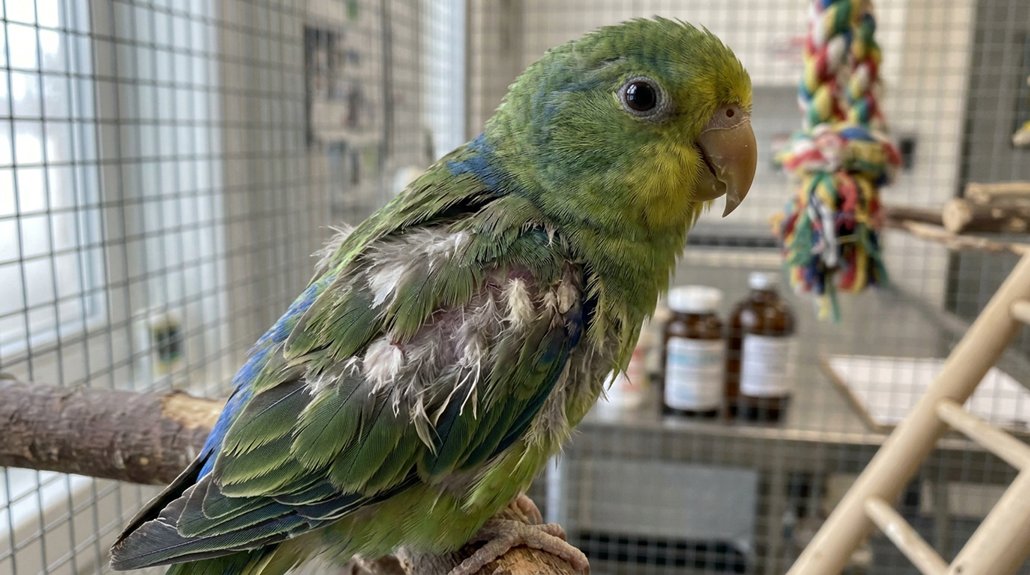
Feather plucking is usually a symptom rather than a diagnosis, and it can reflect underlying medical, psychological, or environmental problems. You should consider medical, behavioral, and husbandry factors together, because birds may pluck when they’re bored, lonely, anxious, fearful, or stressed by changes in their cage, room noise, or social setting. Captive birds with limited flight, poor foraging opportunities, weak enrichment, or no species-typical flock may redirect energy into chewing and feather damage. Hormonal shifts, sexual handling, and sleep loss can also intensify over-preening. In some birds, a genetic predisposition or social learning may make the behavior more likely. Because the causes overlap, you need prompt avian veterinary evaluation, including examination, bloodwork, imaging, and parasite testing, before focusing on environmental and behavioral support.
Medical Causes of Feather Plucking
Although feather plucking often looks behavioral, medical problems are a common and important cause. You should consider parasite infestations, skin infections, and nutritional deficiencies first, because they can drive itching, pain, and feather damage.
- Mites or lice may cause intense irritation.
- Bacterial, fungal, or yeast dermatitis can inflame the skin.
- Low calcium, vitamin A, or limiting amino acids can weaken feather growth.
- Liver, kidney, thyroid, heavy metal, or viral disease may also be involved.
An avian vet can usually narrow the cause with a physical exam, CBC, chemistry panel, skin or feather cytology, cultures, parasite screening, and sometimes radiographs or ionic calcium testing. Don’t wait and see; prompt care can prevent worsening, infection, and bleeding, and medical causes may coexist with behavior.
Stress, Boredom, and Environmental Triggers
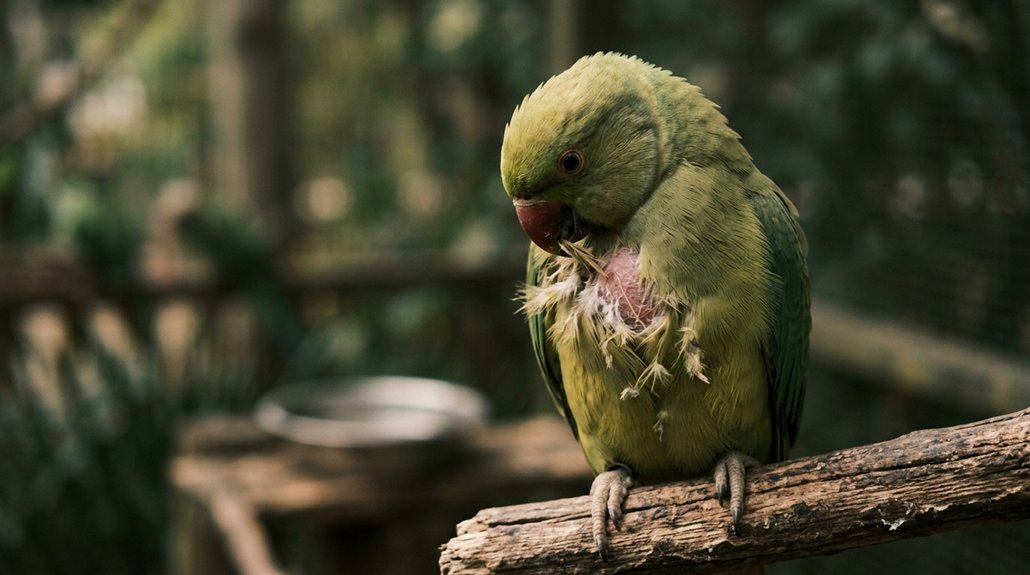
Once medical problems have been ruled out or addressed, it’s important to look at the bird’s environment and daily routine, because stress, boredom, and chronic overstimulation can drive feather plucking just as powerfully. Sudden moves, new people, pets, noise, or construction can make you feel unsafe and increase anxiety. If you’re leaving your bird alone for long periods, or if it’s lost a mate or companion, social bonding needs may go unmet, and plucking can become a coping behavior. Without daily flight, foraging, and environmental enrichment, boredom can turn into chewing and feather damage. Also check for fumes, smoke, aerosols, drafts, poor sleep, and erratic light or temperature, since these irritants and stressors can sustain the problem.
How Vets Diagnose Feather Plucking
To get to the bottom of feather plucking, your avian vet will start with a thorough physical exam, checking the skin, feathers, body weight, and preen gland, then gather a detailed history about diet, housing, social contact, sleep, and any recent environmental changes. Your vet will then use:
- CBC and chemistry screening for illness.
- Fecal, skin, or feather tests for parasites, infection, or irritation.
- Calcium, protein, and hormone testing when nutritional or endocrine imbalance’s suspected.
- Radiographs, biopsy, or aspiration if internal disease or a mass is possible.
A behavioral assessment helps separate medical causes from stress-related patterns. If needed, viral tests such as PBFD may be added. This careful, stepwise approach lets your vet identify treatable problems first and guide compassionate, targeted care.
How to Reduce Feather Plucking Safely
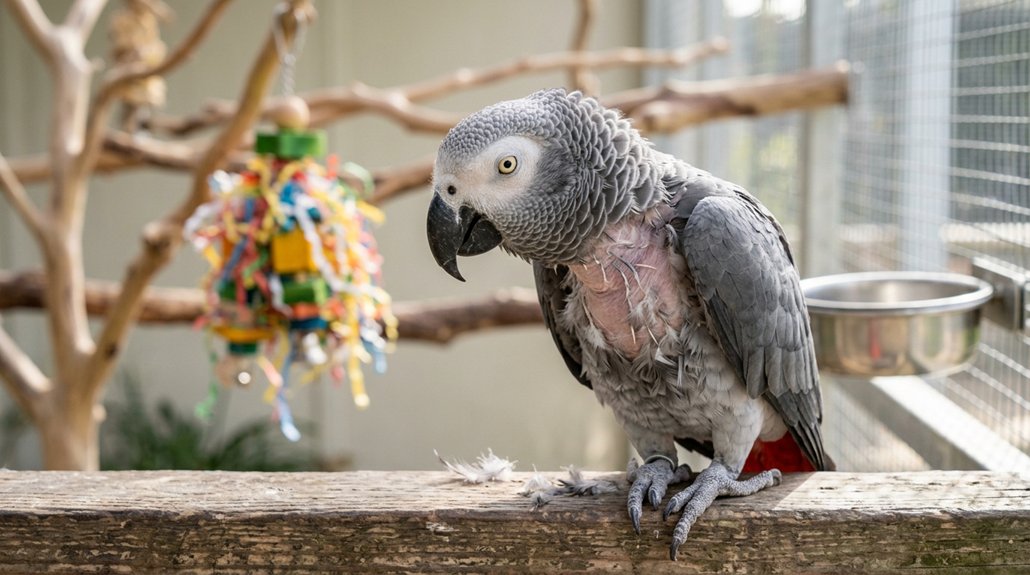
Before you try any home strategies, your bird should have an avian veterinary exam to rule out medical causes of feather plucking, including parasites, skin infection, nutritional deficiencies, and organ disease, because plucking is a symptom, not a diagnosis. If illness is excluded, you can use behavior modification and sensory enrichment to lower stress. Offer high-quality pellets, fresh vegetables, and only vet-approved supplements while watching how much your bird actually eats. Increase daily out-of-cage time, foraging toys, puzzle feeders, regular toy rotation, and predictable routines. Remove aerosols, scented products, smoke, Teflon fumes, and metal hazards. Provide a quiet, draft-free sleep area with 10–12 hours of uninterrupted darkness. If your bird is bleeding or self-mutilating, seek immediate veterinary care and use collars or garments only if your vet recommends them.
Frequently Asked Questions
Can Feather Plucking Become a Lifelong Habit?
Yes, feather plucking can become a lifelong habit if you don’t address it early. Ongoing long term stress can reinforce a behavioral addiction, making the behavior harder to stop; you’ll need prompt, compassionate veterinary care.
Which Bird Species Pluck Feathers Most Often?
Cockatoos, African greys, and some Amazon parrots’re most prone to feather plucking. You’ll also see it in macaws and cockatiels, especially with stress behaviors and species susceptibility, so careful monitoring helps you intervene early.
Does Feather Plucking Affect Flight Ability?
Yes, feather plucking can impair your bird’s flight, especially if wing integrity is reduced. You’ll often see a behavioral impact too, with weaker lift, poorer balance, and reluctance to fly. Prompt veterinary care helps.
How Long Does Regrowth Usually Take?
Regrowth usually takes weeks to months, and sometimes longer if damage is severe. You’ll often see improvement with behavior modification and during seasonal molt. Your bird’s recovery can feel endless, but consistent care usually helps.
Can Plucking Spread to Other Birds?
Yes, it can spread through social dynamics and sometimes disease transmission. You should separate affected birds promptly, monitor flock behavior, and consult an avian veterinarian to identify the cause and reduce further plucking.
Conclusion
Feather plucking is often a signal, not a choice, and you can treat it like a flare on the horizon. By addressing medical causes, easing stress, and enriching your bird’s environment, you give its body and mind room to heal. Work closely with your avian vet, because careful diagnosis guides safe action. With patience and consistent support, you can help your bird’s feathers return like a soft, healthy dawn.