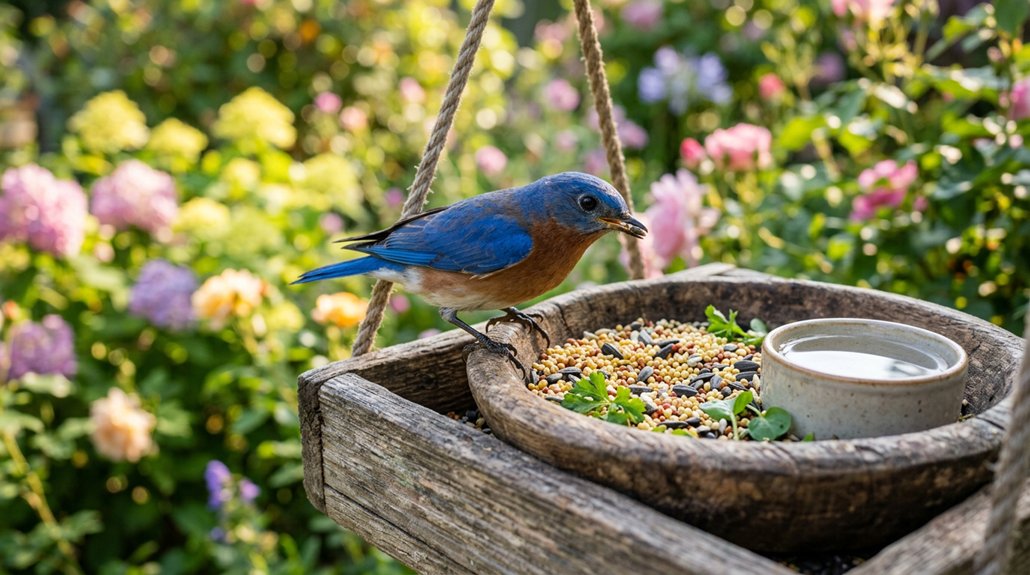
For peak health, you should feed your bird a nutritionally complete pelleted diet as the daily base, then add fresh vegetables every day, especially dark leafy greens and orange vegetables. Offer fruit only in small amounts, and keep seeds, nuts, and sugary or fatty treats limited. Use clean water daily, and shift diets gradually. Avoid avocado, chocolate, caffeine, alcohol, onion, garlic, and other toxic foods. A few practical details can make the difference.
Key Takeaways
- Make nutritionally complete pellets the daily dietary base for consistent vitamins and minerals.
- Add fresh vegetables daily, especially dark leafy greens and orange vegetables, for fiber and vitamin A precursors.
- Offer fruit sparingly, about 5–10% of intake, and remove pits and seeds before feeding.
- Give seeds, nuts, and fatty treats only in strict portions, not as staples.
- Provide clean water daily and avoid toxic foods like avocado, chocolate, caffeine, alcohol, onion, and garlic.
What Should a Bird Eat Daily?
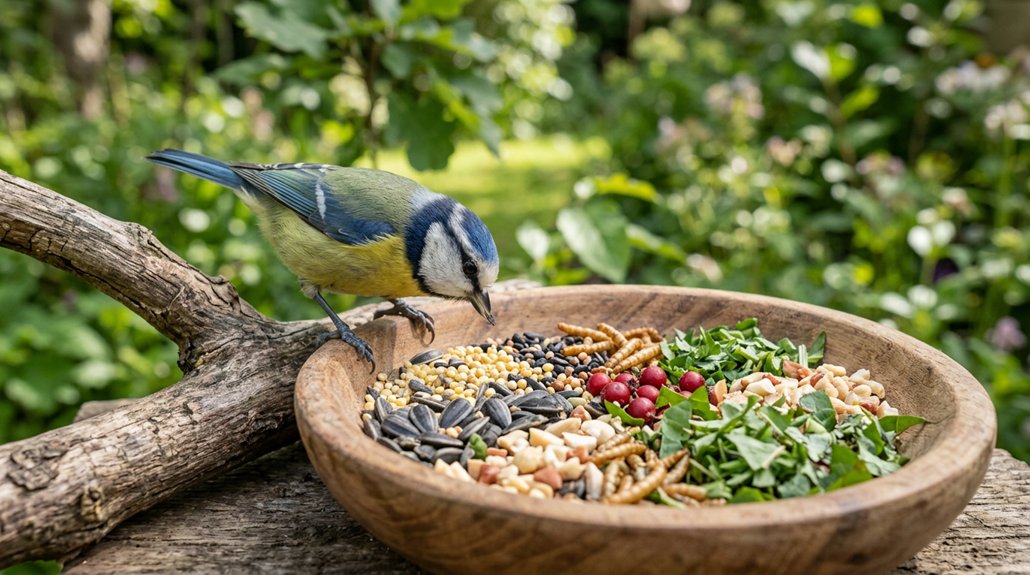
Daily feeding should start with a nutritionally complete pelleted formula, since it provides consistent vitamins and minerals in every bite and helps prevent selective eating. You should make pellets the dietary base, then add fresh vegetables daily, especially dark leafy greens and orange vegetables such as spinach, kale, broccoli, and carrots. Offer several chopped or grated options to improve acceptance and support foraging enrichment. Include seasonal produce in small portions, with fruit limited to about 5–10% of intake; choose apple without seeds, banana, melon, or papaya, and discard leftovers after a few hours. Use seeds and nuts only as occasional high-fat treats or training rewards. Provide clean water every day, changing it more often if supplements are mixed in.
How to Build a Balanced Bird Diet
Build a balanced bird diet by making a pelleted formula the main daily food, since products such as Lafeber Premium Daily Diet are designed to deliver consistent vitamins and minerals and reduce selective eating. You should pair pellets with fresh vegetables every day, emphasizing dark leafy greens and orange or yellow produce for vitamin A precursors, calcium, and fiber. Use strict portion control with seeds and nuts; keep them as treats, not staples. During growth, molting, breeding, or recovery, add lean protein as needed. Make dietary shifts slowly to protect the gut microbiome and improve acceptance. Monitor weight and intake, remove perishable foods after 3-4 hours, and ask an avian veterinarian about species-specific portions and supplements. Variety also supports behavioral enrichment without compromising nutrition.
Which Pellets and Seeds Should Birds Eat?
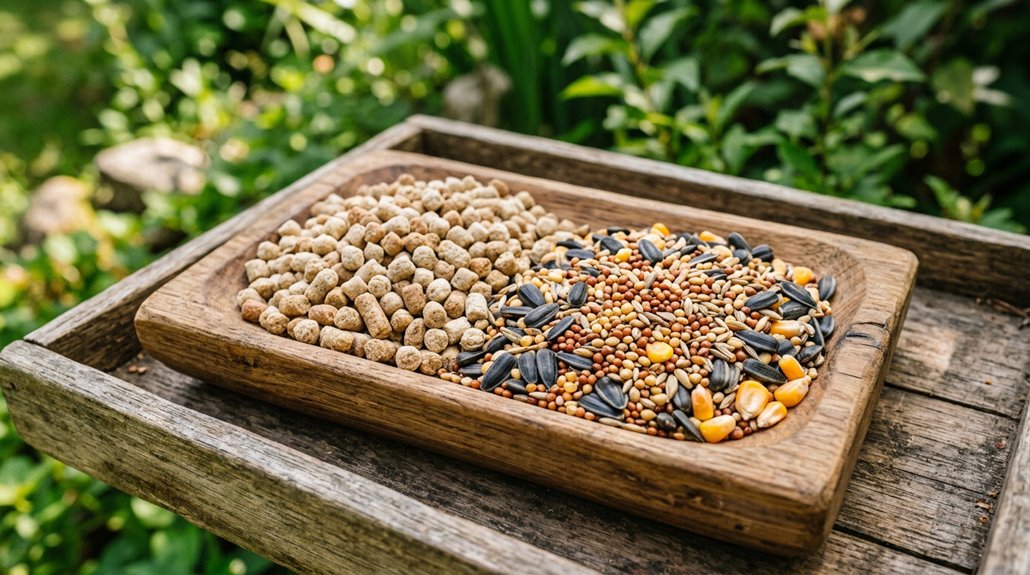
The best choice for a pet bird’s main food is a formulated avian pellet, because products such as Lafeber Premium Daily Diet Pellets, Pellet-Berries, and Avi-Cakes are designed to provide balanced nutrition in each bite and reduce selective eating. Use pellet variety matched to beak size and feeding style. Seed mixes are calorie-dense and should stay limited. | Food | Role | Limit |
| — | — | — |
|---|---|---|
| Pellets | Base diet | Majority daily |
| Seeds | Treats | Small portions |
| Hybrid products | Foraging enrichment | Occasional use |
You should shift gradually, mixing pellets with current seeds, then monitor weight and condition. For larger birds, keep seed under ¼ cup daily; for small birds, about 2 teaspoons. Ask an avian veterinarian for species-specific guidance.
What Fruits and Vegetables Are Safe for Birds?
You can offer bird-safe vegetables like kale, Swiss chard, spinach, dandelion greens, carrots, sweet potato, pumpkin, and leafy greens daily because they supply calcium, vitamins A and K, and support normal health. You can also provide safe fruits in moderation, including apple without seeds, banana, pear, papaya, kiwi, berries, mango, and cantaloupe, while removing pits and seeds from stone fruits. Avoid avocado, chocolate, caffeine, alcohol, onion, garlic, and spoiled produce, and wash all items well before serving them in small, fresh portions.
Safe Fruit Choices
Safe fruit choices can support a bird’s diet when offered sparingly and prepared correctly: seedless apple slices, banana, melon, kiwi, papaya, mango, and berries are generally safe in moderation, provided pits and seeds are removed before serving. You should use seasonal fruits when possible, because peak-ripeness can improve palatability and nutrient quality. Practice strict portion control: fruits are high in sugar and should stay below 10% of weekly intake, with pellets and vegetables forming the dietary base. Rinse produce thoroughly, cut it into bird-appropriate sizes, and discard leftovers after 3–4 hours to limit spoilage and pests. Avoid avocado, chocolate, caffeine, alcohol, raw beans, and certain mushrooms, which can cause toxicity. Keep servings consistent, and monitor response closely.
Bird-Safe Vegetable Options
Dark leafy greens and brightly colored vegetables should anchor a bird’s produce intake, because kale, Swiss chard, dandelion greens, and broccoli supply vitamin A, calcium, and fiber, while carrots, sweet potatoes, and butternut squash provide beta-carotene and are especially useful during molt and breeding. You should offer them daily, with microgreen benefits added when available. Seasonal availability can help you rotate produce without reducing nutrient density.
| Vegetable | Primary value |
|---|---|
| Kale | Vitamin A, calcium |
| Broccoli | Fiber, antioxidants |
| Carrots | Beta-carotene |
| Sweet potato | Vitamin A precursor |
Rinse all items, chop finely, and remove leftovers after a few hours. Keep portions moderate; fruits are still the exception, not the rule.
Which Proteins, Grains, and Snacks Are Okay?
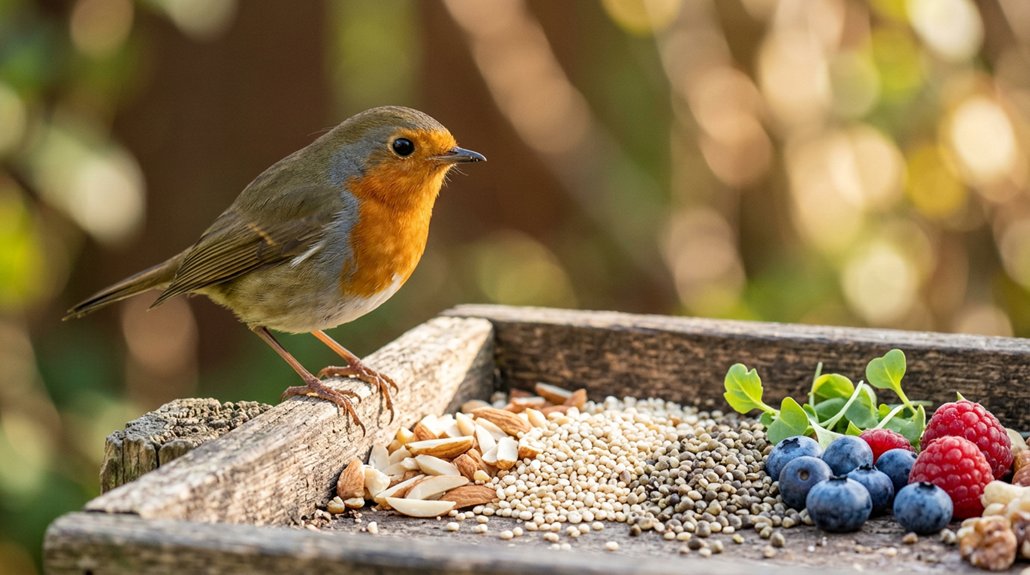
For a balanced bird diet, offer cooked eggs (hard-boiled or scrambled without salt or butter) and cooked lean meats sparingly during growth, molting, or breeding, since these provide high-quality protein in small portions a few times per week. You can also include cooked seafood, mealworms, and millet treats as occasional supplements, especially for insectivorous species and nestlings. Cooked legumes such as lentils, chickpeas, and kidney beans, plus cooked grains like brown rice, oats, barley, and pasta, are safe carbohydrate-rich complements; serve them in small portions once or twice weekly. Unsalted nuts, including almonds, walnuts, and pecans, are nutritious but fatty, so keep them to treat-sized amounts. Introduce each item gradually and monitor weight and stool for tolerance.
What Foods Are Toxic to Birds?
You need to avoid common foods that are toxic to birds, including avocado, chocolate, alcohol, caffeine, and items high in salt, sugar, or fat. Hidden hazards like onion, garlic, raw or undercooked legumes, and seeds or pits with cyanogenic compounds can also cause severe illness, hemolysis, or poisoning. If you’re unsure about a food, follow veterinary guidance before offering it.
Dangerous Everyday Foods
Some common human foods are toxic to birds and should never be offered, even in small amounts. Avocado toxicity is a true emergency because persin can trigger sudden respiratory distress and heart failure. Chocolate poisoning, along with caffeine from coffee, tea, and energy drinks, exposes you to methylxanthines that may cause hyperactivity, seizures, and fatal cardiac failure. You must also avoid alcohol and any dough or food that ferments in the crop, since these can produce severe toxicosis, depression, and death. Chips, processed snacks, candy, and other salty, fatty, or sugary foods can drive obesity, liver disease, and nutritional deficiency. Onions, garlic, and raw green potato or sweet potato parts can cause gastrointestinal upset or red blood cell damage.
Hidden Household Toxins
Beyond the obvious hazards, several common household foods can be toxic to birds even in small amounts. You shouldn’t offer avocado, because persin in the flesh, skin, and oil can trigger sudden respiratory distress or heart failure. Chocolate, especially dark and baking types, contains theobromine and caffeine, and it can cause vomiting, seizures, and death. Alcohol and caffeinated drinks, including coffee, tea, energy drinks, and beer, are also toxic. Onions, garlic, and raw or green potato, including peels and sprouts, may cause hemolytic anemia and digestive upset. Chips, candy, and processed snacks can promote obesity, liver disease, and deficiencies. Even air fresheners and fumes from nonstick cookware can add hidden household risk, so you need to keep your bird away from contaminated food and air.
Safe Vet Guidance
When vet guidance is available, it should be followed closely, because several common foods are well documented as toxic to birds. You shouldn’t offer avocado, since persin can trigger sudden cardiac distress and death in many species. Avoid chocolate and caffeine; their stimulants can cause vomiting, tremors, seizures, and fatal arrhythmias. Alcohol, and foods high in salt, sugar, or fat, can rapidly lead to dehydration, liver failure, or metabolic collapse. Exclude onion, garlic, and raw mushrooms because they may cause hemolytic anemia and gastrointestinal or respiratory distress. Remove fruit pits and seeds from apples, cherries, and peaches, and never feed eggplant or unknown wild plants unless verified safe. Seek veterinary consultation promptly after any exposure. Follow emergency protocols if signs appear.
Frequently Asked Questions
What Is the Healthiest Thing to Feed Birds?
You should feed a species-appropriate pelleted diet as the healthiest staple, then add fresh greens and native seeds sparingly. It’ll give you balanced nutrients, while treats, toxins, and spoilage are limited.
What Is the 3 3 3 Rule for Birds?
It’s a staged adjustment: you give your bird 3 hours out of cage, 3 days for trust-building, and 3 weeks for full environmental, dietary, and behavioral acclimation, including avian quarantine.
What Is the 5 7 9 Rule for Bird Feeders?
The 5-7-9 rule guides feeder placement: keep feeders 5 feet high, 7 feet from ledges, and 9 feet from trees. You’ll reduce predator access, crowding, and disease spread while maintaining seed diversity.
Why Put a Potato in Your Bird Feeder?
You’d put a cooked, plain potato in your bird feeder for feeder enrichment and potato curiosity, offering extra winter calories. Don’t use raw or seasoned potato; toxins, salt, and fat can harm birds.
Conclusion
To keep your bird healthy, you should base its daily diet on high-quality pellets, limited seeds, and measured portions of fresh fruits, vegetables, grains, and safe proteins. Think of nutrition as a tuned instrument: each food group must be balanced for the body to function well. You should also avoid toxic foods such as avocado, chocolate, caffeine, and alcohol. When you feed consistently and correctly, you’re supporting long-term importance, immune function, and feather quality.