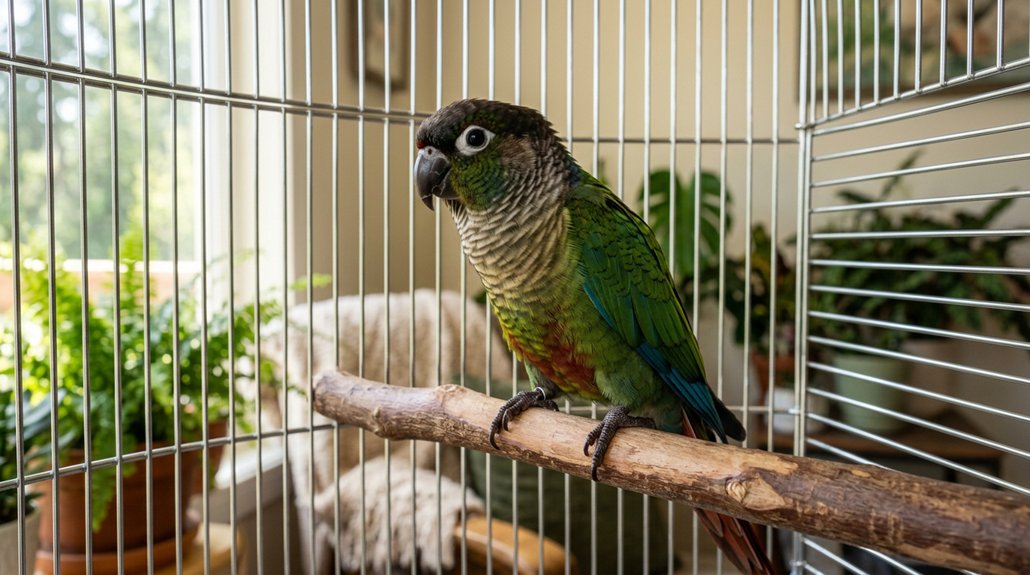
To prevent feather damage in your pet bird, you should treat it as a medical and behavioral problem. Have an avian vet check for skin infections, parasites, hormonal issues, nutrient deficits, and internal disease with exam, bloodwork, fecal tests, and skin or feather testing. Watch for frayed feathers, bald patches, or bloody shafts. Feed a pelleted diet, provide fresh water, bathes, and daily foraging enrichment, and keep lighting, humidity, and routines stable so you can spot more clues.
Key Takeaways
- Schedule an avian vet exam for feather loss, skin irritation, parasites, infections, hormonal issues, or nutritional deficiencies.
- Feed a quality pelleted diet daily, with vegetables, fresh water, and supplements only under veterinary guidance.
- Keep birds enriched with daily foraging, rotating toys, and regular social interaction to reduce boredom and feather picking.
- Maintain proper housing with 12 hours light and darkness, 50–70% humidity, and regular bathing to protect skin and feathers.
- Monitor feather damage patterns and triggers, such as stress, cage changes, separation, or hormonal seasons, using logs or video.
What Causes Feather Destructive Behavior?
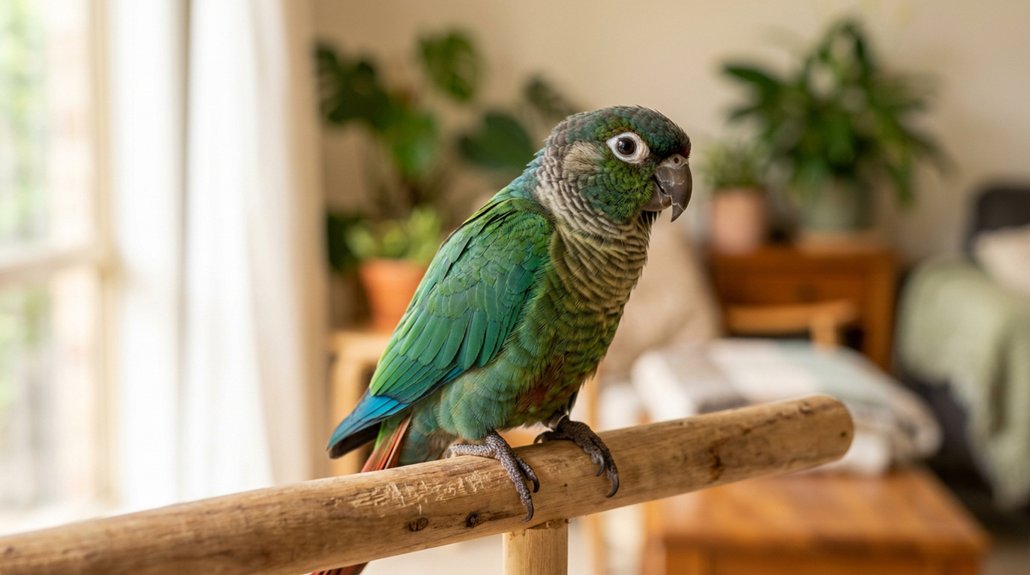
Feather destructive behavior (FDB) can stem from medical, behavioral, nutritional, and environmental causes, and it often reflects a combination of factors rather than a single trigger. You should consider medical causes first, because skin infections, parasites, feather follicle cysts, hormonal imbalances, and nutrient deficiencies can all drive self-trauma and need veterinary diagnosis. Behavioral triggers also matter: boredom, foraging deprivation, separation anxiety, attention-seeking, obsessive-compulsive tendencies, or poor early socialization can initiate or sustain the problem. Diets high in seeds and low in pelleted foods, vegetables, calcium, vitamin D3, vitamin A, and omega-3s can weaken skin and feathers. Low humidity, poor lighting, cramped housing, and abrupt routine changes can worsen FDB and make your bird less resilient.
What Feather Damage Signs Should You Watch For?
When feather damage begins, you’ll often notice progressive changes such as frayed or ragged feather tips, scattered missing feathers that may spare the head, or newly exposed blood feathers from active chewing or plucking. During feather inspections, check the skin and feather bases for redness, scabs, broken blood feathers, or raw patches. You should also watch for timing patterns: increased picking when you’re absent may suggest separation or boredom, while exaggerated fussing when you’re present can indicate attention-seeking. Frequent preening, repetitive picking, or pulling at one fixed spot can point to compulsive behavior. Sporadic loss may fit molt or trauma. Use behavioral logging to track cage moves, diet changes, lower humidity, and hormonal seasons that coincide with worsening damage.
How Can an Avian Vet Diagnose It?
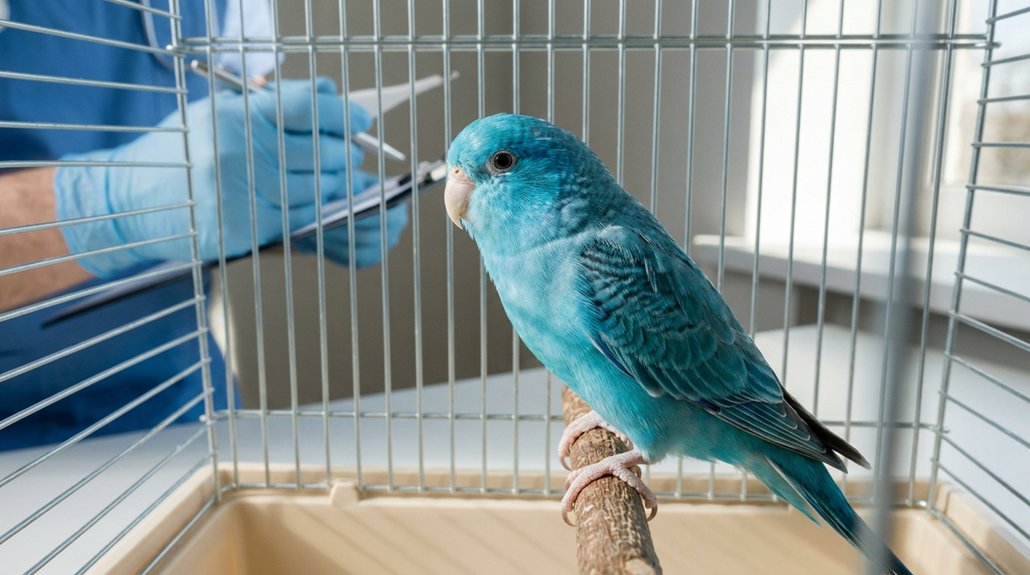
An avian veterinarian starts with a thorough physical exam, checking the skin and feathers for damage, body condition, wounds, abnormal feather sheaths, and any localized follicle problems. You’ll usually need baseline tests, including a CBC, biochemistry panel, and fecal parasitology, to look for infection, organ dysfunction, nutritional deficits, or parasites. Radiographs, and sometimes CT, can reveal internal disease, masses, or occult trauma that may drive feather damage. Cytology, skin scrapings, cultures, and PCR for Psittacine beak and feather disease may identify infectious or dermatologic causes. A behavioral assessment, plus your bird’s history, cage environment, and video timelines, helps separate medical from behavioral causes. If needed, a feather biopsy can further define follicular or skin disease and guide treatment.
How Should You Change Diet, Water, and Supplements?
To support healthy feathers, you should make a species-appropriate pelleted diet—such as Harrison’s, Roudybush, or Lafeber—the daily staple, while limiting seeds and nuts to occasional treats because excess fat and nutrient imbalance can worsen feather picking. During the pelleted shift, offer fresh vegetables daily, including leafy greens, bell peppers, and carrots, and keep fruit to small portions because sugar can displace needed nutrients. Maintain a strict hydration routine: provide clean, fresh water at all times and replace it at least once daily to reduce bacterial growth and support feather condition. Use supplements only with avian veterinary guidance; calcium, vitamin D3, omega-3s, and probiotics may be indicated by bloodwork or clinical signs. Regular exams help identify deficiencies and refine treatment.
How Do Lighting, Humidity, and Enrichment Help?
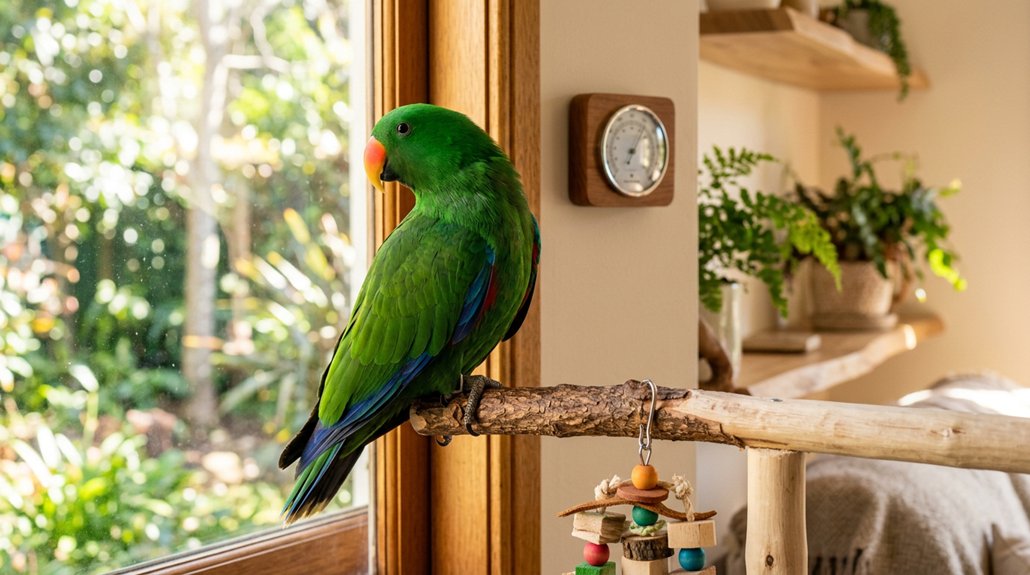
Proper lighting, humidity, and enrichment are essential for preventing feather damage because they reduce physiologic stress and abnormal grooming behaviors. You should provide full-spectrum cycles with about 12 hours of light and 12 hours of darkness to support circadian rhythms, hormone balance, and normal molt. Maintain humidity control at 50–70% with misting or a humidifier, since dry air can lead to brittle feathers and itch-induced over-preening. Offer daily bathing or showering several times per week so your bird can condition skin and feathers naturally. Add foraging enrichment every day, using rotating toys and puzzles for 1–2 hours to limit boredom, chewing, and plucking. Also, place the cage where your bird can see family activity but still retreat to a quiet sheltered corner for rest.
Frequently Asked Questions
What Is the 3-3-3 Rule for Birds?
You use the 3-3-3 rule to gauge adjustment: 3 days, 3 weeks, 3 months. It helps you track stress, bonding, behavioral enrichment needs, and molt timing, guiding veterinary checks and training changes.
How to Treat Feather Loss in Birds at Home?
Treat feather loss like a warning light: you’ll first need an avian vet exam, then use home remedies only after ruling out disease. Address behavioral triggers with pelleted diet, humidity, enrichment, and monitor closely.
What Is Feather Damaging Behavior in Parrots?
Feather damaging behavior in parrots is repetitive self-directed grooming that includes over-preening, feather chewing, self plucking, and feather mutilation. You’ll often see it linked to medical, environmental, or behavioral problems needing veterinary evaluation.
How to Improve Feather Quality in Birds?
Like polishing a wing’s armor, you’ll improve feather quality by feeding a balanced pelleted diet, adding fresh vegetables and occasional egg, using Dietary supplementation when needed, and maintaining Humidity control with regular misting and bathing.
Conclusion
You can prevent feather damage by acting early and addressing both medical and environmental triggers. Watch for broken, missing, or overpreened feathers, and seek an avian vet’s diagnosis promptly. You should support your bird with a balanced diet, fresh water, and targeted supplements when prescribed. Improve lighting, humidity, and enrichment to reduce stress. With consistent care, you’re giving your bird a healthier, calmer life, and its plumage can become a true shield again.