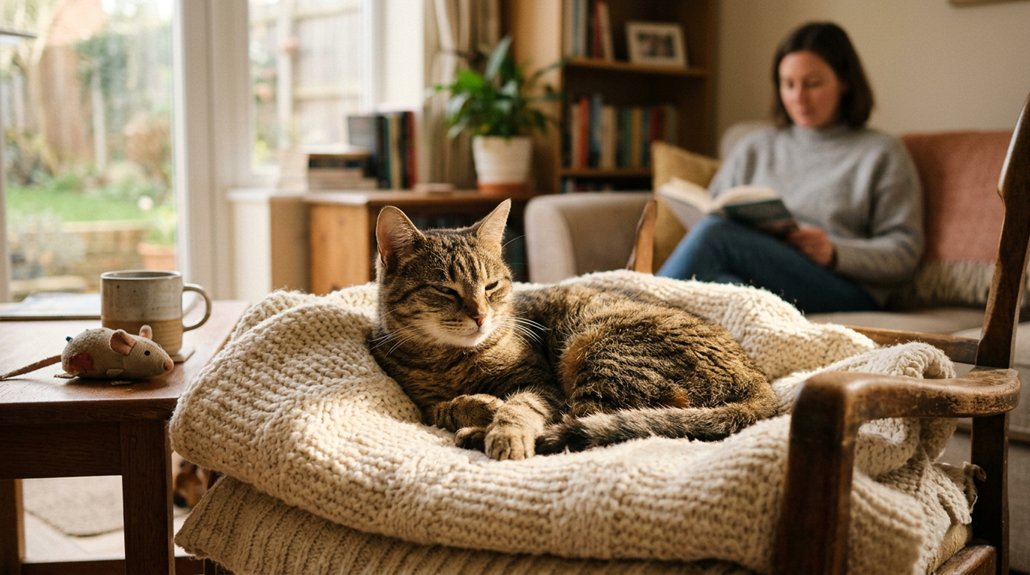
Preventing separation issues in cats involves understanding feline behavior and detecting early anxiety signs. Implement consistent routines with structured feeding and play to reduce stress. Enrich the environment with interactive toys and cozy spaces for security. Gradual absence training and calming rituals ease solitude stress. Use pheromone diffusers and consult veterinarians for persistent anxiety. Explore the importance of these strategies and when professional help might be essential for addressing your cat’s emotional health.
Key Takeaways
- Establish a consistent daily routine to reduce stress and predictability for the cat.
- Use interactive toys and puzzle feeders for mental stimulation during alone time.
- Gradually train the cat to be comfortable with short periods of solitude.
- Create a safe, cozy area infused with familiar scents to comfort the cat.
- Consider pheromone diffusers or consult a vet for anti-anxiety solutions if necessary.
Recognizing the Signs of Separation Anxiety in Cats
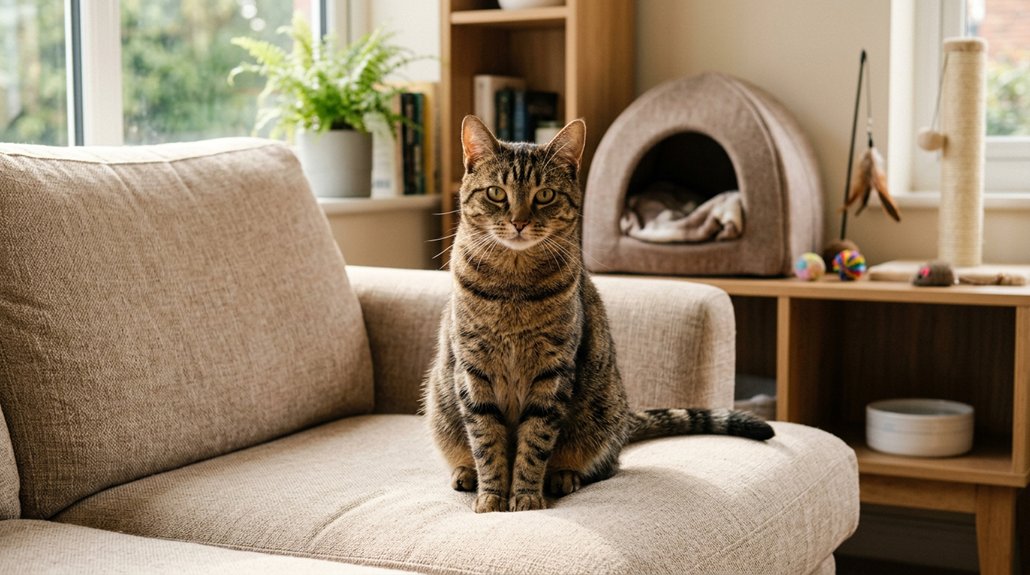
Recognizing the signs of separation anxiety in cats requires observant attention to specific behavioral changes. Excessive vocalization patterns, such as frequent meowing or crying when you’re preparing to depart, are key indicators. These vocal expressions often signal the feline’s distress. Additionally, alterations in eating behavior provide significant insight. You might notice your cat consuming food rapidly—a sign of anxiety-driven feeding—or refusing to eat, suggesting elevated stress levels associated with solitude. By focusing on these behavioral cues, you can discern potential anxiety issues in your cat. Detecting such symptoms early guarantees prompt response, ultimately enhancing your pet’s well-being. Alongside vocal expression and food consumption, monitor for abrupt self-grooming behaviors, which could exacerbate existing anxiety episodes.
Understanding Cat Separation Anxiety
Understanding cat separation anxiety requires recognizing emotional distress and identifying behavioral indicators. You’ll want to monitor for changes in behaviors such as excessive grooming, altered eating habits, or increased vocalization, which can indicate underlying anxiety. Due to cats’ proclivity to mask pain, a nuanced appreciation of routine deviations can facilitate early detection and intervention.
Recognizing Emotional Distress
When evaluating feline behavior, three indicators can suggest separation anxiety: excessive grooming, altered eating patterns, and inappropriate elimination. Analyzing cat body language provides additional emotional cues. Overgrooming signifies heightened stress or sadness. Variations in their usual diet might reflect anxiety, disrupting their nutritional intake. Litter box issues, such as urinating outside the box, emerge as manifestations of emotional turmoil. It’s not uncommon for cats under undue stress to display these psychosomatic symptoms.
Understanding that cats form secure attachments and react adversely in their absence provides insight into their emotional distress. Vocalization or restlessness during your absence can further illustrate unease. Recognizing these indicators, rooted in unfamiliar experiences with solitude, allows cat owners to identify and address potential separation anxiety efficiently.
Identifying Behavioral Indicators
Despite their reputation as independent creatures, cats can exhibit significant stress when separated from their bonded individuals. Cat behavior affected by separation anxiety includes excessive grooming, vocalization, and undesirable litter box use, marked by urinating outside the box. Changes in eating habits might also manifest, acting as anxiety triggers. Restlessness, excessive meowing, and increased startle responses to loud noises indicate underlying stress-related pathology. Unlike the traditionally solitary expectation of feline behavior, cats not habituated to solitude may display these signs when their routine is disrupted. Carefully monitoring for destructive behaviors or unusual toileting can pinpoint separation anxiety. Recognizing these behavioral indicators early allows for prompt intervention, mitigating adverse effects on your cat’s emotional and physical well-being.
Establishing a Routine for Your Cat
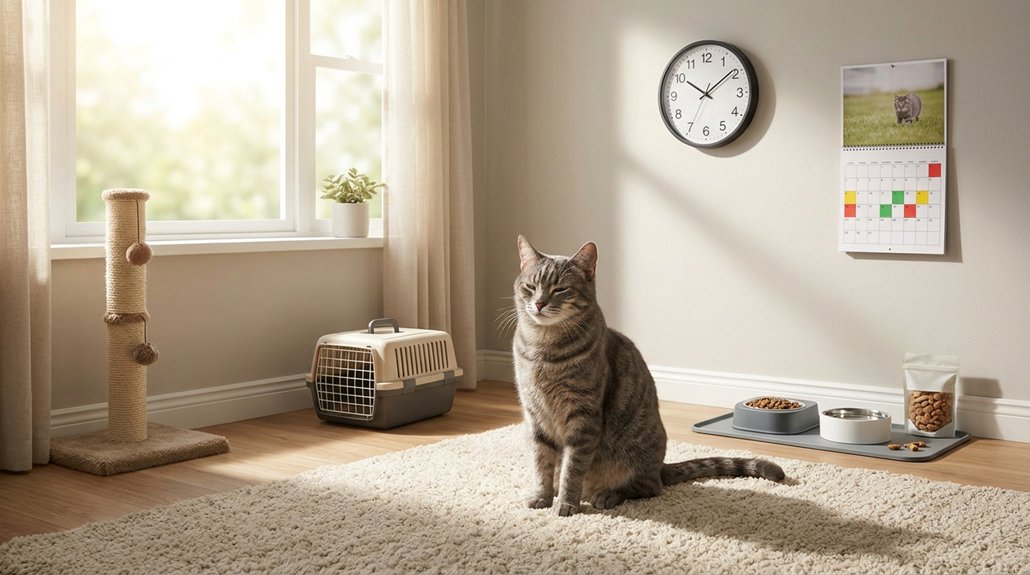
Implementing a consistent daily routine for your cat is vital for fostering a secure and stress-free environment. A structured feeding schedule and playtime structure are important components for minimizing anxiety. Evidence suggests that predictable routines notably reduce stress, as they promote a sense of familiarity and security. By scheduling feeding times, you help your cat anticipate mealtime, decreasing nervousness associated with uncertainty. Structured playtimes, on the other hand, afford physical and mental engagement, essential for preventing behavioral issues. Gradual adjustments to routine mitigate potential stress, ensuring your cat’s adaptation remains seamless. Research underscores that maintaining such routine activities provides stability, encouraging a secure atmosphere that diminishes the likelihood of separation anxiety, ultimately facilitating smoother shifts during alone time.
Enriching Your Cat’s Environment
Enhancing your cat’s environment with diverse enrichment tools is fundamental in mitigating separation anxiety. Incorporating interactive toys such as feather wands or laser pointers encourages solo play, promoting physical activity and cognitive stimulation. Employing puzzle feeders provides essential mental engagement, facilitating independence and reducing anxiety when solitude prevails.
Vertical spaces like cat towers or shelves serve as strategic elements for environmental enrichment, allowing your cat to explore elevated spaces and satisfy their innate curiosity. These structures bolster security by offering observation points to monitor surroundings, effectively increasing territorial confidence.
Additionally, rotating toys and activities regularly is critical to prevent habituation, ensuring continued interest and mental engagement. Establishing a dedicated, cozy area with familiar scents provides comfort and a sense of safety during anxious moments.
Minimizing Departure Stress for Your Cat
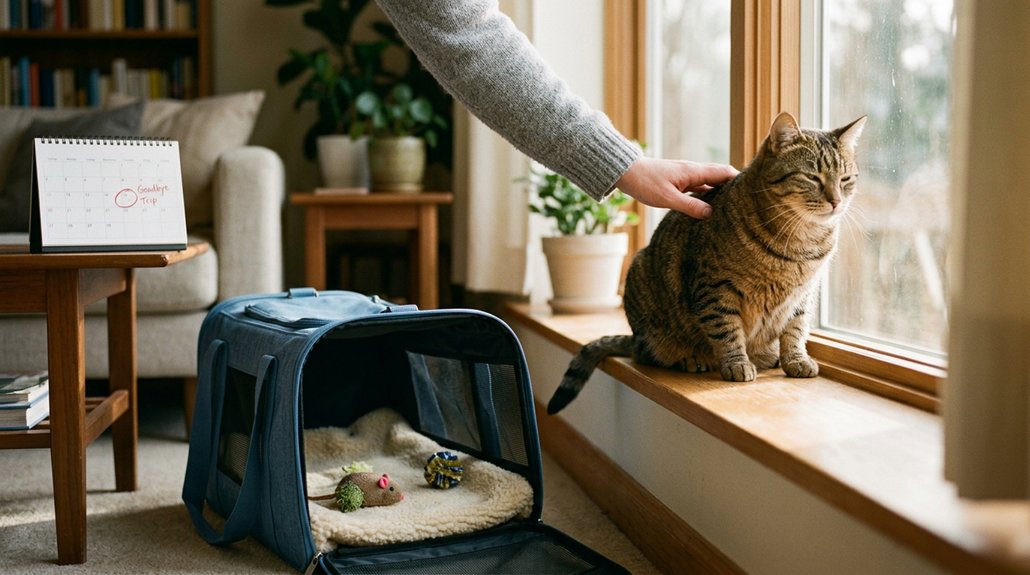
To minimize departure stress for your cat, implement gradual absence training by increasing the length of your absences incrementally, allowing your cat to acclimate to solitude without undue anxiety. Maintain consistent calming departure rituals, ensuring your exits and entrances are subdued to prevent triggering stress responses. Additionally, consider integrating pheromone diffusers to foster a tranquil environment, supporting your cat’s emotional stability when you’re not present.
Gradual Absence Training
When addressing separation issues in cats, implementing gradual absence training is a method that mitigates departure-induced stress by progressively accustoming them to solitude. Begin by experimenting with durations of absence that allow your cat to acclimate without distress. Initially, brief separations suffice; leave your cat alone for just a few minutes, then gradually increase to longer durations. Integrate consistent departure cues into your routine—like picking up your keys or putting on shoes—to signal departures, establishing a predictable pattern that can alleviate anxiety. Reinforce these sessions with positive reinforcements such as treats or affection upon your return, empowering your feline companion to view solitude positively. Incorporate brief, incremental practice separations routinely, enhancing their tolerance to solitude through systematic desensitization.
Calming Departure Rituals
Creating calming departure rituals is essential for minimizing separation stress in cats. Initiate your departure routine 10 to 20 minutes before leaving. Engage your cat in soothing petting and praise to establish a tranquil environment. This departure timing is vital to reduce anticipatory anxiety. Avoid lengthy goodbyes as they can heighten your cat’s stress. Practice low-key departures and normalize your leaving by consistently following the same pattern, such as grabbing your keys or bag.
Implement soothing techniques like using pheromone diffusers to promote relaxation. Gradually increase your time away, starting with brief periods. This desensitization strategy helps your cat adapt to solitude without panic. By employing clinically supported methods, you can effectively mitigate separation stress through structured departure rituals.
Helping Your Cat Adjust to Being Alone
While adjusting to solitude, cats benefit from a structured approach to minimize anxiety. Begin by gradually extending your cat’s alone time, thereby acclimating them effectively. Establishing a consistent daily routine guarantees predictability in feeding, play, and rest, promoting cat companionship even during your absence. This consistency reduces stress levels and fosters a sense of safety.
For positive distractions, engage your cat using interactive toys like puzzle feeders to provide mental stimulation. These activities keep them occupied and content. Securing a safe environment is paramount; using pheromone diffusers or sprays can mitigate stress by promoting relaxation.
Moreover, designate a safe haven or cozy spot for your feline. This environment allows them to retreat and feel secure, effectively supporting their adjustment to solitude.
When to Seek Veterinary Help and Use Calming Aids
Many cats experience separation anxiety at some point, and discerning when to involve a veterinarian is crucial for effective management. If your feline exhibits persistent distress, such as excessive vocalization, inappropriate elimination, or destructive conduct, a vet consultation is warranted. This guarantees that underlying medical issues are ruled out. Calming products like pheromone diffusers can mitigate anxiety by emulating calming scents. However, for maximum effectiveness, seek veterinary recommendations on product selection. Should anxiety symptoms persist despite the use of calming aids, a veterinarian might advise anti-anxiety medications specifically formulated for cats. Monitor your cat’s reaction to treatments diligently, and communicate any concerns or lack of improvement to your vet. Engaging a veterinary behaviorist can further refine tailored interventions.
Frequently Asked Questions
How to Prevent a Kitten From Getting Separation Anxiety?
To prevent separation anxiety in your kitten, prioritize early bonding through socialization techniques. Structure consistent routines to enhance security, and gradually increase alone time. Use interactive toys for stimulation, minimizing distress technically termed as separation-related behavior.
What Is the 3-3-3 Rule for Cats?
The 3-3-3 rule, indicative of cat adjustment, shows 70% of felines exhibit altered behavior initially. They take three days to destress, three weeks to explore, and three months to fully integrate into new environments.
Does Catnip Calm Cats?
Catnip’s effects are variable; it’s known to induce feline relaxation in some cats, triggering a temporary euphoria. However, its efficacy is dependent on genetic sensitivity, and it’s not guaranteed to calm all felines. Observe individual responses.
Does My Cat Have Anxiety Separation?
You might notice behavior signs like excessive meowing or litter box avoidance. These could indicate anxiety separation in your cat. Identifying anxiety triggers is essential; consistent monitoring helps in taking appropriate actions to alleviate symptoms.
Conclusion
Understanding and addressing separation anxiety in cats is vital for their well-being. Did you know that approximately 20% of cats exhibit signs of separation anxiety? Establishing a consistent routine and enriching their environment helps reduce stress. Implement gradual desensitization techniques to minimize departure anxiety and offer interactive toys for mental stimulation. If needed, consult a veterinarian to explore options like pheromone diffusers or calming supplements. With patience and proper strategies, you can substantially enhance your cat’s emotional health.