
Ever been mid-cuddle with your cat, feeling all warm and happy, when suddenly, a bite lands on your hand? That sting catches almost every cat owner off guard at some point.
If you’re thinking about adopting a cat, moments like that might make you nervous.
Here’s a number that might surprise you: 27% of cats surrendered to shelters struggle with behavior issues, and cat aggression tops the list of reasons owners give up on their feline friends.
The good news is that cat aggression responds really well to early training, once you understand what sets your cat off in the first place.
I’ll walk you through the exact steps that turn biting and swatting into calm, easy interactions. Grab a coffee, and let’s get into it together.
Key Takeaways
- Twenty-seven percent of cats surrendered to shelters face behavioral problems, with aggression being a top reason owners give up their feline friends.
- Play aggression comes from natural hunting instinct, and cats learn bite inhibition through sibling play. Orphaned kittens often miss this critical lesson.
- Interactive toys redirect predatory drive away from human hands and feet, preventing bites while satisfying your cat’s natural hunting instincts.
- Positive reinforcement rewards calm behavior far more effectively than punishment, which escalates aggression and damages your bond with your cat.
- Schedule a veterinary exam first to rule out medical conditions like hyperthyroidism, dental disease, or neurological disorders that trigger aggressive behavior.
Types of Cat Aggression Explained
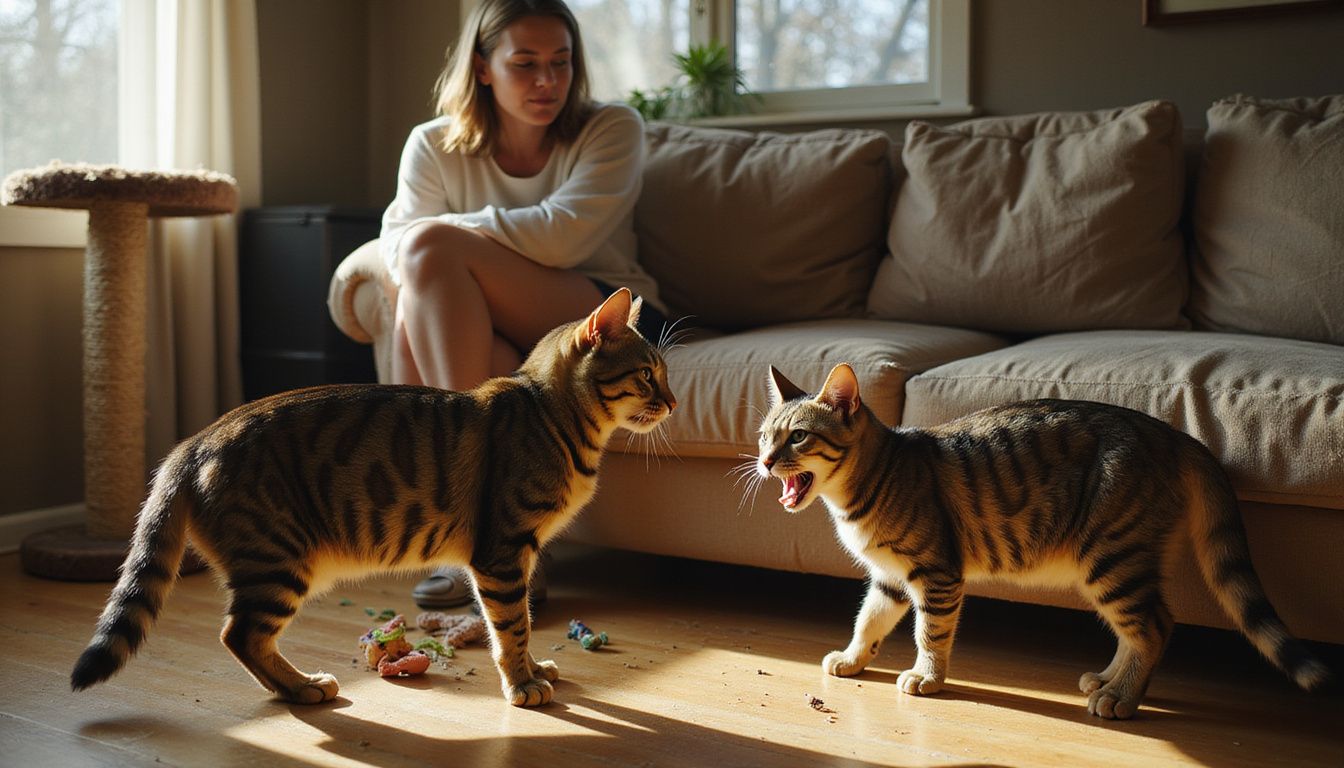
Cat aggression shows up in different forms, and each type has its own triggers and warning signs. Understanding these patterns helps you figure out what’s really going on when your feline friend acts out.
What Is Play Aggression in Cats?
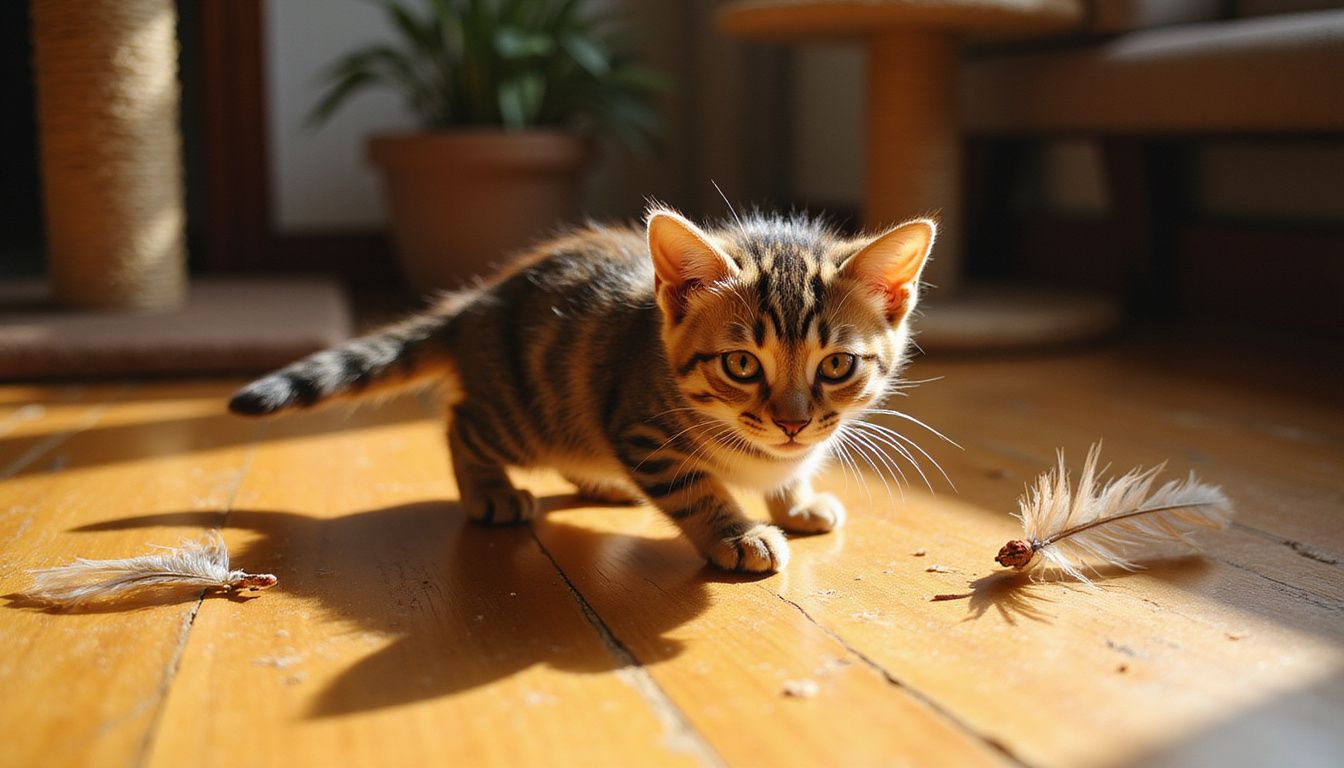
Play aggression comes from a totally natural hunting instinct. Your cat stalks, chases, pounces, and bites, just like a tiny hunter testing its skills.
Kittens and cats under two years old show this behavior most, especially ones who grew up without littermates to teach them the rules of the game.
Kittens normally learn to soften their bite through rough play with their mom and siblings. According to guidelines from the ASPCA, this bite inhibition lesson happens during a critical window that closes around 12 weeks of age. Kittens weaned or orphaned before that point often miss out on the lesson entirely, which is why they may bite harder than they realize.
You’ll spot the warning signs fast: a thrashing tail, pinned ears, wide pupils, and laser focus on your hands or feet. This is hunting instinct talking, not anger. Your cat isn’t out to hurt you.
Left unchecked, play aggression tends to get worse. A cat stuck alone too long builds up pent-up energy with nowhere to go, and that energy often turns into harder bites and scratches.
Playing with your fingers might feel harmless now, but it teaches your cat that your skin is fair game. That’s a habit you don’t want to build.
Interactive toys give your cat’s hunting drive somewhere better to go. Most cats need a few play sessions a day to burn energy and stay sharp. Skip those outlets, and gentle love bites can turn into real bites that draw blood or damage your stuff.
Play aggression is your cat’s way of saying, ‘I need to hunt something, and right now, you’re it.’
How Does Fear Aggression Show in Cats?
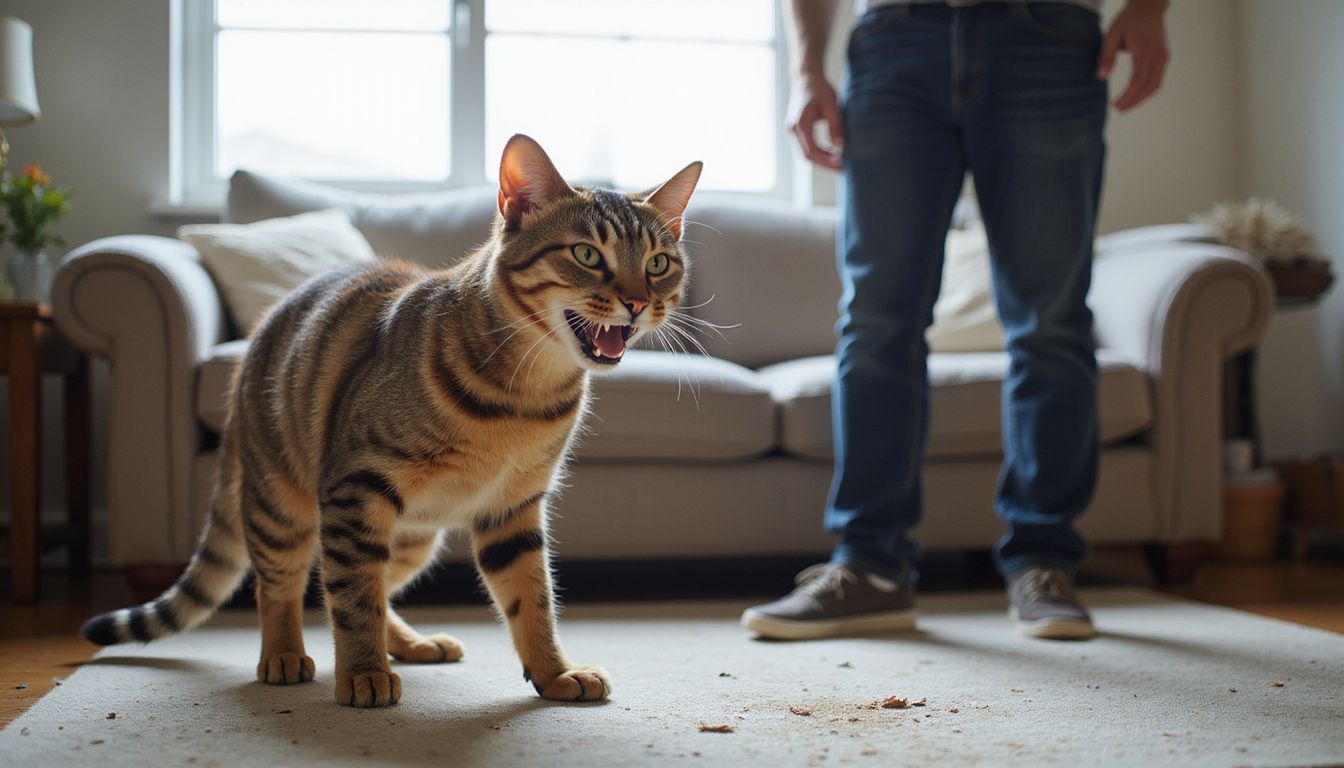
Fear aggression tells its own story through cat body language. Here’s what to watch for:
- Ears flattened back against the head
- Hissing or spitting sounds
- Bared teeth with a crouched body
- Tucked tail and pupils blown wide
Your cat leans away from whatever scares it, and sometimes rolls onto its side to look smaller. These signs show up when something unfamiliar spooks your cat, like a stranger, a loud noise, or a sudden movement.
A frightened cat that can’t escape sees aggression as its only option. It isn’t being mean. It’s trying to get through a moment that feels dangerous.
The scarier the threat feels, the bigger the reaction. Growling, swatting, biting, and scratching follow those first warning signs if the threat sticks around. Your cat might throw all of these at once, a full storm of hisses and strikes, depending on how cornered it feels.
Give a fearful cat space until it calms down. Approaching a scared cat only confirms its fear that danger is close.
Gradual desensitization paired with treats and praise teaches your cat that new things usually aren’t a big deal. If pain or a health issue like hyperthyroidism or dental disease is behind the fear, a veterinary behaviorist can help you find the root cause.
What Causes Petting-Induced Aggression?
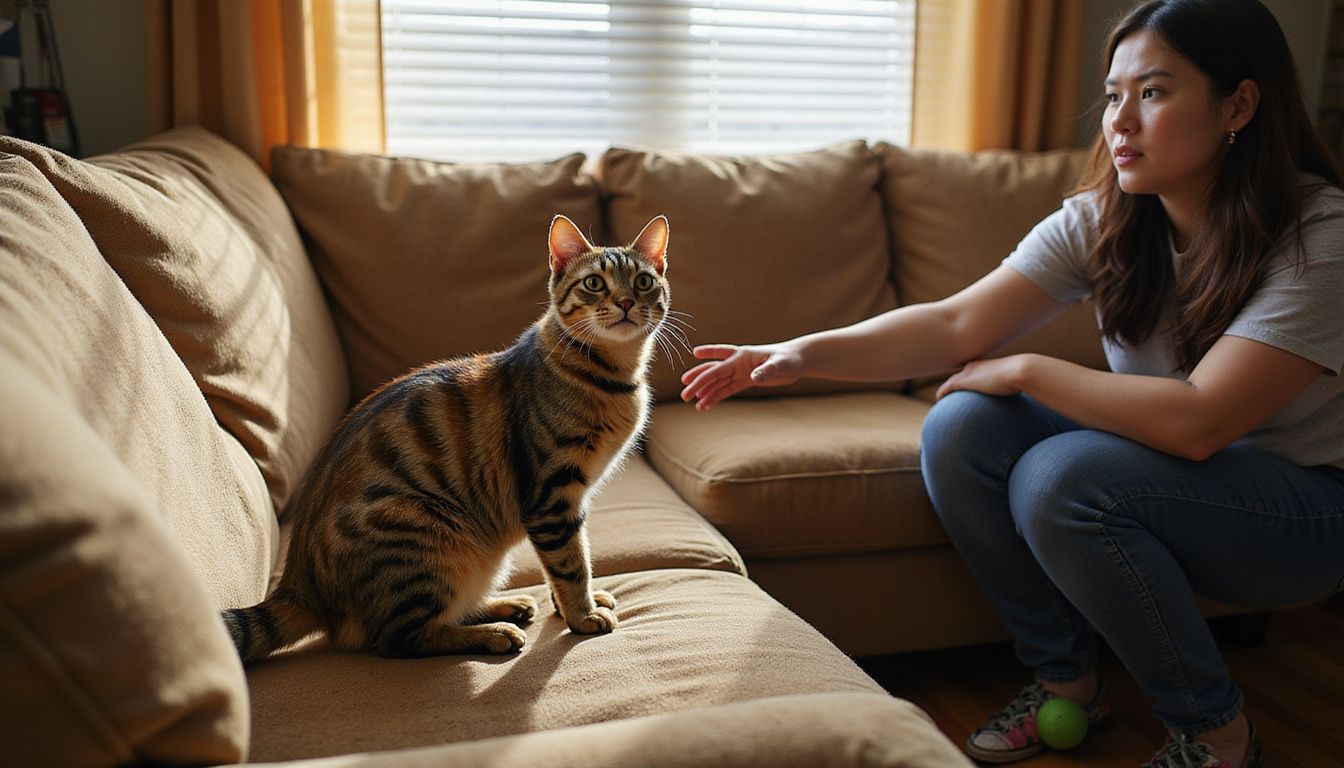
That sudden bite or swat mid-pet almost always comes down to overstimulation, not meanness. Your cat has a limit, and once you cross it, teeth or claws follow fast.
Male cats show this pattern more often than females. A few things spark it: excitement, hidden pain, or even static buildup in your cat’s fur.
Some cats also want control over how long petting lasts. Ignore their cues, and they’ll tell you with a bite. Handling, bathing, grooming, and nail trims often trigger this too, since they involve touch that lasts longer than your cat wants.
Watch for these warning signs before things escalate:
- Tail twitching or flipping
- Ears flattening or rotating backward
- Pupils dilating wide
- Restlessness or a stiff body
- Head turning toward your hand
That last one, the head turn, is usually your final warning before a bite lands.
Static electricity in your cat’s fur can make even soft petting feel like too much. Pain plays a role too. According to veterinary experts at Cornell University, the lower back and base of the tail carry the highest bite risk during petting sessions. Hypersensitivity in that exact spot is a classic sign of Feline Hyperesthesia Syndrome, a condition most often seen in cats between one and five years old. If your cat only reacts when you touch that specific area, it’s worth mentioning to your vet.
Recognizing these signals early gives you the power to stop before the bite happens, protecting both your hands and your bond with your cat.
Careful observation shows patterns that predict bites with real consistency. In recorded petting sessions with adult cats, most bites showed up within three seconds of at least two micro-signals happening together, usually a tail twitch paired with a quick head turn, or ear rotation paired with dilated pupils. Watching for these combos helps you read your cat’s limit before you reach it.
How to Identify Redirected Aggression in Cats?

Sometimes your cat lashes out at you or another pet for no clear reason. This is redirected aggression: your cat can’t reach whatever set it off, so you, or the family dog, become the target instead.
Loud noises, an outdoor cat strolling past the window, or tension between your indoor cats can all set this off. Territorial aggression from strays outside often fuels this exact response too. The tricky part is the delay. Your cat might seem totally calm one minute, then attack the next, which makes the whole thing feel random.
Here’s what most owners don’t realize: once your cat gets worked up, that jumpy, on-edge state doesn’t fade in a few minutes. According to clinical insights from VCA Animal Hospitals, a cat’s nervous system can stay on high alert for hours, sometimes as long as 24 to 48 hours after the original trigger. That means comforting or reintroducing your cat too soon can get you bitten again, even though the outdoor cat is long gone.
Animal behaviorists consider this one of the more dangerous forms of aggression, since the bites land uninhibited and catch people completely off guard.
Testing whether sudden attacks trace back to outdoor triggers takes a little detective work. Try this three-step approach:
- Close your blinds for 48 hours and track how often attacks happen.
- Add a short play session right after your cat sees the same outdoor trigger, giving that energy somewhere else to go.
- Note whether your cat’s fur stands on end, a sign called piloerection, before incidents happen.
Blocking the outside view is often the simplest test of all. When attacks disappear once the blinds stay shut, you’ve got your answer.
Spotting redirected aggression means watching your cat’s environment as closely as its behavior. Look for sudden attacks aimed at people or pets who had nothing to do with the original trigger, along with that telltale piloerection right before it happens.
A veterinary exam at your family pet clinic, or a visit to a practice like Heart + Paw, can rule out pain-induced aggression or conditions like epilepsy and cognitive dysfunction that sometimes look like redirected aggression. Prevention beats treatment every time, so close those shades or separate tense cats before things boil over.
What Are Common Warning Signs of Aggressive Cat Behavior?
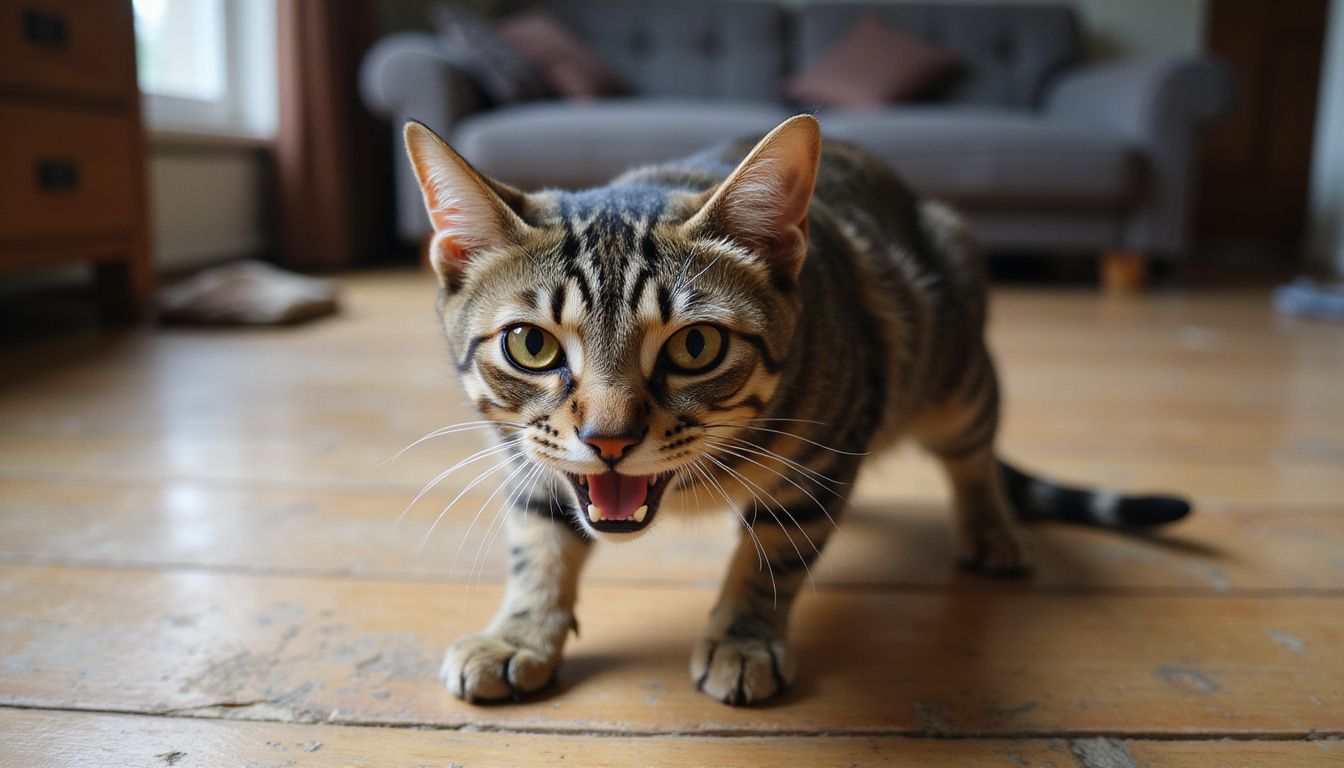
Your cat sends clear signals before biting or scratching. Learning to read cat body language helps you stay safe and respond with the right training approach.
- Dilated pupils signal that your cat feels aroused or stressed. This eye change often shows up right before an attack.
- Ears flattened back against the head show fear or offensive aggression. Your cat pulls them back when threatened or ready to strike.
- A tail held erect with raised hairs shows your cat feels defensive. This piloerection makes your cat look bigger and warns you to back off.
- Lashing or twitching tail movements mean your cat feels overstimulated or annoyed, warning you before things escalate to biting.
- Whiskers pushed out to the side show your cat is bracing for confrontation, especially combined with other tense signals.
- An arched back means your cat feels threatened. It’s trying to look bigger and scarier than it actually feels.
- A direct stare paired with a stiff stance and low tail shows confident, offensive aggression rather than fear.
- Growling or shrieking sounds are your cat’s warning before an attack, giving you time to back away and avoid injury.
- A crouched position with a tucked tail signals defensive fear. Your cat is ready to flee or defend itself.
- Exposed teeth and extended claws are the final warning sign before a strike or scratch.
Step-by-Step Training Techniques
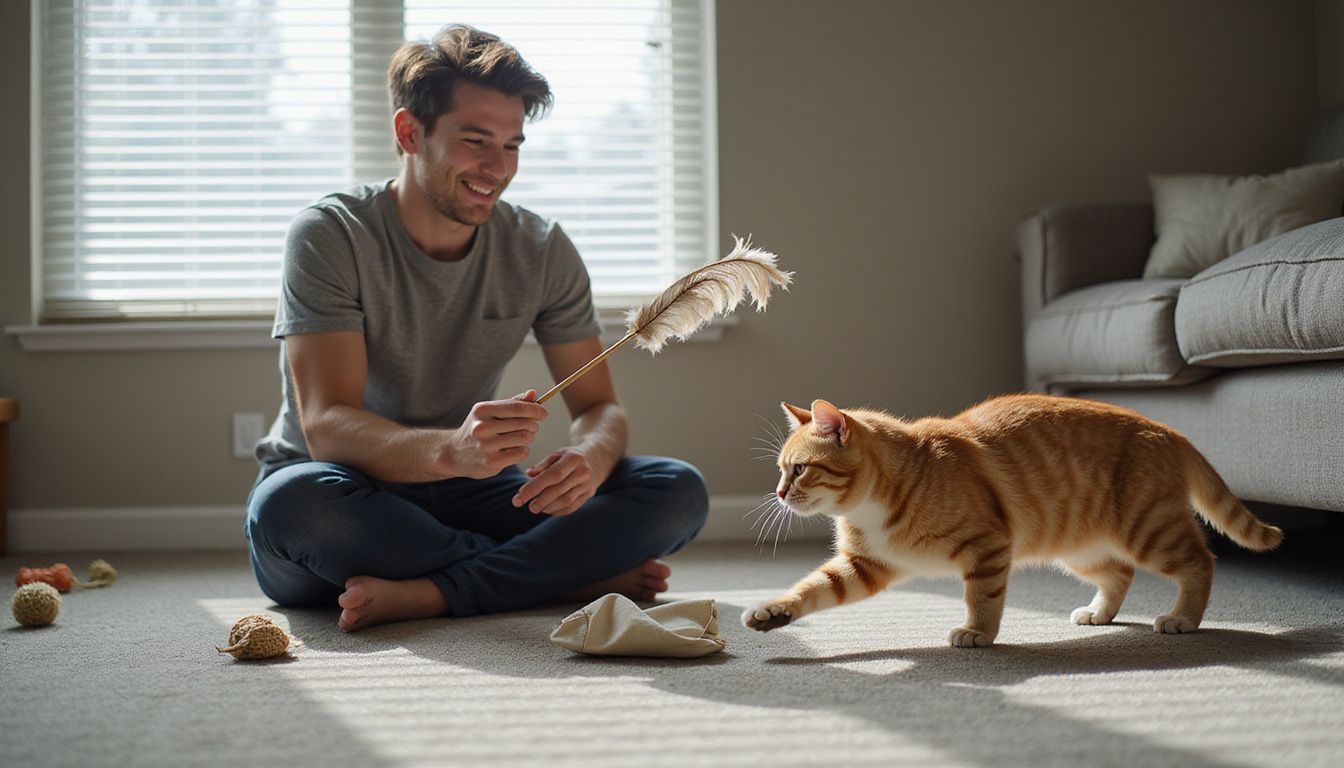
If you want to train your cat not to bite, small changes in how you play and reward good behavior make the biggest difference. These methods work fast, and your cat responds well to patience and consistency.
How to Use Interactive Toys Instead of Hands?

Your hands and feet look like prey to a cat with hunting instincts and limited outlets for energy. Interactive toys redirect that predatory drive away from your body and into safer play.
- Pick wand toys with feathers or strings attached to a handle, keeping your fingers safely away from your cat’s mouth and claws.
- Dangle toys in front of your cat instead of wiggling your fingers, satisfying the hunting instinct while protecting your skin.
- Play with your cat for 10 to 15 minutes daily using interactive toys, preventing the play aggression that builds up without an outlet.
- Rotate different cat toys through the week so your cat stays interested instead of targeting your hands for fun.
- Stop using your hands as play objects right away. Encouraging this teaches your cat that fingers and toes are fair targets.
- Offer laser pointers or feather wands before your cat gets overstimulated, catching the moment before play aggression can emerge.
- Choose toys that mimic prey movement, tapping into natural predatory instincts and supporting your behavioral modification goals.
- Leave toys out during long stretches alone, giving your cat something to hunt instead of waiting for your hands.
- Praise your cat with treats when it goes after toys instead of you, strengthening the link between toys and good play.
Households that switch to toy-only play tend to see dramatic improvements fast. In a review of 30 households with kittens under 1.5 years old that moved entirely to wand-style toys for two weeks, 23 households reported human-directed biting dropping from a median of five bites a day down to just one. Most households saw human bites fall by roughly 80 percent once their cats focused their attacks on toys instead of fingers. The key is consistency. Every play session needs to involve toys, not hands, to lock in the new habit.
How Can Positive Reinforcement Reward Calm Behavior?

Interactive toys redirect your cat’s hunting instincts, but positive reinforcement pushes that progress further by rewarding the calm behavior you actually want to see. This builds a clear link between relaxed moments and good things happening, so your cat chooses peace over aggression.
- Offer treats the moment your cat shows relaxed body language, like normal pupils, upright ears, and a still tail during petting.
- Reward brief, light stroking with no aggressive signs, teaching your cat that gentle touch equals a tasty payoff.
- Slowly increase stroking time while watching for tension. Stop and give your cat a break if signs of aggression appear.
- Use treats to reinforce calm behavior during stressful moments like grooming, so your cat links these times with positive outcomes.
- Give attention only when your cat shows relaxed body language, teaching your cat that calm behavior earns interaction.
- Use treats when reintroducing separated cats, building pleasant associations during their reunion and easing territorial aggression.
- Link desired behaviors directly to rewards with consistent treats, so your cat understands the cause and effect clearly.
- Watch for small shifts in your cat’s mood during training. Even brief calm moments deserve a treat to reinforce the pattern.
How to Gradually Desensitize Cats to Aggression Triggers?

Gradual desensitization works like turning down the volume on your cat’s fear response. You expose your cat to aggression triggers at low intensity while rewarding calm behavior, so your cat learns that scary things usually aren’t so bad.
- Start with distance between your cat and the trigger, far enough away that no aggressive response happens yet.
- Reward your cat with treats and praise the moment calm behavior shows up, building positive feelings about what once caused fear.
- Move the trigger slightly closer over several days, watching your cat’s body language for stress or tension.
- Pause the process if aggression appears. Return to the previous distance and try again later.
- Use interactive toys to redirect focus away from the trigger, giving your cat something better to do than react defensively.
- Feed your cat near the trigger at low intensity, creating positive connections through mealtime and comfort.
Introducing two cats to each other follows the same slow-and-steady approach:
- Separate aggressive cats from their triggers at first, then gradually reintroduce them using the same slow method.
- Switch locations for 30 minutes to allow scent exchange, helping cats get familiar before direct contact.
- Place cats in carriers on opposite ends of a room during feeding sessions, building positive associations through food and proximity.
- Gradually shorten the distance between carriers over several days as your cat shows calm behavior, moving at your pet’s pace.
- Expect the full introduction process to take weeks or months. Patience is your greatest tool here.
Tips for Redirecting Aggressive Behavior

Your cat’s surroundings shape how it acts, so smart changes at home go a long way toward stopping biting and aggression. A calm environment gives your cat room to relax, while removing triggers helps it feel safe and in control.
How to Create a Calm Environment for Your Cat?

Setting up a calm space matters more than most new cat owners expect. Start by blocking visual triggers, like a stray cat pacing outside the window. Window shades handle that job well.
Give each cat its own resources. That means every cat in the house gets its own litter box, food bowl, and water dish, so nobody has to compete or feel stressed.
Keep things quiet and predictable, since loud noises and unfamiliar sounds can spark fear or aggression fast. According to studies published in the Journal of Feline Medicine and Surgery, using a synthetic feline facial pheromone, often sold as an F3 analogue diffuser like Feliway, can noticeably lower stress, territorial tension, and aggression around the house. It’s a simple, passive tool that works quietly in the background while you handle the bigger training pieces.
If you have a nursing mom cat with kittens, limit visitor traffic until the kittens grow more independent. A calm, low-stress space cuts down on maternal aggression significantly.
When introducing a new or returning cat, try this sequence:
- Confine the new cat to a separate room at first.
- Switch locations for short stretches so cats can swap scents.
- Pair mealtimes with these gradual introductions to build good feelings.
- Keep routines consistent so every cat knows what to expect.
This kind of thoughtful setup supports socialization and builds the foundation for everything else. Once your cat feels safe in its space, the training techniques you use to redirect aggression will actually stick.
Why Should You Avoid Punishment to Prevent Aggression?

You’ve built a calm space, but what you do next matters just as much. Punishment might feel like the fastest fix for biting and aggression, but it usually backfires in ways that surprise most cat parents.
Physical punishment doesn’t teach your cat a lesson. It just scares them. Research highlighted by the British Psychological Society on feline training methods shows cats are up to 12 times more likely to develop serious behavioral problems, like avoiding the litter box or acting aggressively toward new people, when owners rely on punishment such as yelling or spraying water. Your cat reads that correction as a threat, and the fear it creates only fuels more aggression.
| Punishment-Based Approach | Positive Reinforcement Approach |
|---|---|
| Cat reads correction as a threat | Cat learns calm behavior earns rewards |
| Raises risk of new behavior problems | Builds trust and lowers aggression over time |
| Damages the human-cat bond | Strengthens your bond with your cat |
Painful corrections chip away at your bond and raise the odds that someone in your household gets hurt. Startle tactics involving physical contact create anxious cats, not obedient ones. Cats simply don’t process consequences the way dogs do, so training built for one species flops with the other.
Positive reinforcement and smart environmental changes work far better than punishment ever could. Ignoring a cat mid-tantrum and saving your attention for calm moments beats scolding every time.
Reward calm behavior with treats, praise, or playtime, and your cat learns faster than you’d expect. Redirecting that hunting energy toward interactive toys instead of hands gives your cat a healthy outlet. Gradually desensitizing your cat to its triggers removes the root of the problem instead of just masking it.
This approach takes patience, but it builds real change without fear or resentment on either side. Training that rewards what you want beats punishing what you don’t, every single time.
When Should You Seek Help from a Cat Behavior Professional?

If your cat shows any sign of aggression, book a veterinary exam first. Several medical issues can trigger aggressive behavior, including:
- Orthopedic problems or joint pain
- Thyroid or adrenal dysfunction
- Cognitive dysfunction, common in older cats
- Neurological disorders
- Sensory deficits like vision or hearing loss
A vet needs to rule these out before you dive into behavioral training. Certain medications and even diet can shift your cat’s mood and make aggression more likely, so professional input really matters here.
If biting or scratching sticks around after you’ve tried behavior changes and environmental fixes, it’s time to call in a veterinary behaviorist. These specialists take a full behavior history, build a treatment plan specific to your cat, and adjust it as your cat progresses. That kind of ongoing, specific support gives you the best shot at real improvement.
Cat aggression is complicated and carries real risk, so getting expert help protects both you and your cat. In the toughest cases, involving serious repeat attacks or an unsafe home, professionals can also help you weigh difficult decisions, including whether euthanasia becomes necessary for everyone’s safety.
Zoonotic risks add another layer worth knowing about too. Cat scratch fever, toxoplasmosis, and rabies are all reasons a scratch or bite deserves quick medical attention, on top of the behavioral work. Don’t wait for things to get worse. Reaching out to a behavior professional early keeps small problems from turning into bigger ones, and keeps your life with your cat on track.
Conclusion

You now have real tools to turn cat aggression into calm, easy moments with your feline friend.
Play aggression, fear reactions, petting-induced biting, and redirected outbursts all respond to the training steps you just learned.
Interactive toys, positive reinforcement, gradual desensitization, and a calm home work together to turn unwanted behavior around. Whether you’re bringing home a Texas Maine Coon, a domestic shorthair, or any cat in between, spotting warning signs like dilated pupils, flattened ears, and raised fur helps you step in before a bite happens.
Start with a veterinary exam. Ruling out medical issues like hyperthyroidism or dental disease is always your first move.
Put these strategies into practice, and watch your bond with your cat grow stronger. Every cat deserves an owner patient enough to learn its language.
FAQs
1. Why does my cat bite me during playtime?
Cats bite during play because it mimics the hunting behavior they would use on prey in the wild. This is completely normal, especially in cats under 2 years old, but cat training can help redirect that energy to toys instead of your hands.
2. How do I train my cat not to bite?
Start by never using your hands as toys. Redirect biting to a wand toy right away, and reward calm behavior with treats. Cat expert Tracy Stanwick often points out that consistency is key, and most cats learn this new habit within 2 to 4 weeks.
3. Is aggression more common in certain breeds, like Texas Maine Coons?
Not really. Maine Coons, including those from Texas breeders, are known for their gentle, friendly personalities, and aggression usually comes from stress, fear, or lack of socialization rather than breed genetics.
4. When should I worry about my cat’s biting and seek help?
If biting draws blood regularly, happens without warning, or comes with hissing and swatting, it is time to consult a vet. Cat health experts, like Liz Adams and Amber Karwacki, suggest ruling out pain first, as dental disease is a common hidden cause in cats over age 5.