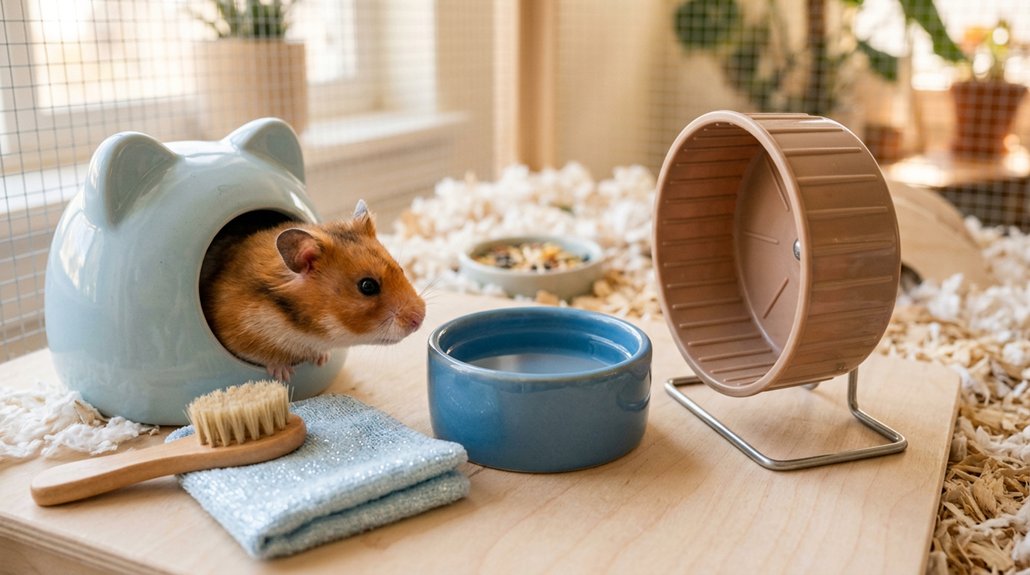
To care for a pet hamster, provide a cage at least 24″x12″x12″ with solid flooring and chew-proof accessories. Position in a quiet area for reduced stress. Maintain cleanliness with daily spot cleaning and weekly bedding changes. Feed high-quality pellets, limiting fruits to 10% of the diet. Guarantee daily fresh, filtered water. Monitor health for signs of illness and behavioral changes. By following these steps, you’ll discover how to provide an ideal environment for your hamster.
Key Takeaways
- Provide a minimum cage size of 24″x12″x12″ with solid flooring and a secure top to prevent injuries and escapes.
- Ensure daily fresh water and a diet of high-quality pellets, with fruits and vegetables limited to 10% of intake.
- Regularly clean bedding and include tunnels for natural exploration to maintain a healthy and enriching habitat.
- Monitor hamster health by observing for bright eyes, shiny fur, and active night behavior.
- Address signs of illness like dull eyes or matted fur promptly with veterinary consultation.
Choosing the Right Cage and Accessories for Your Hamster

While selecting the right cage and accessories for your hamster might seem straightforward, there are key considerations that guarantee a safe and stimulating environment. Opt for cage materials that require a habitat size of at least 24″x12″x12″. Solid flooring is vital to prevent foot injuries, while a secure top containment safeguards against escapes. When evaluating accessory types, prioritize chew-proof items like tubes, tunnels, and toys. These cater to natural burrowing behaviors and support dental health. Choose appropriate bedding material, such as crumpled paper or hardwood shavings; avoid cedar and pine due to harmful emissions. Confirm hydration by installing a 6-ounce water bottle. Consistently exchange water daily to maintain freshness. Each component contributes to your hamster’s overall well-being.
Creating a Safe Home for Your Hamster
To guarantee a safe home for your hamster, select a spacious habitat measuring at least 24″x12″x12″ with a secure top to accommodate natural activities like burrowing. Position the cage in a quiet area where family sounds prevail, avoiding loud noises, high traffic, and drafts to foster a stable environment. Implement regular maintenance protocols, including daily spot cleanings and weekly bedding changes, and ensure fresh water is provided each day to support your pet’s health.
Choosing Suitable Habitat
When constructing a suitable habitat for your hamster, guarantee the enclosure measures at least 24″x12″x12″ for Syrian hamsters, with dimensions adjusted for smaller dwarf species. A secure top is vital to prevent escapes, making sure your pet remains safe. Select chew-proof bedding types, such as crumpled paper or hardwood shavings. Avoid using pine and cedar-based products due to their release of harmful fumes. Incorporate Crittertrail tubes and other enrichment accessories to facilitate exploration and stimulate natural behaviors like tunneling. Ensure the habitat remains clean; change bedding weekly while performing spot-cleaning daily. This routine promotes a hygienic environment and mitigates disease risk. Proper habitat construction supports physical well-being and mental stimulation, essential for your hamster’s health and happiness.
Ensuring Proper Placement
It’s important to take into account several factors when determining your hamster’s habitat placement to guarantee their comfort and well-being. Prioritize habitat comfort by positioning it near family sounds, which can make your hamster feel secure, but be mindful of noise awareness. Avoid loud, high-traffic areas that might induce stress. Maintain a stable environment by keeping the habitat clear of vents or drafty windows. Temperature fluctuations can detrimentally affect health. Monitor your hamster’s behavior; signs like excessive hiding indicate discomfort or stress, necessitating relocation. Initially, a light cloth over the cage will reduce distractions, aiding acclimation. Confirm the use of chew-proof water bottles and burrowing-friendly bedding. These measures collectively create an ideal, stress-free home for your pet.
Maintaining Safe Environment
Creating a safe home for your hamster requires careful attention to detail regarding its habitat’s setup and location. Begin by selecting a habitat measuring at least 24″x12″x12″ with a solid bottom to prevent injuries. Position it in a quiet area, away from high-traffic zones, to facilitate stress reduction. Consider habitat enrichment using secure, chew-proof tubing for exploration, which prevents escape. Use suitable bedding like crumpled paper or hardwood shavings; avoid cedar due to harmful fumes. Guarantee secure latches to maintain habitat integrity. Monitor for signs of stress and wellbeing, such as abnormal behavior or chewing. Adjust as necessary to optimize comfort. Cover all aspects consistently to create a truly efficient and secure environment for your hamster.
Fueling Your Hamster: Dietary Essentials and Tips
To guarantee your hamster thrives, a meticulous approach to nutrition is essential. Understanding dietary restrictions and maintaining a regular feeding schedule are key components. High-quality pellets should form the basis of your pet’s diet. Complement this with fresh vegetables and fruits, ensuring these treats don’t exceed 10% of total intake. Hydration is critical, so provide fresh, filtered water daily. Introduce new foods slowly to prevent digestive issues and promptly remove uneaten food.
Research toxic foods—avoid chocolate, caffeine, garlic, onions. Dental health is pivotal; provide chew toys to manage continuously growing teeth.
| Component | Recommendation | Benefits |
|---|---|---|
| Pellets | High-quality as staple | Balanced nutrition |
| Vegetables/Fruits | Moderation, <10% of diet | Vitamins, minerals |
| Water | Fresh, filtered daily | Essential for overall health |
| Food Introduction | Gradually | Prevents digestive upset |
| Chew Toys | Essential for teeth | Promotes dental health |
Keeping Your Hamster’s Home Hygienic and Healthy

Nourishing your hamster is an essential aspect of care, but maintaining a hygienic habitat plays an equally important role in their overall well-being. Implement a meticulous cleaning schedule: daily toilet hygiene guarantees waste areas stay sanitary, effectively preventing disease. Identify and monitor your hamster’s preferred areas for elimination, which aids in targeted spot cleaning—remove soiled bedding and uneaten food daily. This routine keeps the environment fresh and safe. Each week, perform a thorough cleaning of the entire habitat, replacing all bedding, and disinfect food and water containers with mild detergent or a 3% bleach solution. This prevents bacterial growth, securing fresh hydration and nutrition. Avoid harsh chemicals to protect your hamster’s health, safeguarding a robust and vibrant living environment.
How to Build a Bond With Your Hamster
Establishing a bond with your hamster is essential for fostering trust and ensuring its comfort in your presence. Initiate bonding by offering small, healthy treat rewards during feeding times. This technique associates you with positive stimuli. When handling your hamster, follow these handling tips: wait until it is awake, then scoop it gently into your hands. Allow it to explore your hands to build confidence. Maintain a calm, conversational tone; your hamster will respond to your voice’s soothing cadence, finding reassurance in your presence. For further bonding, provide controlled out-of-habitat time in a secure, toy-filled area. Regularly spend time near the habitat, speaking softly, to condition your hamster to your scent and voice, ultimately reducing stress and cultivating trust.
Keep Your Hamster Healthy: What to Watch For

To guarantee your hamster’s health, regularly monitor for symptoms like dull eyes, matted fur, and weight loss, which can indicate potential illness. Establish a behavior baseline to quickly identify deviations such as changes in grooming habits or increased lethargy. If you observe these signs or suspect any health issues such as digestive, skin, or dental problems, promptly seek veterinary assistance.
Signs of Well-being
A telltale sign of a hamster’s well-being is its shiny coat, indicative of proper grooming habits and a healthy skin condition. Regular grooming and self-cleaning indicate comfort in its environment—key health indicators. Monitor your hamster’s eyes; bright eyes are essential signs of good health. Check activity levels, especially during nocturnal hours. An active hamster maintains overall well-being through foraging and exploration. Make certain its appetite and hydration stay monitored; these are critical to sustain health. Watch for any alterations in behavior or consumption patterns.
| Aspect | Normal Behavior | Indicator of Well-being |
|---|---|---|
| Coat | Shiny, well-groomed | Proper grooming habits |
| Eyes | Bright, alert | Good health |
| Activity Level | Active, especially at night | Healthy and comfortable |
Regular observation aids early detection of issues.
Common Illness Symptoms
While maintaining a keen eye on your hamster’s health, identify common illness symptoms promptly to secure timely intervention. Effective health monitoring involves observing for dull eyes, matted fur, and noticeable weight loss. These signs might indicate underlying health issues requiring early intervention. Shaking, diarrhea, or a runny nose are essential symptoms, often suggesting respiratory infections or other illnesses. In contrast, healthy hamsters display bright eyes, energy, and consistent grooming behaviors. Monitor for any changes in behavior or appetite, as these could be early indicators of stress or potential illness. Should any signs of illness become apparent, seek immediate veterinary attention. Prompt care is essential for your pet’s recovery and guarantees the best possible outcomes for their health and well-being.
Troubleshooting Common Hamster Issues
When dealing with common hamster issues, understanding the root cause is essential for effective resolution. Handling aggression often stems from a hamster’s fear or stress. Gradually accustom them to handling through gentle interactions and rewarding treats, helping to build trust. Address dietary concerns if your hamster refuses food or shows decreased activity. Guarantee a balanced diet and seek veterinary advice as necessary.
Monitor for signs of illness, such as dull eyes or weight loss, and contact a veterinarian immediately to mitigate health risks. Regularly clean their bedding to prevent illnesses linked to unsanitary conditions. Finally, reduce environmental stress by providing a secure, enriching habitat with appropriate mental stimulation to alleviate anxiety signs like excessive hiding or bar chewing.
Frequently Asked Questions
How Often Should I Handle My Hamster?
Handle your hamster daily to optimize socialization techniques, ensuring brief, calm interactions. It’s essential to gradually build trust, focusing on non-threatening hamster handling. Maintain consistency to prevent stress, thereby promoting effective acclimatization and a thriving, harmonious pet-human relationship.
What Are Common Signs of Hamster Stress?
It’s ironic how some believe hamsters are chill creatures. Stress signs include excessive barbering, cage aggression, and pacing. Coping strategies? Offer a spacious environment, hideouts, and a stable routine to mitigate tension and promote well-being.
Can Hamsters Recognize Their Owner’s Voice?
Yes, hamsters can recognize their owner’s voice, aiding in pet bonding. Through repeated voice recognition exposure, they may associate specific vocal cues with positive experiences, providing comfort and familiarity, essential in reducing stress from environmental changes.
How Do I Safely Introduce a New Hamster to My Family?
Begin by ensuring your new hamster’s cage setup meets safety and comfort standards—60% of hamsters thrive in multi-level homes. Gradually incorporate family interactions, introducing members one at a time, observing the pet’s behavior closely.
Is It Normal for Hamsters to Be Active at Night?
Yes, it’s normal. Hamsters exhibit nocturnal behavior, displaying heightened activity patterns during nighttime. Their biological rhythms align with dusk and dawn, optimizing conditions for exploring and foraging, ensuring survival in their natural habitats. Expect lively, nighttime exploration.
Conclusion
Embrace the world of hamster care, where every tiny whisker twitch is your call to action! Craft an unparalleled rodent utopia with precision-engineered habitats, cutting-edge diet plans, and immaculate cleanliness standards. Forge an unbreakable bond with your hamster, achieving legendary levels of companionship. Vigilantly monitor health indicators with the precision of a seasoned specialist. Immerse yourself in the art of troubleshooting with unparalleled expertise. With these guidelines, your hamster care will ascend to stratospheric echelons, achieving mythic proportions of excellence!