
Adopting a cat is generally more cost-effective than buying from a breeder, with fees from $50 to $175 covering essentials like spaying and vaccinations. Breeder prices often start at $750, excluding necessary procedures. Initial costs for setting up your cat’s essentials, like litter boxes and bowls, are around $365. Monthly expenses, including food and litter, can reach $53. Don’t forget potential emergency vet bills, which may soar to $4,000, making budgeting essential. There’s much more to uncover about total cat ownership costs.
Key Takeaways
- Adoption fees range from $50 to $175 and usually include spaying, microchipping, and vaccinations, unlike breeder costs starting at $750.
- Initial setup costs, including supplies like litter boxes and scratching posts, can be around $365.
- Initial vet visit costs range from $200 to $500, with additional funds for emergency vet visits advisable.
- Monthly expenses, including food, litter, and insurance, average around $53 but can vary based on pet needs.
- Emergency veterinary expenses can reach $2,000 to $4,000; maintaining an emergency fund is important for financial preparedness.
Adoption vs. Breeder: Exploring Initial Costs

When deciding between adopting a cat from a shelter or purchasing one from a breeder, it’s essential to reflect on the initial financial impact. Adoption fees range from $50 to $175, often covering spaying/neutering, microchipping, and vaccinations—immediate shelter benefits that breeders frequently don’t offer. Purchasing from breeders typically starts at $750, climbing over $2,000, making breeders a significant expense. You’ll also face additional costs for procedures that shelter cats usually include. While setup costs hit around $365 for basics like litter boxes and food bowls, no matter your choice, the financial advantages of shelter adoption are clear. Plus, by adopting, you’re contributing positively to animal welfare, a rewarding alternative to facing breeder drawbacks.
Essential Purchases for Your New Cat: What You Need
Having weighed the financial advantages of shelters over breeders, it’s time to focus on preparing your home for your new furry companion. Essential supplies form the backbone of your initial setup, ensuring your cat feels comfortable and welcomed. Start with a litter box, important for your cat’s hygiene, alongside premium litter to encourage use. Scratching posts are essential; they protect furniture and satisfy natural instincts. Food and water bowls, ideally elevated, promote healthy eating habits. Don’t forget a good selection of toys to keep your cat entertained and a carrier for safe transport. Initially, you’re looking at an investment of around $365. Each item plays a specific role, ensuring your cat’s well-being and happiness from day one.
Managing Initial Medical Costs and Choosing Pet Insurance
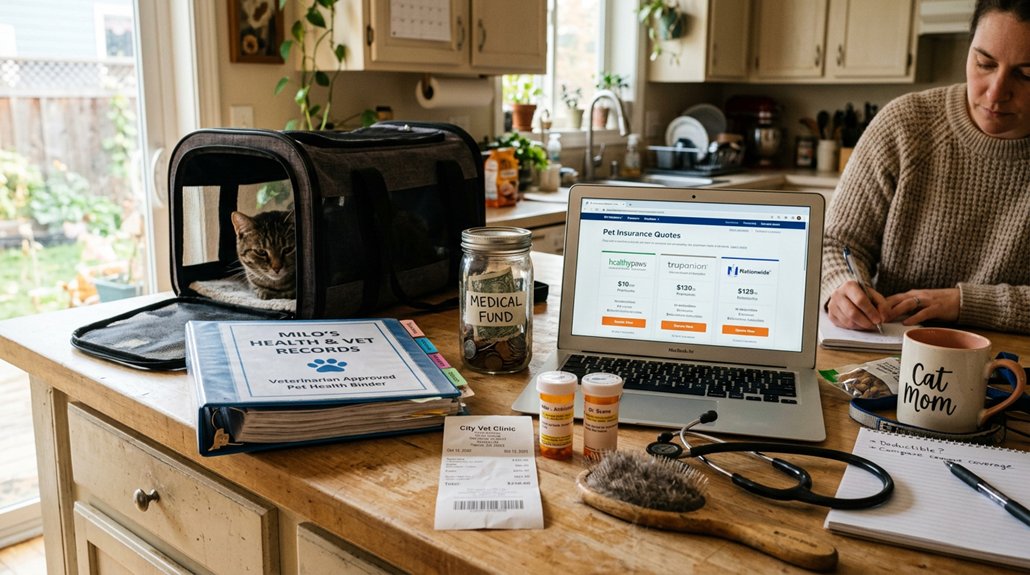
Though the joy of bringing a new cat home is unmatched, managing initial medical costs and choosing the right pet insurance are crucial aspects you shouldn’t overlook. Initial vet expenses alone can range between $200 and $500, covering vaccinations and essential health check-ups. If your adoption fee doesn’t include it, spaying costs could add another $200 to $300. To protect against unexpected bills, consider pet insurance options. While annual premiums vary from $0 to $400, the average monthly cost is around $23 for $5,000 coverage. Emergency care for a cat throughout its lifetime can amount to $2,000 to $4,000, emphasizing pet insurance’s value. Thoughtful planning now can safeguard your cat’s well-being and your finances later.
Understanding Monthly Costs: Food, Litter, and Essentials
Understanding the monthly costs of cat ownership is pivotal for long-term financial planning. Your chosen food quality noticeably affects expenses, ranging from $20 to $50 monthly. High-quality brands guarantee better nutrition but might be pricier. Litter is another key cost, with various litter types available, often costing between $100 and $250 annually. Each type offers unique benefits, whether for odor control or dust reduction. It’s important to factor in essential items like toys and scratching posts, which guarantee your pet’s happiness and well-being. These monthly essentials average about $53, equating to $634 yearly. Routine grooming, though subject to breed and frequency, could add as much as $50 to $100. Plan wisely to maintain your feline friend comfortably.
Planning Annual Health Expenses for Your Cat

Properly planning for your cat’s annual health expenses is essential for guaranteeing their well-being and longevity. Routine veterinary checkups, which typically range from $60 to $110, are important. Make certain you’re aware of your cat’s vaccination schedule; costs here can vary from $0 to $200 annually, depending on age and health. Preventive measures against fleas, ticks, worms, and mites could amount to $0 to $300 each year. These treatments are crucial, particularly if your cat’s lifestyle involves outdoor exposure. Keep in mind that seniors may need biannual checkups, adding $85 to $110 per visit. Balancing these healthcare necessities with your budget guarantees that you’re adequately prepared for your furry friend’s routine care, helping maintain their health and happiness.
How Do You Handle Unexpected Cat Expenses?
While planning your cat’s annual health expenses helps guarantee their routine care, unexpected costs can also arise, often demanding immediate action. Unexpected vet expenses, like treatments for sudden illnesses such as upper respiratory infections, can range from $2,000 to $4,000 over your cat’s lifetime. Preparing for these costs is vital. One effective emergency fund strategy is setting aside a dedicated savings account for pet-related emergencies. This can cover not just vet expenses but also potential damages your cat may cause at home. Additionally, consider pet insurance for a financial cushion against surprise medical bills. Regularly review and adjust your pet budget to make certain you’re prepared for any unforeseen costs. Prioritizing preventive care will help mitigate the risk of costly emergencies.
Implementing Cost-Saving Strategies for Cat Owners
Adopting a few practical cost-saving strategies can make a considerable difference in managing the financial aspects of cat ownership. Start by considering bulk buying for essentials like litter and food, which slashes expenses considerably. Engaging in preventive care by scheduling regular vet visits helps catch health issues early, saving you from expensive emergencies. Get creative with homemade toys and treats to provide enrichment without hefty price tags. Research and take advantage of local discounts on pet supplies, ensuring you snag the best deals. When it comes to nourishment, don’t hesitate to perform brand comparisons. Affordable options, costing as low as $0.12 per day, can cater to your cat’s nutritional needs. Implementing these strategies effectively reduces your overall spending.
Is Pet Insurance Worth It for Your Cat?
Is pet insurance truly worth it for your cat? Given the potential for emergency veterinary bills ranging from $2,000 to $4,000, and unexpected medical expenses possibly exceeding $10,000, pet insurance can be an essential safety net. The insurance benefits include financial relief from these hefty bills, especially with coverage options like $5,000 for about $23 monthly or unlimited coverage for around $34.
Enrolling your cat while they’re healthy is critical, as most policies won’t cover pre-existing conditions. By choosing the right plan, you can guarantee you’re covered for those unpredictable health issues that can strain your budget. Although budgeting for preventative care is fundamental, having pet insurance amplifies your options, providing peace of mind for unforeseen situations.
Creating a Comprehensive Budget for Cat Ownership
When you’re planning your budget for cat ownership, start by considering the initial costs, which can vary dramatically depending on whether you adopt from a shelter or choose a purebred. It’s equally important to manage recurring expenses like food and vet visits, which average around $53 per month, to guarantee ongoing care doesn’t strain your finances. Don’t forget to prepare for emergencies, as unexpected medical costs can skyrocket, so having a financial cushion or pet insurance can be a lifesaver.
Planning for Initial Costs
While deciding to welcome a cat into your home can be heartwarming and fulfilling, it’s essential to plan for the initial costs to prevent any financial surprises. Maneuvering initial adoption costs varies widely, with shelter fees ranging from $25 to $200, often inclusive of vital services like spaying or neutering. Opting for a purebred from a breeder can see costs from $300 to upwards of $1,500. Budgeting tips for this exciting new chapter involve setting aside approximately $365 for necessary supplies such as a litter box, scratching posts, and bowls. Then comes the initial veterinary visit, potentially adding another $200 to $500. Remember, a thorough budget isn’t complete without factoring in emergency funds for unforeseen vet visits.
Managing Recurring Expenses
Managing the recurring expenses of cat ownership is an essential part of ensuring a happy and healthy life for your feline companion. Use budgeting tips and expense tracking to cover your cat’s needs efficiently. Here’s a breakdown to help you plan:
- Monthly Essentials: Allocate $20 to $50 for food. Combine this with litter and treats, and expect a monthly budget around $53.
- Veterinary Care: Include yearly check-ups ranging from $60 to $110. Regular vaccinations are also necessary for preventive care.
- Growth and Change: Be ready to adjust your budget as your cat ages, factoring in grooming or changes in dietary needs.
- Unexpected Costs: Although not directly in recurring expenses, be mindful that financial cushioning for unanticipated situations should subtly influence your ongoing budget strategy.
Preparing for Emergencies
Though planning for emergencies might seem overwhelming, creating a thorough budget for cat ownership can alleviate unexpected financial stress. Start by establishing an emergency fund to cover sudden veterinary costs, which can soar between $2,000 and $4,000 throughout a cat’s life. An emergency fund acts as a vital health backup, guaranteeing that you can address urgent medical needs without financial strain.
Additionally, pet insurance might be worth considering. With premiums averaging from $0 to $400 annually, insurance can effectively mitigate unforeseen expenses, offering peace of mind. Incorporate initial adoption fees and recurring expenses like food, litter, and grooming into your budget to maintain financial stability. By proactively setting aside money, you’ll guarantee both fiscal readiness and peace of mind throughout your cat-parenting journey.
Frequently Asked Questions
What Is the 3 3 3 Rule for Adopting a Cat?
The 3-3-3 rule outlines the cat adjustment period, highlighting feline behavior tips. In three phases—three days, weeks, and months—your cat adapts, gradually showing comfort, trust, and true personality as you provide a supportive environment.
Do Cats Help Children With Autism?
Imagine a gentle stream flowing serenely; cats can offer the same soothing effect. They provide emotional support and social benefits for children with autism, promoting interactions and easing anxieties just like a calming, reliable presence in their lives.
How Expensive Is Owning a Cat per Month?
Owning a cat can cost around $53 monthly. You’ll spend on food expenses ($20-$50) and veterinary costs ($60-$110 yearly). Grooming fees and litter expenses add another $20-$30 monthly. Budget for preventative medications too.
Are Cats Happier if They Sleep With You?
Yes, cats are often happier if they sleep with you. Their sleeping habits align with seeking warmth and safety, and sharing a bed enhances feline companionship, boosting their sense of security, happiness, and reducing stress.
Conclusion
Adopting a cat offers joy, companionship, and unexpected expenditures. You’re budgeting for adoption or breeder fees, accumulating essentials like food and litter, and calculating monthly necessities. You’re maneuvering initial medical costs, choosing pet insurance, and preparing for annual vet visits. You’re bracing for unforeseen expenses and implementing cost-saving strategies. Ultimately, creating a thorough budget guarantees you’re ready for the rewarding, sometimes challenging, journey of cat ownership, making every purr and whisker twitch worthwhile.