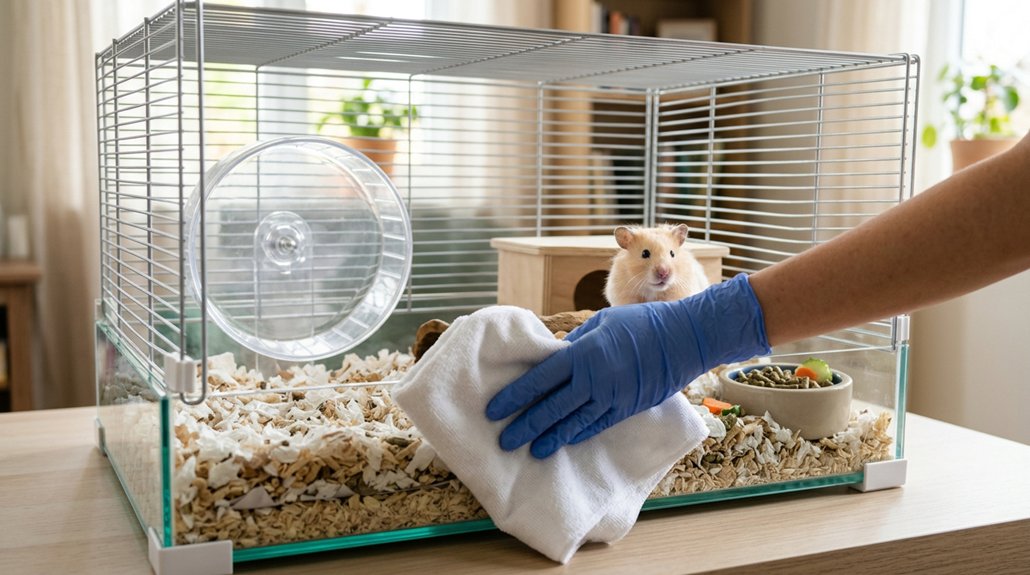
To clean a hamster cage correctly, start with daily spot cleaning. Remove soiled areas, sanitize water bottles, and guarantee fresh sand is accessible. Weekly tasks include cleaning the exercise wheel and replacing old water. Perform a full deep clean monthly, using pet-safe products. Remember to customize your routine based on your hamster’s habits, keeping familiar scents intact. Following these steps assures a healthy environment, and there’s always more to discover about creating a comfortable habitat.
Key Takeaways
- Perform daily spot cleaning to remove soiled areas where the hamster urinates and eliminates waste.
- Clean the exercise wheel and accessories weekly to prevent bacteria buildup.
- Conduct a full cage cleaning monthly, including removing old bedding and sanitizing the tray.
- Use pet-safe cleaning products, ensuring all surfaces and accessories are wiped and sanitized.
- Tailor the cleaning routine to the hamster’s habits, maintaining familiar scents to minimize stress.
Daily Spot Cleaning Essentials for Hamsters
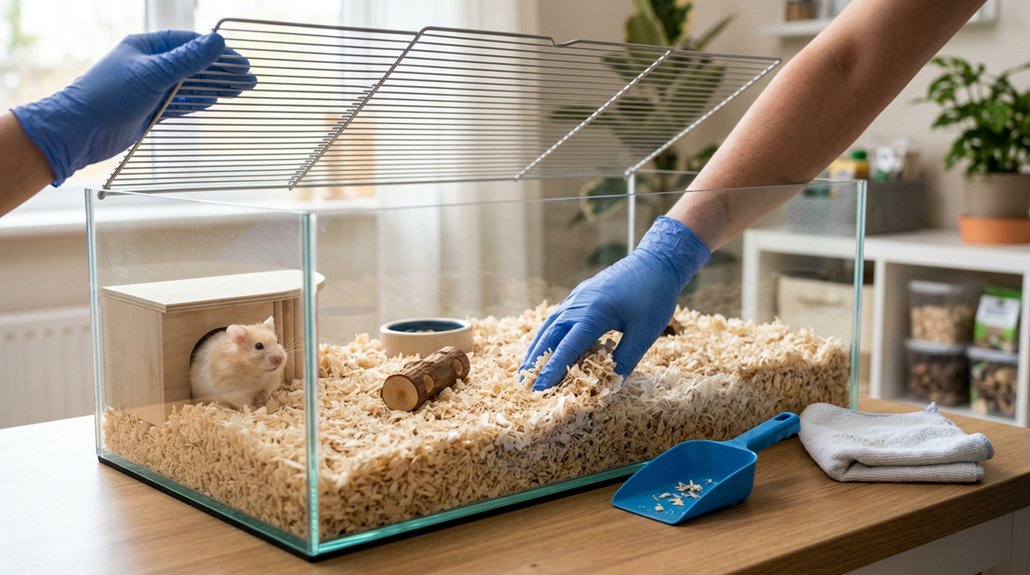
Have you ever wondered how essential daily spot cleaning is for your hamster’s well-being? Effective bedding management involves removing soiled areas where your pet frequently urinates or eliminates waste. It’s important for ensuring a sanitary and comfortable environment. You’ll want to spend around 5-10 minutes on this task daily, using tools like a mini broom or cordless vacuum to easily manage waste disposal of seed casings and droppings from flat surfaces. Regularly clean the water bottle to avoid contamination, keeping your hamster hydrated. Monitor your pet’s food hoard carefully, removing only spoiled items to maintain a clean, comfortable space. These quick tidies reduce stress and promote a hygienic living area, enhancing both your hamster’s health and happiness.
Weekly Tasks to Keep Hamsters Healthy and Happy
Weekly care routines are vital for maintaining your hamster’s health and happiness. Start by inspecting and cleaning the exercise wheel and other accessories weekly. Use soap and water, making certain everything dries thoroughly to avoid bacteria buildup. With water bowls, a daily clean is important to prevent contamination and promote your hamster’s hydration. Pay attention to your pet’s behavior as it can indicate if you need to adjust the cleaning frequency based on their habits.
Here’s a simple checklist to guide you:
| Task | Frequency | Purpose |
|---|---|---|
| Clean exercise wheel | Weekly | Prevents bacteria buildup |
| Change water bowls | Daily | Promotes hydration |
| Spot-clean cage areas | Every few days | Guarantees a hygienic environment |
| Assess hamster behavior | Regularly | Adjusts cleaning as necessary |
| Full cage cleaning | Monthly | Provides a sanitary habitat |
Tackle Monthly Deep Cleans With Ease
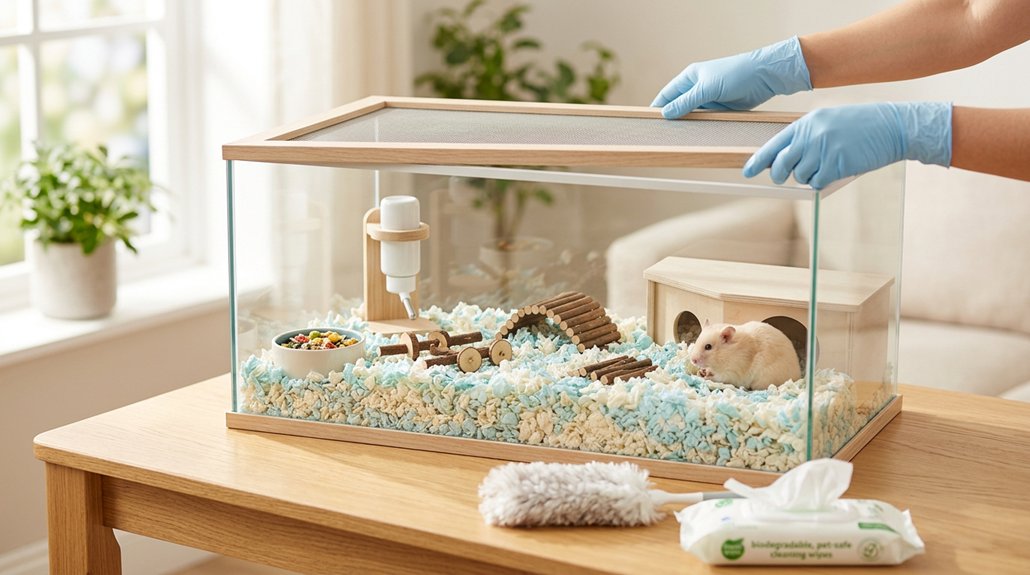
Without a doubt, tackling a thorough monthly deep clean is essential for guaranteeing your hamster’s habitat remains a healthy and pleasant environment. Start by removing your hamster and all accessories to a safe playpen—this keeps your little friend secure during the process. A consistent deep clean schedule enhances overall hamster habitat cleanliness. Dispose of used bedding completely, cleaning the tray with water or mild soap. Verify it’s rinsed and dried before adding new bedding. Attention to detail is key: wipe down all surfaces, including food bowls and tunnels, to eliminate bacteria and odors. Use this time to conduct health checks, identifying any potential issues. Consider rearranging decorations for mental stimulation, offering your hamster a fresh and exciting environment upon return.
Use Effective Tools for Easy Cleaning
Anyone who’s ever owned a hamster knows that keeping their cage clean can be an intimidating task without the right tools. To streamline this process, prioritize efficient organization and invest in specialized cleaning tools. Utilize a mini broom and dustpan for daily pickups; they’re perfect for swiftly clearing away seed casings and droppings. For larger cleaning days, a cordless vacuum allows you to effortlessly remove debris without causing stress to your hamster. Maintaining cleanliness in their sand baths can be achieved by utilizing a sieve or tea strainer to separate waste from clean sand. Incorporate fuzzy straw cleaners to guarantee water bottles remain residue-free. Finally, always choose pet-safe cleaning products to preserve a healthy, hygienic environment. It’s all about minimizing hassle while maximizing cleanliness.
Customize Your Cleaning Routine for Your Hamster’s Habits
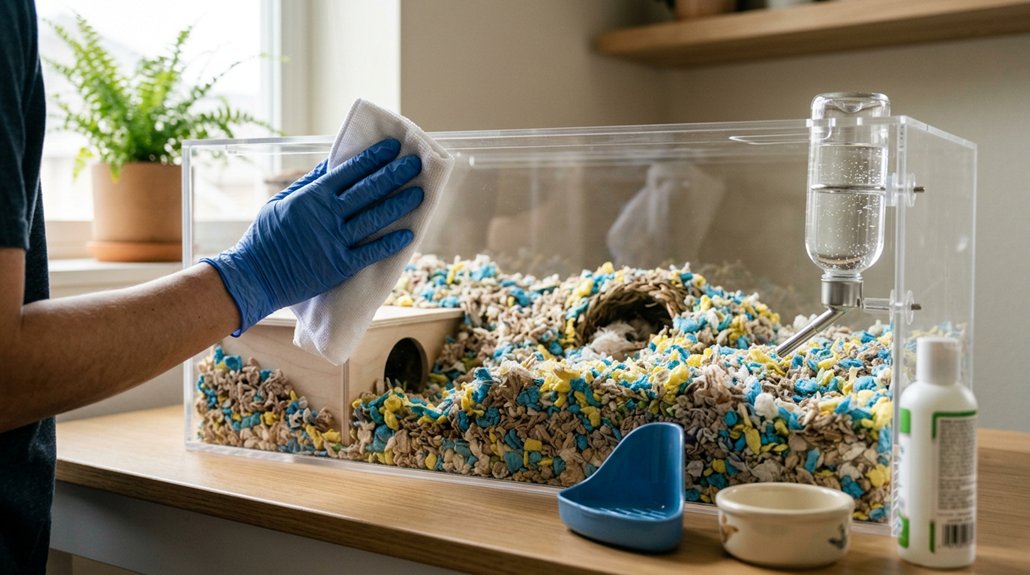
To keep your hamster’s environment clean and comfortable, it’s essential to tailor your cleaning routine based on their specific habits. By monitoring where your hamster tends to hoard food or use the bathroom, you can enhance your spot cleaning efficiency and guarantee you’re focusing on areas that matter. Remember, adapting your approach to their natural behaviors not only maintains hygiene but also keeps the environment familiar and stress-free for your furry friend.
Adapting to Hamster Behavior
Understanding your hamster’s behavior is essential for tailoring a cleaning routine that minimizes stress and maximizes comfort. Your hamster’s cleaning preferences hinge on individual habits and species-specific needs. Here’s how you can adapt effectively:
- Observe Elimination Habits: Watch where your hamster tends to go to the bathroom. This knowledge enables you to target these spots specifically, ensuring cleaner surroundings with less disruption.
- Preserve Familiar Scents: During deep cleaning, keep some of the old bedding. It retains your hamster’s scent, making the environment feel familiar and reducing anxiety.
- Respect Hoarding Spaces: Minimal disturbance around food stashes maintains your pet’s peace of mind. Dwarf hamsters, for example, might appreciate more frequent, yet gentle, cleanings.
Prioritizing their comfort will lead to a happier, healthier hamster.
Spot Cleaning Efficiency
Spot cleaning efficiently not only keeps your hamster’s environment fresh but also minimizes disturbance to their daily routine. By regularly monitoring their designated toilet spots, you can focus your spot cleaning techniques on areas with noticeable pee stains and soiled bedding. This guarantees a healthier environment and effective odor control. Tidy up these soiled areas every few days, preventing unpleasant smells while maintaining comfort for your furry friend.
Only perform a full cage cleaning if there are medical concerns or signs of pests. This way, you avoid unnecessary stress for your hamster. Keep their food hoards intact unless there’s spoilage—this supports their natural behaviors. Use a safe vinegar-water solution to gently wipe surfaces, ensuring your hamster’s health remains the top priority.
Tailored Cage Maintenance
Every hamster has unique habits and preferences, making it essential to tailor your cleaning routine to suit their specific needs. Focus on customizing your approach for ideal hygiene and comfort while ensuring effective odor control. Here are key considerations:
- Spot Cleaning: Identify your hamster’s preferred toilet spots. Regular spot cleaning in those areas prevents excessive odor without disrupting your hamster’s routines.
- Hoard Monitoring: If your hamster is a hoarder, check varied stash locations. Only remove soiled items, leaving untouched hoards intact to maintain their comfort and security.
- Species-Specific Needs: Consider your hamster’s species before tackling cage accessories. Dwarf hamsters often need different attention, such as sand bath upkeep, aligning with their nesting behaviors.
Essential Tips for a Clean Hamster Cage
Keeping your hamster’s cage clean is crucial for their health and happiness, and starts with daily spot cleaning, which only takes a few minutes but maintains a hygienic environment. Focus on the areas they frequent, like urination spots, while leaving food hoards untouched unless essential, to preserve their familiar scents. Remember, a deep clean every month or two, with attention to sanitizing surfaces and replacing bedding, will guarantee a healthy habitat and reduce stress for your furry friend.
Optimal Spot Cleaning Practices
- Urination Zones: Regularly spot clean where your hamster urinates to reduce odors. This promotes hygiene and minimizes stress.
- Food Hoards: Check weekly for spoiled food; removing only contaminated items is essential to support their natural behavior and sense of security.
- Sand Baths: Sift through your hamster’s sand bath daily, removing any waste to maintain cleanliness, while keeping fresh sand accessible.
These practices guarantee your pet’s environment stays healthy and inviting.
Effective Deep Clean Techniques
Commence a thorough deep clean of your hamster’s cage to verify a safe, healthy environment. Start by safely relocating your hamster and all accessories to a secure playpen. This prevents stress and lets you focus on the task. Remove all bedding, discarding soiled portions, and cleanse the bedding tray with water and mild soap. Confirm it’s rinsed and dried thoroughly. Pay close attention to sanitizing surfaces; wipe down every part of the habitat, including food and water bowls, tunnels, and all accessories, with safe cleaning products. Organize accessories as you return them to the cage. Remember to conduct a visual health check on your hamster, noting any unusual behaviors. Finally, refresh the bedding, retaining a small portion to retain familiar scents.
Frequently Asked Questions
What’s the Best Way to Clean a Hamster Cage?
To clean a hamster cage effectively, maintain hygiene by using cage cleaning techniques daily for soiled areas, weekly for bedding, and monthly for full sanitization. These hamster hygiene best practices guarantee a healthy, comfortable environment for your pet.
Do Hamsters Recognize Their Name?
Yes, hamsters can recognize their names through associative learning. By linking specific sounds with positive experiences, you’ll enhance their name recognition. Consider their individual personalities and use simple, unique names to boost responsiveness.
How Long Can You Leave a Hamster Cage Before Cleaning?
You shouldn’t leave a hamster cage for more than a month without a full clean. Regular hamster hygiene practices, including a bi-monthly cage maintenance schedule, prevent odors and health issues, ensuring your pet’s comfort and well-being.
How to Keep Hamster Cage Smelling Fresh?
Did you know 78% of pet odors come from improper ventilation? Guarantee your hamster cage has proper ventilation for effective odor control. This helps maintain fresh air, minimizing smells. A well-ventilated cage means happier, healthier hamsters.
Conclusion
To master the art of hamster care, you’ve got to dedicate yourself like it’s a mission of cosmic importance. By diligently managing daily spot cleaning, handling the weekly tasks with finesse, and executing those monthly deep cleans like a pro, you’re ensuring your little furball thrives in a pristine palace. With the right tools and a customized routine, your hamster will lead a happier, healthier life. Remember, the clean hamster cage is the key to their ultimate joy!