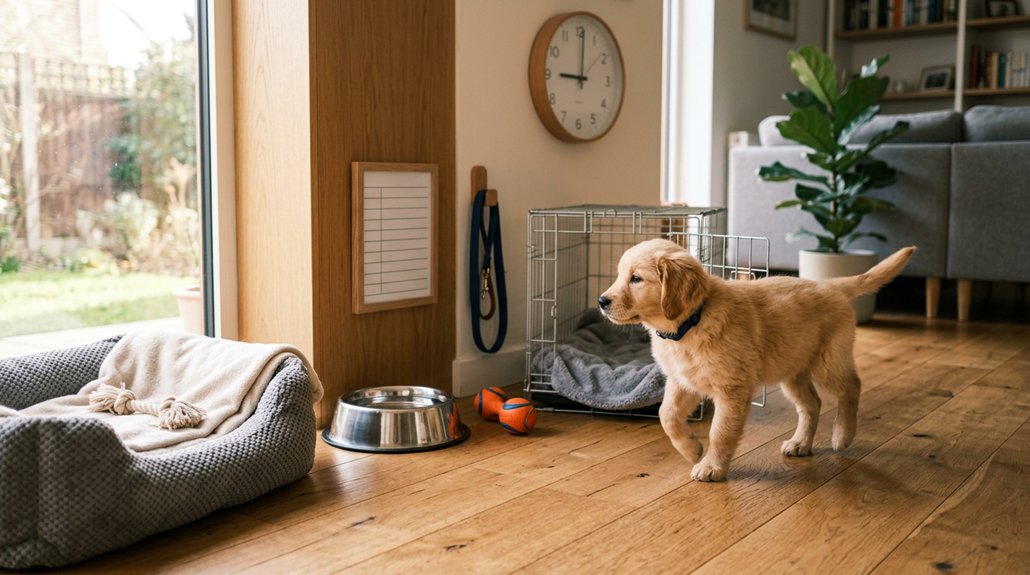
To build a daily routine for your puppy, establish consistent feeding times aligned with family meals and schedule potty breaks 30 minutes after eating. Incorporate brief, varied play sessions to engage them mentally and physically, and guarantee they get 16-18 hours of restful sleep in a calm environment. Start socializing your puppy early for confidence in diverse settings. Flexibility in routines is essential as they grow. Discover how to adapt and optimize your puppy’s routine for their well-being.
Key Takeaways
- Establish consistent feeding times aligned with family schedules to enhance house training and bonding.
- Schedule regular potty breaks after meals and every two to four hours for effective housetraining.
- Implement brief, varied play sessions for mental stimulation and attention maintenance using interactive games and positive reinforcement.
- Ensure 16 to 18 hours of sleep daily in a calm, quiet environment to support healthy development.
- Adapt routines gradually based on developmental needs, ensuring variety and consistency for stable emotional growth.
Why Your Puppy Needs a Daily Routine for Growth
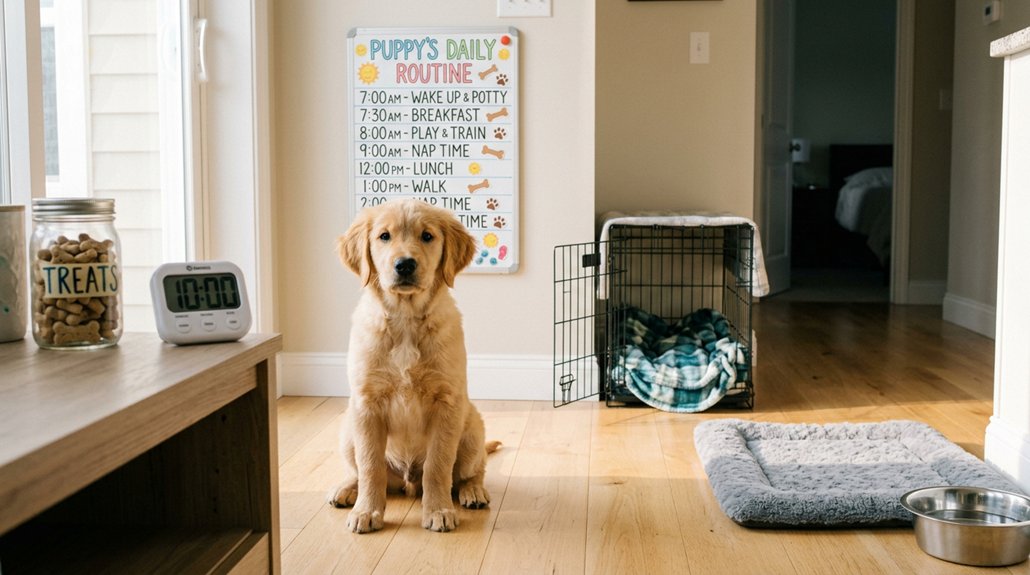
When you’ve welcomed a new puppy into your home, building a daily routine becomes essential for its growth and emotional well-being. A structured schedule provides emotional support, offering your puppy a sense of security and lowering anxiety as it adapts to its new surroundings. Establishing behavioral expectations through routine helps your puppy understand its role and environment, promoting a sense of confidence. Predictability in daily activities encourages stable emotional development, leading to consistent behavior. This reliability fosters a calm household atmosphere, as your puppy learns to expend energy during regular exercise and play times, diminishing the chance of destructive behaviors. Consequently, a well-defined routine not only nurtures emotional stability but also lays the foundation for successful training outcomes in your puppy.
Set Feeding and Potty Times for Consistency
Establishing a consistent feeding schedule by aligning your puppy’s meals with your family’s can foster good eating habits and streamline their integration into your household. Verify you follow each meal with a timely potty break, typically within 30 minutes, to reinforce this routine scientifically, as it’s closely linked to their digestion cycle. Regularly monitoring your puppy’s eating behavior and overall health will help you identify any shifts in their routine and make necessary adjustments to maintain their well-being.
Align Meals With Family
Integrating your puppy’s meals with the family’s breakfast, lunch, and dinner times can dramatically enhance their daily routine, fostering both house training and digestive health. Meal timing not only benefits your puppy’s biology but also strengthens family bonding by including your furry companion in daily activities. Puppies thrive on consistency; aligning feeding schedules with family meals establishes a structured routine essential for instinctive house training. Offer meals at the same time each day—say 15 minutes for eating—to inculcate promptness and regulate potty needs naturally. This predictability allows for scheduling potty breaks shortly post-mealtime, reducing indoor accidents. Don’t forget to provide fresh water readily, aiding necessary hydration. With consistent feeding times, you’ll anticipate outdoor trips within 30 minutes of each meal, keeping your pup healthy and happy.
Regular Potty Break Intervals
A robust routine for meal times naturally extends into your puppy’s potty schedule. Establishing a consistent feeding schedule of three meals daily lays the groundwork for effective potty training techniques. Puppies typically need to relieve themselves within 30 minutes post-meal, making it essential to set regular intervals. Start with taking your 8-week-old puppy outside every two to four hours, adjusting as they mature. Utilizing outdoor cues such as specific spots and verbal commands reinforces their learning process. After every meal, play, or nap, guide them outdoors to solidify habits. Clean accidents promptly with odor-neutralizing cleaners, preventing reoccurrence at improper locations. This systematic approach guarantees a well-regulated potty routine while nurturing your puppy’s ability to communicate their needs.
Monitor Eating And Health
When you establish a consistent feeding schedule of three meals a day, you’re taking an essential step in promoting regular eating and potty habits for your puppy. By leaving the food down for only 15 minutes, you encourage prompt eating, preventing grazing and ensuring regular digestion. This practice is pivotal in fostering consistent potty habits since puppies typically eliminate within 30 minutes of eating. Monitor your puppy’s appetite closely. Deviations in feeding habits could indicate health issues; a pup that consistently finishes its meals is likely thriving. Coordinate feeding and potty times to support effective housetraining. Regular potty breaks every two to four hours, particularly after meals and playtime, further reinforce house training, minimizing indoor accidents and promoting health.
Make Playtime Fun and Effective
To make playtime both enjoyable and effective for your puppy, adopt a strategy that leverages multiple brief and varied sessions throughout the day. This approach not only maintains your pup’s attention but also supports ideal energy levels. Here’s how:
Adopt varied, short play sessions daily to keep your puppy engaged and energetic.
- Interactive games: Use toys like puzzle toys and treat dispensers to boost mental stimulation and promote problem-solving skills.
- Play variety: Incorporate diverse activities such as fetch and tug-of-war, ensuring your puppy never gets bored, and regularly rotate toys.
- Positive reinforcement: During play, teach basic commands and reward positive behavior to instill training seamlessly.
- Social play: Arrange playdates with other pets and humans for essential socialization, fostering a well-adjusted, joyful puppy.
Ensure Restful Naps and Nighttime Calm
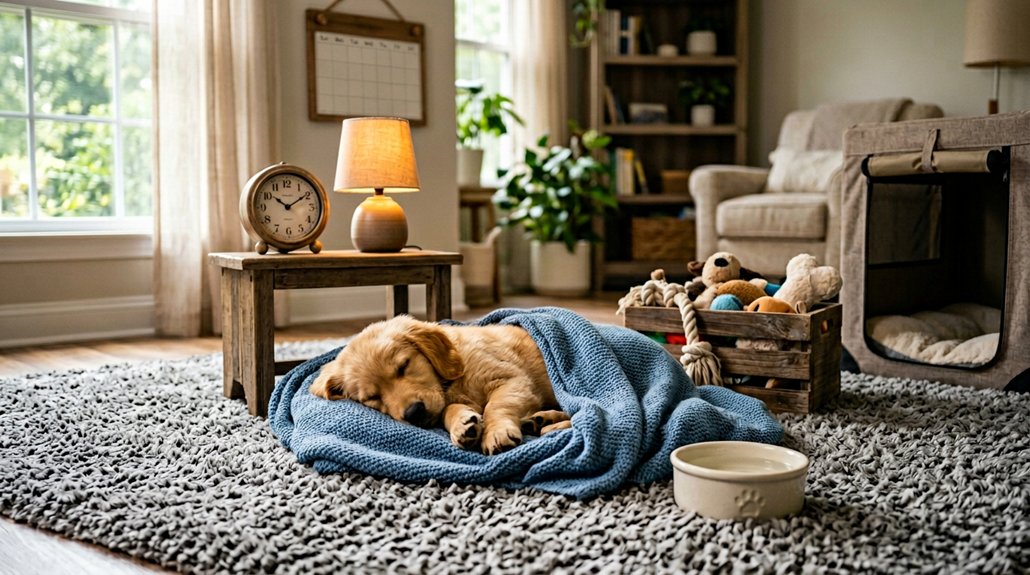
Although many new puppy owners focus on play, proper rest is equally critical to your puppy’s healthy development. Recognizing the nap significance, guarantee your puppy gets 16 to 18 hours of sleep daily. Establish a consistent bedtime to help them adapt to nighttime routines, which encourages undisturbed sleep and reduces disruptions. Craft a conducive sleep environment by designating a calm, quiet space or crate. This minimizes distractions and fosters a sense of security. Avoid disturbing their nap times—interruptions can lead to fussiness and difficulties settling later. Implement “kid-free” zones during naps, so they learn to relax independently, promoting better behavior. By prioritizing structured rest, you’re laying a foundation for your puppy’s physical and psychological well-being.
Socialize Your Puppy From the Start
Start socializing your puppy immediately by exposing them to diverse environments, people, and other animals, which is essential within the initial weeks. Foster positive interactions to minimize fear and anxiety, thereby ensuring your puppy develops into a confident adult dog. Employ gradual introductions to new sounds, sights, and experiences to assist them in becoming adaptable and comfortable in unfamiliar settings.
Begin Early Exposure
When fostering a well-adjusted adult dog, early exposure is essential for your puppy. Begin as early as 8 weeks old to guarantee adaptability and prevent future behavioral issues. Creating diverse puppy environments contributes considerably to their growth. Here’s how you can structure early exposure:
- Varied Experiences: Introduce your puppy to diverse environments, exposing them to different sounds and sights for enriched adaptation.
- Controlled Interactions: Allow gradual and supervised meetings with other pets, minimizing stress and encouraging confidence.
- Reinforcement: Utilize positive reinforcement techniques, like treats and praise, to solidify desirable behaviors and make new experiences enjoyable.
- Manage Sessions: Keep socialization sessions brief but engaging to capture their interest and build training foundations.
Encourage Positive Interactions
Initiate your puppy’s lifelong journey of positive interactions with strategic socialization efforts by starting early, ideally between 3 to 14 weeks of age. During this key period, utilize interaction techniques to safely expose your puppy to diverse environments, sounds, and experiences. This exposure is essential for confidence building, reducing the likelihood of anxiety or fear in new situations later in life. Monitor their reactions closely; when your puppy responds positively, employ positive reinforcement like treats and praise to shape desirable behaviors. Enroll in local puppy classes which offer structured settings for socialization, complementing other efforts. Community parks and pet-friendly events provide additional venues for varied interactions, further broadening your puppy’s adaptability to new stimuli while nurturing sociability.
Utilize Gradual Introductions
While it’s tempting to introduce your puppy to everything all at once, utilizing gradual introductions is essential for effective socialization and long-term behavioral benefits. Start early to prevent behavioral problems and foster an adaptable adult dog. Gradual exposure to diverse sensory experiences helps your puppy adapt and reduce anxiety in novel situations. Here’s a structured approach:
- Environment: Gradually expose your puppy to different environments—home interiors, backyards, or community parks.
- People and Animals: Carefully monitor interactions with varied individuals and animals, offering positive reinforcement for calm behavior.
- Sounds: Introduce household sounds like vacuums and doorbells progressively to avoid fear.
- Puppy Classes: Attend local classes for controlled, supervised socialization opportunities.
Consistently engaging in these structured interactions during the essential socialization period (up to 16 weeks) refines adaptability.
Solve Routine Challenges
Though routine disruptions with a puppy are inevitable, addressing them with structured strategies can guarantee a smoother shift back to normalcy. Implement behavioral adjustments by gradually reintroducing your puppy to the established routine, utilizing positive reinforcement like treats and praise to foster old habits while maintaining routine flexibility. A calm and consistent environment during schedule changes aids smoother adjustments. Employ precise timing, such as using age-based potty intervals—divide your puppy’s age in months by two for accurate prediction. Manage disruptions by prioritizing consistent mealtimes and exercise routines, essential for behavioral stability. Integrate structured activities and play sessions immediately post-potty to cement good habits. This scientific approach strengthens your puppy’s adaptability and restores equilibrium efficiently.
Adapt and Evolve Your Puppy’s Routine
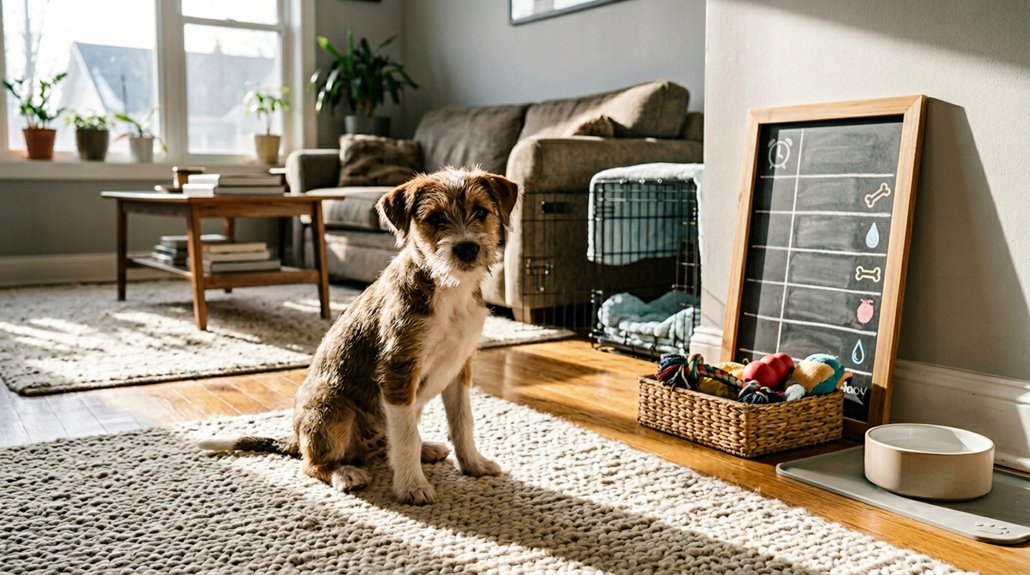
Because a puppy’s development is dynamic and multifaceted, establishing an adaptable routine is crucial to accommodate their evolving needs. Consider these scientific insights for evolving your puppy’s routine:
Establish an adaptable routine to meet your puppy’s dynamic and evolving developmental needs.
- Growth-Based Adjustments: As your puppy grows, modify potty intervals—start with every 2-3 hours at 8 weeks, extending to 4-5 hours by 4 months.
- Behavioral Adjustments: Monitor for signs of overstimulation or boredom. Adjust playtimes and naps accordingly to align with puppy instincts.
- Variety and Consistency: Introduce new toys and walking routes to prevent monotony, yet maintain a reliable structural routine.
- Evolving Exercise: Tailor exercise frequency and intensity progressively, recognizing that intense activities should be delayed until full maturity to prevent physical strain.
Regularly refine their routine to balance well-being and development.
Frequently Asked Questions
What Is the 7 7 7 Rule for Puppies?
The 7 7 7 rule advises you to give your puppy seven minutes of exercise per month of age, three times daily. This aids puppy nutrition, supports joint health, and complements training tips by preventing behavioral issues.
What Is a Good Daily Schedule for a Puppy?
Imagine a day filled with structured bliss: Start with consistent puppy feeding, follow with gentle socialization activities and potty training. Interleave playtime routines with exercise sessions, crate training, positive reinforcement, and a soothing grooming schedule for ultimate harmony.
What Is the 3-3-3 Rule for Puppies?
The 3-3-3 rule for puppies outlines typical adaptation phases: initial stress in the first three days, socialization in three weeks where routines develop, and after three months, stable behavior and bonding with expected behavioral expectations occur.
What Is the 10 10 10 Rule for Puppies?
The 10-10-10 Rule, where 10-minute segments improve learning by 60%, balances puppy playtime, training, and socialization sessions. Structured activities cater to physical and mental well-being, supporting your puppy’s emotional development and reducing behavioral issues.
Conclusion
By establishing a daily routine for your puppy, you’re basically laying the groundwork for a well-rounded adult dog. Just as you’d tune a radio for a clear signal, structuring their eating, playing, resting, and socializing guarantees peak growth and behavior. Consistency is key, but remember, routines should adapt over time as your puppy grows and changes. With patience and commitment, you’ll navigate any challenges and watch your puppy bloom into a confident companion.