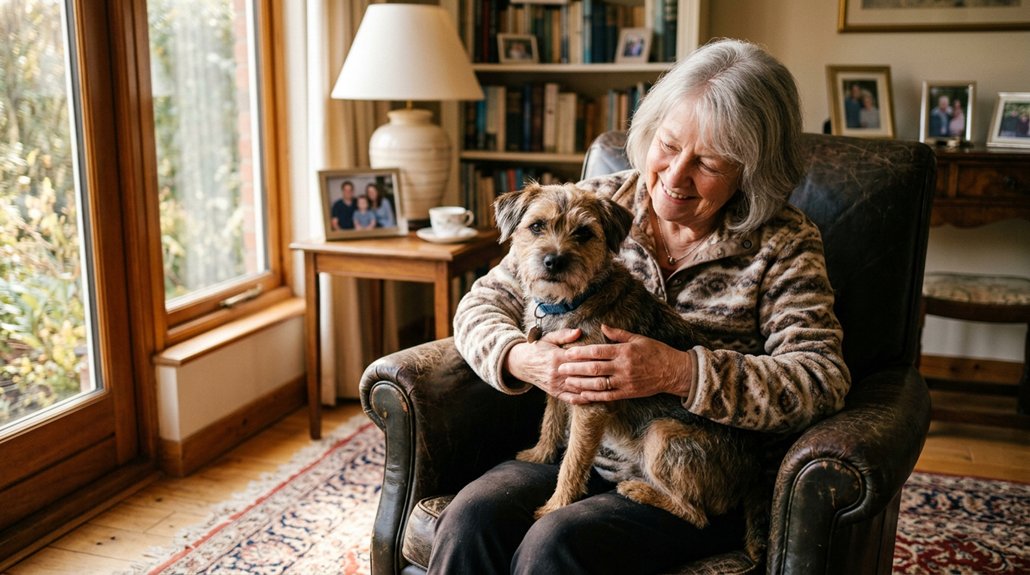
When choosing the best dog breeds for seniors, consider smaller, friendly, and low-maintenance companions like the Cavalier King Charles Spaniel, Shih Tzu, and Bichon Frise. These breeds offer manageable handling, friendly temperaments, and low to moderate exercise needs. Some, like the Poodle, are hypoallergenic. Minimal grooming dogs, such as Beagles, suit those who prefer less maintenance. Dogs enhance well-being and provide companionship, ensuring a fulfilling bond. Discover extensive insights on making the perfect choice.
Key Takeaways
- Smaller breeds like Cavalier King Charles Spaniel and Shih Tzu are easier for seniors to manage.
- Friendly breeds like the Bichon Frise and Pug enhance companionship and emotional support.
- Greyhounds and English Cocker Spaniels have low to moderate energy needs, suiting seniors’ activity levels.
- Beagles and Greyhounds require minimal grooming, reducing maintenance tasks for seniors.
- Poodles are hypoallergenic, offering an option for seniors with allergies.
Choosing the Best Dog Breeds for Seniors
When considering which dog breeds are best for seniors, it’s important to balance the needs of both the pet and the owner. Dog size greatly impacts ease of handling and compatibility with an older person’s lifestyle. Smaller breeds, like the affectionate Cavalier King Charles Spaniel or Shih Tzu, often weigh between 10-20 pounds, making them easy to control and suitable for apartment living. Compatibility in temperament plays an important role, ensuring the dog matches the senior’s energy levels and physical abilities. Friendly breeds like Bichon Frise offer companionship without demanding excessive activity. Additionally, hypoallergenic options like Poodles are ideal for those with allergies, providing light upkeep due to minimal shedding. Selecting a breed thoughtfully sets the stage for a rewarding companionship.
What Makes a Dog Senior-Friendly?
Selecting a dog that’s well-suited for a senior lifestyle involves recognizing specific attributes making a breed “senior-friendly.” First, size plays an essential role; smaller breeds like the Cavalier King Charles Spaniel and Shih Tzu are ideal due to their manageable size, ensuring ease of handling and fitting comfortably in an apartment. Additionally, a friendly temperament is critical—think along the lines of the Bichon Frise and Pug with their gentle and affectionate nature. They provide the emotional support many seniors cherish. Low to moderate energy levels are preferable, accommodating less vigorous exercise demands. Breeds such as the Greyhound and English Cocker Spaniel embody this balance. Finally, consider minimal grooming needs with breeds like the Beagle, reducing maintenance tasks seniors might find burdensome.
Best Dog Breeds for Seniors
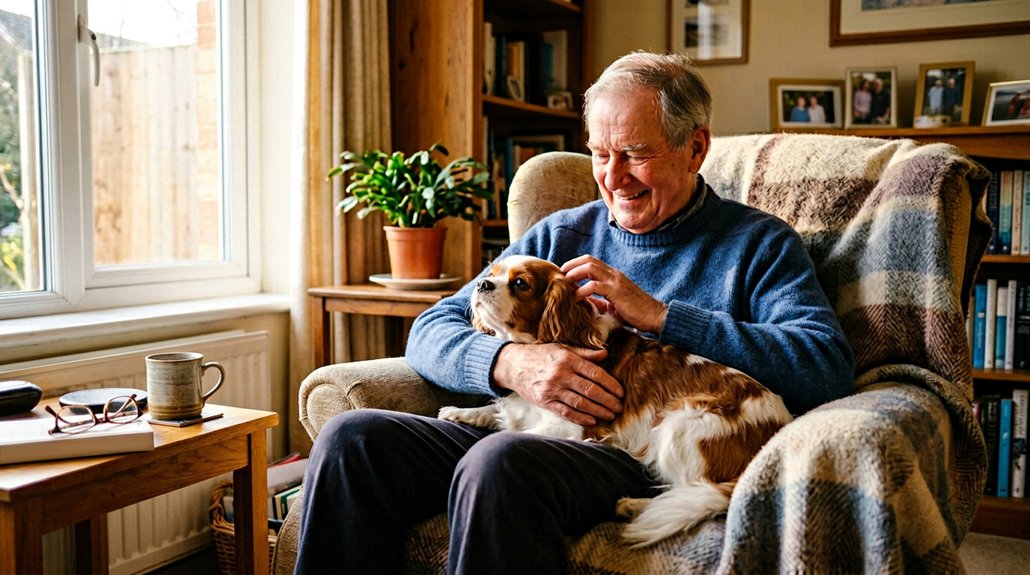
When selecting a dog for a senior, it’s essential to prioritize breeds that offer gentle companionship paired with manageable exercise and grooming needs. Breeds like the Cavalier King Charles Spaniel and Shih Tzu provide loving companionship without demanding high energy levels, while Poodles, Bichon Frises, and French Bulldogs have adaptable grooming requirements that won’t overwhelm. By considering these factors, you can find the perfect canine companion that complements a senior’s lifestyle, bringing joy and ease into their daily routine.
Suitable Companion Traits
Many seniors find joy and comfort in having the right canine companion, and certain traits in dog breeds can make all the difference. Smaller breeds like the Cavalier King Charles Spaniel and Shih Tzu are wonderful for enhancing social interaction due to their friendly and approachable nature. Gentle breeds such as the Bichon Frise and Maltese offer vital emotional support with their calm demeanor, fostering a strong bond beneficial for mental health. Additionally, these companions like the Poodle (Toy or Miniature) and French Bulldog come with the advantage of minimal grooming, perfect for low-maintenance living. A serene breed like the Havanese or Dachshund helps reduce stress levels, providing a peaceful presence that enhances your quality of life with meaningful companionship.
Exercise Needs Overview
While companion traits are essential in choosing a dog breed that complements a senior’s lifestyle, considering exercise needs is equally important for maintaining the well-being of both parties. Tailoring a dog’s exercise preferences to match your activity levels guarantees mutual happiness and health. Smaller breeds like Maltipoos and Shih Tzus thrive with short, daily walks****, offering balance for those with moderate activity levels.
Consider:
- Labrador Retrievers require regular outdoor activities, ideal for active seniors.
- Greyhounds need minimal exercise and suit those preferring a relaxed pace.
- Bichon Frise and Pomeranians demand playtime, but not extensive workouts.
Aligning a breed’s exercise needs with your physical abilities not only enhances the dog’s well-being but also enriches the senior’s lifestyle.
Grooming Requirements Breakdown
Selecting a dog with suitable grooming requirements is essential for seniors who may prefer less demanding routines. Let’s explore the options: Shih Tzus and Bichon Frises have long, dense coats demanding weekly brushing and periodic professional grooming to guarantee coat maintenance. Maltese need daily brushing to prevent matting, which might be too much for some seniors. If you’re looking for lower-maintenance grooming frequency, consider Greyhounds or Beagles. Their short coats only require minimal upkeep, making them ideal for a simpler care regimen. Poodles, with their hypoallergenic curls, need grooming every 6-8 weeks, balancing reduced shedding with a distinct grooming routine. For a moderate option, the Cavalier King Charles Spaniel needs brushing several times weekly, manageable for many.
Benefits of Pet Companionship in Later Life
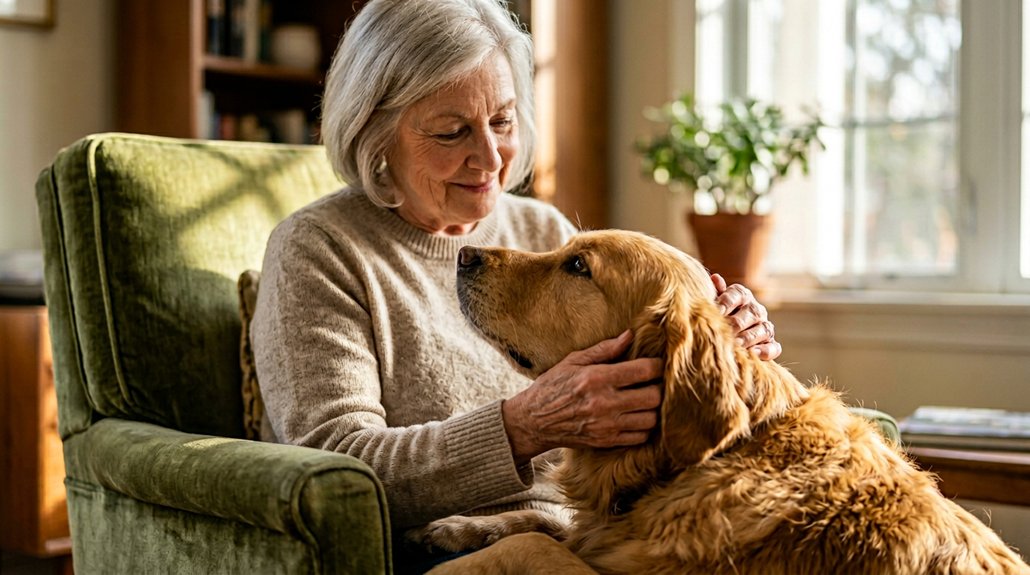
Pet companionship in your later years can profoundly enhance mental well-being and promote an active lifestyle. The simple act of walking your dog not only keeps you physically active but also opens doors to social interactions, alleviating feelings of loneliness. Furthermore, caring for a pet provides a sense of purpose, which can greatly boost your cognitive health and emotional resilience.
Enhancing Mental Well-being
- Pet ownership is linked to improved mental health, adding joy to daily life.
- The bond formed with a dog can lead to enhanced social interaction and community ties.
- Dogs are instrumental in elevating cognitive functions, offering continuous mental engagement.
Embrace the joys and therapeutic benefits a canine companion can bring into your life.
Promoting Active Lifestyles
Whether you’re looking to boost your physical activity or seeking companionship, owning a dog can greatly enhance your lifestyle. Regular walks with your furry friend not only increase your daily step count but also keep your body mass in check. These outdoor activities serve as a perfect opportunity for social engagement, fostering community ties and reducing feelings of loneliness. Beyond physical benefits, dogs offer emotional support and a sense of purpose, directly impacting your mental health and cognitive function. Studies highlight significant improvements in quality of life and mental acuity among seniors with pets. Dogs encourage active lifestyles, supporting healthy aging while enriching your days with emotional connection. Embrace pet ownership as a pathway to improved well-being and lifelong vibrancy.
Deciding on Adoption or Purchase
When considering the companionship of a dog, seniors often face the dilemma of choosing between adoption from a shelter and purchasing from a breeder. Opting for adoption presents several shelter benefits:
- Many dogs are already house-trained, reducing the need for intensive training resources.
- Adoption fees are generally more affordable, and shelters often provide support to new pet owners.
- Rescue organizations assess dogs’ temperaments, ensuring compatibility with seniors’ lifestyles.
Purchasing from a breeder might focus on specific breed considerations. Responsible breeders can offer breeds known for being suitable companions for older adults. With the trend of heightened pet ownership, shelters now have a wide selection of friendly, manageable breeds, including senior dogs that match your activity level and companionship needs.
Creating a Senior-Friendly Home for Your Pet
After choosing between adoption or purchase, the next task is creating a welcoming environment for your new pet. Start with practical pet proofing tips: clear pathways and living areas of clutter to prevent tripping hazards for both you and your pet. Use non-slip rugs or mats in high-traffic zones to prevent slips, a must for small breeds and seniors alike. Create a safe playspace by setting up a designated area with a cozy bed and accessible food and water bowls, fostering good habits. Install gates to restrict access to potentially dangerous areas, like staircases. Regularly check your home’s temperature to guarantee it’s comfortable, as older pets might struggle with temperature extremes. Consistent vet care is essential for their well-being.
Resources for Senior Pet Owners
Discovering the right resources can greatly enhance the experience of pet ownership for seniors. Embracing these opportunities can make managing both the emotional and practical aspects of dog companionship more effortless. Here’s how you can benefit:
- Financial support: Many community programs provide affordable veterinary care and pet supplies, easing financial burdens.
- Training resources: Seek out nonprofits offering senior-focused training courses. Understanding canine behavior strengthens your bond with your furry friend.
- Community engagement: Online platforms connect you with other senior dog owners, offering advice and friendship.
Additionally, local shelters and rescue organizations guide you to suitable breeds, while pet stores host workshops on care and nutrition. These resources empower you to enjoy every moment with your pet confidently and joyfully.
Frequently Asked Questions
What Is the Easiest Dog for Seniors?
You’ll find Cavalier King Charles Spaniels easily the best companion dogs due to their gentle nature and manageable energy levels. Their moderate activity needs and affectionate demeanor make them ideal for seniors seeking comfort and companionship.
What Is the Calmest Dog to Own?
You’re looking for calm and serene breeds like the Greyhound or Shih Tzu. These gentle companions adapt well to tranquil lifestyles, providing company without high demands for exercise or constant interaction. They’re perfect for peaceful homes.
Should a 75 Year Old Get a Dog?
A dog can be a balm to a senior’s soul at 75, offering companionship and encouraging leisurely walks. Consider breeds fitting your lifestyle, focusing on manageable exercise routines and lightweight grooming. You’ll cherish the joy.
Which Dog Is the Most Low Maintenance?
You’ll find that a French Bulldog is incredibly low maintenance. They’re apartment-friendly and require minimal grooming, making them an expert choice for a hassle-free canine companion. They’re perfect for those who value ease and companionship.
Conclusion
Choosing the best dog breed for seniors is like finding the missing puzzle piece that completes a picture of companionship and joy. You’ve explored the factors that make a dog senior-friendly, the breeds that fit the bill, and the heartwarming benefits of a furry friend. Whether you adopt or purchase, guarantee your home is a welcoming haven. With the right resources and a loving touch, you’ll create an enriching bond that brightens your golden years.