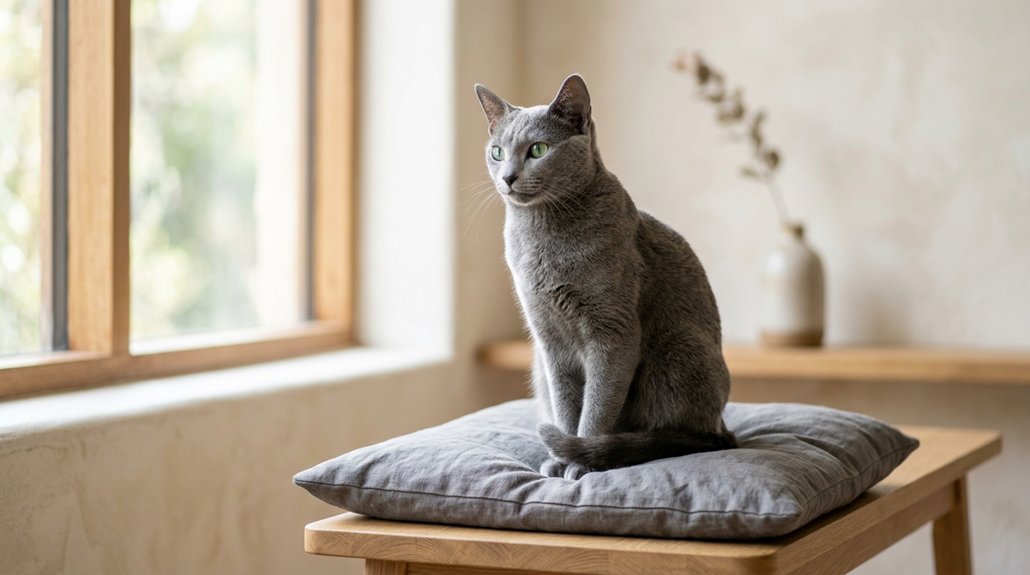
Consider low-maintenance cat breeds like the Russian Blue, British Shorthair, and Turkish Angora. These breeds are ideal if you’ve got a busy lifestyle, as they’re independent and require minimal grooming. The Russian Blue is self-sufficient yet bonds well with owners, while the British Shorthair is calm and adaptable. The Turkish Angora combines intelligence with playful independence. Each offers unique characteristics that fit well with less hands-on care, and there’s more to discover about their individual traits.
Key Takeaways
- Independent cat breeds like Russian Blue and British Shorthair require minimal attention and thrive on occasional interaction.
- Breeds such as the Turkish Angora are low maintenance and prefer minimal handling, ideal for busy individuals.
- Short, dense coat breeds like British Shorthair need little grooming, reducing daily care demands.
- Cats with low activity levels, such as the Chartreux, are content alone and need less engagement.
- Providing mental stimulation with toys and climbing spaces helps keep independent cat breeds happy and self-entertained.
Understanding Independent Cat Breeds and Their Appeal
Although independent cat breeds possess a self-sufficient nature, they’re quite appealing to busy individuals or families due to their low maintenance needs. When examining cat behaviors, breeds such as the Russian Blue and British Shorthair stand out because they adapt well to long periods alone without developing distress. Pet ownership of these cats demands understanding their specific traits, guaranteeing they get adequate interaction and mental stimulation daily. It’s vital to avoid neglect, as boredom could lead to undesired behaviors. While some independent breeds like the Himalayan and Turkish Angora offer a nice balance of affection and independence, each breed presents unique behavior characteristics. Proper research prior to adoption guarantees these pets align perfectly with your lifestyle.
Creating a Comfortable Home Environment for Independent Cats
To establish a comfortable environment for independent cats, prioritize fulfilling several essential needs. Keep their minds active with engaging toy stimulation, including puzzle feeders and interactive gadgets. These tools guarantee mental engagement, especially when you’re not around. Create cozy resting spots by offering soft beds, blankets, and high perches, allowing cats to feel secure when seeking solitude.
Confirm these felines have easy access to essential resources such as food, water, and a clean litter box spread across various home areas. Providing these encourages their independent nature and comfort. Incorporate scratching posts and climbing structures to foster natural behaviors in a safe space. Maintain a quiet, calm environment to minimize stress from loud noises, ensuring your cats remain relaxed and content.
Russian Blue: Independent and Self-Sufficient
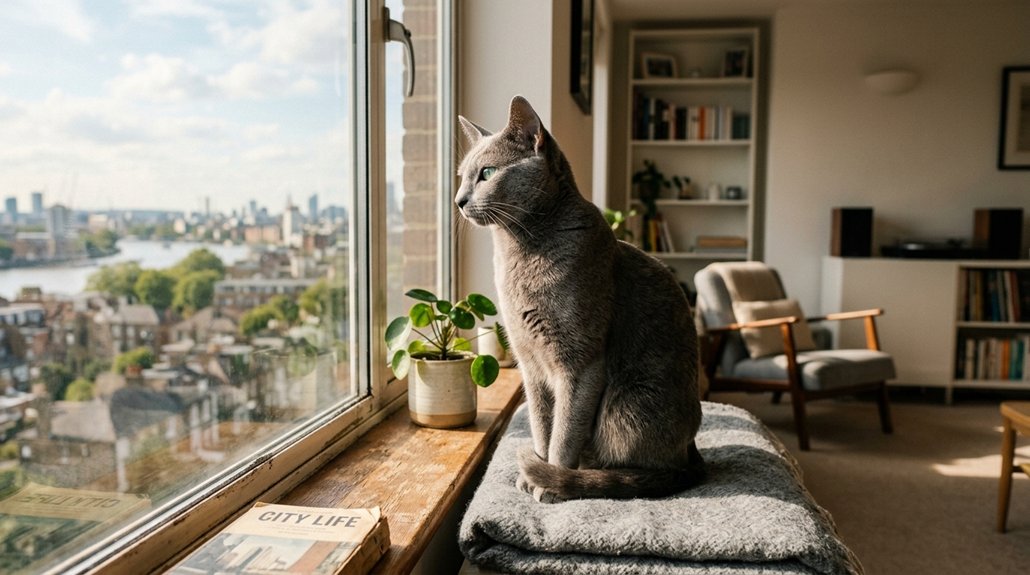
The Russian Blue is celebrated for its blend of independence and self-sufficiency, making it an excellent choice for those who are not home throughout the day. This breed’s innate ability to balance social interaction and playful independence sets it apart. While forming strong bonds with owners, the Russian Blue maintains a remarkable degree of self-reliance, ideal for low-attention environments. Its short, dense coat demands minimal grooming, enhancing its low-maintenance appeal. Russian Blues thrive on mental stimulation; they excel with interactive toys but can entertain themselves, mitigating boredom. Significantly, their quiet, gentle nature minimizes disruptive meowing, fostering a serene environment. These traits collectively illustrate why the Russian Blue is perfect for individuals seeking an independent feline companion.
British Shorthair: The Low-Maintenance Companion
For those seeking a low-maintenance companion, the British Shorthair stands out with its calm and easygoing personality. Known for its short, dense coat, this breed requires minimal grooming, presenting ideal grooming tips for busy pet owners. Regular brushing will suffice, ensuring the coat remains in top condition without demanding extensive time. Personality traits include sociability with children and other pets, making British Shorthairs adaptable to various environments. Weighing between 7 and 14 pounds, they’re a sturdy breed with a life expectancy of 12 to 16 years, providing longevity and resilience. Though they enjoy companionship, they’re also content being alone during the day, perfectly suiting individuals with bustling lifestyles. They’re a friendly yet independent option for any home.
Chartreux: Easygoing and Adaptable
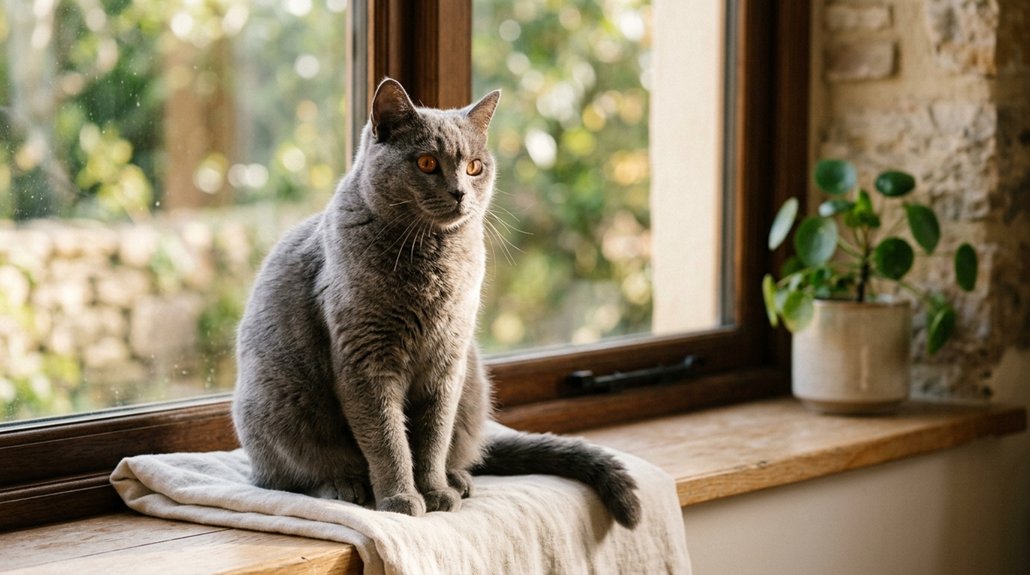
If you’re considering an adaptable cat, the Chartreux is a worthy contender due to its calm disposition and friendly nature. Its unique woolly double coat in a distinctive blue-gray color requires minimal grooming, making it a low-maintenance choice. Ideal for families, this breed forms strong bonds yet manages well in various living situations.
Unique Woolly Double Coat
Chartreux cats possess a distinctive woolly double coat, setting them apart in the feline world with their solid blue-gray fur and silvery-tipped ends. This medium-short coat is characterized by its unique woolly texture, providing not only visual appeal but also tactile interest. The dense nature of the coat serves as a natural insulator, offering warmth in varying temperatures while requiring moderate grooming to maintain its prime condition.
Regarding grooming needs, you’ll find the Chartreux’s grooming routine quite manageable. Regular, gentle brushing will suffice to control shedding and prevent matting, allowing the coat to retain its plush, springy quality. These cats are inherently low-maintenance, so even though they enjoy grooming from you, they don’t demand extensive pampering, making them ideal for busy or laid-back households.
Calm and Friendly
Renowned for their calm and friendly disposition, Chartreux cats offer a patient and adaptable presence, perfect for diverse living environments. These medium-sized felines weigh up to 16 pounds and thrive in apartments or quieter settings. Their calm nature guarantees they’re excellent companions for individuals or families seeking a low-maintenance pet. With a solid blue-gray woolly double coat, minimal grooming is needed, reducing upkeep compared to long-haired breeds. Chartreux cats are sociable with children and display remarkable pet compatibility, making them suitable for homes with multiple animals. Their patient temperament fosters positive social interaction, ensuring they integrate well into your household. Expect Chartreux to provide companionship for 11 to 15 years, enhancing your living space with their gentle presence.
Family-Friendly Pet
Building upon their calm and friendly nature, Chartreux cats excel as family-friendly pets due to their easygoing and adaptable qualities. They’re perfect for households with varied family dynamics and pet interactions. Chartreux’s gentle demeanor fosters harmonious relationships between pets and children. Here’s why they’re an excellent choice:
- Low Grooming Needs: With their unique woolly double coat, Chartreux cats require minimal grooming, making them ideal for busy family schedules.
- Adaptability: This breed easily adjusts to different living environments, from apartments to larger homes, accommodating dynamic family lifestyles.
- Independent: Chartreux cats are content being alone for periods, ensuring they’re not overly demanding of your attention.
- Strong Family Bonds: Their laid-back disposition allows them to form deep connections with the family, yet remain self-sufficient.
Himalayan: Independent Yet Snuggly
When considering a Himalayan cat, it’s important to understand their unique blend of independence and affection. Their long, luxurious coat necessitates regular grooming to prevent matting; implement a routine brushing schedule to maintain peak fur health. Despite their independent nature, Himalayans are not devoid of affection. They cherish snuggles and lounging, favoring cozy lap time over vigorous play. However, don’t be surprised by occasional playful moments—an engaging toy can elicit rare bursts of activity and curiosity. They thrive in peaceful, low-maintenance environments, making them ideal for indoor living. Himalayans are well-suited to families or individuals seeking a cat that offers companionship without the demand for constant attention, ensuring a loving yet contentedly self-sufficient pet.
Turkish Angora: Elegant and Easygoing Companion
Considering the traits of independent feline varieties, another distinguished breed is the Turkish Angora, noted for its graceful elegance and adaptable temperament. This breed is known for its independent nature and ability to entertain itself, which makes it an excellent choice for those with busy lives. Here’s what you need to know:
- Turkish Angora characteristics: Renowned for their intelligence and playfulness, these cats are loyal yet prefer minimal handling.
- Turkish Angora grooming: Although their silky coat needs regular maintenance to prevent matting, it’s less demanding compared to other longhaired breeds.
- Mental stimulation: Interactive toys and climbing spaces are essential to keep this intelligent breed engaged.
- Versatile living: They adapt well to various environments, including apartments, as long as their need for play is met.
Essential Factors for Selecting Your Independent Cat
Selecting the right independent cat breed involves understanding various essential factors that influence compatibility with your lifestyle. First, assess grooming considerations. Breeds like the Exotic Shorthair offer low-maintenance grooming due to their short, plush coats, requiring minimal effort on your part. Next, evaluate the energy levels appropriate for your home environment. Breeds such as the Himalayan and Chartreux have low activity profiles, making them ideal for quiet households or smaller apartments.
Additionally, examine socialization tendencies. While independent, some breeds like the Selkirk Rex and Maine Coon remain affectionate without being overly demanding. Finally, consider how well the breed adapts to alone time. Breeds like the British Shorthair comfortably entertain themselves, suitable for owners with demanding schedules. Carefully balancing these factors guarantees a suitable match.
Frequently Asked Questions
What Cat Breed Needs the Least Attention?
You’re looking for low maintenance cats that are self sufficient felines. The Russian Blue stands out. They’re intelligent, independent, and don’t need much attention. Perfect if you want a cat that’s loving yet requires little engagement.
What Is the 3-3-3 Rule for Cats?
The 3-3-3 rule for cats highlights a helpful, holistic approach to feline familiarity. In the cat adjustment period, assess the 3-day, 3-week, and 3-month timeline to guarantee effective integration into your home environment.
What Breed of Cat Is Independent but Affectionate?
You’ve got several options. The Russian Blue combines independence with affectionate bonds, thriving in quieter environments. British Shorthairs are calm yet sociable, ideal for relaxed homes. Choose according to their personality traits matching your ideal environment.
What Breed of Cat Is Okay With Being Alone?
Consider the British Shorthair, Russian Blue, or Exotic Shorthair. Their cat personality traits include feline independence styles perfect for solitude. You’ll find they’re self-sufficient, calmly entertain themselves, and won’t develop separation anxiety when left alone.
Conclusion
Selecting an independent cat breed offers companionship with less demand for attention. Curiously, a 2021 study found that 40% of cat owners prefer low-maintenance pets due to hectic lifestyles. Breeds like the Russian Blue, British Shorthair, Chartreux, Himalayan, and Turkish Angora fit this preference well, blending self-sufficiency with occasional affection. Make certain a comfortable home environment and consider these traits when choosing an independent cat, aligning your pet’s nature with your lifestyle seamlessly.