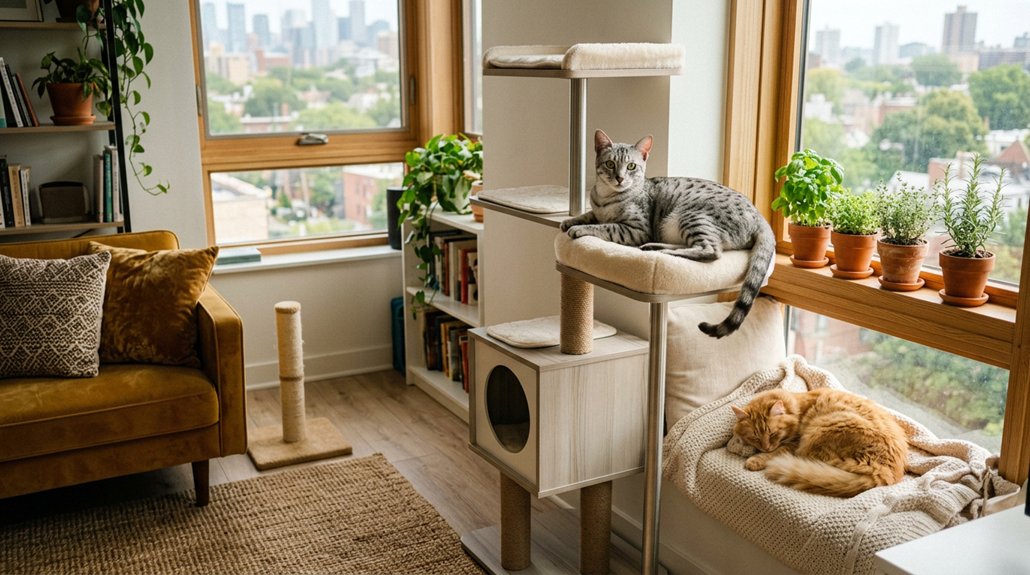
When choosing the best cat for small homes or condos, consider breeds like the British Shorthair, Russian Blue, and Ragdoll, known for their adaptability and low-maintenance nature. British Shorthairs are calm and require minimal exercise, while Russian Blues offer hypoallergenic coats. Ragdolls provide gentle companionship. Maximizing vertical space with cat trees enriches their environment. Rescue cats also thrive due to their adaptability. There’s much more to discover about making your compact space a feline paradise.
Key Takeaways
- British Shorthairs have a calm demeanor and require minimal exercise, making them ideal for small living spaces.
- Rescue cats adapt well to confined environments, bringing diverse personalities and emotional support.
- Russian Blues are low-maintenance and hypoallergenic, perfectly suited for compact homes.
- Persian cats offer a relaxed demeanor for cozy areas but need regular grooming.
- Ragdolls thrive in tight quarters due to their gentle and easygoing nature.
Qualities That Make Cats Perfect for Small Spaces
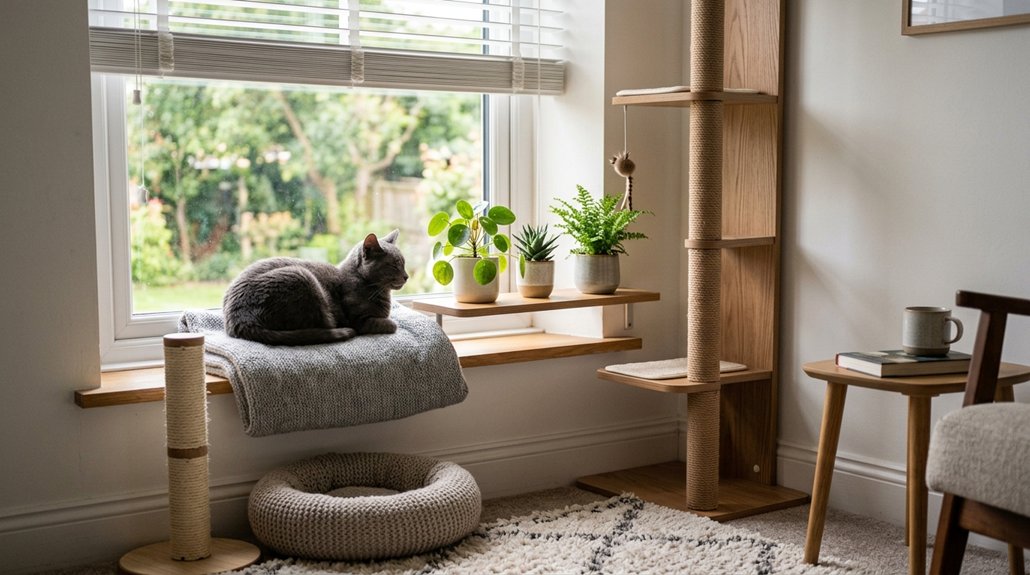
When you’re living in a small home, choosing the right cat is vital to guarantee both your comfort and the feline’s well-being. Cats with strong adaptability traits are perfect companions for compact spaces. You should look for breeds like the British Shorthair and Russian Blue, known for their calm demeanor and low activity levels. These felines settle comfortably into small-home life while maintaining a serene presence. It’s essential to remember that cats naturally gravitate towards vertical space. By incorporating cat trees and shelves, you can offer them secure vantage points to explore. This not only optimizes your dwelling but also enriches their environment. Additionally, providing interactive toys guarantees they stay engaged, compensating for limited horizontal play areas.
Top Cat Breeds for Compact Apartments
When choosing the perfect cat for a compact apartment, you’ll want to contemplate breeds that balance companionship with modest space requirements. Breeds like the British Shorthair, Ragdoll, Russian Blue, Siamese, and Persian each bring unique qualities that make them ideal for smaller homes. Whether it’s their calm demeanor or adaptability, these cats promise to enrich your living space without demanding too much room.
Perfect Breeds for Small Spaces
Finding the best cat for a small home can greatly enhance your living environment, as some breeds are particularly well-suited to compact spaces. Understanding cat behavior and space adaptation is key. The British Shorthair’s calm demeanor and minimal exercise needs make them perfect for small apartments. Ragdolls, gentle and affectionate, relish close companionship and can flourish in tight quarters. Russian Blues not only adapt easily with their low-maintenance needs, but their hypoallergenic coat also benefits allergy sufferers. Siamese cats, known for their sociable and talkative nature, require vertical spaces to thrive in smaller homes, fulfilling their need for interaction. Finally, Persians bring a laid-back attitude, ideal for relaxing in confined spaces, though they need regular grooming.
Compact Living Breeds
Living in a compact apartment doesn’t have to mean sacrificing the joys of feline companionship. Some cat breeds naturally suit smaller spaces and adjust to lifestyle changes with ease. British Shorthairs are perfect for compact living, offering a calm and affectionate presence without needing much room. Russian Blues bring intelligence and low-maintenance traits, along with hypoallergenic coats that eliminate cleaning stress. If you enjoy gentle feline behaviors, consider a large but laid-back Ragdoll who’ll follow you around your home. Persians embrace serene environments, though regular grooming is a must for their plush fur. Sociable Siamese thrive in small apartments, appreciating human interaction and vertical spaces for climbing. These breeds feature adaptable qualities that make cohabiting in small spaces a delight.
Key Features for Creating a Cat-Friendly Compact Home
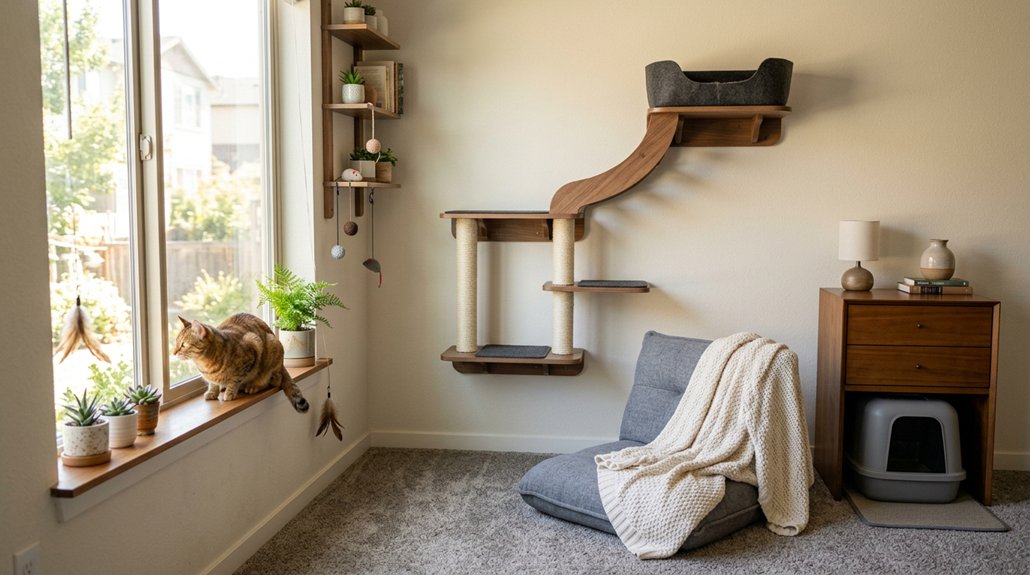
Creating a cat-friendly compact home starts with maximizing vertical spaces through cat trees and shelves, providing your feline friend with plenty of territory to explore without occupying precious floor space. Enrich your cat’s indoor environment by choosing interactive toys and incorporating regular playtime, ensuring your pet remains both physically and mentally active. Additionally, opt for apartment-friendly breeds known for their adaptability to smaller spaces, making for a harmonious living situation without compromising on your cat’s well-being.
Maximizing Vertical Spaces
A small home doesn’t mean you can’t create an adventurous haven for your cat. By embracing vertical spaces, you can maximize your compact living area effectively. Vertical climbing solutions such as cat trees and wall shelf designs are vital for enabling cats to explore upward, space-saving ways. These structures provide high perches, offering a secure vantage point that enhances your cat’s sense of safety and wellbeing.
A well-planned setup with wall-mounted shelves not only conserves precious floor space but also enriches your feline’s play and rest opportunities. Secure scratching posts and climbing features are important; they allow natural behaviors while safeguarding your furniture. Regularly rotating toys on elevated surfaces keeps your cat mentally stimulated, making every vertical inch a part of their playground.
Enriching Indoor Environment
How can you make your small home a cat-friendly paradise? Start by focusing on environment enrichment. Maximize vertical space with cat trees, shelves, and perches, letting your feline explore while conserving floor area. Interactive playthings are crucial for stimulating your cat’s mind. Rotate toys to keep them entertained, preventing boredom in compact living quarters. Guarantee your home includes multiple cozy hideouts where your cat can retreat and unwind, away from household hustle and bustle. Establish a routine for feeding and litter box maintenance, with separate, easily accessible areas to promote hygiene and meet your cat’s spatial needs. Remember, regular veterinary care and maintaining a clean environment are fundamental to your cat’s health and happiness, especially in smaller living spaces.
Choosing Apartment-Friendly Breeds
When selecting a cat breed for a compact home, consider those that adapt well to smaller environments and aren’t overly energetic. Cats like the British Shorthair and Ragdoll excel in quieter settings, and their low-energy nature suits apartment living. Lifestyle adjustments can guarantee your feline friend stays content—provide cozy sleeping spots, interactive toys, and engaging climbing options.
Consider breed characteristics to match both temperament and space:
- Small and adaptable breeds: Russian Blue and Siamese enjoy vertical spaces like shelves, maximizing your home’s usability.
- Playful yet low-maintenance breeds: Burmese and Devon Rex are ideal companions in limited spaces.
- Interactive spaces: Create stimulating environments with cozy beds and roomy litter boxes, guaranteeing your cat remains engaged and satisfied in compact settings.
Keeping Indoor Cats Engaged and Happy
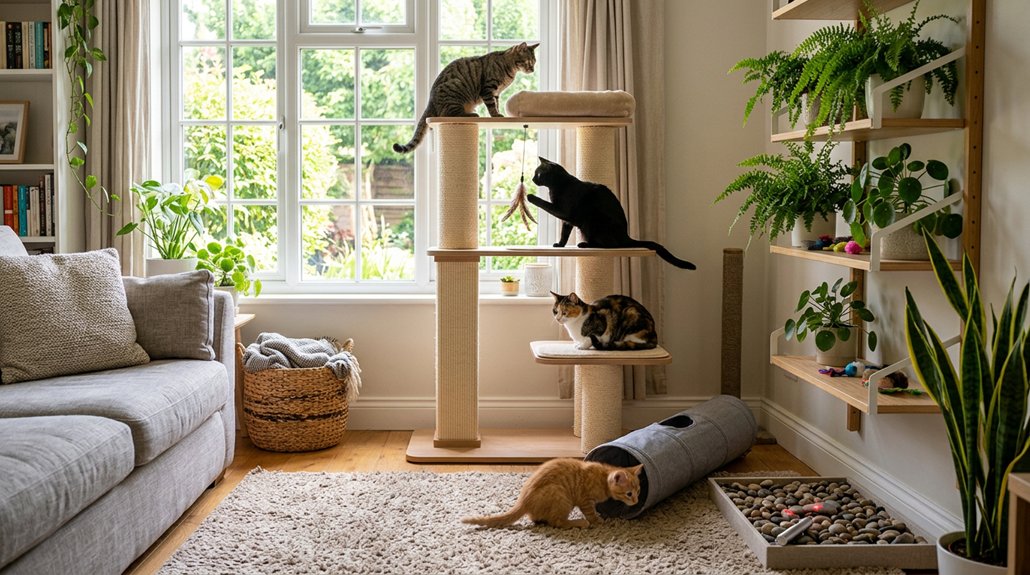
While living in a small space with an indoor cat might seem limiting, numerous strategies can keep your feline friend content and engaged. Interactive playtime is essential for boredom prevention, helping your cat stay active and mentally stimulated. Incorporate a variety of toys to spark interest, rotating them regularly to maintain novelty and prevent behavioral issues. Create vertical spaces with shelves and cat trees, allowing your cat to explore and exercise their climbing instincts. These additions can dramatically enhance their environment, offering the stimulation they crave. Additionally, “Kitty TV” in the form of bird feeders outside windows offers endless entertainment. With scheduled activity and new enrichment elements, you’ll guarantee your cat’s happiness and well-being in any small home.
Advantages of Rescue Cats in Limited Spaces
Enhancing your indoor cat’s environment is key to keeping them engaged, and adopting a rescue cat could be a perfect complement to your efforts. Rescue cats effortlessly bring socialization benefits and behavioral adaptability to limited spaces. Thanks to their previous experiences in shelters or outdoor settings, many have already developed the skills essential for thriving in cozy homes. You’re likely to find that these adaptable felines:
- Acclimate quickly: Often comfortable in small environments due to past experiences.
- Exhibit diverse personalities: Rescue cats present a range of energy levels, perfect for matching any urban lifestyle.
- Benefit from enrichment: Activities aimed at stimulation can enhance their quality of life in confined living arrangements.
Ideal Breeds for Cozy, Low-Energy Living Areas
For those residing in small homes, it’s vital to select cat breeds that are well-suited for cozy, low-energy living areas. Ragdoll characteristics, with their gentle and affectionate nature, help them thrive in such settings, while British Shorthair temperament offers a calm, easy-going companionship, perfect for low-energy environments. The Russian Blue is brilliantly adaptable, needing minimal grooming and seamlessly fitting into small spaces. Persians excel in serene atmospheres, though daily grooming is important to maintain their long, luxurious coats. Siamese sociability guarantees they thrive in apartments, as their minimal space requirements and strong desire for human interaction make them wonderful companions. By choosing the right breed, you can enjoy harmonious living with your feline friend in even the coziest of homes.
Strategies for Introducing Cats to Small Environments
As you introduce your cat to a new, smaller home, it’s essential to create a comforting environment where they can adjust gradually. Your first step is establishing safe zones with essentials. Designate an area with a cozy bed, litter box, and food, enabling your cat’s smooth adaptation and reducing potential distress. Observe their cat behavior as they explore at their own pace.
Providing vertical spaces is vital for their instinctual need to climb and survey their surroundings. Consistency in daily routines reinforces structure, making them feel secure in their new environment.
- Utilize calming pheromone diffusers to soothe emotions.
- Regularly monitor for signs of distress, readying adjustments in the setup.
- Allow casual exploration to foster confidence and adaptation in their safe zones.
Identifying Contentment in Apartment Cats
Contentment in apartment cats reveals itself through various behaviors and routines that signal their comfort and happiness. You’ll notice regular grooming habits and playful behavior as key indicators that your feline friend feels safe and secure. Seeking interaction is another encouraging sign, reflecting their desire to bond and engage with you. Cat behavior is directly linked to emotional health, so maintaining a consistent routine for meals and litter box care is vital for stability. Enriching their environment with climbing structures and interactive toys stimulates their instincts, warding off boredom. Beware of behavioral shifts like appetite loss or excessive hiding; these could signal emotional distress. Always guarantee they have a designated retreat for relaxation, fostering comfort and contentment in small spaces.
Frequently Asked Questions
What Is the 3-3-3 Rule With Cats?
The 3-3-3 rule helps you manage cat adjustment period and feline stress. Expect initial hiding or discomfort, gradual exploration after three weeks, and complete ease by three months. Patience and understanding foster successful adjustments.
What Annoys Cats the Most?
Loud noises, sudden routine changes, and confinement are common feline irritants. Cats value stability and tranquility, so disruptions can lead to frustration. Pay attention to cat behavior to avoid these triggers and maintain harmony.
What Is the Most Low Maintenance Cat?
You’ll find Russian Blues and British Shorthairs among ideal cat breeds if you’re seeking low maintenance options. Adopt these breeds by prioritizing minimal grooming and providing a comfortable environment. Their calm demeanor makes everyday care quite effortless.
Can Cats Lower Cortisol?
Absolutely, a cat’s gentle purr is like nature’s whispering lullaby, aiding cortisol reduction. Through feline therapy, petting cats triggers oxytocin release, reducing anxiety and stress, and providing emotional support and companionship. You’re likely to feel calmer.
Conclusion
So, you’re diving into the world of feline housemates in your shoebox-sized apartment. Fear not! Despite their reputation as aloof royalty, cats are shockingly adaptable. Who knew they’d be perfect for spaces that rival broom closets? Just guarantee your royal highness has their plush throne (aka your couch), and voila! You’ve got yourself a purr-fectly content companion. Remember, in a cozy palace, even the most aloof feline will reign supreme. Size doesn’t matter; it’s all about attitude.