
To protect your cat from parasites, implement year-round prevention using topical and oral treatments for fleas, ticks, ear mites, and heartworm. Regular deworming and maintaining cleanliness can keep intestinal worms and protozoan infections at bay. Check your cat for ticks after outdoor activities and inspect their ears regularly for mites. Keep their environment clean by frequently removing waste and limiting exposure to contaminated areas. With these steps, you’ll lay a strong foundation for your cat’s health journey.
Key Takeaways
- Use year-round topical treatments and oral medications for comprehensive flea and tick control.
- Conduct regular ear inspections and cleanings to prevent ear mite infestations.
- Ensure regular deworming and maintain environmental sanitation to control intestinal worms.
- Give monthly heartworm preventatives and eliminate standing water to reduce mosquito risks.
- Schedule regular veterinary check-ups for early parasite identification and management.
Identify Common Cat Parasites
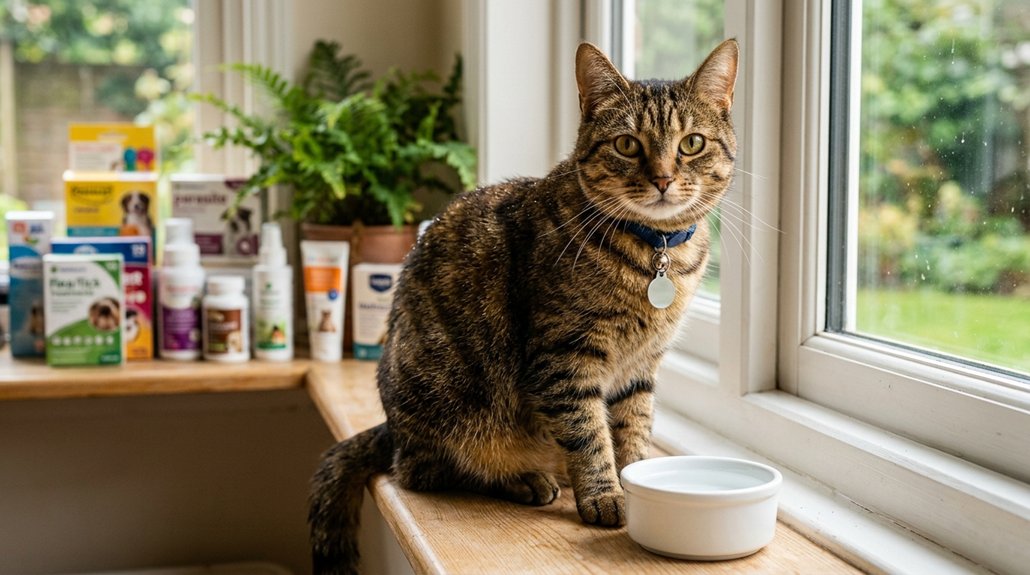
When it comes to keeping your feline friend healthy, recognizing common cat parasites is crucial. External parasites like fleas, ticks, and ear mites often manifest through specific cat behaviors such as excessive scratching and hair loss. Fleas have intricate parasite lifecycles that can lead to skin infections and transmit tapeworms. Ticks latch onto the skin to feed, sometimes carrying dangerous diseases. Internally, roundworms, hookworms, and tapeworms, contracted through contaminated sources, wreak havoc with symptoms like vomiting and diarrhea. Roundworms, prevalent in up to 75% of cats, are particularly concerning. Being attentive to changes in your cat’s behavior can offer clues about a parasite problem. Regular vet check-ups and vigilant observation guarantee you’re taking pivotal steps in early detection and treatment, safeguarding your pet’s well-being.
Stop Fleas and Ticks
Although fleas and ticks might seem like minor nuisances, they can pose significant health risks to your cat. Flea behavior involves fast movement, causing itching, hair loss, and even infections. Year-round control through topical treatments, oral medications, and flea collars is essential for prevention. Ticks thrive in outdoor habitats and can transmit diseases like Lyme disease. Regular tick checks post-outdoor activities, combined with monthly preventatives, are vital to protecting your cat.
Fleas and ticks pose significant health risks; year-round control and regular checks are essential for your cat’s safety.
- Check your cat’s fur regularly for parasites.
- Use veterinary-recommended flea and tick preventatives.
- Groom your cat often to detect flea infestations early.
- Keep your outdoor spaces tidy to limit tick habitats.
- Implement strict flea control to prevent tapeworm transmission.
With consistent management, you can safeguard your cat’s health effectively.
Understand Ear Mite Risks
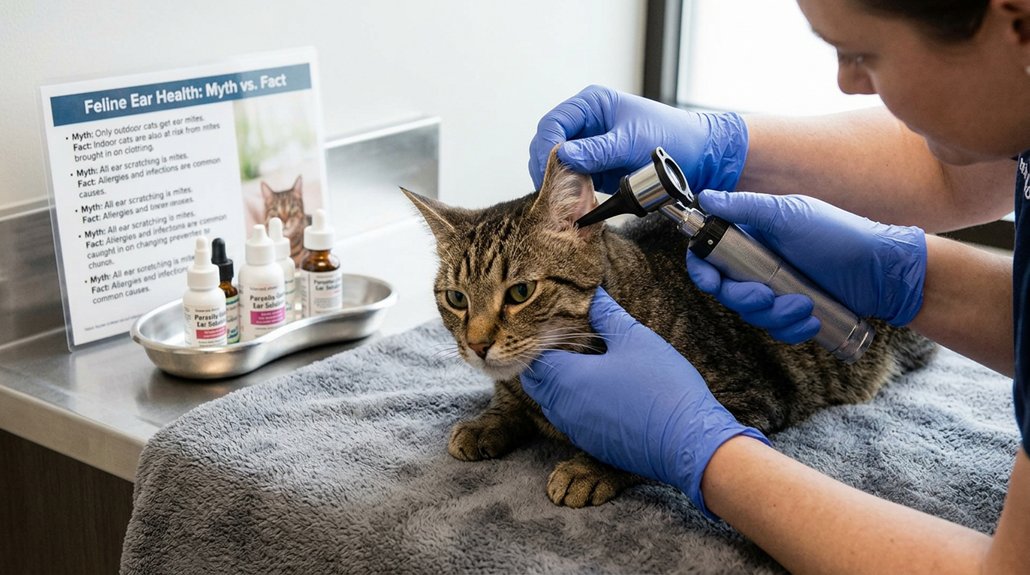
Beyond guarding against fleas and ticks, it’s also important to be aware of the risks posed by ear mites to your cat’s health. These microscopic parasites inhabit your cat’s ear canal, causing discomfort and symptoms like intense itching, dark discharge, and inflammation. Ear mite transmission is highly contagious, especially among cats, so limit contact with infected animals and maintain good hygiene in multi-pet households. Early detection is essential; otherwise, secondary infections can develop. To aid infection prevention, perform regular ear inspections and cleanings, as this helps maintain your cat’s ear health. If you suspect ear mites, seek veterinary advice for prescription medication. Treatment is effective but must be followed by thorough ear cleaning to clear residual debris.
Defend Against Intestinal Worms
To effectively defend your cat against intestinal worms, understanding the common types and modes of transmission is essential. Roundworms and hookworms infect up to 75% of cats, often via contaminated environments or prey. For kittens, regular deworming is vital, as they can acquire roundworms through nursing. Here’s how you can help protect your feline friend:
- Implement deworming techniques regularly, especially for kittens.
- Maintain rigorous environmental sanitation: daily litter box cleaning and prompt feces removal.
- Monitor your cat’s hunting behavior to prevent ingestion of contaminated prey.
- Schedule annual vet check-ups, including fecal testing, to catch infections early.
- Educate yourself on signs of worm infections like weight loss and dull coat to act promptly.
These tips will minimize intestinal worm risks effectively.
Plan Your Cat’s Parasite Security

To effectively safeguard your cat from parasites, it’s vital to establish a year-round prevention plan by working closely with your veterinarian. They can guide you in selecting the best topical treatments, oral medications, or flea collars that suit your cat’s unique lifestyle and environment. Additionally, regular check-ups and mindfulness of potential symptoms are essential to guarantee any infestation is caught and treated promptly.
Year-Round Prevention Strategies
While some pet owners might think that parasites are only a seasonal concern, the reality is that they pose a threat all year round, necessitating an extensive prevention strategy for your cat’s health. A proactive approach involves maintaining a thorough vaccination schedule and investing in parasite education. Follow your vet’s advice on topical treatments, oral medications, or flea collars. Regular vet check-ups every six months are essential for parasite screening and keeping vaccinations up-to-date. Incorporate monthly fecal testing and deworming as directed. Enhance your strategy with these steps:
- Administer topical treatments consistently
- Schedule bi-annual veterinary check-ups
- Ensure monthly fecal tests and deworming
- Practice strict litter box hygiene daily
- Stay informed about parasites and prevention
Implementing these year-round practices will greatly reduce parasite risks.
Identifying Parasite Symptoms
Following a diligent prevention strategy is only part of keeping your cat safe from parasites; recognizing the symptoms is equally important. Early symptom recognition can make all the difference in your cat’s health. Look for excessive scratching or biting at the fur, as this may indicate external parasites like fleas. Gastrointestinal symptoms such as vomiting or diarrhea, along with noticeable weight loss, could signal internal parasites such as roundworms. Pay attention to a dull coat and pale gums, possible indicators of anemia from blood-sucking parasites like hookworms. Behavioral changes, like lethargy or head shaking, might suggest ear mites, especially with dark ear discharge or inflammation. Regularly monitoring these signs guarantees you maintain your cat’s well-being, prompting timely action if needed.
Veterinary Guidance Importance
When it comes to safeguarding your cat against parasites, partnering with a veterinarian is indispensable. Your vet offers personalized recommendations, tailoring prevention plans to your cat’s unique needs and environments. Regular veterinary check-ups allow for ongoing monitoring, essential in catching any parasite issues early. By recommending monthly preventive treatments, your vet helps shield your cat from both internal and external parasites year-round. Routine fecal testing flags gastrointestinal parasites before they become a bigger health threat.
Consider the following:
- Guarantee regular vet visits for thorough parasite monitoring.
- Use vet-prescribed treatments to minimize side effects.
- Incorporate safe flea and tick controls suited for your cat’s health status.
- Plan for seasonal parasite risks with expert guidance.
- Stay informed on early detection and timely intervention strategies.
Guard Against Heartworm and Protozoa
To guard your cat against heartworm and protozoan infections, it’s vital to implement effective prevention and treatment strategies. Make certain your cat receives veterinary-recommended monthly heartworm preventatives and routinely test for protozoan infections, as these parasites can spread even in asymptomatic cats. Maintaining cleanliness by regularly sanitizing litter boxes and monitoring your cat’s health can further mitigate the risks associated with these parasites.
Heartworm Prevention Measures
Ensuring your cat receives year-round heartworm prevention is essential, as the disease is spread by mosquito bites and can be fatal before any symptoms are noticed. Despite common heartworm myths, even indoor cats need preventive measures since mosquitoes carry the infection indoors. Monthly preventatives are a critical step to keeping your cat safe. Pair this with regular veterinary check-ups to monitor for heartworm disease and maintain your cat’s health.
Here’s how to guard against heartworm:
- Use monthly heartworm medications prescribed by your vet.
- Regularly schedule check-ups and fecal tests for early detection.
- Practice good hygiene and eliminate standing water to reduce mosquito risk.
- Keep up with routine parasite control regimens.
- Understand heartworm risks—missteps can lead to serious outcomes.
Protozoan Infection Risks
While heartworm prevention is a key aspect of keeping your cat healthy, it’s important not to overlook the threat of protozoan parasites. Protozoans such as Giardia and Isospora can cause gastrointestinal issues, including chronic diarrhea. Many cats don’t show protozoan symptoms, making regular check-ups essential. Toxoplasma, another protozoan, rarely affects cats severely but can pose risks to humans, especially pregnant women and the immunocompromised. Maintaining excellent sanitation practices, like cleaning litter boxes regularly and promptly disposing of feces, greatly reduces infection risks. In addition, preventing flea infestations and ensuring your cat doesn’t come into contact with rodents are critical steps. Both fleas and rodents can transmit protozoan parasites, leading to infections like Giardia. Stay proactive in protecting your cat’s health.
Effective Treatment Strategies
Safeguard your feline friend from parasites by prioritizing regular preventatives and veterinary guidance. Treatment success against heartworm involves administering monthly preventatives, vital in mosquito-prone areas, as even indoor cats are at risk. For protozoan infections like Giardia, regular fecal tests are fundamental. Despite common treatment failures, specific medication options and veterinary help are essential.
- Administer monthly heartworm preventatives: Especially in mosquito-heavy regions.
- Conduct regular fecal tests: Detects infections like Giardia before they worsen.
- Implement proactive flea control: Minimizes risks of tapeworms and protozoan infections.
- Clean litter boxes daily: Prevents parasite spread with stringent sanitation.
- Consult your vet for appropriate medication options: Guarantees targeted and effective treatment.
Protecting your cat requires a proactive approach balancing prevention and treatment.
Keep Your Cat Healthy Year-Round
To keep your cat healthy year-round, it’s important to implement consistent parasite prevention measures like topical applications and oral medications. These treatments protect against fleas, ticks, and worms and should be combined with practices like balanced nutrition for best health. Managing stress is equally important, as a calm environment supports a robust immune system, enhancing the nutrition impact on your cat’s well-being.
Regular veterinary check-ups, including fecal testing, are key for identifying parasites early. Clean your cat’s litter box daily and remove outdoor feces to minimize transmission risks. Limit their contact with wildlife and strays, maintaining supervision during outdoor activities. Year-round application of preventative measures for common parasites is significant, particularly in multi-pet households or high-risk areas, safeguarding your cat’s health effectively.
Frequently Asked Questions
How Do I Prevent My Cat From Getting Parasites?
You should maintain litter box hygiene by cleaning frequently. Limit outdoor exposure where wild animals roam. Schedule routine vet visits for fecal testing. Use year-round preventive treatments, like flea collars, to effectively guard against parasites.
What Is the 3-3-3 Rule for Cats?
The 3-3-3 rule is like baby steps for cats: within three days they experience stress, three weeks they’re adjusting gradually, and by three months they usually settle in. Practice patience; their comfort is the key to success.
What Is the One Meat to Never Feed a Cat?
Never feed your cat raw pork due to parasite risks like Trichinella spiralis and bacteria such as Salmonella. Parasite symptoms in cats can include vomiting and diarrhea. Consult your vet for safe dietary options and parasite prevention.
What Is the Best Parasite Prevention for Cats?
Did you know that 1 in 3 cats will encounter parasites? The best prevention includes a vet-guided plan combining natural remedies and indoor safety measures. Regular consultations guarantee your cat’s protection is both effective and appropriate.
Conclusion
Protecting your cat from parasites means safeguarding their health and happiness. From fleas that cause endless scratching to ticks that can transmit diseases, staying vigilant is essential. Prioritize ear mite checks, deworm regularly, and consider preventive treatments for heartworm and protozoa. Plan your cat’s parasite security like a fortress, impenetrable and strong. By doing so, you’ll guarantee your feline friend enjoys a life full of purrs, play, and peace, free from the burdens of invisible invaders.