Schedule your puppy’s first vet visit within the first week of bringing them home. Early visits are essential for detecting health issues and initiating vaccinations, protecting against severe diseases. You’ll need medical history paperwork, comfort items, and a stool sample. Expect thorough health checks, initial vaccinations, and parasite testing. Discuss feeding, training, and preventative care with your vet. This early step establishes a foundation for ongoing care and insights into your puppy’s future health milestones await you.
Key Takeaways
- Schedule the first vet visit within the puppy’s first week at home for a health baseline and early care guidance.
- Begin vaccinations by 6-8 weeks to protect the puppy against severe diseases.
- Early vet visits help detect underlying health issues and establish a care foundation.
- Prepare necessary paperwork, comfort items, and a fresh stool sample for the first appointment.
- Regular vet visits every 3-4 weeks are crucial for ongoing care and vaccinations.
Why Early Vet Visits Matter for Your Puppy
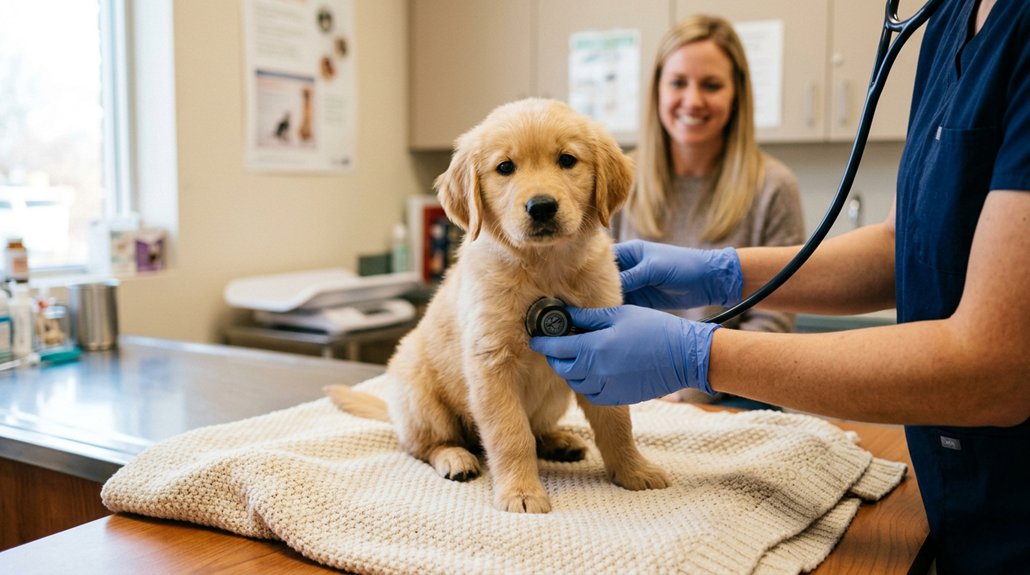
When considering the health and safety of your newly adopted puppy, early veterinary visits are essential for establishing a strong foundation of care. These initial consultations, recommended within your puppy’s first week at home, are vital in setting a baseline for puppy health. Your vet can detect any underlying health issues early on and initiate necessary vaccinations by 6-8 weeks of age to protect against potentially severe diseases. Regular check-ups every 3-4 weeks until the age of 4-5 months enable continuous health monitoring. Importantly, these visits are a chance to build a solid veterinary relationship. This partnership educates you on nutrition, training, and behavioral management, ensuring thorough care and potentially extending your puppy’s lifespan through proactive health management.
Quick Steps to Schedule Your Puppy’s First Vet Visit
After welcoming a new puppy into your home, it’s essential to promptly schedule their first vet visit to confirm a healthy start. Within days of arrival, set up a vet appointment to establish a health baseline and initiate vaccinations, vital for puppy health. Gather all necessary paperwork detailing the puppy’s medical history, including prior vaccinations from the breeder or shelter. Bringing a fresh stool sample for analysis is also recommended to check for intestinal parasites. Expect to discuss a follow-up vaccination schedule, typically every 3-4 weeks until they’re 4-5 months old. Prepare a list of questions and observations regarding your puppy’s appetite, behavior, and health to facilitate thorough discussions with the veterinarian at the vet appointment.
How to Prepare for Your Puppy’s Initial Vet Visit
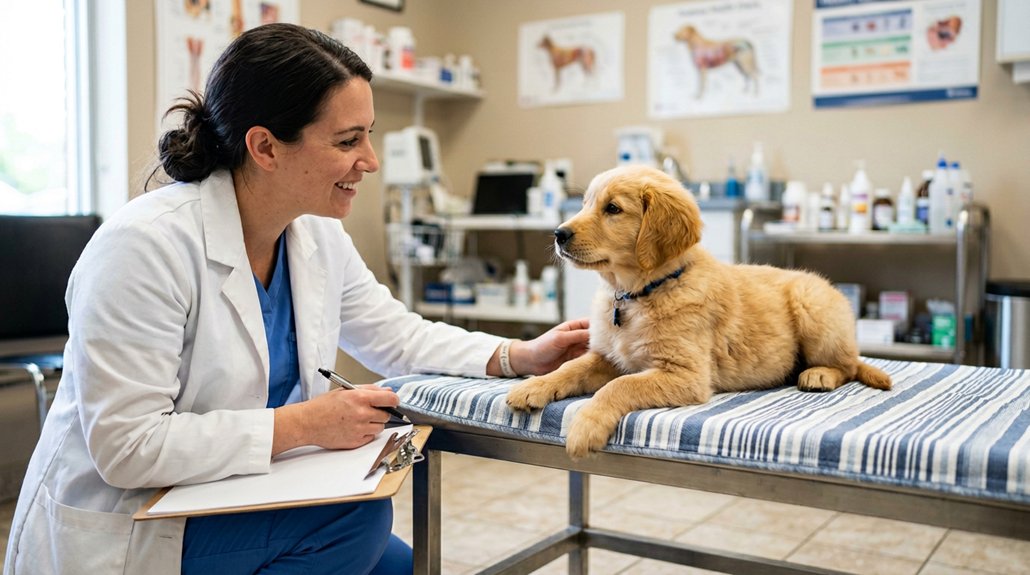
To guarantee your puppy’s initial vet visit is thorough and efficient, gather all relevant health records and any paperwork received from the breeder or shelter. It’s also important to prepare comfort items such as a dog carrier with familiar blankets or toys to ease your puppy’s anxiety during transit. Finally, bring a fresh stool sample for the vet to check for intestinal parasites, and make a list of questions regarding your puppy’s health, nutrition, and behavior.
Gathering Essential Information
As you prepare for your puppy’s initial vet visit, gathering the right information is crucial for a successful appointment. First, acquire health documentation from the breeder or shelter. This includes vaccination history and any previous treatments, which provide necessary background for evaluating your puppy’s current health status. Additionally, prepare diet notes to inform the vet of your puppy’s specific nutrition intake and brands.
- Gather veterinary records: Confirm you have documentation of all vaccinations and past medical treatments.
- List questions and concerns: Document any issues about your puppy’s health or behavior to discuss.
- Note the diet: Record specific food and treats to help the veterinarian give tailored advice.
Remember to bring a fresh stool sample for important parasite analysis.
Preparing Comfort Items
Once you’ve gathered all essential information for your puppy’s initial vet visit, turn your focus to preparing comfort items that will confirm the journey is as stress-free as possible. Employing effective comfort strategies starts with using a well-lined dog carrier; integrate familiar elements like your puppy’s favorite blanket or toy. For safe travel, follow transport tips by always securing your pup with a leash and collar. Including small treats or cherished toys in the carrier can help soothe and distract them from potential anxieties.
| Item | Purpose | Transport Tip |
|---|---|---|
| Blanket or Toy | Provides comfort and security | Line the carrier to evoke a familiar environment |
| Leash and Collar | Confirms safety | Use to restrain the puppy during transport |
| Treats or Toys | Helps soothe and distract | Offer during stressful moments to ease stress |
Arrive early to manage paperwork and acclimatize your pup.
What Happens at Your Puppy’s First Check-Up?
Before your puppy’s first check-up, it’s important to know what to expect during the visit to guarantee you’re prepared. The veterinarian will conduct a thorough physical examination to assess your puppy’s overall health, including weight, coat condition, and essential signs. They’ll review vaccination history and administer initial vaccinations if your puppy is 6 to 8 weeks old. Key components of the check-up include:
- Fecal test and deworming: Screens for parasites and establishes deworming protocols.
- Behavior assessment and socialization tips: Offers insights on your puppy’s temperament and effective socialization strategies.
- Healthcare planning: Sets up a personalized plan for vaccinations and treatments.
This visit is also a chance to discuss any concerns about nutrition, training, or preventative care strategies.
Key Questions to Ask Your Vet About Your Puppy
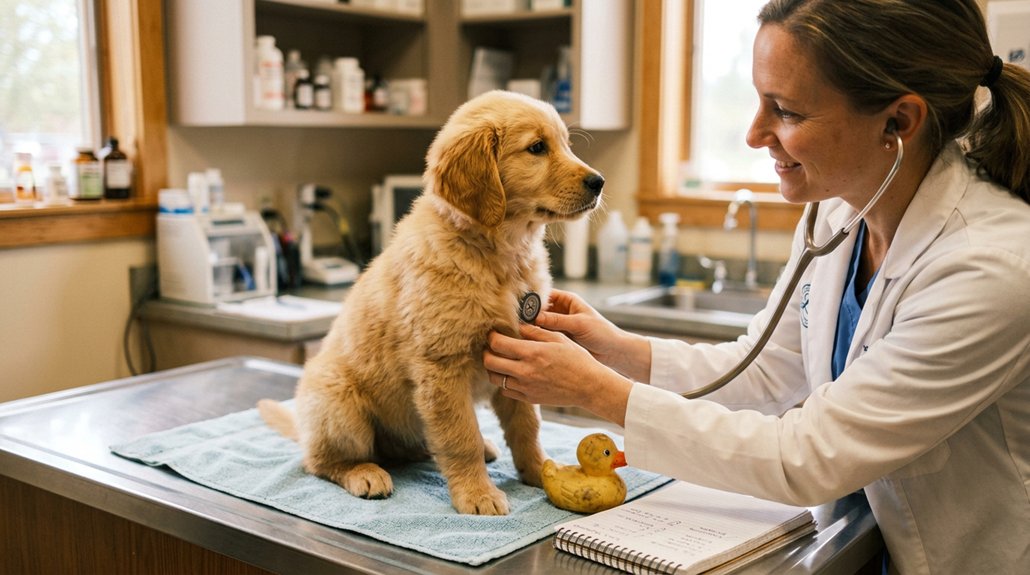
What essential questions should you consider posing to guarantee your puppy’s ideal health and development? First, inquire about puppy nutrition: the type of food, feeding schedule, and appropriate portions based on age, breed, and health. Next, discuss the most effective training techniques for obedience and socialization to help your puppy thrive.
| Question | Topic |
|---|---|
| Type of food and schedule | Puppy Nutrition |
| Effective obedience methods | Training Techniques |
| Parasite prevention and timing | Health Maintenance |
| Ideal spaying/neutering timeline | Growth Management |
Additionally, ask about preventative care for fleas and ticks, and deworming schedules. Finally, consider the timing of spaying or neutering, ensuring your pup’s age and weight meet recommended criteria. These inquiries help lay a solid foundation for your puppy’s health.
Puppy Vaccination Timelines and Health Milestones
Understanding the progression of vaccination timelines and key health milestones is vital for your puppy’s lifelong well-being. Puppies should begin their vaccination schedules between 6 to 8 weeks of age. Core vaccines are administered in a series three times, spaced 3-4 weeks apart, to secure robust immunity. At 12 to 16 weeks, the rabies vaccine is introduced, aligning with local regulations and essential for public health.
Puppies’ vaccination schedules start at 6-8 weeks, with core vaccines and rabies for robust immunity and public safety.
Key health milestones include:
- Initial vaccinations: Begin at 6-8 weeks, with boosters required every 3-4 weeks until 4-5 months old.
- Maternal antibody shift: Confirming vaccinations occur as maternal antibodies wane to solidify long-term immunity.
- Rabies vaccination: Critical for legal compliance and public safety, scheduled for 12-16 weeks.
Each milestone plays a significant role in developing your puppy’s health and resilience.
Keeping Parasites Away From Your Puppy
Ensuring your puppy’s health involves proactive parasite management, starting with routine deworming to eliminate worms and prevent larvae transmission. Effective flea control is also essential, as fleas can infest your puppy and home due to their environmental life cycle. Consult with your veterinarian regularly to receive recommendations on safe deworming schedules and flea control products tailored to your puppy’s needs.
Routine Deworming Importance
Routine deworming is essential for maintaining your puppy’s health, given their vulnerability to intestinal parasites. Establishing a deworming schedule is vital for parasite prevention, as intestinal worms often transmit from the mother. Regular veterinary visits for stool examination help detect these parasites early. Here’s why routine deworming is so important:
- Eliminates adult worms: Deworming medications effectively target adult worms, but require frequent administration to handle emerging larvae.
- Identifies tapeworm presence: Watch for rice-like segments in the stool, signaling tapeworms, prompting targeted deworming.
- Ensures long-term well-being: Consistent deworming and preventive measures lay a solid foundation for a healthy life by keeping parasites at bay.
Effective Flea Control
After establishing a robust deworming schedule, it’s important to contemplate another common concern for puppy owners: flea infestations. Effective flea control is essential to prevent discomfort, skin infections, and transmission of parasites. For ideal flea prevention, consult your veterinarian to select appropriate products tailored to your puppy’s age, size, and health. Topical treatments, known for their efficacy, are a fundamental component of a thorough flea control strategy. Consistent use alongside environmental measures, like regular cleaning of your home and yard, helps disrupt the flea life cycle, which can conclude in mere weeks. Monitor your puppy regularly for signs of fleas, such as excessive scratching or small black specks in its coat, ensuring early detection and timely intervention.
Vet Visit Costs Explained and Budgeting Tips
Understanding the costs associated with your puppy’s first vet visit is essential for effective budgeting and planning. The initial check-up can range from $100 to $350, including examination fees, vaccines, fecal testing, and parasite prevention. Here’s a breakdown to help with vet visit budgeting:
- Examination Fees: Expect to pay between $60 to $85 for the initial consultation.
- Vaccinations: First-time shots can cost from $75 to $150, critical for your puppy’s health.
- Fecal Testing and Deworming: These important procedures add around $25 to $50 for testing and $40 to $60 for parasite treatments.
Anticipate follow-up visits every 3-4 weeks for additional vaccines and ongoing care, planning for similar expenses in your budget.
Making Your Puppy’s Vet Visits Stress-Free
Ensuring your puppy’s vet visits are stress-free requires strategic preparation and understanding of your pet’s needs. To minimize puppy anxiety, acclimate them to car rides and handling. Before the appointment, use a dog carrier with familiar items like a blanket or toy to create a secure space during transport. Arrive early to complete necessary paperwork quickly, thereby reducing stressors linked to the vet environment. Allow your puppy to explore the exam room at their own pace, encouraging relaxation in this new setting. Additionally, keep your puppy off the waiting room floor to prevent exposure to unvaccinated animals and diseases until vaccinations are complete. These proactive measures contribute to a more comfortable and stress-free vet experience for your puppy.
Frequently Asked Questions
What Is the 3-3-3 Rule for Puppies?
The 3-3-3 rule involves understanding a puppy’s adjustment phases: first three days, then weeks, then months. Knowing this can guide puppy socialization and health vaccinations, ensuring they develop safely and confidently in their new environment.
When Should a Puppy See the Vet for the First Time?
Your puppy should attend their first vet appointment within a few days of adoption, especially if they’re between 6-8 weeks old. This guarantees they follow a proper puppy vaccination schedule, much like 8-week-old Max did.
What Is the 7 7 7 Rule for Puppies?
The 7-7-7 rule guarantees puppies receive timely vaccinations starting at 7 weeks, further assessments at 14 weeks, and vaccination completion by 21 weeks. This regimen promotes ideal health and supports effective puppy socialization during critical developmental periods.
What Is the 10-10-10 Rule for Puppies?
The 10-10-10 rule suggests exposing puppies to new experiences in three daily 10-minute intervals. Did you know structured routines reduce puppy anxiety by 20%? This approach aids puppy health, making vet vaccinations and visits more manageable.
Conclusion
Starting on your puppy’s health journey is like nurturing a sapling into a strong tree. Early vet visits plant the seeds for lifelong health, setting down roots of preventive care and timely vaccinations. As your puppy grows, these visits become the sturdy branches that support their well-being, shielding them from parasites and illnesses. By investing time and resources, you’re ensuring your puppy blooms into a healthy, joyful companion, thriving in the garden of life.