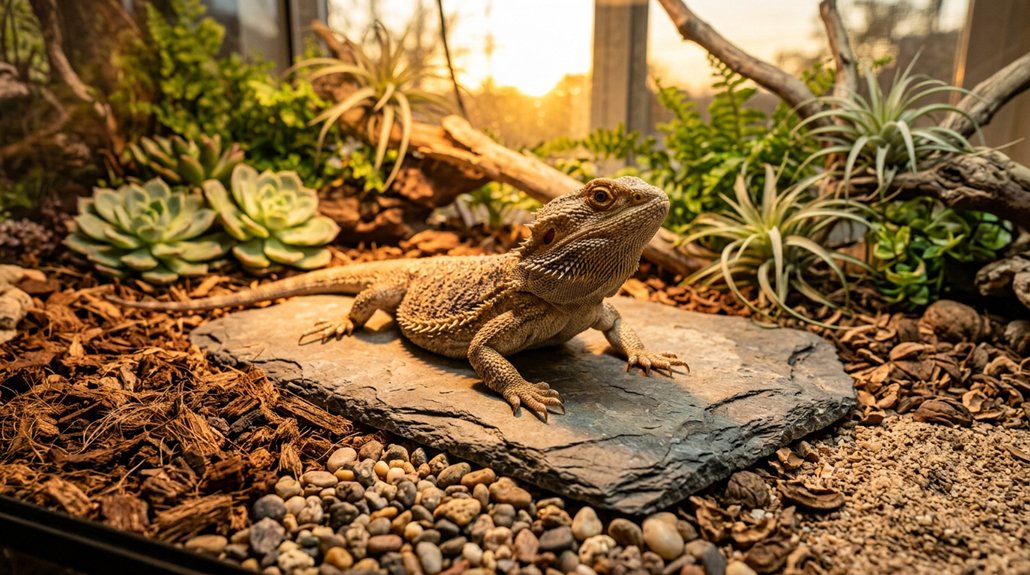
When selecting a substrate for your bearded dragon, focus on safety and natural mimicry. Solid substrates like slate tile and Zen Mats minimize impaction risks but limit digging. Loose options, such as a 70/30 topsoil and washed play sand mix, offer enrichment but pose ingestion hazards if not maintained properly. Avoid materials like calcium sand and linoleum due to health risks. Choose wisely for each life stage, ensuring your dragon’s environment promotes health, safety, and mental stimulation—a deeper understanding awaits.
Key Takeaways
- Solid substrates, like slate tiles, reduce impaction risk and simplify cleaning but restrict natural digging behavior.
- Loose substrates, a mix of topsoil and play sand, promote digging but require careful husbandry to prevent impaction.
- Calcium sand is hazardous due to impaction risks; avoid using it as a substrate.
- Regular substrate maintenance prevents bacterial buildup and ensures a safe environment for bearded dragons.
- Transitioning substrate types as dragons mature balances enrichment and health safety effectively.
What Are Bearded Dragon Substrate Needs?
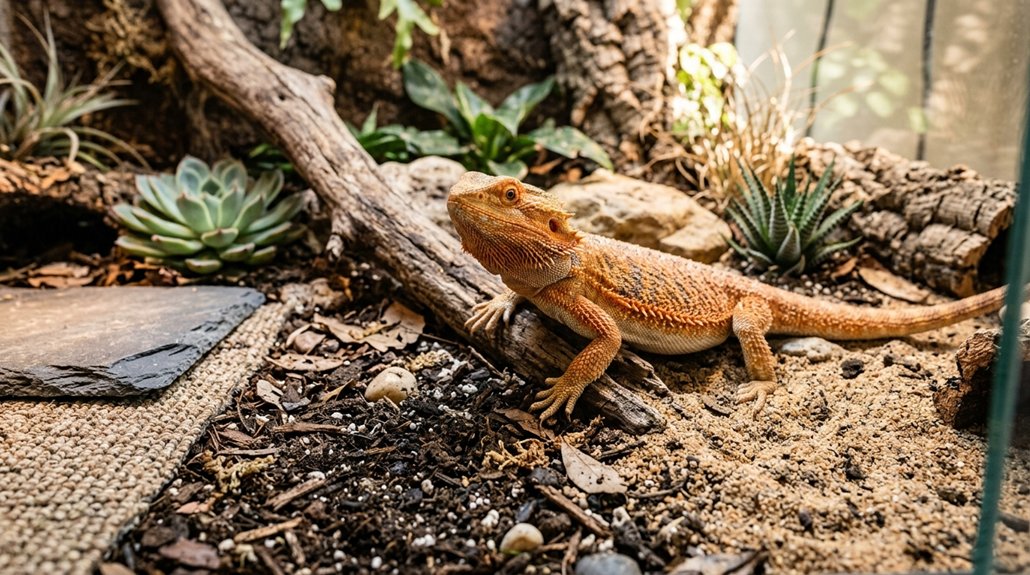
What exactly do bearded dragons need in a substrate to thrive? In their habitat, bearded dragons require substrates that mimic natural conditions while ensuring safety. Solid substrates such as slate tile, paper towels, and Zen Mats offer an ideal bearded dragon habitat by reducing the risk of impaction, a common health issue. These materials make substrate maintenance straightforward—easy to clean and vital for maintaining hygiene, especially for hatchlings. You should aim for a substrate depth of 4-6 inches for adults, facilitating safe burrowing behaviors. Monitoring and adjusting habitat conditions, including temperature and humidity, are essential for digestion and health. Although loose substrates like sand encourage natural digging, they are associated with higher impaction risks, highlighting the importance of thoughtful substrate selection.
The Ups and Downs of Solid Substrates
In the quest for creating an ideal habitat for bearded dragons, solid substrates like slate tiles and Zen Mats offer a compelling solution by reducing the risk of impaction, a significant concern associated with loose substrates. These solid substrate benefits include ease of cleaning and maintaining hygiene, essential for the health of young and ill dragons. Additionally, they provide a neat and visually appealing terrarium environment. However, solid substrate drawbacks should also be considered; they limit enrichment opportunities by restricting natural digging behavior. Although effective for mobility and disinfection, they lack the depth of naturalistic loose substrates, recommended at 4-6 inches for replicating wild conditions. Therefore, while they promote safety, they might compromise behavioral enrichment.
How Loose Substrates Can Be Both Safe and Dangerous
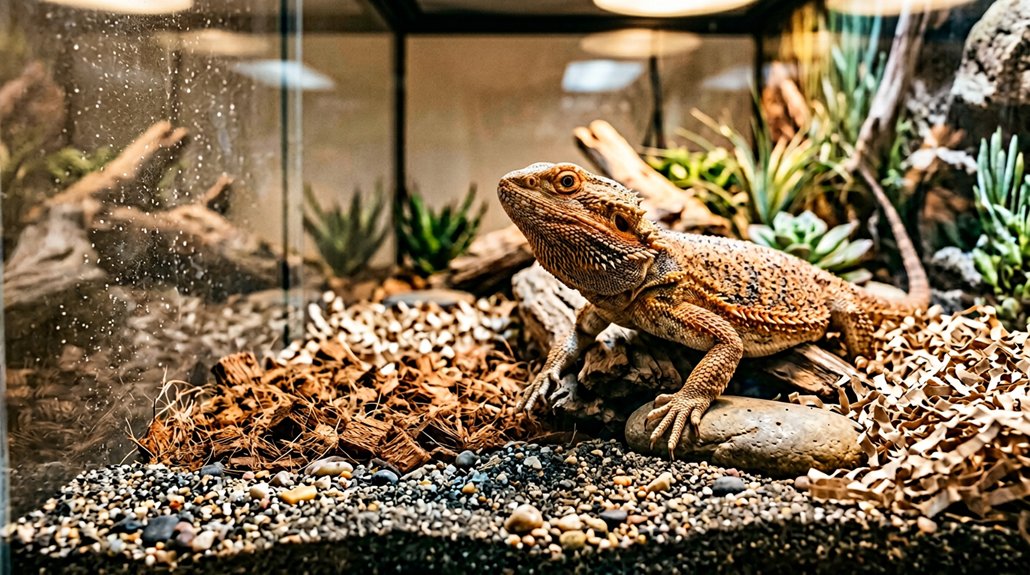
When choosing loose substrates like sand for your bearded dragon, it’s essential to weigh the benefits of natural digging behaviors against the risks of impaction from ingestion. Studies suggest that proper husbandry practices can mitigate these risks, highlighting the significance of monitoring temperature, feeding schedules, and hydration levels. To balance natural behaviors and safety, consider using a mix of substrates, such as a 70/30 ratio of topsoil to washed playsand, particularly for adult dragons.
Understanding Impaction Risks
Maneuvering the potential hazards of loose substrates for bearded dragons necessitates a scientific approach to understanding impaction risks. Contrary to popular belief, impaction primarily stems from inadequate temperature and lighting—integral aspects of habitat management—rather than loose substrate use alone. Research reveals few impaction cases among dragons housed on loose substrates. As a result, it’s essential to maintain accurate lighting and temperature to safeguard their gastrointestinal health.
Explore substrate alternatives with caution: though loose substrates like sand or coconut husk encourage natural behaviors, they present ingestion risks. Implement a 70/30 mix of topsoil and washed playsand to mimic natural environments, mitigating impaction risks effectively. Ultimately, individual dragon health factors into substrate decisions, guiding choices in creating safe habitats.
Balancing Natural Behaviors
Having established the importance of habitat management, the intricacies of substrate selection warrant further investigation. Loose substrates enable bearded dragons to exhibit natural digging behaviors, an essential component of mental stimulation. When you provide a mix of 70/30 topsoil and sand, it simulates their natural environment, supporting both physical activity and psychological health. However, loose substrates come with impaction risks, particularly under improper husbandry conditions or existing health issues. Young dragons, due to size and vulnerability, should use solid substrates to minimize ingestion risks. Balancing safety with natural enrichment requires careful consideration of substrate type, age-related needs, and diverse habitat conditions. Regular monitoring of temperature and humidity helps prevent digestion problems and promotes overall well-being, ensuring a harmonized approach to habitat enrichment.
Why Avoid These Substrates to Keep Your Dragon Safe
To keep your bearded dragon safe, it’s crucial to understand how certain substrates can impact their health negatively. Materials like calcium sand can cause impaction due to calcium carbonate’s properties, while linoleum and shelf liners may emit VOCs when heated, creating health hazards. Additionally, dusty substrates can lead to eye irritation and respiratory problems, emphasizing the importance of selecting substrate materials carefully to prevent potential harm.
Hazardous Substrate Materials
Although substrate selection may seem like a simple choice, it’s critical to understand the risks associated with certain materials to guarantee your bearded dragon’s safety. Sand dangers, especially from calcium or vitamin sands, can lead to impaction, as ingested particles can cause serious digestive problems. Consider these substrate alternatives to safeguard your dragon’s habitat:
- Ground Nut Shells: Their dusty nature poses respiratory risks and, if swallowed, can also lead to impaction.
- Wood Products: Items like mulch and bark may cause impaction; they can additionally harbor harmful bacteria.
- Linoleum and Shelf Liners: When heated, these materials emit volatile organic compounds (VOCs) harmful to reptiles.
- Reptile Carpet: Known to trap bacteria and entangle toenails, risking injury.
Impacts on Dragon Health
In the interest of your bearded dragon’s well-being, understanding the impact substrates can have on health is imperative. Loose substrates, such as sand or coconut fiber, pose significant risks due to impaction, a digestive obstruction stemming from ingestion. This risk is augmented by inadequate temperature and lighting, critical factors in digestion. Substrates like calcium sand and ground nut shells are doubly concerning due to dust-induced respiratory issues, necessitating thorough monitoring of habitat conditions. Solid substrates, such as tiles or Zen Mats, mitigate the risk of impaction and facilitate hygiene through ease of cleaning. Ideal substrate choice supports habitat enrichment and aligns with diet considerations to promote overall health. Prioritize a well-informed selection to avert complications.
Choosing Your Baby Bearded Dragon’s First Substrate
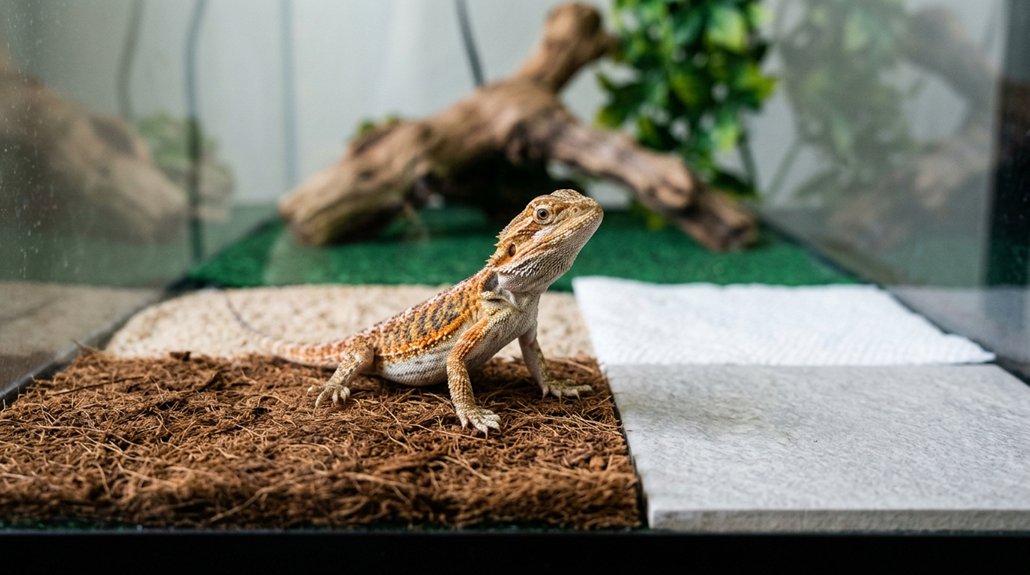
- Solid substrates such as paper towels provide a sterile, easy-to-clean surface, minimizing ingestion risks.
- Zen Mats offer a durable, reusable alternative that similarly helps prevent accidental ingestion.
- Guarantee proper food placement within the habitat to avoid loose substrate contact during feeding.
- Avoid free-roaming insects in the enclosure, as they can carry substrate materials that a young dragon might ingest unintentionally.
Transition gradually to more diverse substrates as the reptile matures.
Creating the Ideal Substrate Blend for Mature Bearded Dragons
As your bearded dragon matures, it’s time to contemplate a more complex substrate blend that not only mimics their natural habitat but also supports their evolved needs, such as digging and burrowing. Effective substrate selection is essential; consider a mix of 70% organic topsoil and 30% washed play sand. This composition closely replicates their desert landscape, enhancing the enclosure’s aesthetics. The depth should range from 4-6 inches, providing both comfort and the ability to express innate behaviors. Regularly monitor habitat conditions and adjust the blend as necessary, reflecting changes in your dragon’s health or behavior. Maintaining a minimum basking temperature of at least 95°F is also crucial for supported digestion and overall health on this substrate.
How to Keep Your Dragon Safe From Impaction
Even though creating an ideal habitat involves numerous elements, preventing impaction remains one of the most vital aspects of bearded dragon care. The risk of impaction can be mitigated with a few meticulous measures:
- Monitor Habitat Conditions: Confirm the correct temperature and humidity, as improper levels can hinder digestion and increase impaction risks.
- Substrate Alternatives: Opt for solid substrates like slate tiles or newspaper, which are less risky than loose substrates like sand that can be ingested accidentally.
- Hydration Importance: Maintain a consistent hydration regimen. Dehydration elevates the likelihood of digestive complications leading to impaction.
- Prevent Substrate Ingestion: Avoid mixing food with substrate materials to reduce accidental ingestion risks.
Regular monitoring and veterinary visits are essential to catch issues like parasites or metabolic bone disease early.
Hear From the Community: Tips and Insights
While caring for bearded dragons can seem challenging, community insights often provide invaluable, practical guidance. Among community preferences, solid substrates like slate or tile are frequently recommended to minimize impaction risk and improve hygiene. However, for naturalistic setups, some owners advocate washed, sifted play sand or other natural substrates, allowing natural digging behaviors without compromising hydration.
Switching focus to young dragons, many keepers favor materials such as Zen Mats or paper towels for their safety and practicality. Notably, a common strategy for adult dragons involves mixing 70% topsoil with 30% washed play sand. This blend offers a natural environment while maintaining diligent monitoring of temperature and humidity. Additionally, regular substrate maintenance and thorough cleaning routines emerge as critical practices in preventing bacterial buildup.
Frequently Asked Questions
What Type of Substrate Is Best for a Bearded Dragon?
You’ll find natural substrates like coconut fiber offer humidity benefits, while artificial ones prioritize cleanliness. Sand and soil alternatives mimic nature but raise safety concerns. Paper towels guarantee cleanliness, avoiding heating and impaction issues for baby dragons.
What Is the Best Thing to Put at the Bottom of a Bearded Dragon Tank?
You should consider slate tile or paper towels for the tank’s bottom. These substrate alternatives guarantee easy cleaning techniques, reduce impaction risk, and enhance environmental control, offering a scientifically sound, detailed solution for bearded dragon habitats.
How Often Should I Replace the Substrate on My Bearded Dragon?
You should replace loose substrates monthly, with a total thickness under 2 inches, impacting bacterial growth risks by 40%. Solid substrates need weekly cleaning. Bioactive setups require weekly spot cleaning, highlighting the importance of substrate cleaning.
Is Substrate or a Mat Better for Bearded Dragons?
You’re comparing substrates and mats for bearded dragons. Mats are better due to cleaning frequency and safety concerns, but substrates offer natural options for digging with less aesthetic appeal. Consider what’s more important for your dragon’s environment.
Conclusion
Choosing the right substrate for your bearded dragon is like finding the perfect hiking boots; it’s about safety, comfort, and fit. Just as sturdy boots protect your feet from harsh terrains, a well-chosen substrate shields your dragon from impaction and injury. Studies show impaction risk decreases with solid substrates, but many owners successfully use loose options with careful management. Trust your research, weigh the pros and cons, and tailor your decision to your dragon’s unique needs.