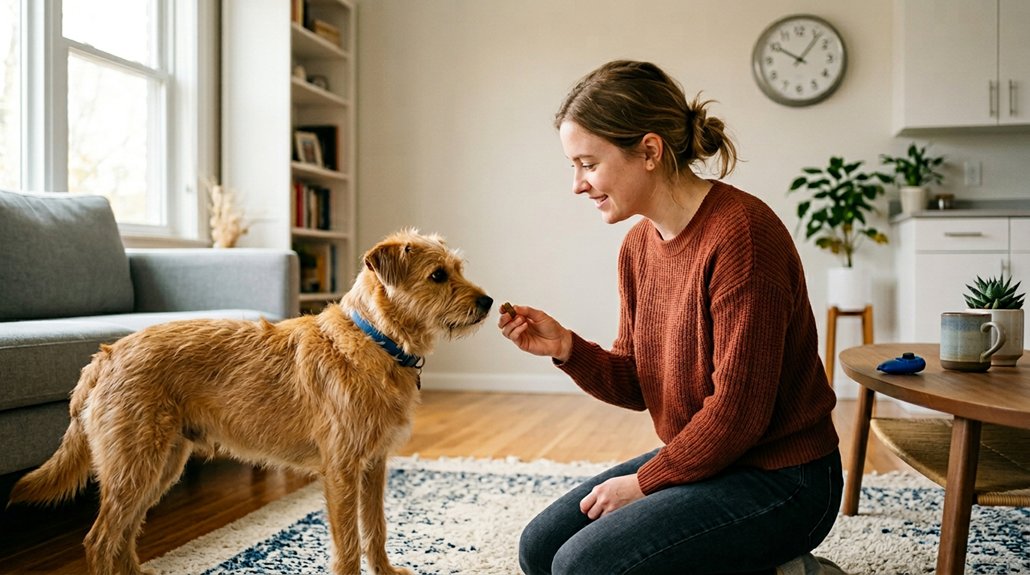
Start training your dog by understanding their unique learning style and using essential training tools like a flat collar, leash, treat pouch, and clicker. Master basic commands with positive reinforcement and focus on simple, short sessions for potty training. Prioritize a consistent routine and offer high-value rewards to encourage good behavior. Manage behavioral challenges with positive techniques and lifelong habits. Equip yourself with the right knowledge, and you’ll discover more strategies to guarantee effective training.
Key Takeaways
- Begin with basic commands like “sit” and “stay” using positive reinforcement strategies such as treats and praise for motivation.
- Use a flat collar or harness and a four-to-six foot leash to maintain control during training sessions.
- Keep training sessions short, ideally 10 to 15 minutes, to prevent overwhelming your dog and enhance focus.
- Implement consistent daily routines, including scheduled potty breaks, to establish lifelong habits and minimize accidents.
- Create a distraction-free environment and tailor training techniques to your dog’s learning preferences for effective sessions.
Tailor Your Training to Your Dog’s Learning Style
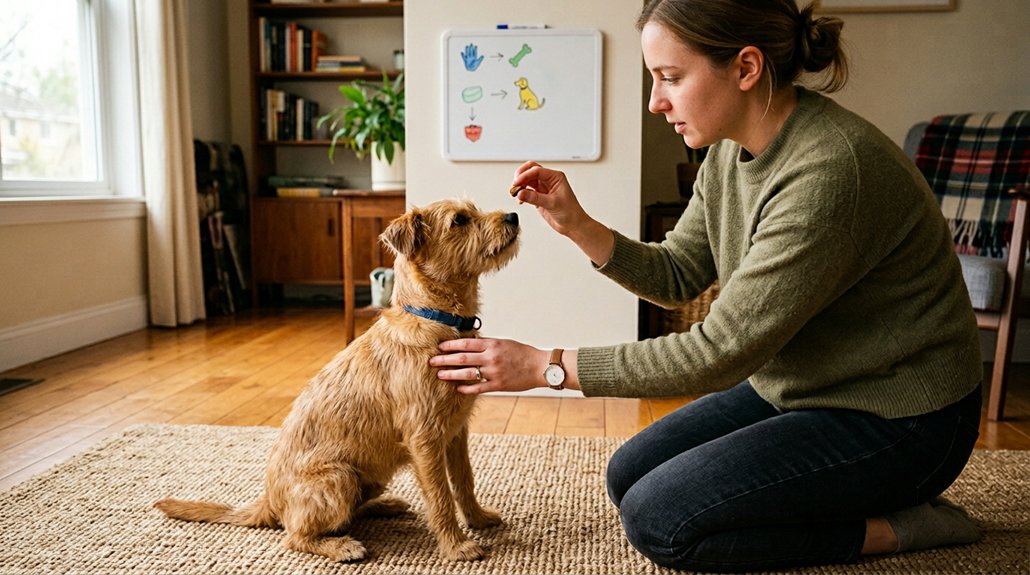
When beginning to train your dog, one of the most essential steps is to customize your approach to their specific learning style. Different breeds show distinct preferences; some might excel with visual learning, while others respond best to verbal cues. To effectively tailor your training, use keen observation skills to identify your dog’s unique pace and preferred engagement strategies. By implementing distraction management, you can minimize interruptions that could impede progress. A precise balance of repetition techniques will cater to your dog’s attention span, ensuring short yet dynamic sessions enhancing focus. Remember, patience is vital as varied breed differences dictate learning curves. Embrace flexibility in your methods, and you’ll foster a positive and rewarding experience for both you and your canine partner.
Gather Your Dog Training Tools
To successfully conduct dog training sessions, start by assembling a well-curated set of essential tools. A basic understanding of the necessary training tools will elevate your dog training experience. Incorporate these essential accessories into your toolbox:
Assemble essential tools to enhance your dog training experience and ensure successful sessions.
- Flat Collar/Harness: Provides safe, effective control during walks or commands.
- Leash (Four-to-Six Foot): Ideal for maintaining control without compromising freedom.
- Treat Pouch: Keeps rewards accessible for immediate reinforcement.
- Clicker: A precise tool to mark desired behavior instantly.
- Training Treats: Small, enticing rewards that motivate and maintain attention.
Each tool serves a purpose, ensuring a structured approach to sessions. Your choice of training tools greatly influences success; prioritize quality and functionality. With these items on hand, you’ll be equipped to guide your dog’s learning confidently and efficiently.
Master Basic Commands First
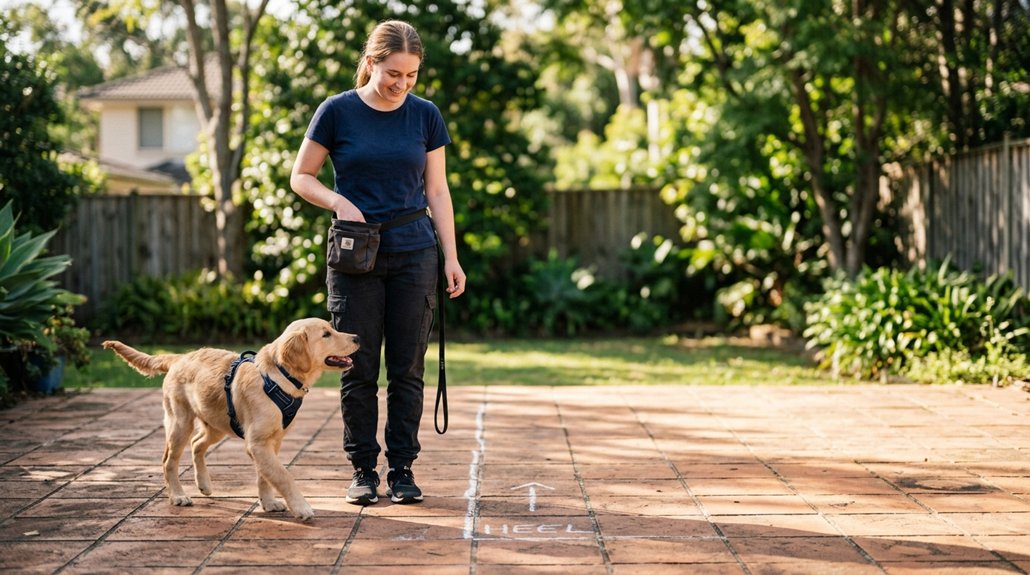
Although starting your dog’s training journey can seem intimidating, mastering basic commands is essential for ensuring a well-behaved companion. Begin with core commands like “sit,” “down,” “stay,” “come,” and “leave it,” as these lay the foundation for effective dog behavior control. Use positive reinforcement—such as treats or praise—to encourage consistent responses, solidifying command consistency. Keep sessions brief, about 10 to 15 minutes, preventing your dog from becoming overwhelmed. Practice in varied settings to promote skill generalization, ensuring your dog remains responsive in diverse environments. Incorporating socialization while practicing commands is invaluable; interaction with other dogs and humans enhances learning and builds confidence. By focusing on these fundamentals, you’ll develop a strong, reliable bond with your canine companion.
Potty Training Made Simple
Begin the potty training process as early as possible to set a reliable foundation for your puppy’s lifelong habits. Establishing a potty schedule consistency is vital to preventing accidents. To foster effective outdoor bathroom training, avoid potty pads that might confuse your dog. Prioritize regular trips outside, especially during key times, like post-meals and after naps. You’ll want to be keen in observing signs like sniffing or circling, indicating it’s time to head outdoors. Positive reinforcement is your secret weapon—reward your puppy immediately after they successfully go outside.
- Develop a consistent potty schedule
- Avoid using indoor potty pads
- Take your puppy out frequently
- Watch for pre-potty behavior cues
- Reward outdoor bathroom successes with treats and praise
Techniques for Smart Puppy Socialization
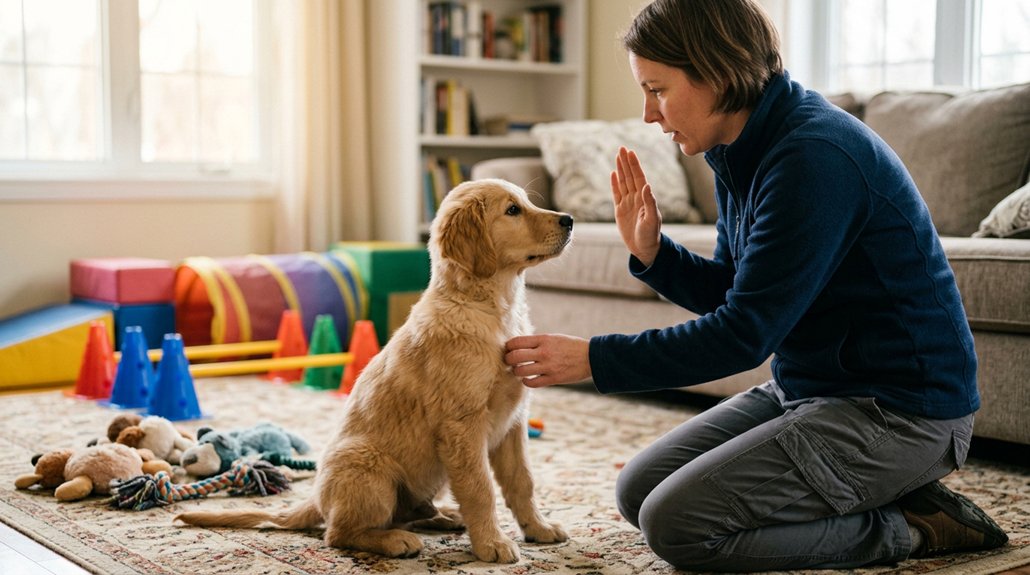
To guarantee your puppy grows into a well-adjusted dog, it’s critical to begin socialization early, ideally before the age of 16 weeks. You should focus on positive exposure strategies by introducing your puppy to diverse environments, people, and friendly dogs, always making sure these experiences are filled with treats and praise to foster confidence. Consistently monitoring for signs of stress will help you identify the right balance and maximize adaptability.
Timing Is Crucial
Getting the timing right for puppy socialization is critical to guarantee your dog grows up adaptable and confident. The ideal socialization timeline ranges from 3 to 12 weeks. During this period, carefully manage puppy exposure to various stimuli. By introducing positive and diverse experiences, you’ll foster a well-adjusted dog and mitigate future fears or aversions. Here’s how to proceed:
- Introduce Varied Environments: Don’t limit them to dog parks. Explore different settings.
- Incorporate Diverse Sounds and Smells: Expose them to everyday noises and scents.
- Interact with Well-Mannered Older Dogs: These interactions teach proper canine etiquette.
- Gentle Human Handling: Allow interactions with different people to build confidence.
- Avoid Over-Stimulation: Focus on calm, pleasant situations to nurture desirable behavior.
Timing guarantees successful socialization.
Positive Exposure Strategies
Smartly planning your puppy’s early social experiences plays an essential role in shaping their behavior and temperament. Prioritize socialization activities before they reach 12-16 weeks to avoid future behavioral issues. Introduce them to diverse environments—not just dog parks—like different sounds and various people. This variety guarantees a well-rounded development. Keen stress monitoring is crucial; watch for signs of anxiety and avoid pushing your puppy into overwhelming scenarios. Calm exposures, rather than forced interactions, are key. Allow your puppy to explore at their own pace, fostering a natural curiosity and confidence. Reinforce positive behavior with treats or praise to make these experiences enjoyable. This approach will lay a strong foundation for future learning and harmonious interaction.
Encourage Good Behavior With Rewards
To nurture good behavior in your dog, utilizing positive reinforcement techniques is paramount. Identifying high-value rewards that specifically motivate your dog will guarantee effective training sessions, reinforcing desired actions with precision. By consistently applying these strategies, you’ll cultivate a positive environment that encourages your dog to learn and perform well.
Positive Reinforcement Techniques
Positive reinforcement techniques are vital for encouraging good behavior in dogs by associating actions with positive outcomes. To shape your dog’s behavior effectively, use a variety of reward types, including treats, praise, or toys, immediately after they perform the desired action. Timing is critical; offer the reward within seconds to enhance the learning process.
- Reward Types: Use high-value rewards like chicken or cheese to boost motivation.
- Behavior Shaping: Reinforce specific actions promptly for success.
- Bond Enhancement: Consistent reinforcement strengthens the owner-dog relationship.
- Anxiety Reduction: Focus on rewards, not harsh corrections, to create a stress-free environment.
- Learning Willingness: A positive approach fosters enthusiasm in dogs to learn new behaviors.
Effective Reward Strategies
Several effective reward strategies can transform your dog training sessions into successful and enjoyable experiences. Start by using engaging rewards like high-value treats—think small pieces of chicken or cheese. Immediately deliver these treats after your dog performs the desired behavior to establish a clear connection. Don’t limit yourself to treats; incorporate praise and toys to sustain interest and excitement. As your dog’s reliability improves, shift towards variable reinforcement by randomly mixing verbal praise and occasional treats. This keeps motivation high and guarantees your dog doesn’t solely rely on food rewards. Consistently pair all rewards with warm verbal praise to enhance the emotional bond and reinforce positive behaviors effectively. Mastering these strategies leads to a well-behaved and enthusiastic companion.
Designing Short & Fun Training Sessions
When starting on the journey of training your dog, keeping sessions short yet engaging is essential for success. Opt for training sessions that last 10 to 15 minutes to maintain your dog’s focus and enthusiasm. To guarantee these sessions are effective and enjoyable, incorporate a variety of fun games and short tricks. This approach prevents boredom and keeps your dog engaged.
Consider the following tips:
- Use high-value treats and positive reinforcement immediately after the desired behavior.
- Mix up commands and skills to keep each session dynamic.
- Schedule training during quiet times to minimize distractions.
- Choose a distraction-free environment to enhance concentration.
- End on a positive note with a well-known command your dog performs well.
These strategies guarantee productive and enjoyable learning.
Solutions for Common Behavioral Challenges
While training your dog, you’ll encounter common behavioral challenges like barking and chewing that require specific strategies. To effectively address barking, first pinpoint the trigger and incorporate techniques that encourage calmness and distraction. For leash pulling, focus on teaching the “heel” command, rewarding calm walking, and practicing in increasingly varied environments.
Addressing Barking and Chewing
Barking and chewing are two of the most common behavioral challenges dog owners face, yet understanding the root causes can pave the way for effective solutions. Recognizing barking triggers—such as boredom, anxiety, and alertness—can help you address excessive noise. For chewing solutions, guarantee your dog receives ample physical and mental stimulation. Here’s what you can do:
- Identify and manage barking triggers to minimize unnecessary noise.
- Offer daily exercise and interactive toys to curb destructive chewing.
- Use positive reinforcement to reward quiet behavior and redirect actions.
- Implement commands like “quiet” or “leave it” for control.
- Seek a qualified trainer if issues persist for targeted guidance.
Precision and consistency in training will greatly reduce unwanted behaviors.
Managing Leash Pulling
Leash pulling is a widespread issue that requires immediate attention to assure enjoyable walks for both you and your dog. Begin with proper leash techniques by using a standard flat collar or harness, paired with a four-to-six-foot leash; this assures control far better than retractable options. Implement the “stop-and-go” method: halt progress instantly when your dog pulls, resuming only when they’ve returned to your side. This correction instills an understanding that pulling halts forward movement. Enhance compliance with walking etiquette through positive reinforcement—reward calm behavior beside you with treats or praise. Gradually introduce distractions on walks, increasing difficulty over time to cement leash manners. Maintain consistency across training sessions and assure all household members employ identical techniques for lasting results.
Develop Lifelong Training Habits
Developing lifelong training habits with your dog guarantees a harmonious and well-adjusted relationship. Begin by committing to lifetime consistency and routine reinforcement. Establishing a solid routine involves short, engaging sessions—10 to 15 minutes—daily. These sessions should focus on basic commands like sit, down, and stay to reinforce understanding without overwhelming your pet. Remember, positive reinforcement is key. Use treats, praise, or toys to encourage desired behaviors. Here’s what you’ll want to keep in mind:
- Practice commands regularly.
- Use positive rewards consistently.
- Maintain a low-distraction environment during training.
- Keep sessions short and engaging.
- Adjust your methods based on your dog’s comfort and progress.
Adopt these strategies, and you’ll create rewarding experiences for both you and your dog.
Enhance Your Training With External Resources
While starting on the journey of training your dog, leveraging external resources can greatly enrich your methods and accelerate results. Enroll in structured online classes or attend community workshops to gain foundational skills from professional trainers. Virtual seminars and expert podcasts can offer deep insights into contemporary techniques. Supplement this with training blogs and social media groups to connect with other dog owners, exchanging experiences and strategies. Participate in local meetups for hands-on learning and to tackle real-world training challenges, fostering your dog’s socialization and skill development. Investing in quality resources and engaging with these platforms guarantees a thorough understanding tailored to your dog’s unique personality and needs. Remember, external input can considerably enhance your training effectiveness and confidence.
Frequently Asked Questions
What Is the 3-3-3 Rule With Dogs?
The 3-3-3 rule explains your dog’s adaptation process: three days of anxiety, three weeks for routine-building, three months for bonding. Use socialization techniques and positive reinforcement during this period to guarantee a smooth, successful adjustment.
What Is “I Love You” in Dog Language?
“I love you” in dog language happens when actions speak louder than words. Recognize their dog behavior through relaxed body language, wagging tails, and soft eyes. Canine communication includes vocal cues and leaning in for comfort and trust.
What Is the First Thing You Should Train Your Dog?
Start with basic commands like “sit” to establish control and promote safety. Use positive reinforcement by immediately rewarding desired behaviors with treats or praise to encourage repetition. Consistency and patience are key to successful training.
What Is the 7 7 7 Rule for Dogs?
The 7-7-7 rule is your roadmap: seven days for routine, seven weeks for foundational dog training techniques, and seven months for puppy socialization tips. Like nurturing a garden, patience helps your dog’s personality blossom.
Conclusion
With your newfound skills, you’re now the captain guiding your dog’s journey to well-behaved bliss. Just as a painter needs brushes, tailor your approach with essential tools, commands, and playful sessions. Address behavioral hurdles like seasoned pros by socializing your pup smartly and ensuring consistent potty habits. Remember, lifelong learning is the key. Keep the flame of curiosity alive by reaching for external resources. You’re paving the way to a symphony of harmony and mutual understanding.